
Best Inflatable Camp Pillows – 2026 Reviews

A full night’s sleep in a tent often comes down to one small piece of gear: the pillow. Get it wrong and you wake up with a stiff neck and a grudge against your sleeping pad. Get it right and the whole trip feels easier.
Inflatable camp pillows are a different breed from the fluff-filled pillow at home. The best ones balance packed size, support height, and air retention without turning your sleep setup into a balloon-animal experiment. The category splits quickly into ultralight backpacking pillows that disappear into a side pocket and larger comfort-first pillows that feel more like a real bed.
We surveyed the market across brands to sort out which inflatable camp pillows are worth the pack space. The main decision axes are packability and nighttime comfort – and the right pick depends on whether you’re counting ounces or counting hours of sleep.
Best Inflatable Camp Pillows – 2026 Reviews
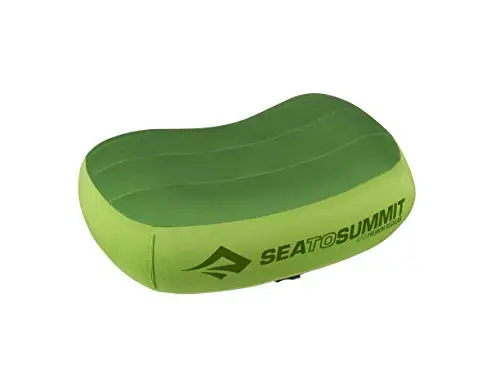
Aeros Premium – Ultralight Comfort with a Soft Knit Top
A premium inflatable camp pillow with a soft brushed knit surface and a multi-function valve for fast inflation, quick deflation, and fine pressure control. The regular size packs to fist size and works with PillowLock patches on compatible Sea to Summit mats.
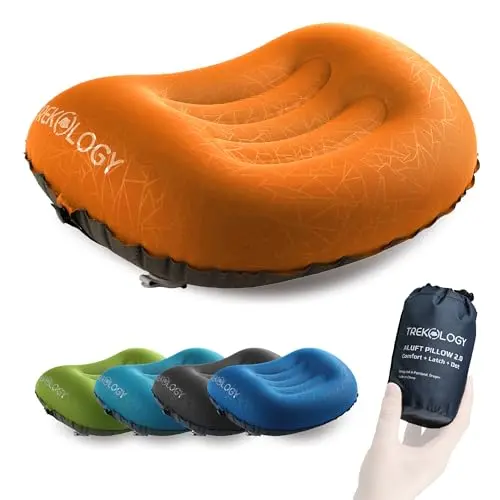
Aluft 2.0 – Ultralight Backpacking Pillow
An ultralight inflatable camp pillow that folds to soda-can size and weighs just a few ounces. It uses a one-way valve, anti-slip rubber dots, and a latch strap to stay put on sleeping pads.
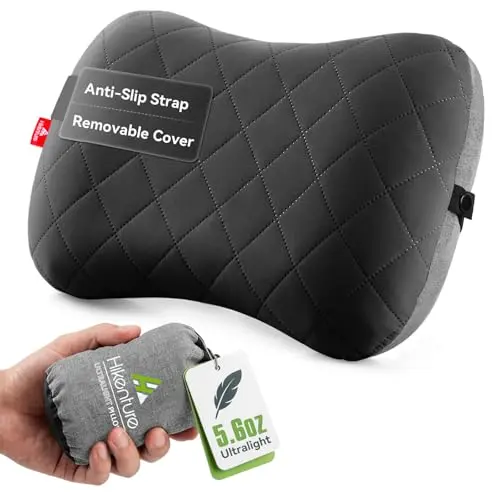
Camping Pillow with Removable Cover – Leakproof Bladder Design
A compact inflatable camp pillow with a separate thickened TPU bladder and a removable washable cover. The one-click valve inflates in a few breaths, and the elastic strap helps keep it on your pad.
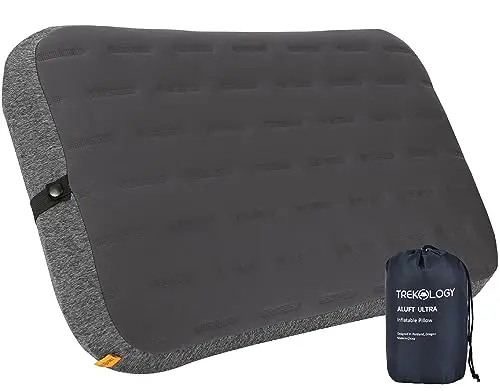
Aluft Ultra – Large Camp Comfort
A large inflatable camp pillow built for home-like comfort on car-camping and travel trips. The 24 x 15-inch surface has a removable cover, detachable pad strap, and ergonomic neck support.
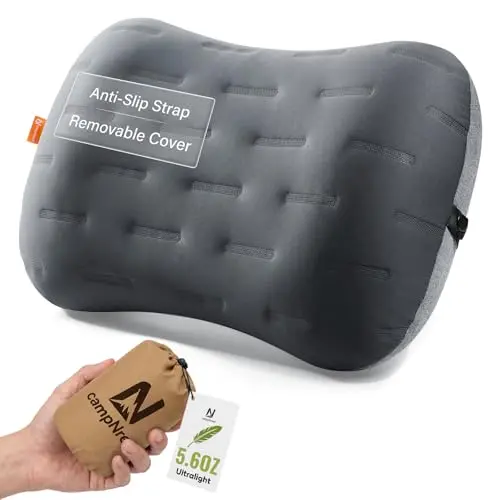
Inflatable Camping Pillow – Quiet Removable-Cover Comfort
A compact inflatable camp pillow with a thick TPU bladder, quiet removable cover, and one-click valve. It packs to palm size and doubles as lumbar support for travel or office use.
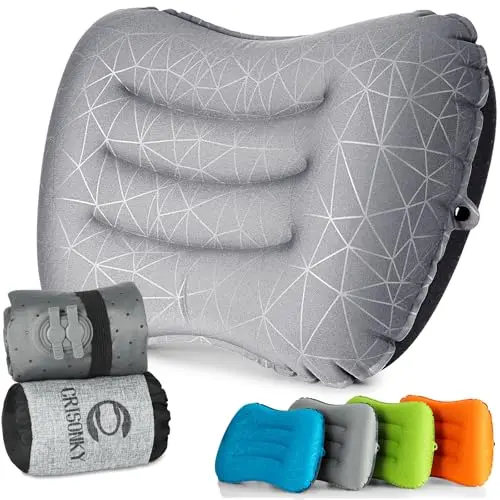
Camping Pillow – Budget-Friendly Ultralight Option
A budget-friendly inflatable camp pillow with a dual air valve, anti-slip silicone dots, and a compact packed size. It inflates in a few breaths and works as a head or lumbar pillow.
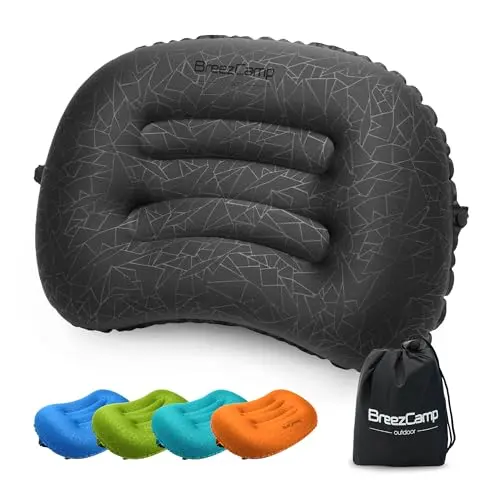
Inflatable Camping Pillow – Compact Travel Support
A compact inflatable camp pillow with a built-in high-efficiency valve, anti-slip dots, and an elastic band. It folds to water-bottle size and includes a storage bag and inflatable pump.
How We Evaluated These Inflatable Camp Pillows
We didn’t see these through a full season of field use. What we did: cross-referenced 7 inflatable camp pillow models from 6 distinct brands across five decision axes – packed size and weight, inflation and deflation systems, support shape, cover washability, and air retention. We triangulated published specifications, feature sets, owner feedback where available, and use-case fit against representative buyer profiles for camping and backpacking.
We mapped each pillow to the sleeping positions and trip styles it actually suits, rather than treating every inflatable as interchangeable. A pillow that disappears into a backpack pocket is not automatically better than a larger one that gives side sleepers more neck support. We also weighed how easy each valve is to use in the dark, how much noise the cover makes, and whether the care routine is realistic for multi-night trips.
The scoring framework weighted real-world fit and comfort (70%) – how well each pillow delivers on its stated sleep scenario – against feature differentiation (30%) – unique valve designs, cover systems, and attachment points. We have no commercial relationship with any of the brands featured; recommendations track fit and differentiation, not brand preference. If you want the plushest ultralight option, the Sea to Summit Aeros Premium is the match; if you’re counting ounces, the Trekology Aluft 2.0 serves you better.
How to Choose the Right Inflatable Camp Pillows
1. What Makes an Inflatable Camp Pillow Comfortable?
Comfort in an inflatable camp pillow comes from three things: surface softness, support height, and firmness control. A pure TPU bladder can feel taut and noisy, so a soft knit or cotton cover makes a bigger difference than most shoppers expect. The better models also let you fine-tune air pressure through a multi-function valve, which matters if you sleep on your side and need more height under the neck.
Don’t confuse thickness with support. A contoured shape that cradles the neck often feels more comfortable than a flat pillow that’s simply inflated harder. If you move around at night, look for anti-slip dots or a pad strap to keep the pillow in place.
2. Packed Size and Weight: The Real Inflatable Camp Pillow Tradeoff
An inflatable camp pillow’s biggest selling point is packability, but the specs that matter are packed dimensions and trail weight. Ultralight models can fold to soda-can size and weigh under four ounces, which is ideal for backpacking and fast-and-light trips. Larger pillows may pack to water-bottle size and weigh closer to nine ounces, trading pack space for a more home-like sleeping surface.
Think about your trip style before chasing the smallest number. If you’re car camping, a larger pillow footprint can be worth the extra bulk. If you’re counting every ounce, a compact backpacking pillow wins even if it feels less plush.
3. Valve Systems and Inflation Effort
A one-way valve lets you inflate by mouth without losing air between breaths, while a dual valve or multi-function mini valve adds faster deflation and finer pressure control. Most inflatable camp pillows fill in a handful of breaths, but the difference shows up when you’re setting up in the dark or trying to soften the pillow at 2 a.m.
Check whether the valve is easy to operate with cold hands and whether it has a secure closure. A valve that’s fussy or prone to grit is a common weak point, so it’s worth reading the fine print on air retention before you commit.
4. Support Shape, Height, and Sleeping Position
The right height depends on your sleeping position. Side sleepers usually need more lift under the neck, while back sleepers can get away with a flatter profile. Stomach sleepers often prefer a thinner pillow or one they can under-inflate. A contoured shape can help, but the valve matters just as much because it lets you soften or firm the pillow without fully deflating it.
If you want a cleaner sleep setup, a removable cover is worth prioritizing. It adds a soft layer, cuts down on plastic crinkle, and can be washed separately after a sweaty trip.
5. Covers, Cleaning, and Long-Term Air Retention
Most inflatable camp pillows use a TPU bladder inside a fabric shell. A separate bladder is generally more leak-resistant than a thin coating, but no inflatable is immune to punctures or valve wear. A removable washable cover makes a real difference for hygiene on multi-night trips, and it also reduces the plasticky feel against your face.
Check the care instructions before you buy. Many models are hand wash only, and some covers should be air dried rather than tumble dried. A stuff sack is nice, but a repair patch or spare valve is better if you plan to use the pillow hard.
6. Trekology Aluft 2.0 vs Sea to Summit Aeros Premium: Which Inflatable Camp Pillow Fits?
These two represent opposite ends of the inflatable camp pillow spectrum. The Trekology Aluft 2.0 leans into ultralight packability: it folds to soda-can size, weighs very little, and has a grippy back for sleeping pads. The Sea to Summit Aeros Premium costs more but adds a plusher surface, a finer pressure valve, and mat-compatible attachment points.
Choose the Trekology if you’re counting ounces on backpacking trips and want a proven compact shape. Choose the Sea to Summit if you want the most comfortable inflatable experience and don’t mind paying for the premium tier.
Frequently Asked Questions
1. Are inflatable camp pillows comfortable enough for a full night?
Yes, if you choose the right shape and firmness. The key is neck support, not raw thickness. A pillow that lets you fine-tune air pressure will feel better than a thicker pillow that’s either rock hard or too soft. A soft cover also helps cut the plasticky feel and noise. For side sleepers, look for a contoured profile or a slightly taller pillow.
2. What's the difference between the Trekology Aluft 2.0 and the Sea to Summit Aeros Premium?
The Trekology Aluft 2.0 is the ultralight backpacking pick: it packs to soda-can size, weighs very little, and has a grippy back. The Sea to Summit Aeros Premium is the comfort-first pick: it adds a soft brushed knit surface, a multi-function valve, and PillowLock compatibility. Both are strong choices, but they suit different priorities: minimum packed size versus plusher sleep surface.
3. How does the Hikenture Camping Pillow compare with the CAMPNREST inflatable pillow?
They’re close in concept: both pair a thick TPU bladder with a removable washable cover and a one-click valve. The Hikenture has a slightly larger footprint and a detachable elastic strap, while the CAMPNREST emphasizes a quiet inner layer and a palm-size packed shape. If cover washability is your priority, either works; if you want the larger sleeping surface, lean Hikenture.
4. Do inflatable camp pillows leak or lose air overnight?
Any inflatable can lose a little air, but the better ones hold firmness through the night. Look for a separate TPU bladder rather than a thin coated shell, and check that the valve closes securely. A one-way valve reduces the chance of air escaping between breaths. If you’re rough on gear, choose a model with a removable cover so you can inspect the bladder easily.
5. Can you use an inflatable camp pillow for side sleeping?
Yes, but height matters. Side sleepers usually need more lift under the neck, so a larger footprint or a contoured shape helps. The Trekology Aluft Ultra is the roomiest option here, with a 24 x 15-inch surface and a detachable pad strap. If you sleep on your back or stomach, a smaller ultralight pillow may be enough.
Final Verdict
For most campers, the Aeros Premium is the inflatable camp pillow to beat. It’s the rare ultralight option that feels genuinely plush, and the multi-function valve makes it easy to dial in pressure for side or back sleeping. If you’re packing for a backpacking trip and want to save weight, the Trekology Aluft 2.0 is the smarter ultralight pick; it folds tiny, grips the pad, and costs far less than the premium option. Budget shoppers should look at the Crisonky Camping Pillow, which covers the basics at an entry-level price. And if you want a bigger, home-like sleeping surface for car camping, the Trekology Aluft Ultra is the roomy alternative. Start with fit and packed size, then choose the comfort level you’ll actually notice after a long day outside.
