
Best Inflatable Travel Pillows – 2026 Reviews

A red-eye flight is a bad place to discover that your travel pillow is a balloon with opinions. The best inflatable pillows earn their keep in the details: a valve that holds air, a shape that supports the part of your body that actually aches, and a packed size that does not crowd out your one carry-on.
Inflatable travel pillows split into two broad jobs. Neck pillows are built for upright sitting, with raised edges, chin support, and a firmness you can tune for sleeping or reading. Lumbar pillows target the lower back, using foam or air to fill the gap between your spine and the seat. Within each group, the real differentiators are valve quality, air retention, and whether the cover can be washed after a trip.
We compared the inflatable travel pillow market across brands and styles, from ultralight camping pillows to purpose-built neck and lumbar supports. The goal is not to crown one brand. It is to help you match the pillow to your travel pain point, whether that is a floppy neck on a long flight or an aching lower back on a road trip.
Best Inflatable Travel Pillows – 2026 Reviews
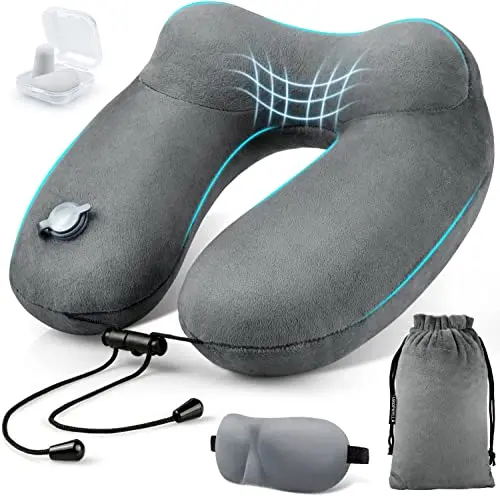
Inflatable Travel Neck Pillow – Chin Support for Long Flights
The urophylla is a purpose-built neck pillow for upright travel, with raised chin supports and an adjustable rope lock to keep your head from dropping forward. The soft velvet cover is removable, and the pillow packs small with an eye mask and earplug included.
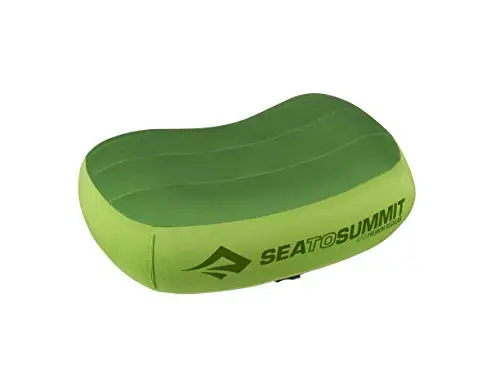
Aeros Premium – Lightweight Pillow with Brushed Knit
The Aeros Premium pairs a brushed knit exterior with a memory foam top layer for a softer, quieter feel than most inflatables. Its multi-function valve lets you fine-tune pressure, and it packs down to a tiny stuff sack for camping or carry-on travel.
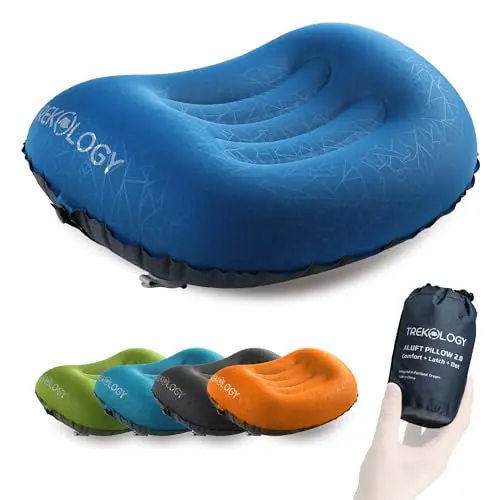
Aluft 2.0 – Ultralight Camping Pillow
The Aluft 2.0 is an ultralight camping pillow that inflates in a handful of breaths and packs smaller than a soda can. Anti-slip dots and a latch strap keep it steady on a sleeping pad, while the larger surface works for back and side sleepers.
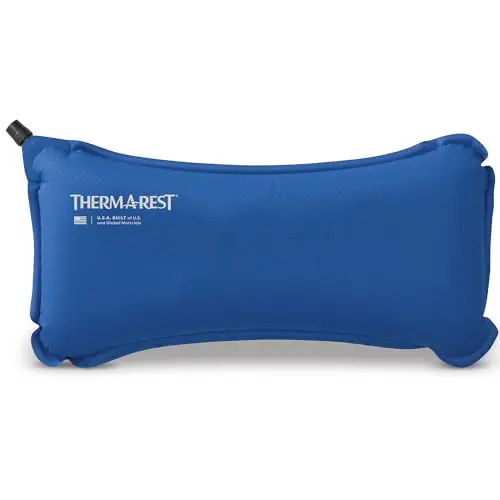
Lumbar Travel Pillow – Self-Inflating Back Support
The Therm-a-Rest Lumbar is a self-inflating back support for airplane seats, car seats, and office chairs. Die-cut foam and an adjustable valve create targeted lumbar pressure relief in a package that weighs just a few ounces.
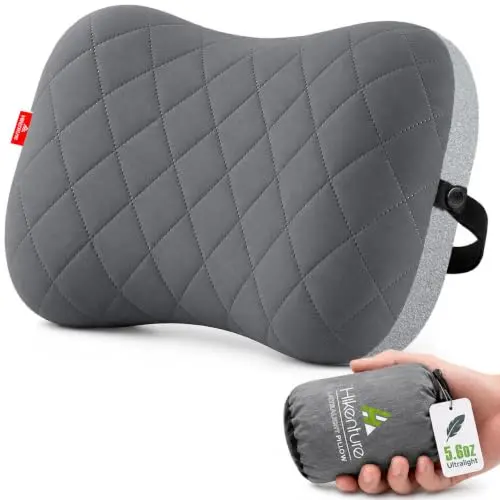
Camping Pillow with Removable Cover – Leakproof Ultralight Support
The Hikenture camping pillow uses a separate thickened TPU bladder to resist leaks, plus a removable cotton cover that is easy to wash. A one-click valve speeds inflation and deflation, and the elastic strap keeps it on a sleeping pad.
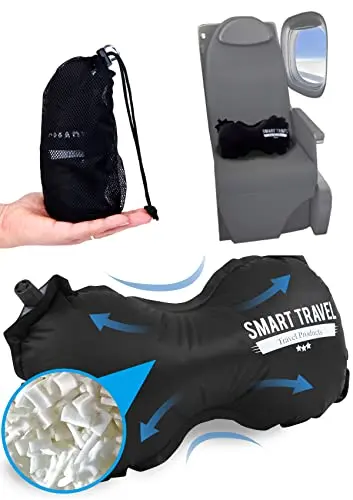
Inflatable Lumbar Support Pillow – Self-Inflating Back Relief
The Smart Travel lumbar pillow combines a memory foam core with self-inflating convenience and an adjustable strap for seat-back support. It deflates into a compact package and wipes clean, making it a practical choice for flights, commutes, and desk work.
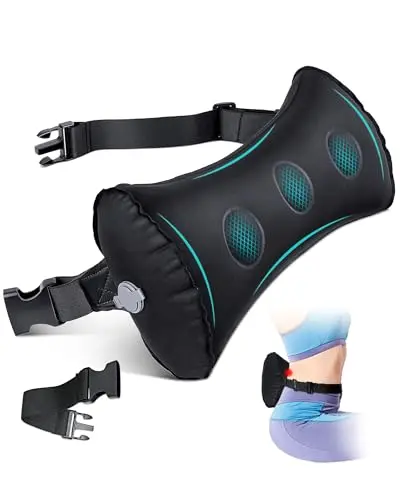
Inflatable Lumbar Pillow – Adjustable Back Support
The BLABOK lumbar pillow uses a TPU shell and memory foam fill to create firm lower-back support for car seats, office chairs, and long flights. A wide belt and one-way valve let you adjust the fit and firmness without a pump.

Portable Inflatable Neck Pillow – Quick Three-Breath Inflation
The Keemall inflatable neck pillow inflates in about three breaths and packs into a small pouch for travel. Its soft micro-velvet cover is removable and washable, and the U-shaped design supports the neck during upright naps.
How We Evaluated These Inflatable Travel Pillows
We didn’t see these through a full season of airport and road-trip use. What we did: cross-referenced 8 inflatable travel pillow models from 8 distinct brands across 6 decision axes – packed size and weight, valve design and air retention, support shape, firmness adjustability, cover care, and use-case fit. We triangulated published specifications, feature sets, and aggregated owner feedback where available, then mapped each pillow to representative travel scenarios such as long flights, camping trips, and desk work. We also weighed washability and packed volume, since a pillow that only fits in a checked bag tends to stay home. A pillow that solves one job well beats a compromised multi-tasker.
The scoring framework weighted real-world performance (70%) – how well each option supports the body part it claims to target – against feature differentiation (30%) – unique valve systems, cover materials, and shape advantages. We have no commercial relationship with any of the brands featured; recommendations track fit and differentiation, not brand preference. We did not run lab air-retention tests, controlled pressure measurements, or long-haul flight trials. Our read is built on published specifications, feature sets, and patterns in owner feedback where available. If you want a purpose-built neck pillow for upright sleeping, the urophylla neck pillow is the most balanced pick. If you want a premium sleep surface for camping or lounging, the Sea to Summit Aeros Premium is the comfort-first alternative.
How to Choose the Right Inflatable Travel Pillows
1. What Makes an Inflatable Travel Pillow Worth Packing
An inflatable travel pillow earns its place in your bag when it solves a problem that a rolled-up jacket cannot. The appeal is obvious: air is lighter than foam, and a good valve lets the pillow collapse to a fraction of its inflated size. But the category has a wide quality range. A leak-resistant bladder and a one-way valve matter more than a fancy cover, because a pillow that slowly deflates overnight is useless by hour three.
Look for a removable, washable cover if you travel often. The cover is the part that touches your face and neck, and being able to wash it separates a hygienic travel pillow from a one-trip novelty. Also check the inflated dimensions and packed size together; a pillow that is comfortable but bulky will stay in the hotel room.
2. Valve Design and Air Retention: The Real Make-or-Break
Valves come in two broad styles. A one-way valve lets you inflate without losing air between breaths and usually deflates with a button press. A multi-function mini valve gives finer pressure control, which is useful if you want a softer pillow for reading and a firmer one for sleep. Either design can work; the failure mode is a valve that does not seal cleanly.
Air retention is the spec you cannot see in a listing. Owner feedback is the best available signal here, so pay attention to patterns around leaks at the seam or valve failures after repeated use. A slightly firmer TPU bladder is generally a better bet than a thin PVC shell, especially if the pillow will be stuffed into a backpack.
3. Neck vs. Lumbar: Match the Travel Pillow to Your Pain Point
Neck pillows are built for upright sitting. They use a U-shape or chin-rest humps to keep your head from dropping forward, and the best ones add an adjustable lock or strap so the pillow stays put. If your main issue is a floppy neck on a long flight, choose a purpose-built neck pillow rather than a rectangular sleep pillow. For that job, the urophylla neck pillow is the pick.
Lumbar pillows target a different problem: the gap between your lower back and the seat. They tend to be rectangular or butterfly-shaped, with a strap to hold them against the seat back. If you want lower-back support for flights, driving, or desk work, the Therm-a-Rest Lumbar is the pick.
4. Packed Size, Weight, and Cover Care for Frequent Flyers
For carry-on travel, packed volume matters more than inflated size. A pillow that packs to the size of a soda can is easy to justify; one that takes up half a daypack is not. Weight is secondary for most flyers, but it matters for backpackers and campers who count ounces.
Cover care is the quiet differentiator. A machine washable cover is easier to live with than a hand wash only surface, especially on multi-stop trips. If the cover is not removable, check whether the material can be wiped clean.
5. How Much Should You Spend on an Inflatable Travel Pillow?
Budget-friendly inflatable pillows can cover the basics: quick inflation, a soft cover, and a compact packed size. The tradeoff is usually valve refinement and long-term air retention. Mid-range options add better fabrics, more precise pressure control, and shapes designed around specific sleep positions. Premium pillows tend to use nicer covers, more durable bladders, and thoughtful details like mat-compatible attachment points.
Spend more if you travel often or have a specific support need. For budget travelers, the Keemall inflatable neck pillow is the value pick. For a premium comfort upgrade, the Sea to Summit Aeros Premium is the splurge.
Frequently Asked Questions
1. Are inflatable travel pillows actually comfortable for long flights?
They can be, but comfort depends on the shape and valve more than the fact that they are inflatable. A purpose-built neck pillow with chin support and an adjustable firmness valve will outperform a generic rectangular air pillow for upright sleeping. The key is to inflate it firmly enough to support your head without turning it into a rock. If you want a dedicated flight pillow, the urophylla neck pillow is the most balanced option in this lineup.
2. What's the difference between the Sea to Summit Aeros Premium and the Trekology Aluft 2.0?
The Sea to Summit Aeros Premium is the comfort-first choice, with a brushed knit surface, a memory foam top layer, and a multi-function valve for fine pressure control. The Trekology Aluft 2.0 is more of a camping workhorse: a larger rectangular sleep surface, anti-slip dots, and a latch strap for sleeping pads. Choose the Aeros Premium for lighter packing and a softer feel; choose the Aluft 2.0 for a bigger pillow surface at camp.
3. How does the urophylla neck pillow compare with the Keemall inflatable neck pillow?
The urophylla has a more structured chin-rest shape, an adjustable rope lock, and a softer velvet cover, which makes it better for long flights and upright sleeping. The Keemall is simpler and more budget-friendly, with three-breath inflation and a washable pillowcase, but its neck support is softer and the size runs small for some travelers. If you want the best chance of dozing off upright, go with the urophylla; if you want a low-cost backup pillow, the Keemall is fine.
4. Can I use an inflatable lumbar pillow on an airplane seat?
Yes, as long as the pillow has a strap or belt to hold it against the seat back. Lumbar pillows are shaped to fill the lower-back gap, and an inflatable model lets you adjust firmness without carrying a bulky foam cushion. The Therm-a-Rest Lumbar and Smart Travel lumbar pillow are both built for this use, though the Therm-a-Rest is lighter and the Smart Travel adds a memory foam core.
5. Do inflatable travel pillows leak or lose air over time?
Some do, especially budget models with thin bladders or simple valves. A thickened TPU bladder and a one-way valve reduce the risk, but no inflatable is immune to wear. Check owner feedback for patterns around air retention and valve durability, and treat a removable cover as a bonus for hygiene rather than a leak fix.
Final Verdict
For most travelers, the urophylla neck pillow is the answer: it supports the neck in the upright position where airplane sleep actually happens, adjusts firmness easily, and packs small enough to live in a carry-on. If your priority is a plush sleep surface for camping or lounging, the Sea to Summit Aeros Premium is the premium upgrade. If your lower back is the problem, skip the neck pillows and get the Therm-a-Rest Lumbar, which is purpose-built for seat-back support. And if you just want a cheap, packable backup for occasional naps, the Keemall inflatable neck pillow covers the basics without asking much. The right inflatable travel pillow is the one that matches your pain point, not the one with the longest feature list.
