
Best Inline Ice Maker Filters – 2026 Reviews

Ice from a fridge dispenser should taste like nothing at all. When it tastes metallic, dusty, or faintly like a swimming pool, the culprit is often the water sitting in the line on its way to the ice maker. A small inline filter can fix that without replacing the refrigerator’s built-in cartridge or tearing into the plumbing.
The category is broader than it looks. Some inline ice maker filters are basic carbon cartridges; others are full systems with certified lead reduction, brass fittings, and multi-year service lives. The useful split is filtration certification, connection type, and how often you’re willing to change the cartridge.
Fit matters as much as media. A filter that leaks at the push fitting or needs an adapter you don’t have is worse than a simpler cartridge that seals cleanly. We cross-shopped the market with those tradeoffs in mind, from compact six-month cartridges to complete install kits and premium under-sink systems.
Best Inline Ice Maker Filters – 2026 Reviews
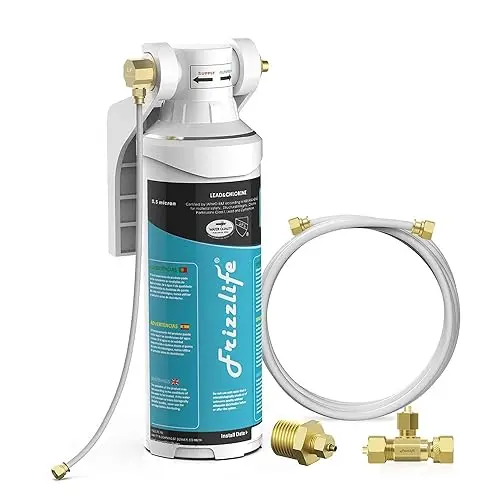
MS99 – Certified Under-Sink Inline System
The MS99 is a full inline system with a twist-in cartridge, compression brass fittings, and IAPMO certification against NSF/ANSI 42 and 53. It is built for fridge, ice maker, and under-sink duty where lead and chlorine reduction matter.
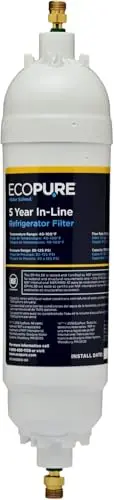
EPINL30 – Five-Year Universal Inline Filter
The EPINL30 is a universal inline filter for refrigerators, ice makers, RVs, and boats. It includes compression and push-to-connect fittings and is certified to NSF/ANSI 42 for chlorine, taste, and odor reduction.
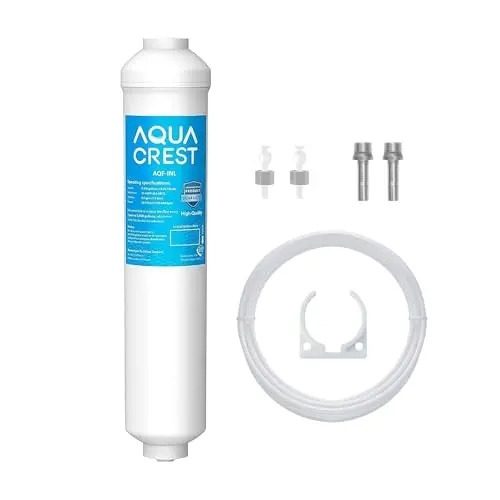
AQF-INL – Five-Year Refrigerator Filter
The AQF-INL is a five-year inline filter for refrigerators, ice makers, RVs, and RO systems. The kit includes PE tubing, compression and push-to-connect fittings, and a coconut shell carbon block for chlorine, taste, and odor reduction.
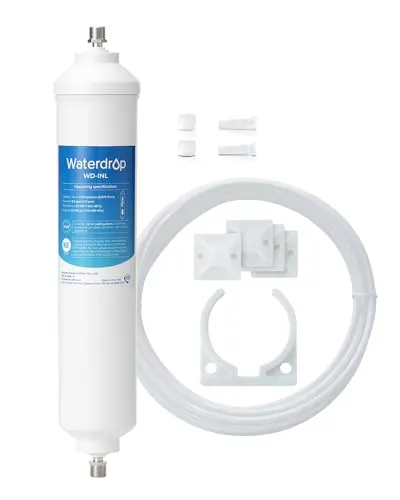
WD-INL – NSF-Certified Inline Filter
The WD-INL is an NSF 42 and 372 certified inline filter with a coconut shell carbon block. It includes compression and push-to-connect fittings plus a 7/16-inch adapter for plastic or copper water lines.
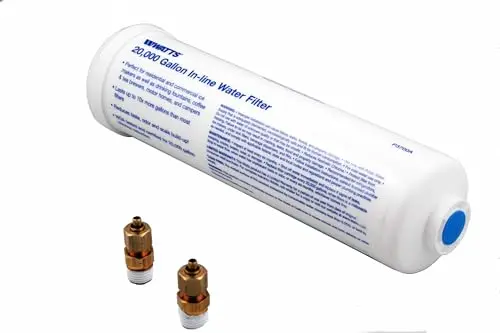
500318 – High-Capacity KDF Filter
The Watts Premier 500318 is a high-capacity inline filter with KDF copper-zinc media and 1/4-inch brass connectors. It targets chlorine, odors, sediment, and scale across refrigerators, ice makers, RVs, coolers, and coffee equipment.
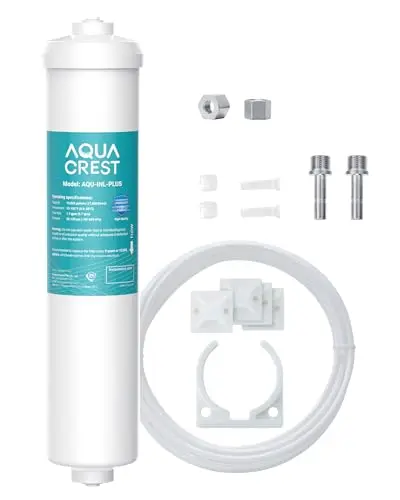
AQU-INL-PLUS – High-Capacity Inline Filter
The AQU-INL-PLUS is a larger inline filter with a long service claim and a complete installation kit. It uses granular activated carbon to reduce chlorine, taste, odor, rust, and suspended solids for refrigerators, ice makers, RVs, and boats.

PWF10 – Coconut Carbon Inline Filter
The PWF10 uses natural coconut shell granular activated carbon in a polypropylene body with integrated 1/4-inch push fittings. It is NSF/ANSI 42 certified for chlorine, taste, and odor reduction and rated for 1,500 gallons or 12 months.

37-1821 – Compact Ice Maker Inline Filter
The LASCO 37-1821 is a compact 10-inch inline filter built specifically for ice makers. It uses carbon media and includes 1/4-inch compression fittings, with a 1,500-gallon or six-month life rating.

Quick-Connect Filter – Post-Carbon 2-Pack
The Vegebe two-pack is a value option for standard 1/4-inch quick-connect lines. Each cartridge uses food-grade coconut shell activated carbon and is NSF/ANSI 42 certified for chlorine, taste, and odor reduction.

PUREUS-IWFK6 – Complete 2-Pack Install Kit
The Purenat kit includes two inline filters, 10 feet of 1/4-inch PE tubing, brass fittings, a shut-off valve, elbow, union, adapter, clips, and wall stickers. The filters use coconut shell activated carbon block and carry NSF 42 certification.
How We Evaluated These Inline Ice Maker Filters
We didn’t install every one of these filters on a test refrigerator or run lab chlorine-breakthrough testing. What we did: cross-referenced 10 inline ice maker filter models from 9 distinct brands across six decision axes – filtration certification, connection type and fit, rated capacity and lifespan, flow and pressure specs, installation complexity, and owner feedback where available. We triangulated published specifications, feature sets, and practical fit for refrigerator, ice-maker, RV, and under-sink use, then weighed the claims that matter most when water sits in a freezer and becomes ice.
The scoring framework weighted real-world fit and performance (70%) – how well each filter handles chlorine, taste, odor, sediment, and the realities of a 1/4-inch line – against feature differentiation (30%) – certified contaminant reduction, included fittings, service life, and installation flexibility. We have no commercial relationship with any of the brands featured; recommendations track fit and differentiation, not brand preference. If you want certified lead and chlorine reduction, the Frizzlife MS99 is the strongest match. If you want a long-interval universal filter with fewer installation headaches, the EcoPure EPINL30 is the more practical pick.
How to Choose the Right Inline Ice Maker Filter
1. What Actually Matters in an Inline Ice Maker Filter
An inline ice maker filter has one main job: make the water entering the ice maker taste clean and stay that way. Most models target chlorine, taste, odor, and sediment. Very few reduce total dissolved solids, and only some are certified for lead. The best pick for you depends on what your water actually contains and how much space you have behind the appliance.
Look beyond the cartridge size. A filter that seals well, fits your existing 1/4-inch line, and has a realistic replacement interval is usually a better buy than a larger cartridge with vague certification claims.
2. Connection Type and Fit for Ice Maker Lines
Most refrigerator and ice-maker lines use a 1/4-inch line. Some filters use compression fittings, which suit copper tubing and need a nut, sleeve, and insert. Others use push-to-connect fittings, which are faster with plastic tubing but depend on pushing the tube to the correct depth. Brass fittings feel sturdier, while plastic is lighter and often easier to seat.
If your line is already set up for quick-connect, the Waterdrop WD-INL is the simpler route; if you’re adapting copper tubing, the Watts Premier 500318 gives you brass compression fittings. Check what is included before buying, because missing adapters are a common install delay.
3. Filtration Certifications and What They Cover
NSF/ANSI 42 is the baseline for chlorine, taste, and odor reduction. NSF/ANSI 53 is the one to look for if lead reduction matters to your household. A filter can be certified for one and not the other, so read the claim carefully. The phrase ‘tested against’ is weaker than ‘certified to’, and it is worth knowing the difference.
No inline ice maker filter is a water softener. If your issue is scale, hardness, or high dissolved solids, a different treatment approach makes more sense. For ice taste and chlorine, a certified carbon block is usually enough.
4. Capacity, Lifespan, and Replacement Rhythm
Rated capacity is a guide, not a guarantee. A filter rated for a long service life may need earlier replacement if your water is heavily chlorinated or if you notice pressure drop at the dispenser. Check the flow rate and pressure rating before installing any filter on a line that feeds both water and ice.
Short-interval cartridges are often cheaper and simpler. Long-life cartridges cost more upfront but reduce the number of changes. The right replacement interval is whichever comes first: the rated gallons, the rated months, or a change in taste and flow.
5. Leak Risk, Installation, and Maintenance
Leak risk is the most common real-world complaint in this category. Most issues trace back to tube depth, missing inserts, or fittings that were not fully seated. Push the tubing in firmly, tug it gently to confirm it is locked, and follow the filter’s flush instructions before connecting the ice maker.
Keep the filter accessible. A cartridge that is buried behind a fridge or under a cabinet is more likely to be ignored past its service life. Label the install date, and check the fitting connection after the first few hours of use.
6. Budget, Mid-Range, and Premium Inline Ice Maker Filters
Budget-friendly inline filters usually cover chlorine, taste, and odor with basic fittings. Mid-range models add longer service intervals, more complete install kits, or better certification. Premium systems bring lead reduction, higher flow, brass fittings, and easier cartridge changes.
Spend more only if the upgrade solves a real problem for you. If your main complaint is chlorine taste in ice, a certified mid-range cartridge is often enough. If you have lead concerns or a busy household with a long line run, the premium tier is easier to justify.
Frequently Asked Questions
1. What's the difference between the Frizzlife MS99 and the EcoPure EPINL30?
The Frizzlife MS99 is the more serious filtration system. It is certified against NSF/ANSI 42 and 53, uses a 0.5-micron carbon block, and adds lead reduction to the usual chlorine and taste claims. The EcoPure EPINL30 is simpler: a universal inline filter with NSF/ANSI 42 certification, a five-year service claim, and both compression and push-to-connect fittings. Choose the Frizzlife if certified lead reduction matters; choose the EcoPure if you want a long-interval filter at a more accessible tier. The Frizzlife MS99 is the one to pick for broader contaminant coverage.
2. AquaCrest AQF-INL vs Waterdrop WD-INL: which inline filter should you choose?
The AquaCrest AQF-INL is built around a five-year or 5,000-gallon rating and ships with a complete parts package, including PE tubing and multiple fittings. The Waterdrop WD-INL is a one-year filter with NSF 42 and 372 certification, a 0.5-micron carbon block, and a 7/16-inch adapter. Choose the AquaCrest if you want a long interval and a full install kit. Choose the Waterdrop if you prefer a shorter service cycle with a certified carbon block and a simpler parts list. The AquaCrest AQF-INL is the long-life pick of the two.
3. Do inline ice maker filters remove TDS or lead?
Most inline ice maker filters do not reduce total dissolved solids. They are primarily carbon filters for chlorine, taste, odor, and sediment. Lead reduction is a separate certification, usually NSF/ANSI 53, and only some models carry it. Check the certification list on the specific filter rather than assuming all inline cartridges are equal.
4. How often should you replace an inline ice maker filter?
Replace it at the first of three signals: the rated gallon capacity, the rated time interval, or a noticeable drop in flow rate or ice quality. Common intervals range from six months on compact cartridges to one year on standard inline filters and longer on high-capacity systems. If your water is heavily chlorinated or you use a lot of ice, shorten the replacement interval rather than stretching it.
Final Verdict
For most buyers, the Frizzlife MS99 is the answer – it is the only pick here with IAPMO certification against NSF/ANSI 42 and 53, so it covers lead along with chlorine, taste, and odor. The twist-in cartridge and fast flow make it easier to live with than a bare inline filter. If you want a long-interval filter without the premium tier, the EcoPure EPINL30 is the value pick; its five-year claim, universal fittings, and NSF 42 certification cover the basics well. And if you need a complete parts kit for a new line, the AquaCrest AQF-INL ships with tubing and fittings and has a five-year capacity rating. Choose the Frizzlife for certified contaminant reduction, the EcoPure for low-fuss value, and the AquaCrest for a full install package.
