
Best Ironing Boards For Sewing – 2026 Reviews

Pressing seams as you sew is one of those quiet habits that separates a project that hangs well from one that fights you at the machine. A dedicated sewing setup needs a board that can hold a sleeve, a trouser leg, or a quilt section flat without wobbling while you lean in.
The tricky part is that sewing asks for a different balance than occasional shirt ironing. You want a broad, stable pressing surface, padding that stays taut under steam, and a height that works whether you stand at a cutting table or sit for detail work. Compact boards are tempting in a shared room, but they often give up the surface area that makes garment sewing easier.
We looked across the market at full-size floor boards and folding tabletop options, weighing how each one handles the stop-start rhythm of a sewing room. The goal is a board that earns its footprint, not just one that folds away.
Best Ironing Boards for Sewing – 2026 Reviews
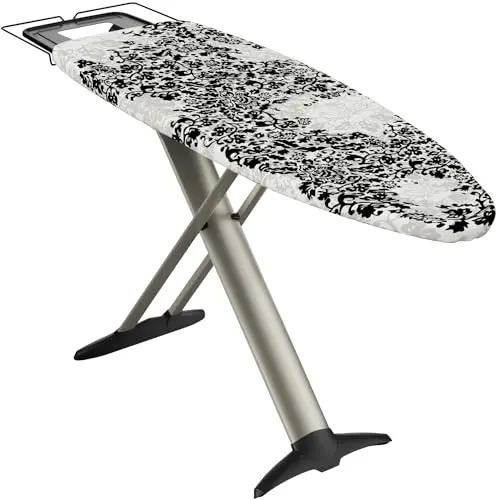
Pro Luxury 1105 – Extra-Wide 51×19 Pressing Surface
A European-made floor board built around a 51 x 19 inch pressing surface. The aluminum frame, adjustable height, and included steam iron rest make it a serious option for sewing rooms where large pieces and long seams are routine.
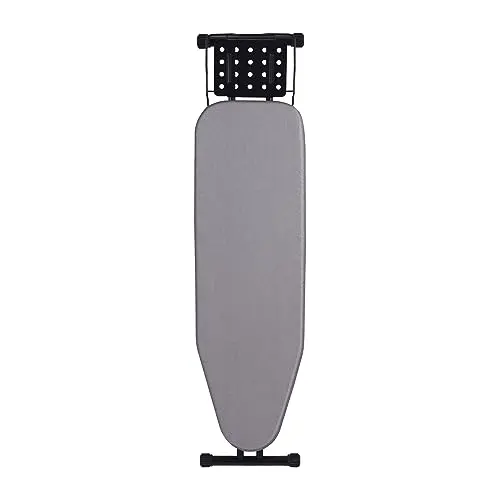
Deluxe XLB-142CM – Full-Size Stable Pressing Board
A full-size floor board with a 13 x 43 inch mesh top, seven height settings, and a silicone-padded iron rest. It is designed for everyday pressing without the bulk of a premium wide-surface board.

Rorets 9738-43013 – Full-Size European Pressing Board
A European-made full-size board with a 43 x 13.5 inch surface, four-layer cover and pad, and height adjustment up to 36 inches. The four steel legs and compact folded profile suit laundry rooms and dorm sewing setups.

Metal Mesh Panel Tabletop – Sturdy Small-Space Board
A tabletop board with a metal mesh panel, heat-resistant cover, and 8 mm cotton pad. It folds to about two inches thick and is sized for small sewing rooms, dorms, and secondary pressing stations.
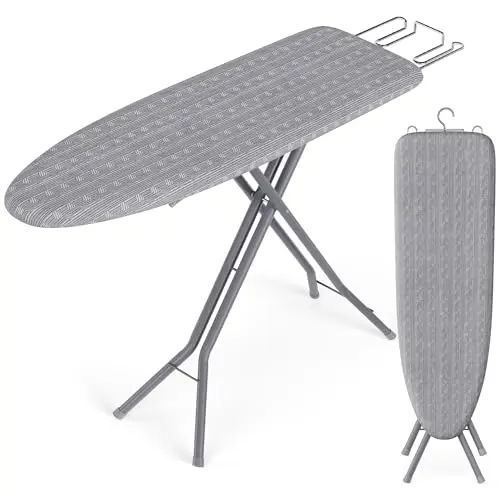
BORIX ULLB001G01 – Compact Adjustable Pressing Board
A compact floor board with a 43 x 13 inch surface, seven height options, and a four-layer cover system. The dual X-legs fold in the same direction for storage, and the built-in hook adds hanging flexibility.
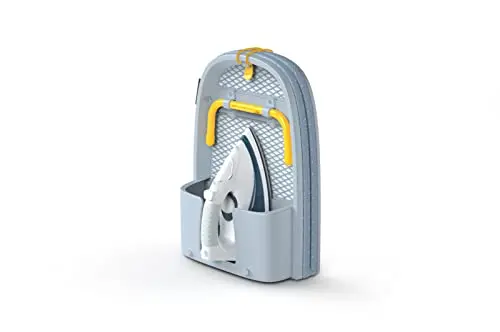
Pocket Max – Folding Tabletop with Iron Storage
A folding tabletop board with a 35-inch surface, integrated iron storage, and a hanging hook. The DripLock cover is designed for higher-volume pressing and steam-generator irons.
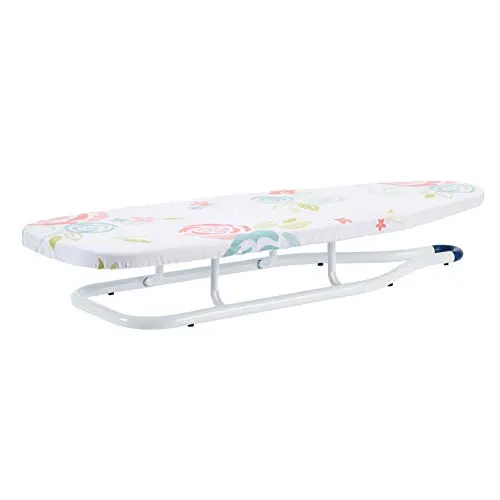
Foldable Space-Saving Tabletop – Compact Sewing Companion
A small tabletop board with a 77 x 29 cm surface, folding frame, and V-shaped storage hook. It is aimed at quick pressing jobs in apartments, dorms, and compact sewing areas.

Compact Tabletop Chevron – Small-Space Pressing Board
A very compact tabletop board with a 23.6 x 14.3 inch surface, folding legs, and a removable trellis cover. It is built for occasional pressing in small apartments, craft rooms, and sewing corners.
How We Evaluated These Ironing Boards for Sewing
We didn’t press a full quilt through every board or measure surface deflection under load. What we did: cross-referenced 8 ironing boards from 6 brands across six decision axes – pressing surface size, frame stability, height range, padding and cover construction, storage footprint, and iron-rest practicality. We triangulated published specifications, feature sets, and owner feedback where available against sewing-room use cases: piecing and pressing seams, fusing interfacing, and handling larger garment sections.
The scoring framework weighted real-world fit (70%) – how well each board supports sewing tasks – against feature differentiation (30%) – unique advantages like mesh tops, folding geometry, and iron storage. We have no commercial relationship with any of the brands featured; recommendations track fit and differentiation, not brand preference. If you press quilt tops and long seams, the Bartnelli Pro Luxury 1105 is the most accommodating; if you want a lighter full-size board for a dedicated sewing table, the Jakeefud Deluxe is the easier daily driver.
Small details mattered more than marketing claims: a cover that stays taut under steam, legs that stay planted when you lean into a seam, and an iron rest that keeps a hot iron clear of fabric. Tabletop boards were judged differently from full-size floor models because sewing rooms often double as laundry areas, guest rooms, or cutting spaces. We favored boards that create a flat, reliable pressing zone without demanding permanent floor space, and noted where compact geometry introduces tradeoffs in surface area or stability. The resulting ranking is built for sewists who press as they go, not for occasional touch-ups before a meeting.
How to Choose the Right Ironing Board for Sewing
1. Why Surface Size Matters for Sewing and Quilting
The pressing surface is the first thing to get right. Garment sewing benefits from a board long enough to support a sleeve or trouser leg without the fabric hanging off the end, while quilting and large quilt tops reward extra width. A board around 43 inches long is a practical full-size baseline; a 51-inch surface gives you more room for seam allowances and bulky sections. If large quilt sections are routine, the Bartnelli Pro Luxury 1105 gives you the most room to maneuver.
2. Stability, Height, and Padding for Long Sewing Sessions
Frame stability matters most when you press down on a seam and the board shifts under you. Four legs or a rigid X-frame are generally more planted than a light tabletop model, especially on carpet or uneven floors. A useful height range lets you stand at a cutting table or sit for detail work without hunching. Dense padding keeps the surface smooth without feeling hard, and a taut cover prevents fabric from dragging. For a full-size board that stays planted without much fuss, the Jakeefud Deluxe is the straightforward pick.
3. Tabletop vs Full-Size Ironing Boards for Sewing Rooms
A tabletop board is useful when your sewing area has to reset between projects, but it gives up surface area and often some stability. A full-size floor model is better for garment sections and long seams, assuming you can leave it out or have a closet to roll it into. The best choice depends on whether your dedicated sewing room is permanent or shared. For a compact secondary pressing station, the ZOES Homeware Metal Mesh Panel balances size and stability.
4. Covers, Steam, and Heat Management
A cotton cover over foam or felt is the standard setup, but the details matter. A mesh top lets steam pass through instead of trapping moisture under the fabric, which helps when you press interfacing or damp seams. Look for a cover that stays tight and a pad that does not compress into a hard spot. If you use a steam generator or press heavily, a cover designed for high moisture is worth prioritizing.
5. Storage and Footprint in a Sewing Space
Folded thickness and a hanging hook can matter as much as pressing area in a small room. A board that folds to a few inches and hangs on a door is easier to live with than one that needs a dedicated corner. Weight is the tradeoff: lighter boards are easier to move, but heavier frames often feel more planted during use. Measure your storage spot before you buy, especially if the board will go behind a door or beside a machine.
6. What Price Tier Gets You
At the entry level, tabletop boards prioritize storage and low cost; they are best for quick seams and small sewing corners. Mid-range full-size boards add sturdier legs, better padding, and more height options. The premium wide-surface tier buys extra pressing room and heavier frames, which matters most if large quilt sections or frequent garment sewing are part of your routine.
Frequently Asked Questions
1. What size ironing board is best for sewing and quilting?
For garment sewing, a full-size surface around 43 inches long gives you room for sleeves, trouser legs, and dress sections without constant repositioning. For quilting, a wider board in the 51-inch range is more comfortable for quilt tops and long seams. A tabletop board can work as a secondary pressing station, but it is a compromise for large pieces.
2. Bartnelli Pro Luxury 1105 vs Jakeefud Deluxe: Which suits a sewing room better?
The Bartnelli Pro Luxury 1105 wins on surface area and has the steadier feel of a wide aluminum frame, so it is the better fit for quilt pressing and long garment sections. The Jakeefud Deluxe is lighter, easier to move, and still offers a full-size mesh top with a useful iron rest. If your sewing room is fixed and you press large pieces often, the Bartnelli Pro Luxury 1105 is the better match; if you need a daily board that is easier to fold and shift, the Jakeefud is the more practical pick.
3. Joseph Joseph Pocket Max vs ZOES Homeware tabletop: Which compact board is better for sewing?
The Joseph Joseph Pocket Max is the more organized choice, with integrated iron storage and a DripLock cover that suits heavy steam use. The ZOES Homeware Metal Mesh Panel is the more stable pressing surface for seams, thanks to its metal mesh top and 8 mm cotton pad. Choose Joseph Joseph if storage and iron parking matter most; choose ZOES if you want a compact board that feels more like a small full-size surface.
4. Can a tabletop ironing board handle garment sewing and quilting?
A tabletop ironing board can handle seam pressing, sleeves, and small panels well, especially if it has a sturdy hinge and a heat-resistant cover. It becomes limiting for quilt tops and long dress sections because the fabric overhangs the edges. Treat a tabletop board as a secondary station beside the machine, not a replacement for a full-size board if large pieces are routine.
5. How stable should an ironing board be for pressing seams?
Stability matters most at the moment you lean into a seam. A board with four steel legs or a rigid X-frame will feel more planted than a light tabletop model, especially on carpet or uneven floors. Look for non-slip feet, a secure folding lock, and a frame that does not flex when you press down. If the board shifts, you will compensate with pressure and lose accuracy.
Final Verdict
For most sewing setups, the Bartnelli Pro Luxury 1105 is the answer – its extra-wide surface and planted aluminum frame make large pieces and long seams easier to handle, and the adjustable height helps you stay comfortable through a project. If you want a lighter full-size board for everyday garment pressing, the Jakeefud Deluxe is the more manageable daily driver. And if your sewing space has to reset between sessions, the ZOES Homeware Metal Mesh Panel is the compact secondary station that still feels stable under a seam. Choose the board that matches how much surface you actually use, not the one that folds the smallest.
