
Best Italian Commercial Espresso Machines – 2026 Reviews

A shot pulled at a café bar has a certain weight to it: dense crema, a thick body, and a finish that doesn’t turn bitter halfway through. Chasing that at home is where the phrase Italian commercial espresso machine starts to matter. In this category, Italian usually points to pump and portafilter standards, while commercial signals the parts and workflow that make a machine feel sturdier and more serviceable than a basic starter box.
The catch is that not every machine marketed this way is a true café workhorse. Some lean on commercial-style components, others lean on Italian engineering and brand heritage. The useful distinction is whether the machine gives you a 58mm basket, a real steam wand, stable temperature, and a workflow you can repeat every morning without babysitting it.
We looked across brands for machines that make sense in a serious home setup. The picks below range from an Italian-built classic with commercial parts to feature-rich options that trade some old-school simplicity for guidance and convenience. The right choice comes down to how much hands-on control you want and how much counter space you’re willing to give up.
Best Italian Commercial Espresso Machines – 2026 Reviews
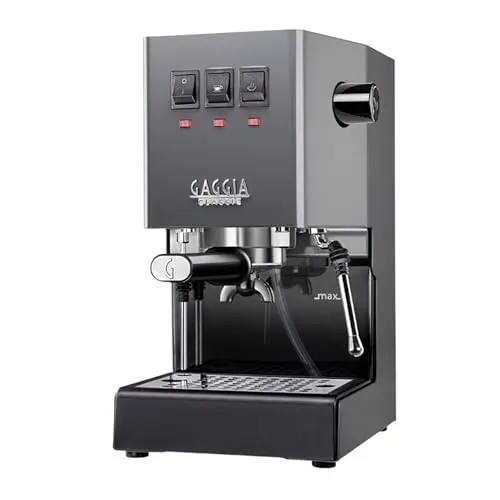
Classic Evo Pro – Commercial-Style Italian Build
The Classic Evo Pro is the closest thing here to an old-school Italian espresso setup without stepping into full café equipment. It uses a stainless steel 58mm portafilter, a commercial three-way solenoid valve, and a commercial steam wand, all wrapped in solid steel housing made in Italy. The result is a hands-on semi-automatic machine for someone who wants to learn the craft rather than press a button and walk away.
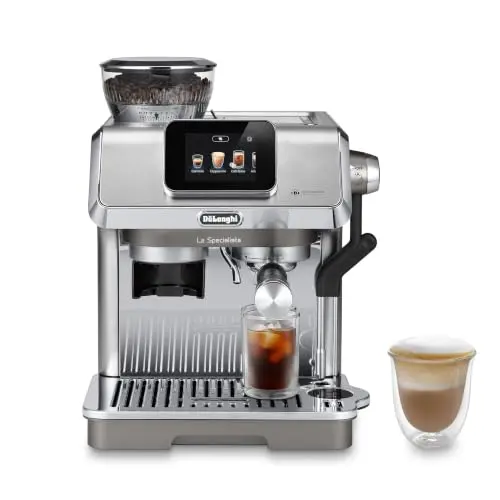
La Specialista Touch – Guided Grind-and-Brew Espresso
The La Specialista Touch is the most appliance-like machine in the lineup, and that’s not a knock. It pairs a conical burr grinder with guided brewing, a touchscreen, and 10 preset drink recipes, then backs it up with an automatic steam wand that can also be used manually. Bean Adapt helps dial in grind, dose, pre-infusion, and temperature, making it a strong fit for someone who wants café-style drinks without building a barista routine from scratch.
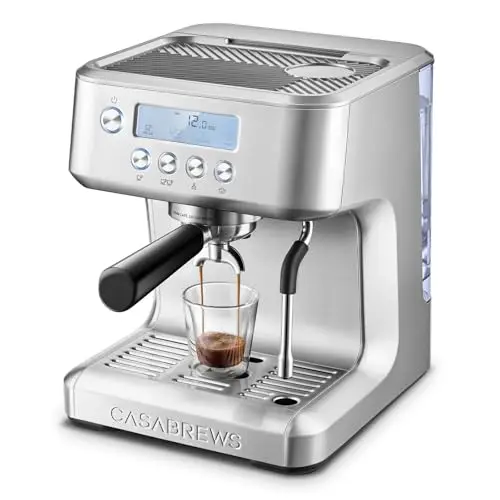
Ultra – LCD-Controlled Italian-Pump Espresso
The Ultra is a budget-friendly semi-automatic with a 20-bar Italian pump, a 58mm portafilter, and an LCD panel for brew temperature and shot control. It includes a powerful steam wand and a large removable water tank, so it can handle back-to-back milk drinks without constant refilling. It’s not an Italian-built machine in the traditional sense, but it brings Italian pump hardware and a commercial-style portafilter into a much more accessible package.
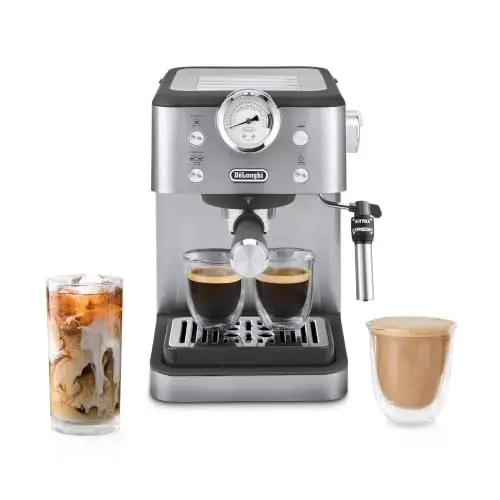
Classic Signature – Compact Italian-Pump Espresso
The Classic Signature is a compact semi-automatic built around a 15-bar Italian professional pump and Thermoblock heating. It has preset single and double espresso buttons, a pressure gauge, and a two-setting steam wand for either silky steamed milk or richer microfoam. It’s the simplest machine here to live with day to day, especially if counter space is tight and you want a fast warm-up more than a manual workflow.
How We Evaluated These Italian Commercial Espresso Machines
We didn’t plumb these machines into a café bar or run lab-grade extraction tests. What we did: cross-referenced four espresso machines from three distinct brands across five decision axes – build materials, pump and portafilter specifications, steam performance, heat stability and recovery, and serviceability. We triangulated published specifications, feature sets, owner feedback where available, and use-case fit for a serious home espresso setup. We also mapped included accessories and the day-to-day workflow each machine expects from its owner.
The scoring framework weighted real-world fit (70%) – how well each machine delivers on the Italian commercial brief in a home kitchen – against feature differentiation (30%) – unique technical advantages like a built-in grinder, guided brewing, or a 58mm commercial-style portafilter. We have no commercial relationship with any brand here, and recommendations track fit and differentiation rather than brand preference. If you want the most traditional hands-on experience, the Gaggia Classic Evo Pro is the closest match; if guided brewing and an integrated grinder matter more, the De’Longhi La Specialista Touch is the stronger fit.
What we can’t tell you is how each machine will hold up after years of daily service or how it performs with every grinder and basket combination. Those are ownership questions, not spreadsheet questions. We treated Italian and commercial as claims to verify against the hardware list, not as automatic quality stamps.
How to Choose the Right Italian Commercial Espresso Machines
1. What Italian Commercial Really Means in a Home Espresso Machine
In this category, Italian can mean several things: made in Italy, built around an Italian pump, or designed by an Italian brand with a long espresso heritage. Commercial is even looser. It can refer to a 58mm portafilter, a three-way solenoid valve, a steam wand with real capacity, or a machine that’s easy to service with common parts. The label alone doesn’t guarantee café-level output.
What matters is whether the hardware supports the way you actually make coffee. A machine with commercial-style parts but no heat stability will still frustrate you on the third milk drink. A polished automatic with no commercial parts may still be the better daily choice if convenience is the priority.
2. Pump Pressure, Portafilter Size, and Basket Compatibility on an Italian Espresso Machine
9-bar extraction is the useful baseline for espresso. Higher pump ratings can help with steam or pressure profiling, but the basket and grind matter just as much. A 58mm portafilter is the commercial-standard size and opens up the widest range of baskets, tampers, and distribution tools. Smaller baskets can still make good espresso, but your accessory path is narrower.
Think about pressurized versus non-pressurized baskets too. Pressurized baskets are forgiving with pre-ground coffee; non-pressurized baskets reward a good grinder and fresh beans. If you want the most room to grow, the Gaggia Classic Evo Pro gives you the broadest basket and accessory path in this lineup.
3. Steam Power and Milk Workflow for Italian Commercial Espresso
A real steam wand changes the texture of the drink. Commercial-style steam should be dry enough to create microfoam rather than big bubbles, and strong enough to finish a pitcher before the coffee goes cold. Manual wands reward practice; automatic wands remove the variables but can feel less tactile.
If you make mostly milk drinks and want repeatability, an automatic system is a legitimate shortcut. The De’Longhi La Specialista Touch is the pick when you want guided frothing with a manual option for latte art practice. If you want to learn by feel, a traditional wand is the better teacher.
4. Heat Stability, Recovery, and Daily Espresso Rhythm
Heat stability is what separates a machine that can pull two or three shots in a row from one that needs a long recovery pause. Thermoblock systems heat quickly but can waver under back-to-back use. Boiler systems tend to hold temperature better but take longer to warm up. Neither is automatically better; it depends on whether you make one shot or a round of drinks.
Look for a pressure gauge or clear temperature controls if you like feedback. If you mostly brew solo and value speed, a quick-heating compact machine makes sense. If you entertain or steam milk daily, prioritize recovery and steam power.
5. Gaggia Classic Evo Pro vs De'Longhi La Specialista Touch: Which Workflow Fits?
The Gaggia Classic Evo Pro is for the hands-on drinker. It gives you a commercial-style portafilter, a real steam wand, and a simple semi-automatic workflow that exposes the variables. You’ll learn to manage temperature, grind, and timing, and you’ll be able to service more of the machine yourself. It’s less convenient and less forgiving.
The De’Longhi La Specialista Touch is for the drinker who wants guidance. It grinds, doses, brews, and froths with on-screen prompts, presets, and Bean Adapt feedback. You trade some old-school tactility for a shorter learning curve and a more complete all-in-one station. Neither is universally better; they serve different temperaments.
6. Build, Serviceability, and Long-Term Ownership
Steel housing, standard portafilter sizes, and accessible parts are good signs for long-term ownership. A machine that uses common baskets and gaskets is easier to maintain than one with proprietary fittings. Self-serviceable design matters if you’re comfortable doing basic maintenance; if not, a strong warranty and easy support matter more.
Plan for regular descaling, steam wand cleaning, and basket maintenance. These are not optional chores if you want consistent espresso. A simpler machine with fewer electronics can be easier to live with for a decade, while a feature-rich machine may justify its complexity through convenience.
7. Budget, Mid-Range, and Premium Tiers Without the Hype
The entry tier can still deliver Italian pump hardware, a 58mm portafilter, and strong steam. The CASABREWS Ultra is the value-focused example: more features than heritage, with a large tank and LCD controls. Mid-range machines often add better build and simpler serviceability, while premium models bring integrated grinders, guided brewing, and more automation.
Spend where the workflow matters to you. If you want to learn manually, put budget toward build and a good grinder. If you want one-button milk drinks, put it toward automation and support. Avoid paying for the word commercial if the hardware doesn’t back it up.
Frequently Asked Questions
1. Are Italian commercial espresso machines suitable for a home kitchen?
Yes, if you treat commercial as a set of useful traits rather than a full café specification. A home kitchen benefits from a 58mm portafilter, a real steam wand, and a machine that’s serviceable with common parts. What you don’t need is a massive boiler or plumbed water line. Watch counter space and warm-up time, especially if you make one or two drinks at a time.
For a traditional home setup, the Gaggia Classic Evo Pro is the most direct fit because it brings Italian build and commercial-style hardware into a counter-friendly footprint.
2. What's the difference between the Gaggia Classic Evo Pro and the De'Longhi La Specialista Touch?
The Gaggia Classic Evo Pro is a manual-leaning semi-automatic built around a 58mm commercial portafilter, a three-way solenoid valve, and a traditional steam wand. It asks you to manage grind, dose, and temperature, and it rewards that effort with a very hands-on espresso experience.
The De’Longhi La Specialista Touch is a guided all-in-one with a built-in grinder, Bean Adapt prompts, and an automatic steam wand. It’s easier for a beginner to get consistent milk drinks, but it offers less of the old-school ritual. Choose the Gaggia for craft and serviceability; choose the La Specialista for convenience and repeatability.
3. How does the CASABREWS Ultra compare with the De'Longhi Classic Signature?
The CASABREWS Ultra leans on a 20-bar Italian pump, a 58mm portafilter, an LCD for temperature control, and a large removable tank. Its steam wand is the stronger milk-frothing tool, and the included basket options give you room to move from pre-ground coffee to fresh beans.
The De’Longhi Classic Signature is more compact and simpler. It brings a 15-bar Italian pump, Thermoblock heating, preset buttons, and a pressure gauge, but it offers less manual control and a lighter-duty feel. Pick the Ultra for features and steam; pick the Classic Signature for a smaller footprint and faster daily routine.
4. Do I need a 58mm portafilter for commercial-style espresso?
No, a 58mm portafilter isn’t mandatory for good espresso. It is, however, the commercial-standard size, so it gives you the widest choice of baskets, tampers, and distribution tools. That matters if you plan to experiment with different doses and coffee styles.
Smaller baskets can still produce excellent shots, especially with a pressurized basket and pre-ground coffee. But if you want a long upgrade path and a more commercial-style workflow, a 58mm machine is the more flexible foundation.
5. How much maintenance does an Italian commercial espresso machine need?
Plan on daily steam wand cleaning and a quick flush after each session. If the machine has a three-way solenoid valve, regular backflushing keeps the group clean. Descaling should follow your water hardness and manufacturer guidance, and the basket and shower screen need occasional deeper cleaning.
Machines with integrated grinders add another routine: keep the burrs clean and avoid oily beans if you want consistent dosing. A self-serviceable design makes these tasks easier, but no espresso machine is maintenance-free if you want consistent results.
Final Verdict
For most buyers, the Gaggia Classic Evo Pro is the answer. It’s the only machine here that combines Italian manufacturing with the commercial-style hardware – 58mm portafilter, three-way solenoid, real steam wand – that makes the category worth caring about. It asks more of you, but it gives more back.
If you want guided brewing and a built-in grinder, the De’Longhi La Specialista Touch is the premium path and a much easier daily routine. Budget-focused shoppers should look at the CASABREWS Ultra for Italian pump hardware and strong steam at an entry-level tier, while the De’Longhi Classic Signature wins when counter space and fast warm-up matter most. Choose the workflow you’ll actually use every morning, not the one with the longest feature list.
