
Best Japanese Bath Towels – 2026 Reviews

A plush terry towel feels great for the thirty seconds after you step out of the shower. What actually changes how your skin looks a week later is what you scrubbed with. That’s why the Japanese bath towel – a long, woven nylon strip rather than a looped cotton rectangle – has become a bathroom staple well beyond Japan.
The concept is simple. You grip a textured mesh cloth at both ends and pull it across your back, and it lathers harder, dries faster, and lasts longer than a loofah. But the category has filled up with near-identical listings, and the specs that separate a genuinely good cloth from a frustrating one are easy to miss.
Two things matter most. Reach – a 35-inch cloth and a 47-inch cloth solve different problems – and weave firmness, which varies wildly from brand to brand and is the single most common source of buyer regret. We compared the major brands in this category to sort out which cloth suits which skin, so you can pick on substance instead of product photos.
Best Japanese Bath Towels – 2026 Reviews
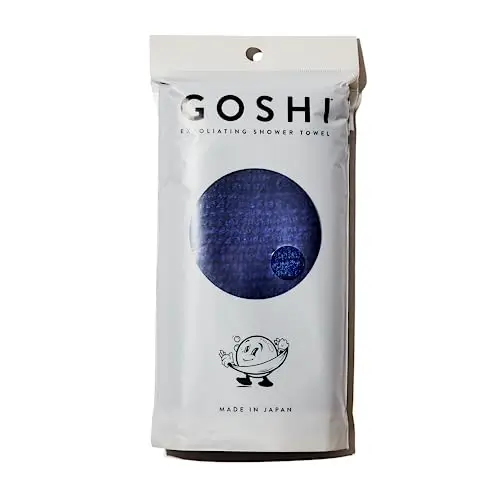
Exfoliating Shower Towel – Japanese-Made Long-Reach Nylon
A 46-by-11-inch nylon shower towel woven in Gunma, Japan, using two different threads – one built to lather, one built to scrub. The rip-resistant weave keeps its texture instead of going limp, and the whole cloth air-dries fast when hung in the shower.
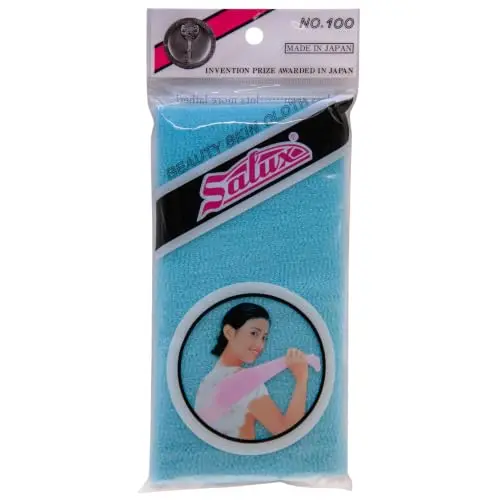
Beauty Skin Bath Wash Cloth – The Original Japanese Scrub Towel
The cloth that popularized this category outside Japan. A 35-inch woven nylon strip with a patented texture that’s rougher than a washcloth and softer than a loofah, it whips bar soap into lather fast and air-dries completely between showers.
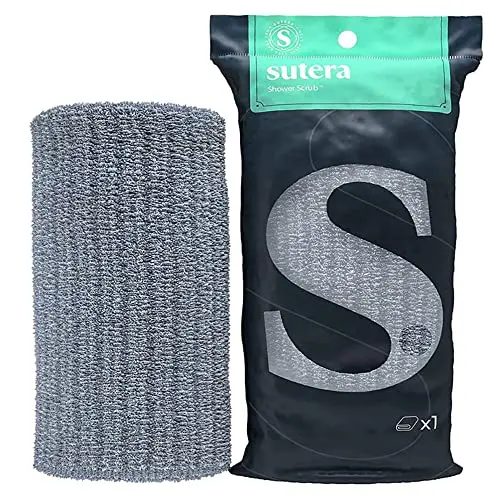
Exfoliating Shower Towel – 47-Inch Full-Back Reach
A 47-by-11-inch nylon shower towel built for full-back reach. The cross-woven mesh lathers hard from a couple of pumps of body wash, and the pressure you apply sets the intensity – light for a daily polish, firm for rough patches.

Exfoliating Washcloth 3-Pack – Daily-Use Rotation Set
A three-pack of 35-inch textured poly-nylon towels designed for daily shower use. The open weave dries fast between uses, and having three means one in the shower, one in the gym bag, and one in the wash.

Exfoliating Washcloth – Two-Sided Hexagon Weave
A 47-by-10-inch towel with hexagon-woven fibers split into two sides – a soft face for washing and a rougher face for sloughing. Silver-infused fibers are aimed at keeping odor and buildup down between washes.

Deep Exfoliating Japanese Shower Towel – Firm 3-Pack
A three-pack of 35.4-by-11.8-inch nylon towels, each with a hanging rope. The texture is deliberately firm out of the box and softens with use, so the first few showers are the most aggressive.
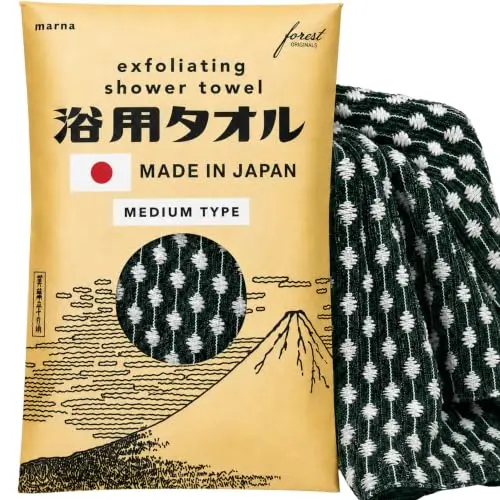
Marna Japanese Washcloth – Medium Croc-Texture Scrub
A 39.4-by-10.6-inch cloth in a 62/38 nylon-polyester blend with a raised, bumpy surface the brand calls croc-texture. It’s built as a medium scrub – noticeably textured, comfortable enough for every shower.

Japanese Washcloth – Medium-Firm Ashikaga Nylon
A 40-by-9-inch cloth made from 100% nylon sourced from mills in Japan’s Ashikaga region, with raised coils that increase skin contact and help soap build lather. Texture sits at medium-firm.
How We Evaluated These Japanese Bath Towels
We didn’t run these cloths through dozens of laundry cycles or put them through dermatologist-supervised skin trials. What we did: cross-referenced 8 Japanese bath towel models from 8 distinct brands across five decision axes – length and back reach, weave texture and firmness, fiber composition, drying behavior, and durability signals. We triangulated published specifications, feature sets, owner feedback where available, and use-case fit against real buyer profiles: daily exfoliators, sensitive skin, back-acne sufferers, and households that want a towel per person.
Length turned out to be the most consequential spec. Anything under 36 inches works for the shoulders but forces a twist for the mid-back; 46 inches and up lets you grip both ends and cover the full span. Texture was the second axis and the least standardized – firm means something different from one brand to the next, so we weighed how each weave actually reads rather than what the label promises.
The scoring framework weighted real-world fit (70%) – how well a cloth delivers on the job it’s built for, informed by owner sentiment where that signal existed – against feature differentiation (30%) – weave engineering, drying design, and material honesty. There is no commercial relationship between this review and any brand featured, and recommendations track fit and differentiation rather than brand preference. If you want one do-everything cloth, the Goshi is the safest starting point; if you’d rather begin with the benchmark this category is measured against, the Salux gets you there for less.
How to Choose the Right Japanese Bath Towel
1. Why Japanese Bath Towels Beat Loofahs and Washcloths
The name is a little misleading. A Japanese bath towel isn’t a plush terry rectangle – it’s a long strip of woven nylon or polyester mesh, usually between 35 and 47 inches, used the way you’d use a washcloth. What it does better comes down to texture consistency and a textured nylon shower towel surface that grips instead of glides.
Loofahs and puffs hold moisture in their core, which is exactly where the musty smell comes from. A thin woven mesh air-dries in minutes when hung. Cotton washcloths are gentle but barely exfoliate and stay damp for hours. The mesh towel splits the difference: real scrubbing power with nothing inside to hold water.
2. Sizing a Japanese Bath Towel: Length and Back Reach
This is the spec that decides whether you’ll actually use the thing. 35 inches handles shoulders, neck, and most of the upper back, but you’ll still twist for the mid-back. 39 to 40 inches is a comfortable middle. 46 to 47 inches is where you can grip both ends and pull across the full span without contorting.
Width is easy to overlook. A 10 to 12 inch width gives good coverage per stroke, while narrower cloths cover less ground per pass. If total back coverage is the whole reason you’re shopping, the Sutera runs the longest here.
3. Texture and Firmness: Reading the Weave Before You Buy
Firmness labels in this category are close to meaningless – one brand’s medium is another brand’s rough. What actually tells you something is the weave structure. Flat meshes feel smoother, raised or bumpy weaves (croc-texture, coil, hexagon) create more bite, and two-sided cloths let you flip between grits.
Start conservative if you have reactive or sensitive skin. You can always press harder; you can’t un-scrub a raw back. If you already know you want serious grip, a firm cloth like the MainBasics will satisfy you longer than a soft one you outgrow in a week.
4. What Keeps a Japanese Bath Towel Fresh Between Showers
Nylon is the category standard, and for good reason: it’s durable, sheds water, and holds a woven texture through repeated washing. Polyester blends are common too – slightly less springy, perfectly serviceable. What matters more than the fiber is how open the weave is. A tight, dense cloth stays damp longer no matter what it’s made from.
Hang it, don’t ball it up. A hanging rope or loop is a small feature with an outsized effect. Follow the care label too – some brands specify hand wash and air dry with no bleach or tumble drying, and a cloth that sits in a wet heap will start to smell regardless of fiber.
5. Single Towel or Multi-Pack: Rotation and Longevity
One towel is enough if you wash it regularly, but rotation is what keeps these hygienic. A three-pack typically costs about what a single premium cloth does, and it gives you one for the shower, one for the gym bag, and one in the laundry.
Expect six months to a year of regular use before the weave flattens. A worn cloth still lathers – it just stops exfoliating, which is the whole point.
6. What Japanese Bath Towels Cost at Each Tier
At the entry tier you’ll find multi-packs and single cloths from newer labels. They work, though texture can vary between individual towels in a pack. The mid-range is where most of the category sits: Japanese-made nylon with a well-defined weave. At the premium tier, you’re paying for Japanese mill sourcing, tighter construction, and single towels rather than packs.
Price predicts durability and weave consistency reasonably well. It does not predict whether you’ll like the texture – that part is personal, which is why matching firmness to your skin matters more than spending up.
Frequently Asked Questions
1. What's the difference between the Goshi and the Salux exfoliating towel?
Mostly length and texture ceiling. The Goshi is a 46-inch Japanese-made nylon cloth with a dual-thread weave – one thread lathers, one scrubs – and it lands on the gentler side of firm. The Salux is the category’s original: 35 inches, a patented single weave, and a firmer feel that some skin finds too aggressive for daily use. If you want maximum reach and a softer touch, go with the Goshi; if you want the proven classic at the more affordable tier, the Salux is it.
2. How does the Sutera towel compare with the Sima two-sided cloth?
Both are among the longest cloths here, so back coverage isn’t the differentiator. The Sutera is a single-texture cloth where you control intensity with pressure – light for daily use, firm for elbows and heels. The Sima splits the job structurally with a soft side and a rough side, plus silver-infused fibers aimed at odor control. Choose Sutera for simplicity and lather efficiency; choose Sima if you like the idea of two distinct grits in one towel.
3. Are Japanese bath towels suitable for sensitive skin?
Some are, but firmness is the wild card. Look for cloths described as medium or gentle, and treat the first week as a test – light pressure only. Two-sided cloths are a good hedge because you can use the soft face daily and the textured face sparingly. Avoid anything sold as super hard or explicitly firm unless you already know you like aggressive exfoliation, and keep all of them off your face if your skin is reactive.
4. How often should you replace a Japanese exfoliating towel?
When the texture flattens, which for most people is somewhere between six months and a year of regular use. Signs it’s done: the weave feels slick rather than grippy, it stops producing that post-shower smoothness, or it starts to smell even after washing. Rotating between two or three towels and hanging them to dry extends the useful life of the set considerably.
Final Verdict
For most people, the Goshi is the answer. It pairs some of the longest practical reach in this group with a weave that scrubs without punishing, and it’s built well enough that you won’t be replacing it in a season. If you’d rather start with the towel that defined the category, the Salux is the original for a reason – firmer, shorter, and the more affordable way in. Budget-minded households and shared bathrooms should go straight to the Arch&M three-pack, which covers daily exfoliation for several people at once. And if your skin reacts to everything, start with light pressure on the Sutera and work up from there.
None of these will transform your shower overnight. Pick the length that matches your reach, the texture that matches your skin, and hang it up when you’re done – that’s the whole game.
