
Best K-Cup Coffee Makers – 2026 Reviews

The pod brewer is the most convenient appliance in the kitchen and the easiest one to buy badly. Two machines that both claim K-Cup compatibility can feel completely different at 6:45 on a Tuesday – one fills a travel mug from a single pod, the other makes you brew twice and still hands you lukewarm coffee.
The two things that separate a good K-Cup coffee maker from a frustrating one are brew range and reservoir design. Brew size range decides whether one pod is actually enough for your mug. Strength and temperature control decide whether the cup is worth drinking at all. Reservoir capacity – and, more importantly, whether the tank lifts off for refilling – decides how much of your morning gets spent managing water instead of drinking coffee.
That’s the lens we used across the market here: pod-only brewers, pod-and-grounds machines, and combo units that bolt on a carafe or espresso capsules. Some of these are built for one person in a small kitchen. Others are trying to replace three appliances at once. The right answer depends on which of those you actually are.
Best K-Cup Coffee Makers – 2026 Reviews
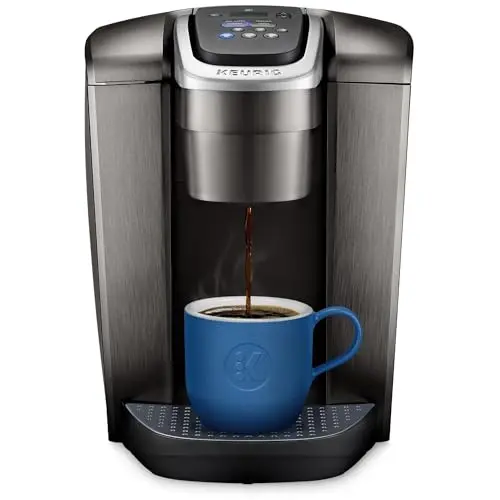
K-Elite – Strength and Temperature Control Built In
The K-Elite is what the K-Cup format looks like once you stop stripping features out. It brews five cup sizes from 4 to 12 oz, adds a strong brew setting and adjustable temperature, and handles iced coffee with a dedicated button. The 75-oz reservoir is removable, the drip tray pulls out to clear a travel mug, and a hot water button covers tea and oatmeal. Quiet brew technology keeps the morning volume down.
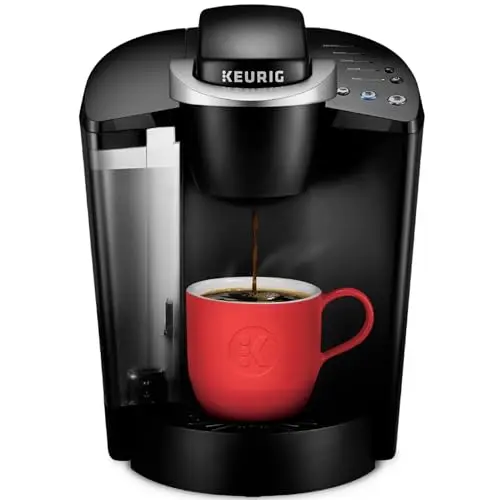
K-Classic – The Straightforward K-Cup Standard
Three brew sizes, a removable 48-oz reservoir, and one row of buttons. That’s the whole pitch, and it’s why the K-Classic keeps showing up in kitchens that just want a pod brewer that works. The 6-oz setting is the one to use when you want the strongest cup, and running the handle open without a pod dispenses hot water.
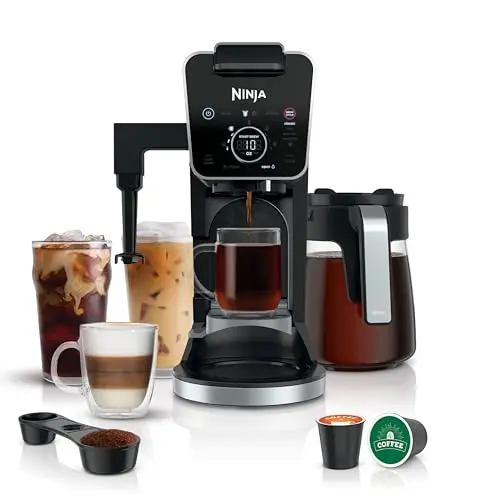
DualBrew Pro CFP301 – Pods, Grounds, and a Full Carafe
The DualBrew Pro is the widest-reaching machine here. It takes K-Cup pods for a fast single cup, brews ground coffee in five sizes, and fills a 12-cup glass carafe when you need a pot. Four brew styles – Classic, Rich, Over Ice, and Specialty – plus a fold-away frother and an independent hot water system that runs at hot or boil.
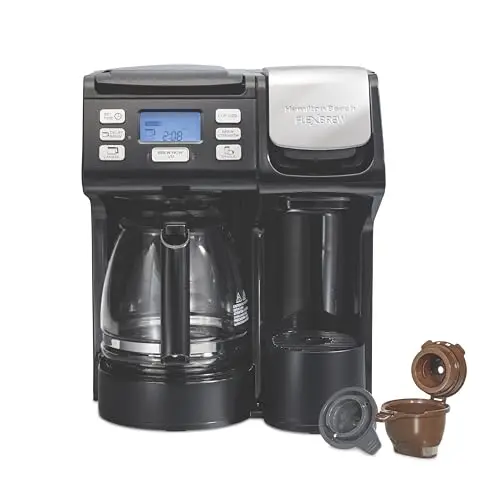
FlexBrew Trio 49902JN – Three Ways to Brew, One Machine
Brew a pod, brew grounds into a 7-inch travel mug, or brew 12 cups into the glass carafe – the FlexBrew Trio covers all three without a second appliance on the counter. The 56-oz removable reservoir holds enough for roughly seven single servings, and a single cup comes out in about 90 seconds. Easy-Touch programming handles the carafe side overnight.
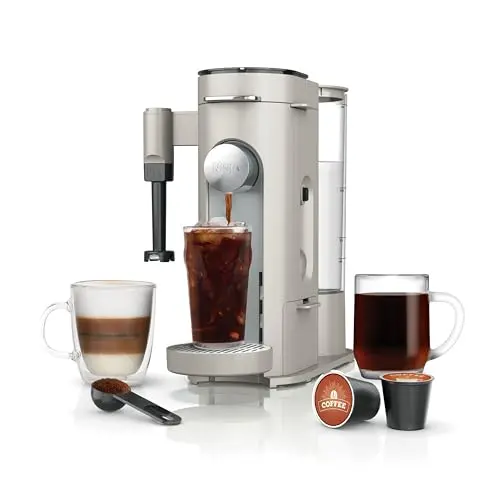
PB051ST – Single Serve With a Built-In Frother
A single-serve machine that takes K-Cup pods and ground coffee, brews from 6 oz up to a 24-oz mug, and tucks a fold-away milk frother into the body. Four brew styles – Classic, Rich, Over Ice, and Specialty – plus a 56-oz removable reservoir and a thermal flavor extraction system built to keep temperature and saturation even.
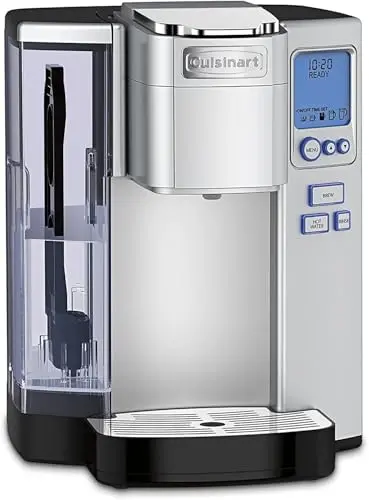
SS-10P1 – Big Reservoir, Programmable Single Serve
A programmable single-serve brewer with a 72-oz reservoir, five cup sizes, and a hot water dispenser sharing the same footprint. It handles K-Cup and K-Cup 2.0 pods plus ground coffee through a reusable filter, and adds auto on/off, adjustable brew temperature, and an auto-rinse cycle for the brew chamber.
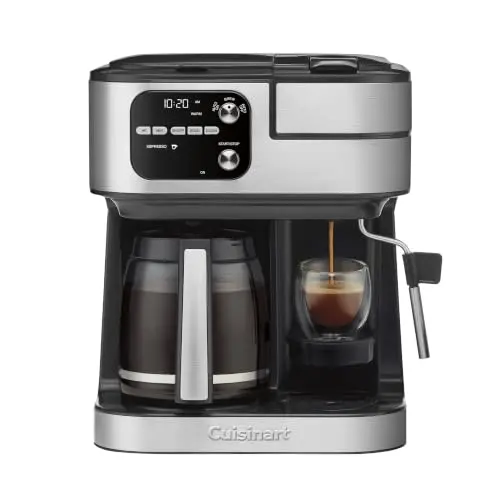
Coffee Center Barista Bar 4-in-1 – K-Cup Meets Espresso
Four brewers in one body: a 12-cup drip side, a K-Cup-compatible single-serve side with three sizes, a Nespresso OriginalLine-style capsule brewer for single and double espresso, and a milk frother for cappuccinos and lattes. Programmable on a 24-hour timer, with brew strength control, a permanent gold-tone filter, and keep-warm up to four hours.
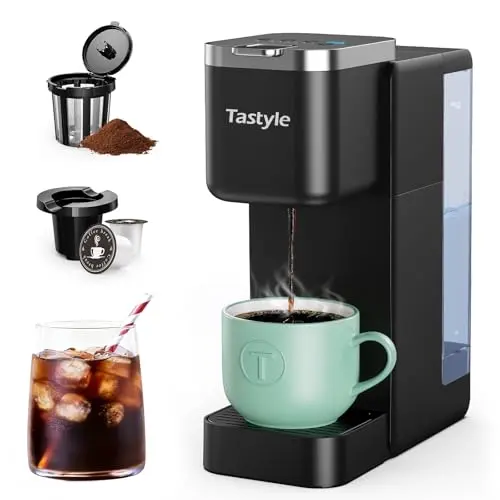
K330IC – Mid-Size Pod and Grounds Brewer
A compact single-serve brewer that handles K-Cup pods and ground coffee across three brew styles – Hot, Bold, and Over Ice – with six sizes from 6 to 24 oz. The 40-oz reservoir lifts off for refilling, and two drip tray heights accommodate travel mugs up to 7.3 inches.
K310IC Mini – Compact Pod Brewer for Travel
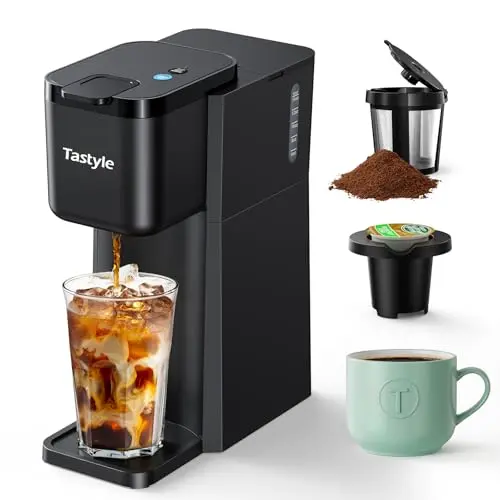
A single-serve brewer weighing under two pounds, built for tight spaces – dorm rooms, RVs, hotel rooms, office desks. It takes K-Cup pods and ground coffee, brews 6 to 14 oz, and has a dedicated Over Ice mode that starts hotter and cools the brew so your ice survives. The water tank is built in, so you add water per cup.
How We Evaluated These K-Cup Coffee Makers
A few things we can’t tell you: how each of these machines holds up after two years of daily brewing, or whether your particular pod lands at exactly the temperature you like. We didn’t run controlled lab extractions or multi-month reliability trials. What we did do is cross-reference nine K-Cup coffee makers from five brands across six decision axes – pod compatibility, brew size range, reservoir capacity and placement, strength and temperature controls, cleaning and descaling routine, and counter footprint.
We triangulated published specifications, feature sets, and aggregated owner feedback where available, then mapped each machine against realistic buyer profiles: the one-cup-a-day commuter, the household that wants a pot on weekends, the small-kitchen renter, the traveler. Where a spec sheet promised something the broader feedback contradicted, we weighted the real-world signal over the marketing line.
The scoring framework put real-world fit and performance at 70% – how well each brewer delivers on its stated job, cup after cup – against feature differentiation at 30% – the controls, accessories, and capabilities that actually separate one machine from another. We have no commercial relationship with any of the brands featured; recommendations track fit and differentiation, not brand preference. If you want the most complete K-Cup brewer in a standard form factor, the K-Elite is the one. If your household needs pods, grounds, and a carafe from a single machine, the DualBrew Pro CFP301 covers it.
How to Choose the Right K-Cup Coffee Maker
1. Pod Compatibility: What Fits in a K-Cup Coffee Maker
Nearly every machine here brews a standard K-Cup pod, and most also accept K-Cup 2.0 pods with the larger brewing chamber. That’s the easy part. The differences show up in the second input: many brewers also take ground coffee through a reusable basket or pod adapter, and a few add Nespresso OriginalLine capsules or a full 12-cup carafe alongside the pod slot.
If you already own a drawer full of pods, compatibility is settled and you’re really choosing on brew sizes and reservoir. If you’re new to the format, note that reusable filters let you test whether pods suit you before committing to a subscription. The K330IC is a low-risk way to try both – it ships with a capsule holder and a roomy grounds basket.
2. Reservoir Size and Placement Changes Your Whole Morning
Reservoir capacity quietly shapes your routine. A 48-oz reservoir covers a few cups before a refill; a 72-oz or 75-oz tank can stretch most of a week of single-serve brewing. Just as important is whether the tank lifts off for refilling – carrying a carafe across the kitchen to a fixed tank is the most common daily annoyance in this category.
Placement matters in a narrow kitchen too. A couple of machines let you set the reservoir on the side or the rear, which buys back real counter depth. If you want the refill question to disappear entirely, the SS-10P1 has the largest tank in this lineup and adjustable brew temperature to go with it.
3. Brew Size Range and Strength Control
Brew size range tells you how flexible the machine is with your own mugs. The classic spread is 6, 8, and 10 oz. Wider ranges run 4 to 12 oz and, on a few machines, all the way to a 24-oz mug – the difference between one pod and two on a busy morning.
Strength control is the feature that actually changes flavor. Brewing a smaller volume through the same pod concentrates the cup; a dedicated strong or bold setting slows the extraction to a similar effect. If your complaint about pod coffee has always been that it tastes thin, prioritize strength control over counting brew sizes.
4. Temperature, Over-Ice Brewing, and Realistic Expectations
Brew temperature is where pod machines diverge most in practice, and where spec sheets tell you the least. A machine that brews hot holds up when you add cold milk; one that brews lukewarm won’t. Look for adjustable temperature control if you take your coffee with a generous pour of cream.
Over-ice settings are worth understanding before you pay for one. A real iced mode brews hotter and stronger so the ice melts less; a machine without it just makes a normal cup that you pour over frozen cubes. If iced coffee is a daily habit, that’s a meaningful difference in the glass. The PB051ST treats over-ice as a full brew style rather than an afterthought, and its 24-oz capacity means one pod fills a tall tumbler.
5. Cleaning, Descaling, and Long-Term Upkeep
Every pod brewer needs descaling, and the machines that remind you are easier to live with than the ones that don’t. A dedicated descale alert, an auto-rinse cycle, and dishwasher-safe drip trays and pod holders are unglamorous features that determine whether you’re still happy with the machine in year two.
Budget for consumables beyond pods. Charcoal water filters need replacing on a schedule, and reusable baskets need a rinse after every grounds brew. Machines with a carafe side add a glass vessel to wash. If you’d rather not think about maintenance at all, a pod-only brewer with a rinse cycle is the least demanding option in this category.
6. Budget, Mid-Range, and Premium K-Cup Coffee Makers: What Each Tier Gets You
Entry-level K-Cup coffee makers get you a working pod brewer with a small reservoir and a couple of brew sizes. That’s genuinely enough if you drink one cup a day and don’t care about strength control. Expect a compact footprint and fewer moving parts, which is not a bad trade at all.
Mid-range machines are where strength control, temperature adjustment, larger reservoirs, and iced settings appear. That’s the sweet spot for most households – you’re paying for the features you touch every morning rather than capacity you’ll never fill.
Premium territory buys multi-brewer capability: a carafe side, espresso capsules, a frother, an independent hot water tap. It’s worth it only if you’d otherwise own two or three separate appliances. For a straightforward one-cup-a-day pod drinker, the extra plumbing is complexity without benefit.
Frequently Asked Questions
1. Keurig K-Elite vs. Ninja DualBrew Pro: which K-Cup coffee maker should you buy?
They solve different problems. The K-Elite is a pure pod machine – five sizes, strength control, adjustable temperature, and a large removable reservoir, all in the classic single-serve footprint. The DualBrew Pro CFP301 adds a 12-cup carafe and grounds brewing alongside the pod slot, plus a frother and an independent hot water tap.
Buy the K-Elite if everyone in the house drinks single cups from pods and you want the most dialed-in version of that. Buy the DualBrew Pro if someone still wants a pot on Sunday, or if you regularly brew ground coffee.
2. Is the Keurig K-Classic still worth it next to the Cuisinart SS-10P1?
The K-Classic wins on simplicity – three brew sizes, one row of buttons, nothing to configure and nothing to get wrong. The SS-10P1 counters with a much larger reservoir, five cup sizes, adjustable brew temperature, and a real hot water dispenser for tea.
If you want the fewest decisions before your first cup, the K-Classic is still the easier machine to own. If you want the refill question to vanish and you like having a dedicated hot water tap, the Cuisinart is the better long-term pick.
3. Do all K-Cup coffee makers also brew ground coffee?
No. Several machines in this category are pod-only. Others ship with a reusable basket or pod adapter that accepts ground coffee, and a few pair a pod slot with a 12-cup carafe on the side. Check the input type on the spec sheet before you buy – pods and grounds is a meaningfully different machine from pods alone, and the difference shows up every weekend.
Machines with a grounds basket generally want a medium grind. Too fine and the basket clogs, the brew slows down, and you’ll be rinsing it out more often than you’d like.
4. How often does a K-Cup coffee maker need descaling?
Follow the manufacturer’s schedule and treat any descale alert as the real trigger. Hard water scales faster than soft water, so a machine running on well water may need attention well before one on filtered municipal supply.
A descale reminder and a self-cleaning or auto-rinse cycle are the two features that make this easy to stay on top of. If your coffee starts tasting flat or the brew noticeably slows, scale is almost always the reason rather than the pod.
5. Can one K-Cup coffee maker serve a family that also wants a full pot?
Yes, but only if it’s a combo machine. A pod-only brewer means brewing cup after cup when guests arrive, which gets old fast. The machines that handle both – pods on one side, a 12-cup carafe on the other – are the practical answer for a household that splits between single-cup and pot drinkers.
Just expect a bigger footprint and a longer cleaning routine. If counter space is tight, the FlexBrew Trio approach of pods, grounds, and a carafe in one body is the compromise most people land on.
6. Are mini K-Cup brewers good enough for daily use?
For one cup a day, yes. Mini brewers trade reservoir capacity for portability – you fill the tank per cup, which keeps the water fresh but gets tedious by the second or third brew. They’re excellent for a dorm, an RV, a hotel room, or an office desk. They’re frustrating as a primary kitchen machine if more than one person drinks coffee in your house.
Also expect a narrower brew range and less strength control. Small machines are usually built around a fixed brew cycle, so the 6-oz setting is your best available tool for a stronger cup.
Final Verdict
For most people, the K-Elite is the answer. It covers the pod format completely – strength control, adjustable temperature, iced brewing, a big removable reservoir – without demanding that you learn a control panel.
If you fill a 20-oz mug every morning and want frothed milk without another appliance, the PB051ST is the better single-serve fit. Households that want a pot on weekends should go with the DualBrew Pro CFP301 instead; it brews pods, grounds, and a full carafe from one footprint. And if you’re brewing on a desk, in an RV, or in a dorm room, the K310IC Mini is small enough to actually pack and still brews a proper cup. Match the machine to the way you drink coffee, not to the longest spec sheet.
