
Best King Size Goose Down Comforters – 2026 Reviews

A king bed gives you room to spread out, but it also exposes every weak spot in a comforter: short fill, shifting clumps, cold corners, and a shell that crackles every time you roll over. King-size bedding is a bigger investment than queen bedding, and the wrong comforter can feel like a heavy sheet with delusions of grandeur.
The best king size goose down comforters solve two problems at once. They use a fill blend and box construction that keeps warmth spread across a 106-by-90-inch footprint, and they pair that with a shell that breathes instead of trapping heat. That’s why fill ratio, baffle design, and corner anchoring matter more here than marketing labels.
We looked across major brands at king-size down and down-fiber comforters, from budget feather blends to premium baffle-box builds. This guide is about matching the right comforter to your sleep style and your bed, not crowning one brand by default.
Best King Size Goose Down Comforters – 2026 Reviews

Goose Down Fiber Comforter – Baffle Box All-Season Warmth
A high-down-content king comforter with a baffle box build, cotton shell, and enough loft for year-round use. The fill blend leans heavily on goose down fiber rather than feather fiber, giving it a softer, puffier feel than budget feather blends.
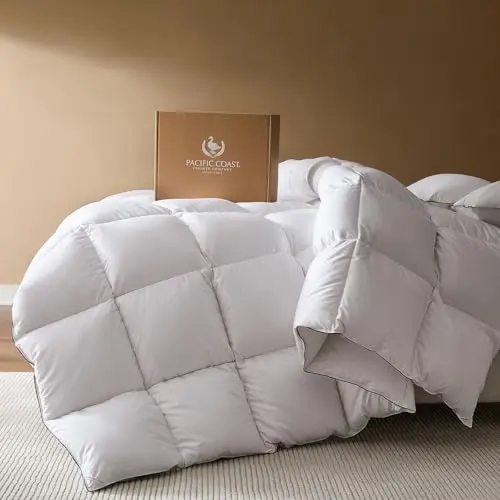
3D Baffle Box Goose Down Fiber Comforter – Premium All-Season Warmth
A premium 3D baffle-box comforter with a soft hand, eight anchoring points, and a warranty that backs up its hotel-supply background. The shell is a cotton-poly blend rather than pure cotton, which is the main tradeoff.

Goose Feather Down Fiber Comforter – Hotel-Style All-Season Warmth
A budget-friendly king comforter with a hypoallergenic fill treatment, sewn-through box construction, and a familiar hotel-inspired look. It’s feather-heavy, so it feels more substantial than a down-forward comforter.

White Goose Feathers Down Fiber Comforter – Hotel Collection Breathability
A breathable all-season king comforter with a 100% cotton cover and a sewn-through box build. It’s aimed at sleepers who want warmth without the trapped-heat feel of a heavier comforter.
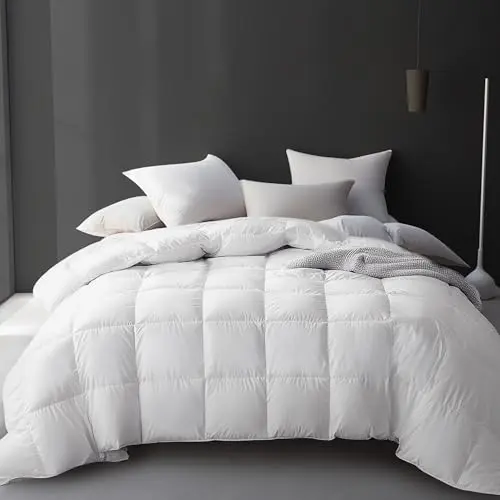
White Goose Feather Down Fiber Comforter – Lightweight All-Season Loft
A lightweight all-season king comforter with a 233 thread count cotton shell, ADFC-certified fill, and four corner loops plus side tabs. It’s built for even warmth rather than maximum loft.

3D Hidden Baffle Goose Feather Down Comforter – Hotel Collection Softness
A hotel-collection king comforter with a 3D hidden baffle box, eight tabs, and a soft hand. The shell leans polyester, so it’s more about smoothness than natural breathability.
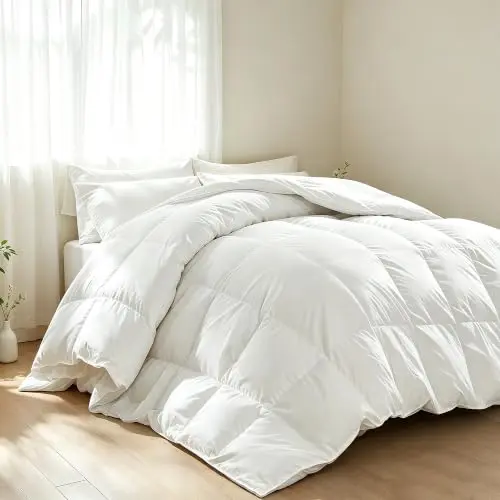
White Goose Feather Down Fiber Comforter – All-Season Cotton Softness
An all-season king comforter with a 100% cotton cover, hypoallergenic fill treatment, and eight corner loops. It’s a straightforward value option with a soft hand.

Feather and Down Fiber Comforter Insert – Machine-Washable Everyday Loft
A machine-washable king comforter insert with a 100% cotton shell, box stitching, and four corner tabs. It’s the easiest pick here to clean and maintain.
How We Evaluated These King Size Goose Down Comforters
We didn’t run lab tests on fill power or put these comforters through a full winter of nightly use. What we did: cross-referenced 8 king-size goose down and down-fiber comforters from 6 brands across 7 decision axes – fill composition, shell fabric, thread count, construction style, warmth level, corner anchoring, and care requirements. We triangulated published specifications, compared feature sets, and weighed owner feedback where available against real-world use cases for king beds.
The scoring framework weighted real-world fit and performance (70%) – how well each comforter delivers warmth, loft, and breathability across a 106-by-90-inch footprint – against feature differentiation (30%) – unique construction, certification, and anchoring advantages. We mapped each option to likely buyer profiles rather than treating hotel branding as proof of quality. We also separated true baffle-box builds from sewn-through box designs, since that difference affects loft retention over time. Certifications such as RDS, OEKO-TEX, and ADFC were noted where present, but they did not override fill ratio, shell material, or care burden. We have no commercial relationship with any brand here; recommendations track fit and differentiation, not brand preference. If you want the most down-forward build, the Egyptian Bedding Goose Down Fiber Comforter is the standout. If you want a true baffle box and warranty coverage, the Pacific Coast 3D Baffle Box Comforter is the stronger route.
How to Choose the Right King Size Goose Down Comforter
1. What King Size Really Means for a Goose Down Comforter
A standard king comforter is usually 106 by 90 inches, while a California king mattress is longer and narrower and often needs a 104-by-96-inch or larger comforter for proper drape. That difference matters because a king-size comforter that’s too short leaves cold shoulders and exposed feet, no matter how good the fill is. Check the finished dimensions against your mattress and your preferred drape before you buy.
King comforters also need better fill distribution than queen-size models. More surface area means more chances for down to migrate, so look for baffle box construction or well-sewn box stitching, plus at least 4 corner loops and ideally 8 anchoring points. If you use a duvet cover, those loops are what keep the comforter from bunching into one end.
2. Fill Composition: Goose Down Fiber vs Feather Fiber
Goose down fiber is the fluffy, insulating part of the cluster, while feather fiber adds bulk and weight. A higher down-fiber ratio generally means a softer, puffier comforter with more warmth for the weight; a feather-heavy blend feels more substantial and often costs less. Neither is automatically better – it depends on whether you want a cloud-like hand or a more grounded, weighty feel.
Pay attention to the fill ratio and fill weight, not just the word ‘goose’ on the label. A comforter with a high down-fiber percentage but a low fill weight may still sleep cool, while a feather-heavy comforter can feel warm without being lofty. If you want a budget-friendly feather-forward blend, the Serta Goose Feather Down Fiber Comforter is the value route.
3. Construction: Baffle Box vs Sewn-Through Box
Baffle box construction uses interior walls to create separate chambers, so the fill can loft fully without shifting. Sewn-through box construction stitches the top and bottom layers together, which is lighter and less expensive but creates thin spots at the seams. For a king-size comforter, baffle box designs usually hold their shape better over time.
That doesn’t make sewn-through boxes bad. They work well in lightweight all-season comforters and can feel less bulky. The tradeoff is loft retention and cold spots at the stitching lines. If you want the most controlled loft, prioritize a true baffle box; if you want a lighter, more affordable build, sewn-through is fine.
4. Shell Fabric, Breathability, and Noise
100% cotton shells breathe better than polyester blends and tend to feel softer against a duvet cover. Thread count matters less than fabric quality, but a higher thread count can create a smoother, more down-proof surface. A tight weave helps contain feathers, while a breathable weave keeps the comforter from feeling clammy.
Noise is another king-size issue: a crispy or rustling shell is more noticeable across a larger comforter. Look for a noiseless or soft cotton finish if you’re a light sleeper. For a breathable cotton option aimed at hot sleepers, the Martha Stewart Hotel Collection Comforter is the pick.
5. Warmth Level and Sleep Style
Most king goose down comforters are sold in light warmth, all-season medium warmth, and extra warmth. All-season medium warmth is the safest starting point for most bedrooms, especially if you layer with a duvet cover. Hot sleepers should lean toward breathable cotton and medium or light warmth; cold sleepers can size up to extra warmth or add a blanket.
Don’t assume a heavier comforter is always warmer. Fill quality, loft, and shell breathability matter as much as weight. A well-built medium-warmth comforter can sleep warmer than a heavy, low-loft one because it traps air more efficiently.
6. Care, Longevity, and Realistic Expectations
Many king down and feather comforters are dry-clean only or spot-clean preferred, which is a real ownership cost. If you want easier maintenance, look for a machine-washable comforter and follow the care label exactly. Always use a duvet cover to protect the comforter and reduce how often you need to clean it.
Vacuum-packed comforters need time to regain their loft after unpacking. Pat and shake them, then let them rest or tumble on low heat if the label allows. If home laundering is non-negotiable, the Cosybay Feather and Down Fiber Comforter Insert is the practical choice.
Frequently Asked Questions
1. What's the difference between the Egyptian Bedding goose down fiber comforter and the Serta goose feather down fiber comforter?
The Egyptian Bedding leans much further toward goose down fiber – 80% down fiber versus Serta’s 90% feather fiber and 10% down fiber. That gives the Egyptian Bedding a softer, puffier hand and a more traditional down-comforter feel, while the Serta has more body and weight from its feather-heavy fill. The Egyptian Bedding also uses a baffle box design and 8 loops, while the Serta relies on sewn-through box construction and 4 loops. If you want the closest thing to a down-forward comforter here, the Egyptian Bedding Goose Down Fiber Comforter is the stronger choice; if you want a budget-friendly feather blend, the Serta makes more sense.
2. Is a king-size goose down comforter big enough for a California king bed?
Usually not. A standard king comforter is typically 106 by 90 inches, while a California king mattress is 72 by 84 inches and often needs a 104-by-96-inch or larger comforter for proper drape. The extra length matters more than the extra width on a Cal king. Check the finished dimensions before buying, and favor a comforter with 8 anchoring points if you plan to use a duvet cover. If you have a true California king, measure your bed and compare against the listed 106-by-90-inch or oversized king options.
3. How does the Pacific Coast 3D baffle box compare with the Hotel Grand sewn-through box?
The Pacific Coast uses a 3D baffle box with taller chambers, which helps the fill stay evenly distributed and maintain loft over time. The Hotel Grand uses sewn-through box construction, where the top and bottom layers are stitched together; that’s lighter and less expensive, but it creates thin spots at the seams. The Hotel Grand counters with 233 thread count cotton, ADFC-certified fill, and 4 corner loops plus 4 side tabs. If you want maximum loft retention, the Pacific Coast design is stronger; if you want a lightweight all-season comforter with good anchoring, the Hotel Grand is the practical pick.
4. Do goose down fiber comforters work for hot sleepers?
They can, but the shell and warmth level matter as much as the fill. A 100% cotton cover and a medium warmth rating usually breathe better than a poly-blend shell with heavy fill. The Martha Stewart Hotel Collection Comforter is a good example: it pairs a breathable cotton shell with all-season warmth and avoids the trapped-heat feel some king comforters create. If you sleep hot, look for OEKO-TEX certified fill, sewn-through or baffle box construction, and a duvet cover in a breathable fabric. The Martha Stewart Hotel Collection Comforter is the pick here for that profile.
5. How do I fluff a vacuum-packed king goose down comforter?
Start by gently shaking and patting the comforter while it’s still in the box, then spread it flat on the bed. Most vacuum-packed comforters need a few hours to a full day to regain their shape, and some benefit from low-heat tumble drying for 10-20 minutes. Break up any clumps with your hands, then let the comforter rest before putting on a duvet cover. Avoid high heat and wet washing unless the care label explicitly allows it; many king down comforters are dry-clean only.
Final Verdict
For most king beds, the Egyptian Bedding Goose Down Fiber Comforter is the best overall match. It has the highest down-fiber ratio in this lineup, a true baffle box, and enough loft to feel like a proper down comforter rather than a feather-filled insert. If you want to spend less, the Serta Goose Feather Down Fiber Comforter is the value pick and still delivers a soft cotton cover and hotel-style warmth. If you want premium construction and warranty coverage, the Pacific Coast 3D Baffle Box Comforter is the step-up choice. And if you sleep hot, the Martha Stewart Hotel Collection Comforter is the breathable cotton option to beat. The right king comforter is the one that fits your bed dimensions, your sleep temperature, and your care routine – not just the one with the best label.
