
Best Kitchen Sink Stoppers – 2026 Reviews

There’s a specific kind of frustration that comes from a sink that won’t hold water. You’re soaking a roasting pan, the tap is running, and the water disappears as fast as it fills – or the stopper seals so hard you need both hands and a butter knife to free it. Neither problem has anything to do with your sink. It’s the small part sitting in the drain.
Two things separate a stopper that works from one that annoys you daily. The first is fit – actual opening diameter and the depth of the drain throat, both of which vary more than the standard 3-1/2 inch drain label suggests. The second is mechanism: a one-piece plug, a twist-to-switch combo, or a press-down pop-up with a removable basket. Each has a different failure mode after a few months of hot dishwater and grease.
We compared the field across brands rather than lining up one manufacturer’s catalog. What follows is a practical breakdown of what each style actually does well, which drains it fits, and where the seals tend to give out – so you can buy once and stop thinking about it.
Best Kitchen Sink Stoppers – 2026 Reviews
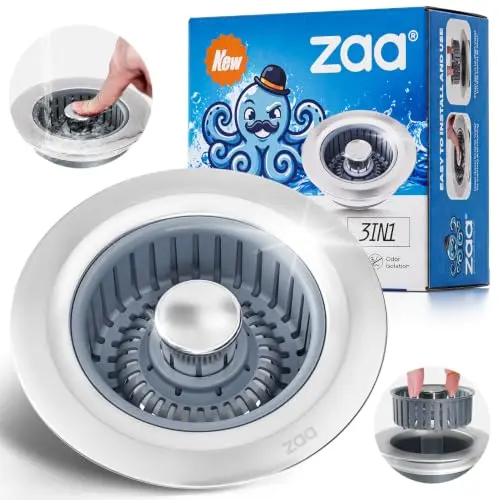
3-in-1 Pop-Up Drain Strainer – Seal, Strain, and Block Odor
A press-to-seal pop-up that handles three jobs at once: holding water, straining scraps, and closing off the drain between uses. The body is 304 stainless steel with a brass bounce core, and the food basket lifts out for emptying.
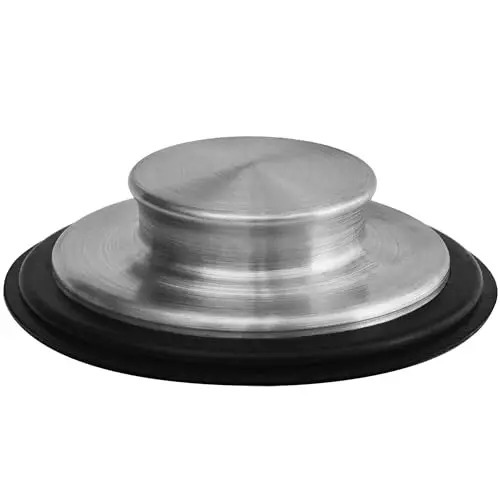
Stainless Steel Sink Stopper – Simple Plug for Disposal Drains
A no-moving-parts stainless plug for garbage disposal drains. Drop it in to hold water for soaking, lift it out by the handle to drain. Sized for the standard 3-1/2 inch disposal opening.
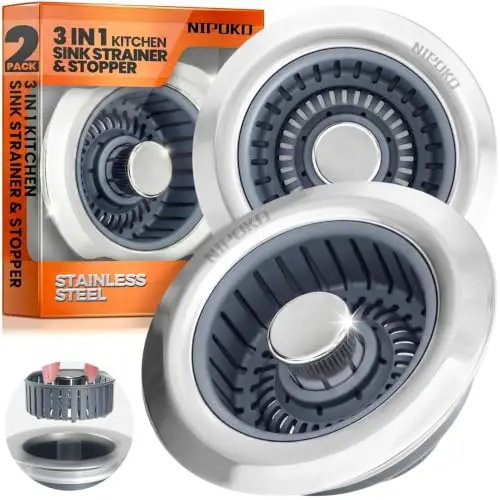
3-in-1 Pop-Up Sink Stopper – Two-Pack with Odor Seal
A two-pack of pop-up 3-in-1 stoppers combining water storage, straining, and an odor seal in one unit. Stainless steel with a brass core and a removable PP basket, sized for standard 3-1/2 inch drains.
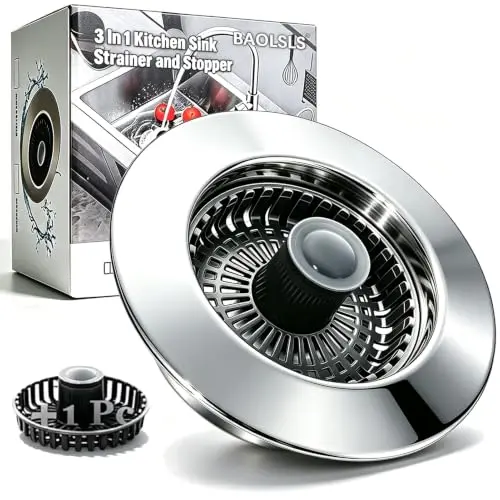
3-in-1 Brass Sink Stopper – Press-to-Drain With a Spare Basket
A three-in-one pop-up built around a brass body rather than plated plastic, with an extra strainer basket in the box. Press to hold water, press again to drain through the anti-clog basket.
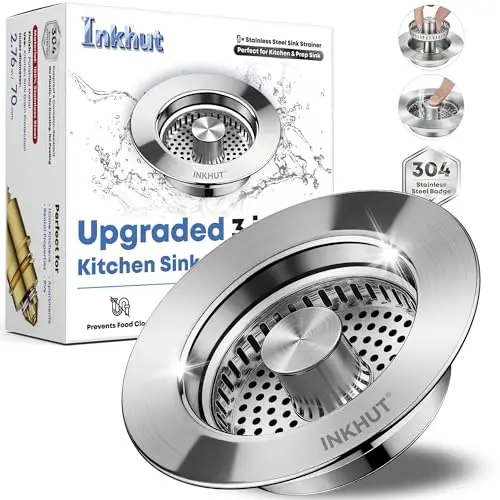
3-in-1 Drain Strainer – Spring-Loaded Anti-Clog Basket
A stainless 3-in-1 with a spring-loaded bounce core and an anti-clog basket. Press once to seal, press again to drain, then lift the basket to empty.
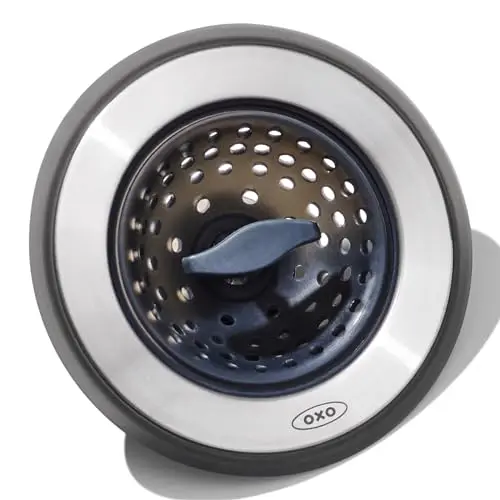
Good Grips 2-in-1 Strainer & Stopper – Twist to Fill or Drain
The OXO take on the category: a strainer that becomes a stopper with a twist of the tab. No installation, no separate lid, and a silicone basket that flips inside out for emptying.
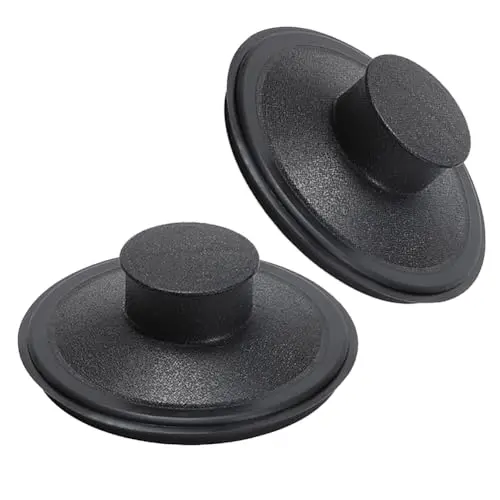
Rubber Drain Stopper – InSinkErator STP-PL Replacement Plug
A direct replacement for the InSinkErator STP-PL disposal stopper, in rubber over hard plastic. Textured, non-slip, and sized for standard 3-1/2 inch drains.
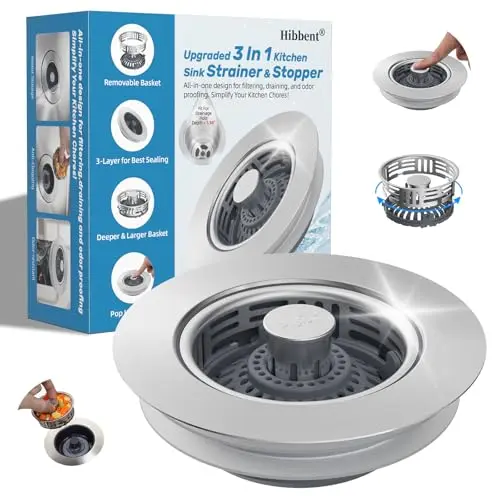
3-in-1 Metal Sink Strainer – Deep Detachable Basket
A metal 3-in-1 with a deeper, detachable basket and a three-layer gasket seal. Pop-up operation, brushed stainless finish, and a thin rim designed to sit flush with the basin.
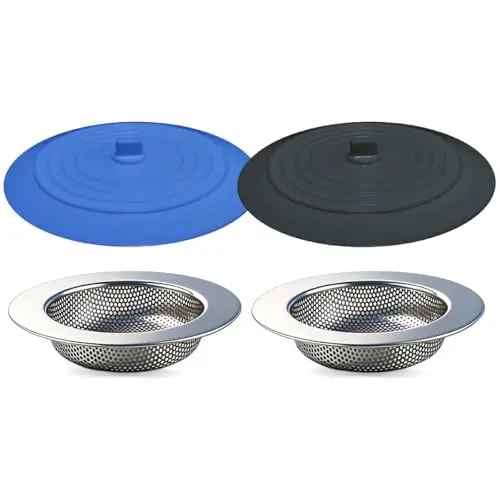
4-Piece Strainer & Stopper Kit – Silicone Cover Plus Steel Basket
A four-piece kit rather than a single part: a wide silicone drain cover for holding water plus a stainless strainer basket for catching scraps. Two tools, two jobs, sold together.
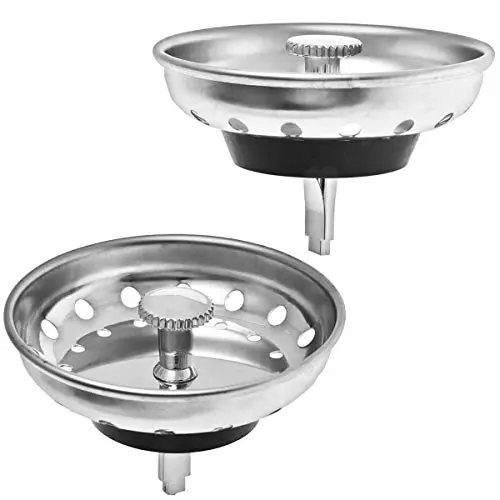
Basket Strainer & Stopper Combo – Two-Pack Post-Style Replacement
A two-pack of drop-in basket strainers with stopper knobs, sized for standard 3-1/2 inch kitchen drains. The basket catches scraps; the rubber-bottomed knob seals for soaking.
How We Evaluated These Kitchen Sink Stoppers
We didn’t run controlled kitchen lab tests or submerge these stoppers in a test rig for weeks. What we did: cross-referenced 10 kitchen sink stopper models from 9 distinct brands across seven decision axes – drain compatibility (opening diameter and required depth), seal quality, drainage speed, basket capacity, build materials, cleaning and removal, and what actually comes in the box. We triangulated published specifications, mapped every unit against US standard 3-1/2 inch drain dimensions, and audited owner feedback where available for the failure patterns that show up after a few months of real dish duty. Stoppers are a rare category where the most affordable option occasionally wins outright, so nothing earned a pass on price alone in either direction.
Fit came first because it decides everything else. A stopper that’s a fraction of an inch too small won’t seal; one that’s too tall will sit proud of the basin and leave standing water around the rim. So we weighed compatibility against actual sink dimensions before anything else, then pressure-tested the seal story each brand tells – single rubber gasket, dual gasket, three-layer seal – against what owners report after repeated soaking cycles.
The scoring framework weighted real-world fit and performance at 70% and feature differentiation at 30%. We have no commercial relationship with any of these brands; recommendations track fit and differentiation, not brand preference. If you want one unit that handles stopper duty, straining, and odor control, the zaa 3-in-1 is your match. If you just need to fill a disposal sink and nothing more, the Hilltop stainless stopper plug covers it for less.
How to Choose the Right Kitchen Sink Stoppers
1. Measure Your Drain Before You Buy a Kitchen Sink Stopper
Two measurements decide whether a stopper works: the drain opening diameter and the depth of the drain throat. American sinks are usually described as having a 3-1/2 inch drain, but the usable hole you’re actually fitting into typically lands somewhere between 2.83 and 3.42 inches. A stopper spec’d for the narrow end of that range will rattle in a wide opening; one built for the wide end won’t seat in a tight one.
Depth is the number people skip. Pop-up models with a basket need roughly 1.4 inches of clearance below the rim, and some want more. Drop a ruler in and check before you order – a stopper that bottoms out early will sit proud of the basin and leave a ring of standing water around the edge no matter how good the gasket is.
2. Seal Quality: What Actually Keeps Water in a Kitchen Sink
A sink stopper holds water because a soft material compresses against a hard edge. That’s the whole mechanism. What varies is how many chances the design gives itself: a single rubber gasket, a dual gasket, or the three-layer seal some metal units advertise. More sealing surfaces generally means a more forgiving fit, which is why the Hibbent 3-in-1 holds a soak better than a thin single-ring plug in a slightly worn drain.
Material matters over time. Silicone stays flexible through hot dishwater cycles; cheap rubber hardens and takes a set, which is when a stopper that sealed perfectly in month one starts weeping in month eight. Grease film is the other silent killer – it coats the gasket, the gasket stops gripping, and no amount of pressing fixes it until you degrease.
3. Strainer, Stopper, or Both: Matching the Tool to Your Sink
There are three families here. The one-piece plug holds water and does nothing else – fine for a disposal drain you fill a few times a week. The strainer-and-stopper combo catches scraps during rinsing and seals when you twist or press, which covers most of what a kitchen sink actually does. The 3-in-1 pop-up adds an odor block when closed.
If you’re replacing a part and want the least fuss, go combo. The zaa 3-in-1 is the one we’d point most people toward, because press-to-seal and press-to-drain live on the same button and the basket lifts out without you touching anything.
4. Pop-Up 3-in-1 Stoppers vs Simple Disposal Plugs
The trade is complexity for capability. A pop-up 3-in-1 gives you sealing, straining, and odor control in one unit, but it introduces a spring, a basket, and more crevices for grease to collect – and owners of several models report pop-up mechanisms stiffening up after months of dishwater. A simple disposal plug has no moving parts to fail; it just holds water. If your disposal sink only needs filling now and then, simpler genuinely wins.
Where the complex units earn their keep is a cooking-heavy sink. If you’re emptying a strainer basket twice a day, the lift-out basket is worth more than the simplicity you give up.
5. Build Materials and How Long a Kitchen Sink Stopper Lasts
304 stainless steel is the benchmark for the body and basket – it resists rust, heat, and the scratches that come from scraping a pot across the drain. Brass cores are the tell on a pop-up that won’t jam; the pressing action stays smooth where plastic springs bind. Plastic knobs on replacement baskets are the classic weak point – the basket outlives the knob by years.
Fit style matters as much as material. Post-style replacement baskets only work in sinks with a narrow rectangular center hole; if yours has a round hole, the Hilltop Products two-pack won’t drop in, no matter how good the finish looks.
6. What Kitchen Sink Stoppers Cost at Each Tier
This is one of the few kitchen categories where the entry tier is genuinely fine. Entry-level money buys a single stainless plug or a basic basket assembly, and if that’s all your sink needs, stop there. Mid-range pricing gets you a pop-up 3-in-1 with a stainless body, a removable basket, and a brass or spring-loaded core – the sweet spot for most households. The premium end of this category is still inexpensive by kitchen standards, and it mostly buys multi-packs, spares, or a heavier metal body.
Spending more here doesn’t buy a better seal. It buys convenience features and build quality that survive more hot water cycles. Buy on fit first, then mechanism, then price.
7. Care and Cleaning for a Long-Lasting Seal
A stopper’s enemy is grease, not use. Pull the basket weekly and rinse it in hot water; once a month, soak the gasket end in a vinegar and water solution to break down mineral film and soap scum. Skip abrasive scrubbers on brushed or polished finishes – they leave scratches that trap residue and turn into a permanent grime line.
If your stopper starts holding less water, don’t press harder. Check for a film of grease on the sealing surface and clean it off; that resolves most sealing complaints. And if a pop-up suddenly won’t stay closed, warm soapy water and a few presses usually free the core – the mechanism is jamming, not failing.
Frequently Asked Questions
1. What size kitchen sink stopper do I need?
Measure the inside diameter of the drain opening and the depth below the rim. Most US kitchen sinks are built around a 3-1/2 inch drain, and most stoppers are spec’d to cover roughly 2.83 to 3.42 inches of actual hole. Depth is the sleeper spec: pop-up units generally want at least 1.38 to 1.46 inches of clearance, and a shallow sink will leave the stopper sitting above the basin floor.
If your number falls outside those ranges, don’t force it. A stopper that doesn’t seat flush will never hold a full sink, no matter how tight the gasket feels.
2. What's the difference between the zaa 3-in-1 and the Hilltop stainless plug?
They solve different problems. The zaa 3-in-1 is a pop-up combo: press to seal, press to drain, with a removable basket that catches scraps and an odor block when closed. It’s a full replacement for the strainer assembly in your sink.
The Hilltop stainless plug is a single-purpose stopper with no spring, no basket, and nothing to clean beyond the disc itself. It holds water in a disposal drain and that’s it. Choose the zaa if you want the strainer and stopper rolled together; choose the Hilltop if your strainer is fine and you just need a plug.
3. Do pop-up sink stoppers hold water as well as a rubber plug?
Usually yes, with an asterisk. A well-seated dual or three-layer gasket holds a deep sink for a long soak, and owners of metal pop-ups regularly report no leaks at all. The failures cluster around two things: a grease film that stops the gasket gripping, and a mechanism that has stiffened up with food residue.
Simple rubber plugs have fewer ways to fail, but they also can’t strain anything. If a watertight soak is the priority above all else, a plain plug is the safer bet; if you want one part doing everything, accept that it needs a rinse now and then.
4. OXO Good Grips vs the zaa 3-in-1: which is easier to clean?
The OXO has the edge on daily debris removal. Its silicone basket flips inside out, so scraps come out in one motion without you picking anything free. Twist the tab and it converts from strainer to stopper with no separate lid to set down.
The zaa pulls ahead on mechanism durability. There’s no flexible basket to fatigue, the brass core holds a smoother press over time, and the basket is a simple lift-out cylinder. If your main complaint is scrubbing rice out of perforations, take the OXO; if you’ve broken a strainer before, take the zaa.
5. Why does my kitchen sink stopper smell, and how do I fix it?
Smell almost always comes from organic residue trapped under the basket rim or in the drain throat below it, not from the stopper material itself. Pull the basket, scrub both sides with hot soapy water, and pour a vinegar and baking soda mix down the open drain. Leave it ten minutes, then flush with hot water.
A stopper that seals closed between uses helps here – the odor-blocking position keeps drain gas from rising into the basin. If the smell returns within a week, the problem is further down the pipe and a new stopper won’t solve it.
Final Verdict
For most kitchens, the zaa 3-in-1 is the answer – it seals with one press, strains while it drains, and the basket lifts out without you touching anything slimy. If your sink has a garbage disposal and you only need to fill it now and then, the Hilltop stainless stopper plug does that job for the least money in this lineup. Two-sink households, or anyone tired of carrying a stopper between the prep sink and the main basin, should look at the Nipoko two-pack; you get the pop-up function and a spare in the same box. And if you like the strainer-and-stopper-in-one idea but want something you twist rather than press, the OXO Good Grips 2-in-1 is the odd one out in the best way.
