
Best Knee Pillows For Sciatica – 2026 Reviews

Sciatica has a way of making a familiar sleeping position feel like a bad idea by 3 a.m. If you sleep on your side, the top leg often drifts forward, the hips rotate, and the lower back takes the brunt. A knee pillow is a small wedge-shaped fix, but the category has real differences: height, firmness, strap or no strap, and whether the shape supports one knee or both.
For sciatica specifically, the goal isn’t just cushioning. You want to keep the hips stacked and the spine closer to neutral without creating new pressure points. The useful models in this lineup solve that in different ways, some with a dual-knee H-shape, some with a half-moon bolster for back sleeping, and some with a long thigh-separating profile.
We cross-shopped the major brands and compared the details that actually change how these feel overnight. The picks below cover side sleepers, back sleepers, budget shoppers, and anyone who needs more separation than a small between-knees cushion provides.
Best Knee Pillows for Sciatica – 2026 Reviews
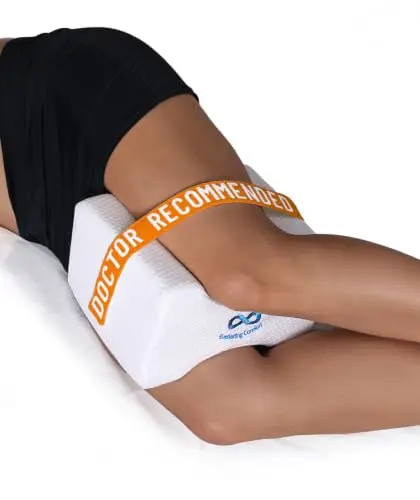
Support Knee Pillow – Dual-Knee Alignment for Side Sleepers
A dual-concave memory foam knee pillow built to keep both knees and thighs aligned for side sleeping. The removable strap helps it stay put through turns, and the washable cover keeps nightly use practical.
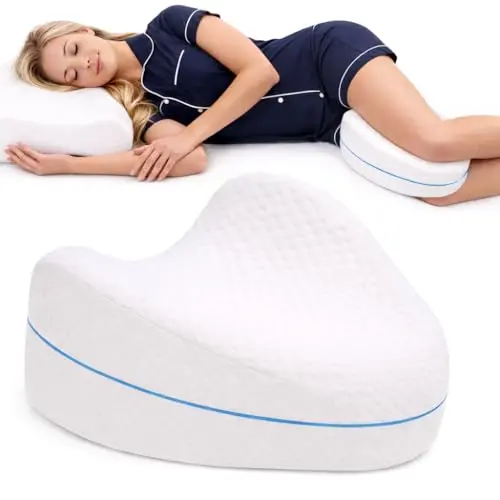
Legacy Leg & Knee Pillow – Ventilated Contour for Side Sleepers
A crescent-shaped leg pillow with ventilated memory foam and a strap-free design. It is built to contour between the knees while letting air move through the foam.
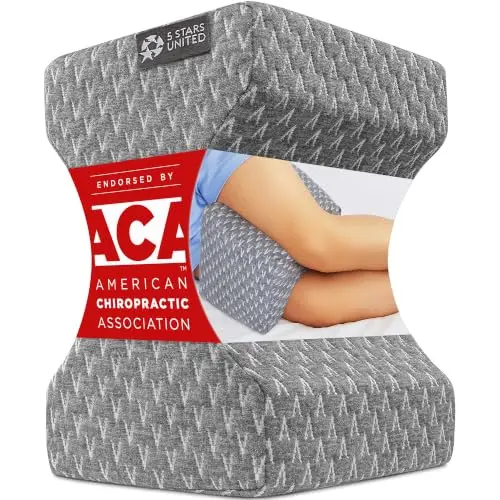
Side-Sleeper Knee Pillow – ACA-Endorsed Hip and Spine Support
A memory foam knee pillow with a soft knit cover and an ACA endorsement. The wedge-like contour is designed for between-knees side sleeping, with no strap included.
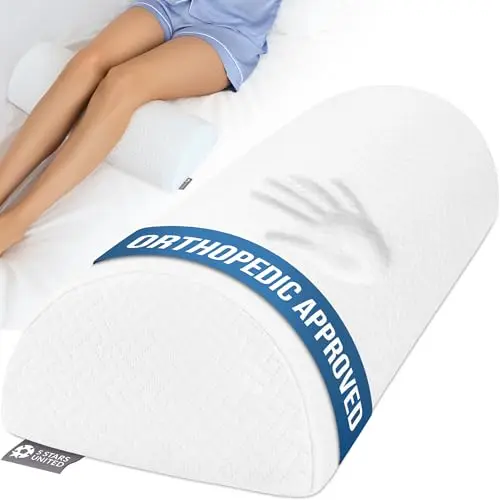
Half Moon Bolster – Under-Knee Support for Back Sleepers
A half-moon bolster designed mainly for back sleeping, with memory foam and an OEKO-TEX certified cover. It supports under the knees, calves, or ankles.
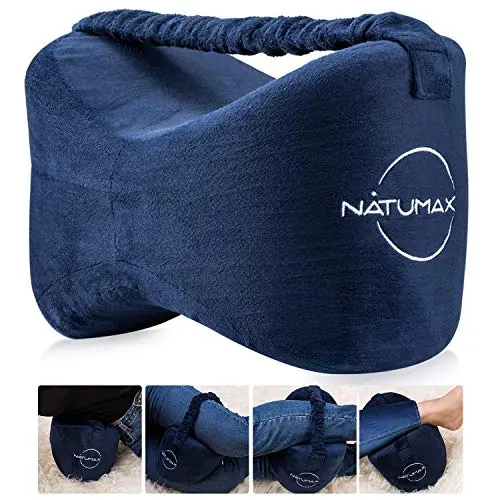
Butterfly Knee Pillow – Strap-Secured Side-Sleeper Relief
A butterfly-shaped memory foam knee pillow with a leg strap, plus a sleep mask and ear plugs in the box. The cover is removable and washable.
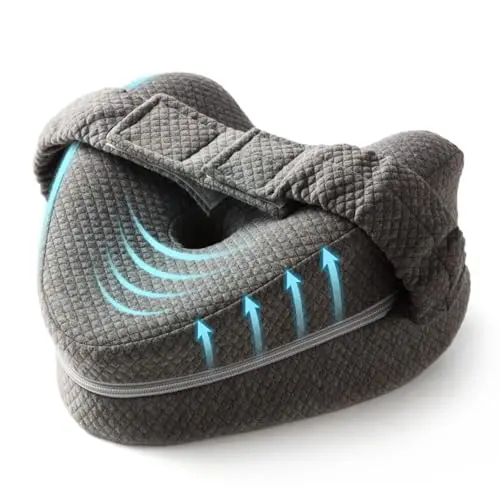
Heart-Shape Knee Pillow – Adjustable Strap for Side Sleepers
A heart-shaped memory foam knee pillow with an adjustable strap and breathable cover. It is designed to stay between the legs and support hip and spine alignment.
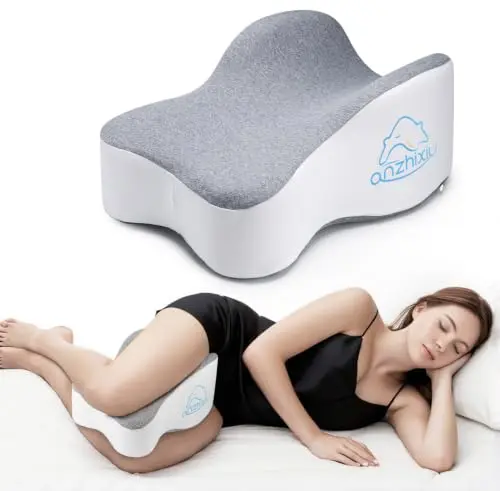
14-Inch Long Knee Pillow – Full-Thigh Separation for Side Sleepers
A 14-inch long knee pillow designed to separate the full thighs, not just the knees. It uses medium-firm memory foam and a removable cover, with no strap.
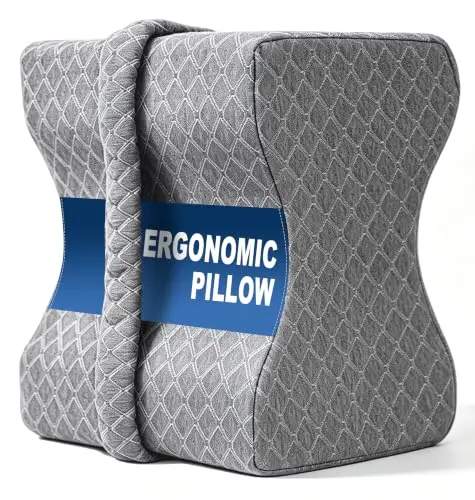
Knee Pillow with Strap – All-Position Sciatica Support
An H-shaped memory foam knee pillow with a basic strap and breathable cover. It is designed for between-knees side sleeping and multi-position support.
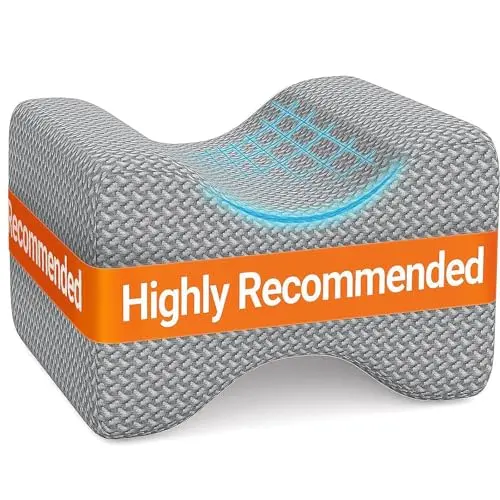
Memory Foam Knee Pillow – Budget-Friendly H-Shape Support
A budget-friendly H-shape memory foam knee pillow with a removable washable cover. It is sized large and designed for side sleeping and pregnancy support.
How We Evaluated These Knee Pillows for Sciatica
We didn’t run clinical sleep studies or measure spinal alignment in a lab. What we did: cross-referenced 9 knee pillow models from 8 distinct brands across 5 decision axes – sleep-position fit, shape and height, foam firmness, strap stability, and cover care. We triangulated published specifications, feature sets, owner feedback where available, and use-case fit for people managing sciatica at night. We weighed whether each pillow actually supports neutral hips and a straighter spine, not just whether it sounds comfortable in a product listing. We also compared how each shape behaves between the knees for side sleepers, under the knees for back sleepers, and along the thighs for sleepers who need more separation.
The scoring framework weighted real-world fit for sciatica-prone sleep (70%) – how well each option supports side sleeping, back sleeping, or both – against feature differentiation (30%) – shape, foam, strap design, and care details that separate one pillow from another. We audited the practical stuff too: removable straps, breathable covers, washable fabrics, and whether the foam core can be cleaned. Where owner feedback was thin, we leaned on published specs and each pillow’s stated geometry rather than guessing. We have no commercial relationship with the brands featured; recommendations track fit and differentiation, not brand preference. If you sleep on your side and want the most complete package, the Everlasting Comfort Knee Pillow is your match; if you need ventilated foam and a strap-free feel, the Contour Legacy is the better fit.
How to Choose the Right Knee Pillow for Sciatica
1. Match the Knee Pillow to Your Sciatica Sleep Position
Sciatica symptoms often feel different depending on whether you sleep on your side or your back. Side sleepers usually need a between-knees pillow that stops the top leg from dropping forward and twisting the hips. Back sleepers often do better with an under-knee bolster that slightly lifts the legs and takes pressure off the lower back. Neither shape is universally better; the right answer depends on the position you actually wake up in.
If you switch positions during the night, look for a versatile shape or a strap that keeps the pillow from disappearing under the covers. A knee pillow for sciatica should feel like a support tool, not a constraint. The Everlasting Comfort is the most flexible side-sleeper pick in this group, while the 5 Stars United Half Moon Bolster is the better route for back sleeping.
2. Shape and Height: H-Shape, Half Moon, and Long Knee Pillows
Shape is not cosmetic. An H-shape or butterfly contour cradles both knees and adds lateral stability. A half-moon bolster is longer and lower, designed mainly for under-knee support. A long knee pillow runs farther down the thigh, which can help if a compact pillow still lets your top leg drift. Height matters too: too tall and it can push your hips out of line; too short and it may not create enough separation.
Start with the shape that matches your sleep position, then check the thickness and footprint. A 5-inch wedge feels very different from a 3-inch long pillow. If you need full-thigh separation, the Anzhixiu 14-Inch Long Knee Pillow is the purpose-built option here.
3. Firmness and Foam: Soft, Medium, or Firm for Sciatica?
Foam firmness is where most returns happen. Soft memory foam feels plush but can bottom out for heavier sleepers. Medium-firm foam usually holds alignment better for sciatica support. High-density foam is not the same as firm foam, it can be soft yet durable. If you run hot, ventilated foam or a breathable cover can make a bigger difference than a slight firmness change.
Read the product’s firmness description as a starting point, not gospel. A pillow that feels too firm at first may soften with body heat, and a soft pillow may feel flatter by morning. The Contour Legacy is the one to consider if cooler, ventilated foam is a priority.
4. Straps vs. Strap-Free Stability
A removable strap can keep a knee pillow in place when you roll over, which is useful if you wake up with the pillow on the floor. The tradeoff is that straps can feel snug, restrict movement, or take practice to fit. Strap-free pillows rely on contour and body position instead; they are easier to move but more likely to slide if you toss and turn.
Choose a strap if all-night placement matters most. Choose strap-free if you dislike the feel of a band or need to switch positions easily. The Tularis Heart-Shape Knee Pillow is a good middle ground with an adjustable strap, while the Contour Legacy is the cleaner strap-free option.
5. Contour Legacy vs. 5 Stars United: Which Knee Pillow for Sciatica?
These two come up often for the same buyer, but they solve different problems. The Contour Legacy is a compact, strap-free side-sleeper pillow with ventilated foam and a soft crescent shape. The 5 Stars United Side-Sleeper Knee Pillow is a certified, wedge-like option with a soft knit cover and no strap. If you want cooler foam and a smaller footprint, Contour is the better fit. If you value an ACA endorsement and a slightly more structured contour, 5 Stars United makes more sense.
Neither is the right call for back sleeping. For that, step over to the half-moon bolster instead of forcing a side-sleeper shape to do a job it was not designed for.
6. Covers, Care, and Long-Term Value
Most knee pillows have a removable cover, but not all covers are equally easy to live with. Check whether the cover is machine washable, whether the foam core can be spot-cleaned only, and whether replacement covers are available. A breathable fabric helps with heat, and a zippered cover is easier to remove than a slipcover.
Price tiers in this category are broad, but the differences are often in foam density, cover quality, and extras like straps or sleep masks. A budget-friendly pillow can be a smart first step, while a premium pick may make more sense if you have tried the habit and know you will use it nightly. Look at warranty terms too; a generous replacement policy can matter more than a small upfront saving.
Frequently Asked Questions
1. What's the difference between the Contour Legacy and the Everlasting Comfort knee pillow?
The Contour Legacy is a compact, strap-free crescent with ventilated memory foam; it suits side sleepers who want cooler foam and dislike straps. The Everlasting Comfort Knee Pillow is a dual-concave H-shape with a removable strap, so it stays put more reliably but feels softer and more enclosed. For sciatica-prone side sleeping, choose Contour for a lighter, cooler feel and Everlasting Comfort for more stability.
2. Is the 5 Stars United half-moon bolster or side-sleeper knee pillow better for sciatica?
They target different sleep positions. The 5 Stars United Side-Sleeper Knee Pillow is a between-knees wedge for side sleeping, with a soft knit cover and an ACA endorsement. The Half Moon Bolster is designed for back sleeping, tucking under the knees to reduce lower-back pressure. If your sciatica flares on your side, pick the side-sleeper model; if lying on your back is the problem, the bolster is the better shape.
3. Do knee pillows actually help sciatica?
A knee pillow can help by improving hip and spine alignment and reducing the pressure points that make sciatica symptoms worse at night. It is not a treatment for the underlying nerve issue, but it can make sleeping on your side or back more comfortable. Look for a supportive shape, a manageable height, and a cover you can wash; those details matter more than marketing language.
4. Should I choose a knee pillow with a strap or without one?
Choose a removable strap if you move a lot and want the pillow to stay between your legs. Choose a strap-free design if you dislike the feel of a band or need to switch positions easily. A strap is not automatically better; it helps with placement, but it can also feel restrictive. If you are unsure, start with a strap-free contour and add a strap later only if slipping is a real problem.
5. How long does it take to get used to a knee pillow for sciatica?
Give it at least a few nights. Some brands note a 3-to-7-night adjustment period, and that matches the general experience with new sleep support: the first night can feel strange before your body settles. Start with the height and position that feels most neutral, and adjust from there. If you still have numbness, worsening pain, or new pressure points after a week or two, the shape or firmness is probably wrong for you.
Final Verdict
For most side sleepers dealing with sciatica, the Everlasting Comfort Knee Pillow is the pick that gets the balance right: dual-knee support, a removable strap, and a washable cover without asking you to relearn how to sleep. If you are shopping on a tight budget, the BlissTrends Memory Foam Knee Pillow is a low-risk way to test the habit. If you sleep on your back, skip the side-sleeper shapes and go with the 5 Stars United Half Moon Bolster, which supports the legs from underneath. And if you need more separation than a compact pillow can give, the Anzhixiu 14-Inch Long Knee Pillow runs farther down the thigh for full-thigh alignment.
The common thread: buy for your sleep position, not for the loudest label. A knee pillow only helps sciatica if it stays comfortable enough to use every night.
