
Best Led Shower Heads – 2026 Reviews

Every LED shower head makes the same promise the same way: you turn the water on, and the head glows. If that’s where your research ends, you’ll probably be happy for about six weeks – roughly how long it takes for a cheap light engine to quit, or for hard water to crust over nozzles you can’t clean.
The decision that actually matters is less glamorous. Is the light reporting something, or just cycling? Temperature-linked heads tell you the water is still cold, or already hot enough to sting, before you step in. Auto-cycling heads put on a show and tell you nothing. Both are legitimate purchases. They’re just not the same purchase.
Past the lighting, this is a shower head category like any other, and the familiar specs decide whether you’re still using the thing a year from now: filtration media, nozzle design, flow rate, and whether the hose and bracket actually come in the box. We pulled options from across the market – handheld kits, fixed rain heads, and a full ceiling system – so you can pick by how you shower rather than by whichever listing shouted loudest.
Best LED Shower Heads – 2026 Reviews
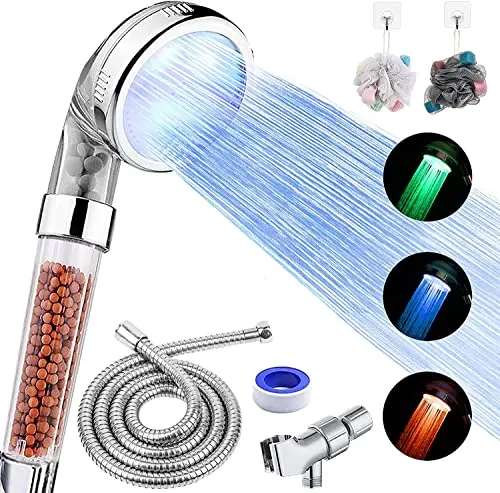
FLSH02 – Temperature-Sensing LED Handheld Kit
A complete handheld LED kit: a temperature-reactive head with a visible bead-filtration chamber, plus a 59-inch hose, holder, PTFE tape, hooks, and a shower sponge in the box. The micro-nozzle face is built to raise perceived pressure while trimming water use.
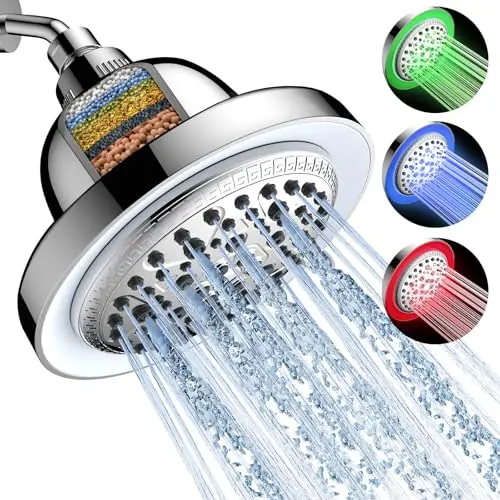
30314 – 7-Mode Filtered LED Rain Head
A wall-mounted head built around water treatment first: a stacked filter layer of KDF media, calcium sulfite, and alkaline mineral balls, paired with a 6.2-inch spray face and seven selectable modes. Temperature-linked LEDs shift color as the water heats.
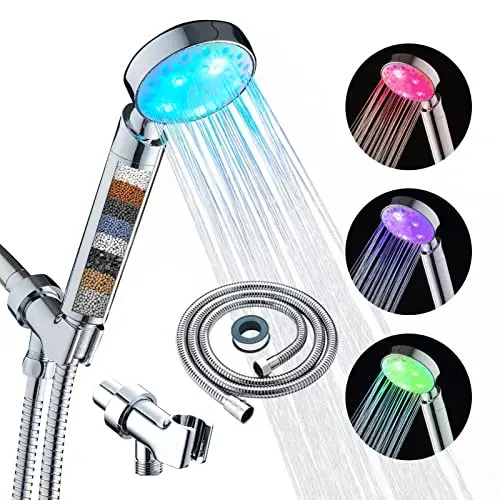
KR801-H-B – Auto Color-Changing Filtered Handheld
A filtered handheld that cycles through seven LED colors automatically and ships with a 60-inch stainless hose and adjustable bracket. Silicone jets flex to shed mineral buildup, and a flow control keeps the 1.8 gpm output feeling substantial.

Ceiling LED Shower System – 12-Inch Rain and Handheld Combo
A full ceiling-mounted shower system rather than a replacement head: a 12-inch water-powered LED rain head, a handheld on a 59-inch hose, a three-way diverter, and a brass valve body behind a trim plate, all in matte black stainless.
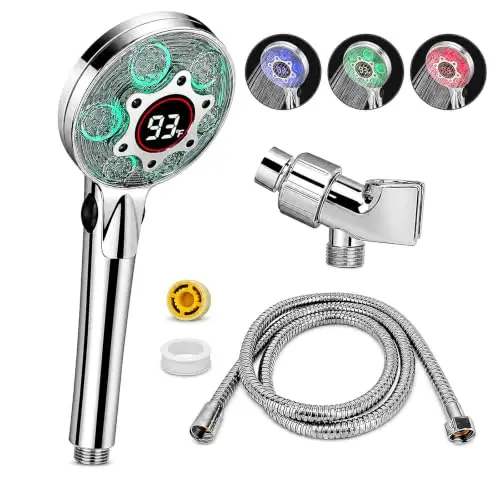
JIEYUMJ-002 – Handheld with Temperature Display
A handheld that pairs color-changing LEDs with a numeric temperature readout on the face, driven by a copper motor generator with a published service-hour rating. Three spray modes switch from a button on the handle.
RSH1 – 10-Inch Square LED Rain Head
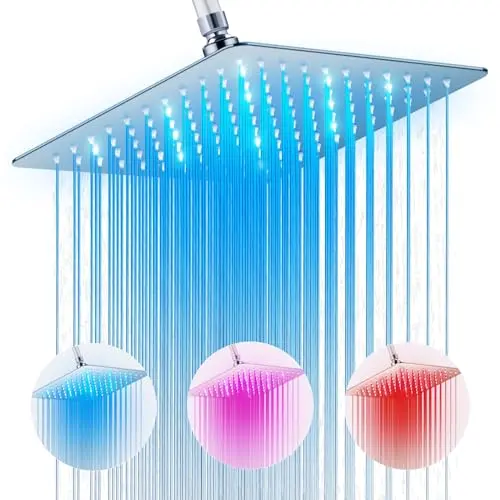
A 10-inch square rain head in stainless steel rather than ABS, with silicone nozzles, a 360-degree brass swivel at the inlet, and water-powered LEDs that shift blue, purple, then flashing red with temperature.
RDB1 – Rain and Handheld Combo with Extension Arm
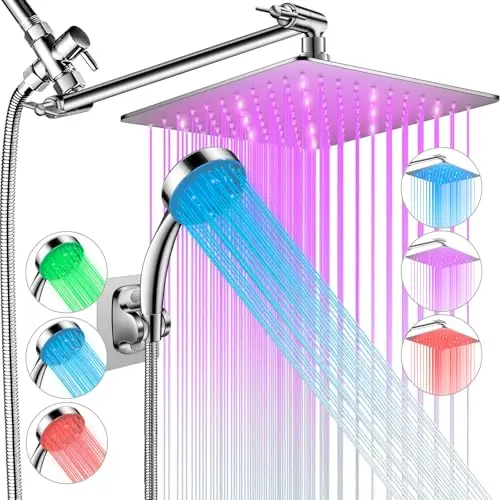
The same square stainless rain head, bundled into a system: a handheld on a 60-inch hose, a three-way diverter, and an 11-inch extension arm that raises the rainfall overhead and adjusts through roughly 180 degrees.
VortexRed – 79-Inch Hose Handheld Kit
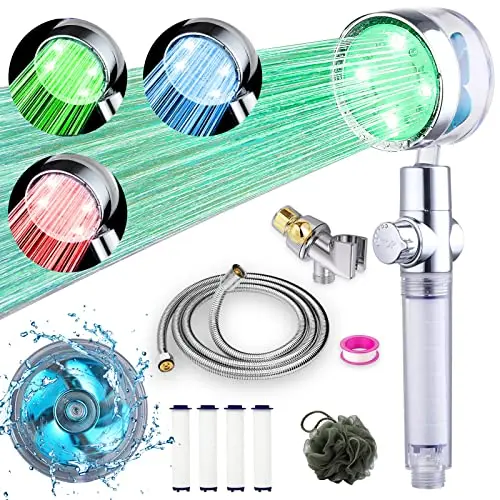
A handheld kit built around reach and control: a 79-inch explosion-proof hose, a one-key pause switch on the handle, four PP cotton filter cartridges, and an adjustable flow dial, all with temperature-linked LEDs.
How We Evaluated These LED Shower Heads
We didn’t plumb these shower heads into a flow bench or run them through months of real showers. What we did: cross-referenced 8 LED shower head models from 7 distinct brands across five decision axes – how the lighting behaves, spray performance, filtration media, build material and finish, and what actually ships in the box. We triangulated published specifications, feature sets, and owner feedback where available, then mapped each option against representative buyer profiles, from renters swapping a head in ten minutes to renovators replacing a valve behind tile.
The scoring framework weighted real-world performance (70%) – usable pressure, readable temperature cues, and a leak-free install with the parts included – against feature differentiation (30%) – a numeric temperature panel, a pause valve, real filter media, a metal body. Lighting got pressure-tested as a durability question rather than a novelty one, because a head that glows beautifully for six weeks and then goes dark is a worse product than a plain head that keeps working. We weighed metal against plastic, published warranties against silence, and the contents of each box against what a typical install actually demands.
We have no commercial relationship with any of the brands featured; recommendations track fit and differentiation, not brand preference. If you want the most complete handheld kit, the FASTRAS FLSH02 is your match. If the water in your building runs hard, the FEELSO 30314 attacks the water itself.
How to Choose the Right LED Shower Head
1. How LED Shower Heads Actually Get Their Power
Almost every LED shower head on the market is hydro-powered: a small impeller sits in the water path and spins a generator that feeds the lights. That’s why there are no batteries to replace and no wiring to run, and why the light only appears once water is flowing. The practical consequence is a water pressure threshold – below a certain flow the impeller doesn’t spin fast enough and the head stays dark, which is worth knowing before you buy one for a gravity-fed system or a top-floor apartment.
The quality of that little generator is the least visible and most consequential spec in the category. A copper motor assembly is generally a better bet than a bare plastic housing, and any manufacturer quoting a service-hour rating for the light engine is telling you something about expected life. None of it is serviceable – when the light dies, the head is done.
2. Temperature-Linked Color vs Decorative Color Cycling
LED colors fall into two philosophies. Temperature-linked heads change at temperature bands – typically green or blue for cool, blue or purple for warm, red for hot, sometimes flashing red as a scald warning. Auto-cycling heads simply rotate through a color sequence every few seconds regardless of water temperature. The second kind is fun for kids and useless as information.
Think honestly about which you want. If the appeal is a visual cue so you don’t step into a cold spray, buy temperature-linked and check that the bands are published. If the appeal is a colorful shower for a child who fights bath time, auto-cycling is cheaper and does the job. The KAIREY KR801-H-B is the pick on that side of the line.
3. Filtration Is the Part You'll Feel Within a Week
Filter media is where LED heads quietly separate. PP cotton cartridges catch sediment and rust particles and need swapping every few weeks. KDF media and calcium sulfite target chlorine and heavier metals – the stuff that leaves skin tight and hair straw-like in hard-water buildings. Some heads add alkaline mineral balls and claim a pH shift; treat that as a bonus rather than the reason to buy.
Check two things before choosing: whether replacement filters are sold as a separate, findable product, and whether the head tells you when to change them. A filter you can’t easily replace is a filter that stops working silently. For genuinely hard water, the FEELSO 30314 is the pick here, with the most substantial media list in this lineup.
4. Spray Modes, Nozzle Design, and Perceived Pressure
Most of what shoppers call high pressure in this category is nozzle geometry, not plumbing. A micro-nozzle face with many small, closely packed holes speeds the water up and reads as a stronger spray at the same flow rate. Air-in technology does something similar by mixing air into the stream, which feels softer but fuller against the skin.
Silicone nozzles matter more than they sound, because they flex – mineral crust wipes off with a thumb instead of needing a soak or a pin. If your water is hard, that single detail prevents the most common reason people replace a shower head: clogged, spraying-sideways jets. The FASTRAS FLSH02 leans hardest on micro-nozzle geometry to keep pressure feeling strong at a reduced flow.
5. What Ships in the Box Decides Your Install Day
Almost everything here uses a standard G1/2 connection, so a handheld head swaps onto an existing hose without tools. What changes your afternoon is the rest of the box. A hose and bracket included means a ten-minute job; a diverter or extension arm adds a little more; a valve and trim kit means a real renovation.
Read the included-components list carefully. Some kits bundle PTFE tape, extra washers, and a flow limiter – small things that save a trip – while others ship the head alone. The FEELSO, for instance, is a fixed shower head with no hose at all, which is exactly right if you’re replacing a wall-mounted head and a problem if you’re not.
6. Budget, Mid-Range, and Premium LED Shower Heads
Entry-level heads get you a plastic body, a working light engine, and usually a hose and bracket. Mid-range is where filtration media, a temperature readout, and better nozzle design appear. Premium buys metal – stainless rain heads, brass valve bodies, all-metal handhelds – plus longer warranties and, at the top, a complete shower system rather than a replacement head.
My honest read: the light itself isn’t worth paying much for. Filtration, nozzle quality, and metal determine whether you’re still happy next year. Spend up on those and treat the color show as a free extra.
Frequently Asked Questions
1. Do LED shower heads need batteries or electrical wiring?
No. Nearly all of them are hydro-powered, using a small impeller in the water path to spin a generator, so there are no no batteries to swap and nothing to connect to mains power. That’s also why the light only appears once water is flowing.
The catch is a minimum flow threshold. On a gravity-fed system or a very low-pressure supply, the impeller may not spin fast enough to trigger the LEDs at all. If your shower already feels weak, check manufacturer pressure notes first – the FASTRAS FLSH02 is a temperature-linked unit that needs no wiring whatsoever.
2. What's the difference between the FASTRAS FLSH02 and the KAIREY KR801-H-B?
Both are filtered handheld kits with a hose, holder, and a light that changes color – the split is in what the light is for and what the filtration does.
The FLSH02 is temperature-linked colors, so green, blue, and red correspond to water bands, with a flashing red warning before the water gets genuinely hot. It also uses dual filtration beads targeting chlorine and a claimed alkaline shift. The KR801-H-B runs auto-cycling color that rotates on a timer, regardless of temperature, and leans on silicone anti-clog nozzles plus a complete box with a 60-inch stainless hose and bracket.
Choose the FLSH02 if you want the light to mean something. Choose the KAIREY if you want a full kit and cheerful color at the lowest cost in this lineup.
3. How does the HUUKE RSH1 rain head compare with the Aolemi ceiling system?
One is a drop-in replacement and the other is a renovation. The RSH1 is a 10-inch square stainless rain head that screws onto your existing shower arm in about a minute, adds a 360-degree brass swivel and temperature-linked LED, and backs it with a one-year warranty.
The Aolemi replaces the works: a 12-inch LED rain head plus a handheld on a 59-inch hose, a brass valve body, trim plate, and a ceiling arm. It needs a rough-in behind the tile and standard 1/2-inch NPT plumbing, so it’s a project rather than an afternoon. If you’re already opening a wall, the Aolemi ceiling system is the more coherent purchase.
4. Will an LED shower head still light up with low water pressure?
Only if there’s enough flow to spin the generator. Each head has a flow threshold below which the light simply won’t come on, and some listings say so outright – the CWPW kit notes that color won’t appear if pressure is too low.
Two things help. A head with pressure-boosting nozzles concentrates the outlet holes and speeds up the water, which can be enough to trigger the light on a weak supply. And if you fit a pause valve or flow limiter, remember it’s cutting flow to the impeller too – expect the light to behave differently at low settings than at full.
Final Verdict
For most bathrooms, the FASTRAS FLSH02 is the answer. The color change tracks water temperature – the entire point of putting a light in a shower head – and the bead filtration plus the included hose, holder, and tape make it a one-box upgrade.
If your water runs hard, the FEELSO 30314 puts real filter media ahead of the light show and gives you seven spray modes to work with. Watching the budget? The KAIREY KR801-H-B gets you a filtered, color-changing handheld with hose and bracket for the least money here – just expect the light to be decoration, not information.
And if you’re already opening a wall, the Aolemi ceiling system builds LED into a full all-metal shower instead of bolting it onto an old one.
