
Best Lever Wine Openers – 2026 Reviews

A cork that crumbles halfway out is the kind of small failure that can derail a dinner before the first pour. A good lever wine opener prevents that with mechanics rather than muscle: a sharp screw, a stable fulcrum, and a handle that lets you pull in stages.
The lever is the defining part of this category, but it is not the whole story. The best lever wine openers also get the small details right, from a foil cutter that actually cuts to a grip that stays put when the cork is tight. Vertical levers, double-lever waiter’s keys, and wing corkscrews each solve the same problem in a different shape.
This guide is built for cross-shopping, not brand loyalty. We looked at how each opener handles natural and synthetic corks, how much control it gives you, and who it suits, so you can pick the lever wine opener that fits your table, your drawer, and your patience.
Best Lever Wine Openers – 2026 Reviews
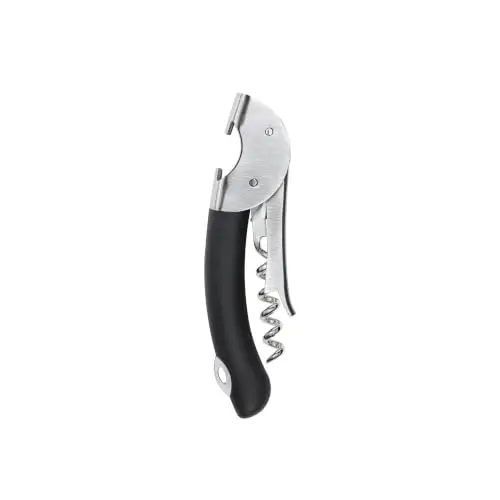
Steel Double Lever Waiter's Corkscrew – Compact Two-Stage Leverage
A compact waiter’s-style corkscrew with a double-lever fulcrum, a non-stick screw, and a built-in foil cutter and bottle opener. It is sized for a drawer or server’s pocket and built around controlled, two-stage leverage rather than a single dramatic pull.
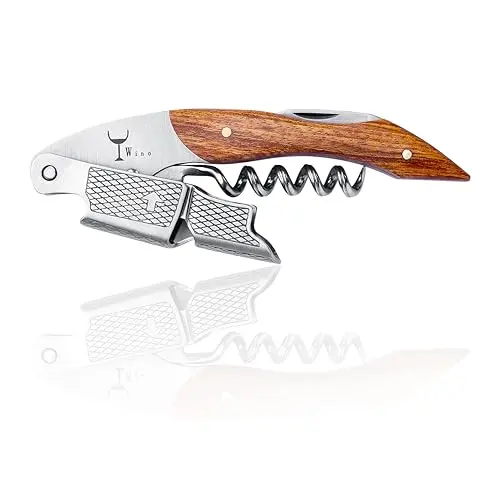
Wine Key – Double-Hinged Sommelier Corkscrew
A sommelier-style wine key with a spring-loaded double-hinged lever, a grooved screw, a curved foil cutter, and a bottle opener. The French Oak finish gives it a warmer look than an all-metal bar key, while the slim profile suits pocket or drawer storage.
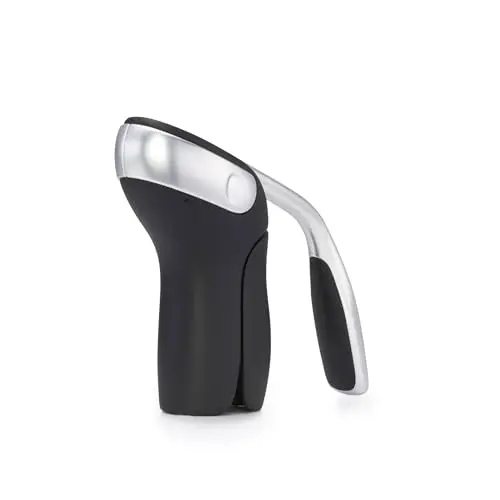
Steel Vertical Lever Corkscrew – One-Pump Cork Release
A vertical lever corkscrew with a one-pump action, a removable foil cutter, and an extra non-stick screw included. The die-cast zinc handle and soft grip are designed for controlled leverage, and the symmetrical shape works for left- and right-handed users.
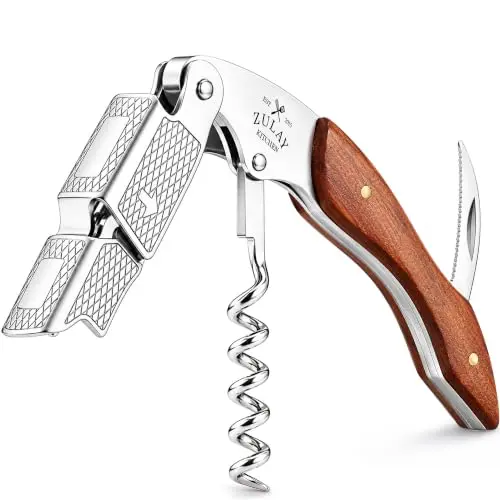
Corkscrew Wine Opener – Double-Hinged Server's Key
A waiter’s-style wine key with a double-hinged fulcrum, rosewood handle, serrated foil cutter, and cap remover. It folds into a slim profile, includes a lifetime warranty, and is aimed at servers, bartenders, and home hosts who want a traditional key.

Compact Vertical Corkscrew – Three-Second Lever Opening
A compact vertical lever corkscrew in 304 stainless steel with a long non-slip handle and a heavy-duty zinc alloy foil cutter. It uses a quick up-and-down motion and is built for both natural and synthetic corks.
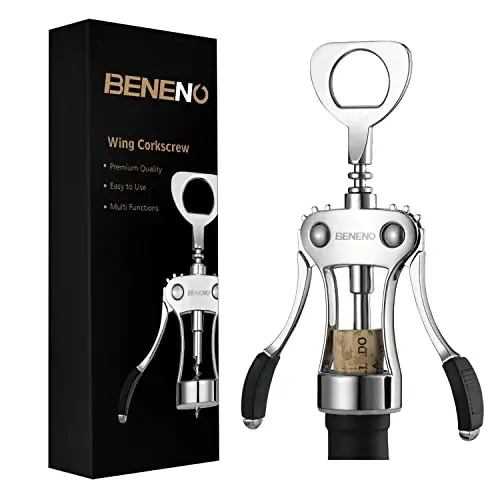
Premium Wing Corkscrew – Zinc-Alloy Lever Action
A wing corkscrew with a zinc alloy body, mechanical gear centering, a sharp-edged screw, and a built-in bottle opener. The wing handles are designed for leverage, and the multifunctional layout covers corked wine and capped bottles.

Waiter Corkscrew – Classic Rosewood Server's Key
A classic waiter corkscrew with a rosewood handle, stainless steel body, serrated foil knife, and double-hinged fulcrum. It folds into a slim server’s key and includes a cap remover for beer and other capped bottles.

Vertical Lever Corkscrew – Ball-Bearing Effort Reduction
A vertical lever corkscrew with a ball-bearing design, zinc alloy handle, Teflon-coated carbon steel screw, and a stainless steel foil cutter. It is battery-free, works with natural and synthetic corks, and is built for a push-down, lift-up routine.

Heavy-Duty Wing Corkscrew – Ergonomic Lever Handle
A heavy-duty wing corkscrew in zinc alloy with an ergonomic rubber handle, sharp-edged screw, and multifunctional bottle-opening layout. It is designed for wine, beer, and other capped bottles, with a hanging end for storage.

Wine Lever Corkscrew – One-Pull Cork Removal
A lever corkscrew with a one-pull action, included foil cutter, and spare spiral. The Merlot finish and ergonomic handle are designed for controlled leverage, and the tool is built to fit standard wine bottle necks.
How We Evaluated These Lever Wine Openers
We didn’t run a timed cork-pull trial or measure lever force with a workshop gauge. What we did: cross-referenced 10 lever wine opener models from 9 distinct brands across six decision axes – lever mechanism, cork compatibility, foil-cutter usefulness, grip and weight, included extras, and owner feedback where available. We triangulated published specifications, feature sets, and use-case fit for home hosts, servers, and gift buyers. A lever opener can look simple, but the difference between a clean pop and a crumbled cork usually comes down to screw sharpness, fulcrum geometry, and how much control the handle gives you.
We audited the little details that separate a smooth pull from a wrestling match: how the screw centers, whether the lever has a comfortable stop, and whether the foil cutter is a real tool or a token add-on. The scoring framework weighted real-world fit and performance (70%) – how cleanly each opener handles natural and synthetic corks in its intended setting – against feature differentiation (30%) – mechanism design, extras, and use-case specificity. We have no commercial relationship with any brand here; recommendations track fit and differentiation, not brand preference. If you want the most balanced everyday key, the Steel Double Lever Waiter’s Corkscrew is our top pick; if you prefer a slim sommelier-style lever, the Wine Key is the value route.
How to Choose the Right Lever Wine Opener
1. What Makes a Lever Wine Opener Actually Easy to Use
A lever wine opener is only as good as its fulcrum geometry. The lever multiplies your effort, but if the screw does not enter the cork centered, you lose that advantage fast. Look for a sharp, centered screw and a lever stop that lets you pull in stages rather than forcing one big yank.
Grip and control matter just as much. A soft, non-slip handle keeps your hand from sliding when the cork is tight, and a balanced weight helps you feel what the cork is doing. The best lever wine openers make the pull feel predictable, not dramatic.
2. Double-Lever, Vertical Lever, and Wing Lever: Which Mechanism Fits Your Pour
A double-lever waiter’s key is the most portable option: it folds slim, uses two fulcrum positions, and usually includes a foil cutter. A vertical lever sits on the bottle and uses a pump or pull motion, which is faster for high-volume serving but takes up more drawer space. A wing corkscrew uses two rising handles and is intuitive for guests, though it can be fussier with short corks.
If you want a drawer-friendly key for mixed bottles, the Steel Double Lever Waiter’s Corkscrew is the pick. If you open several bottles at once, a vertical lever earns its countertop footprint.
3. Cork Type, Foil Cutters, and Bottle Compatibility for Lever Wine Openers
Natural cork rewards a sharp screw and a slow, centered pull. Synthetic cork can be more slippery, so a screw with a grippy coating or a well-cut groove helps. Most lever wine openers fit standard bottle necks, but check the bottle-neck fit if you open unusual shapes or oversized bottles.
A serrated foil cutter should cut cleanly without chewing the foil. For a slim key with a curved foil cutter, the Wine Key is a sensible route.
4. Grip, Weight, and Storage: The Lever Wine Opener Details That Matter
A non-slip grip is not a luxury on a lever tool; it is the difference between control and a bruised thumb. Die-cast zinc and stainless steel add heft, but a tool that is too heavy can feel clumsy after the third bottle. Waiter’s keys win on drawer-friendly storage, while vertical levers need shelf or cabinet space.
5. How Much Should You Spend on a Lever Wine Opener?
A budget-friendly key can open bottles well if the screw is sharp and the fulcrum is stable. Mid-range lever tools usually add better grips, nicer foil cutters, and more consistent alignment. A premium vertical lever makes sense if you open bottles often and want a one-pump routine with spare parts included.
If you open bottles often and want a one-pump lever with a removable foil cutter, the Steel Vertical Lever Corkscrew is the premium pick.
6. Care and Longevity for Lever Wine Openers
Wipe the non-stick screw after use so cork dust does not build up, and keep the foil cutter clean and dry. Store the tool closed or in a drawer with dry storage to protect the finish. A spare screw, when included, is worth keeping with the tool rather than losing it in a kitchen drawer.
Frequently Asked Questions
1. Are all lever wine openers actually lever-driven?
No. The phrase covers a few mechanisms: double-lever waiter’s keys, vertical lever corkscrews, and wing corkscrews that use two rising handles. All multiply your effort through a lever or hinge, but they suit different settings. A waiter’s key is the most portable; a vertical lever is fastest for repeated opening; a wing corkscrew is the easiest for guests to understand.
2. What's the difference between the OXO Steel Double Lever Waiter's Corkscrew and the Wino Wine Key?
The OXO Steel Double Lever Waiter’s Corkscrew feels more like a compact all-rounder: a soft non-slip body, a built-in foil cutter, and a bottle opener, with a two-stage lever that suits mixed corks. The Wino Wine Key is slimmer and more sommelier-style, with a spring-loaded double-hinged lever and a grooved screw that seats quietly. Choose the OXO for a comfortable everyday drawer key; choose the Wino for a pocketable service key with a sharper foil-cut feel.
3. How does the OXO Steel Vertical Lever Corkscrew compare with the Rabbit Wine Lever Corkscrew?
The OXO Steel Vertical Lever Corkscrew is the more polished one-pump design, with a removable foil cutter, a soft non-slip grip, and an extra non-stick screw included. The Rabbit Wine Lever Corkscrew leans on its one-pull routine and spare spiral, but feedback flags plastic tabs as a long-term weak point. The OXO is the safer premium pick; the Rabbit is the faster-feeling icon if you treat it gently.
4. Do lever wine openers work with synthetic corks?
Most do, but the screw and alignment matter more with synthetic cork. A sharp, centered screw and a steady two-stage pull reduce the chance of the cork slipping or pushing in. Vertical levers and wing corkscrews can handle synthetic corks well when the bottle is stable; waiter’s keys need a little more care because you are holding the bottle with one hand.
5. Which lever wine opener is best for serving a crowd?
A vertical lever is usually the fastest for a crowd because it sits on the bottle and releases the cork with a pump or pull. The Steel Vertical Lever Corkscrew is a strong choice for repeated opening, while a double-lever waiter’s key stays more portable for servers moving between tables. If you mostly open a bottle or two at home, a slim key is easier to store.
Final Verdict
For most buyers, the Steel Double Lever Waiter’s Corkscrew is the lever wine opener to get: it pairs compact two-stage leverage with a comfortable grip and a built-in foil cutter, so it handles everyday bottles without turning opening wine into a task. If you want a slim sommelier-style key, the Wine Key is the value route, with a double-hinged lever and a clean foil cut. For high-volume serving or a one-pump routine, the Steel Vertical Lever Corkscrew is the premium pick. And if you want a traditional server’s key with a warranty, the Corkscrew Wine Opener from Zulay Kitchen is the practical alternative.
