
Best Light Comforters – 2026 Reviews

A light comforter is the bedding equivalent of a good three-season jacket. You want enough fill to take the chill off, but not so much that you wake up overheated at 3 a.m. The tricky part is that ‘light” means different things across brands: some comforters are thin and airy, while others are simply less dense than a winter-weight quilt.
The two axes that separate a great light comforter from a mediocre one are breathability and fill stability. A breathable shell helps heat escape, and box stitching or well-distributed fill keeps the comforter from turning into a lumpy, cold-spotted mess after a few washes. Whether you want a standalone comforter or a duvet insert changes which details matter most.
We looked across the market at light comforters from multiple brands, focusing on how each one handles warmth, airflow, attachment points, and care. Some are built for hot sleepers, some are better as a complete set, and some are simply the airiest layer you can put on a bed. The right pick depends on your sleep temperature and how you like to make the bed.
Best Light Comforters – 2026 Reviews
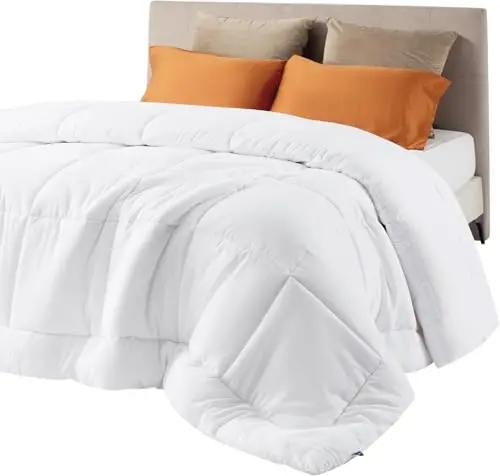
Comforter Duvet Insert – All-Season Box-Stitched Comfort
A white all-season duvet insert with box stitching, a soft polyester shell, and eight tabs for securing a cover. It can work as a standalone comforter or a duvet insert, and the fill is designed to stay evenly distributed.

All-Season Cooling Comforter – Lightweight Duvet Insert
A white down-alternative comforter with a soft polyester cover, box stitching, and corner tabs. It is designed as a lightweight duvet insert or standalone comforter and needs a short airing-out period after unpacking.

Reversible Comforter Set – Lightweight Three-Piece Value
A three-piece reversible comforter set with a grey and light-grey face, two matching shams, and a lightweight microfiber fill. It is machine washable and designed for year-round use.

Queen Duvet Insert – Ultra-Light Everyday Layer
A white queen duvet insert with a microfiber shell, box stitching, and corner loops. It is one of the lightest options here and works as a duvet insert or a simple standalone layer.
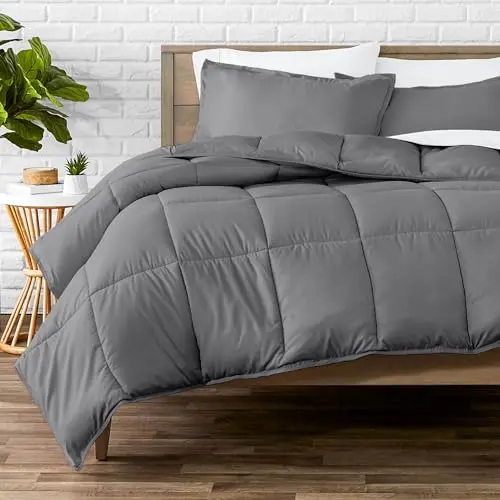
Ultra-Soft Comforter Set – Brushed All-Season Set
A four-piece comforter set with a brushed microfiber shell, 300 GSM down-alternative fill, and two matching shams. It is designed as an all-season set with a soft, lived-in feel.
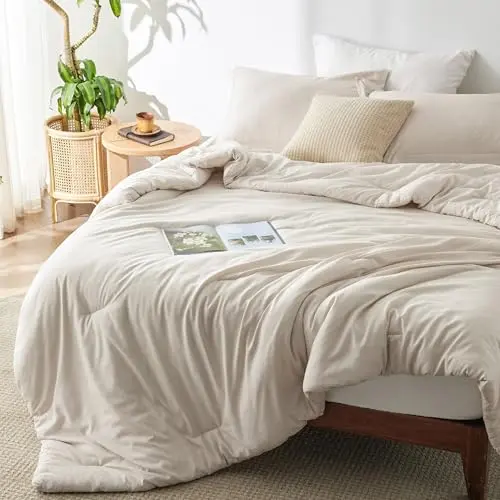
Cationic Dyed Comforter Set – Heather-Finish Three-Piece Set
A three-piece queen comforter set with a heather-finish cover, soft brushed microfiber, and two matching shams. The lightweight fill and corner loops let it work as a standalone comforter or duvet insert.
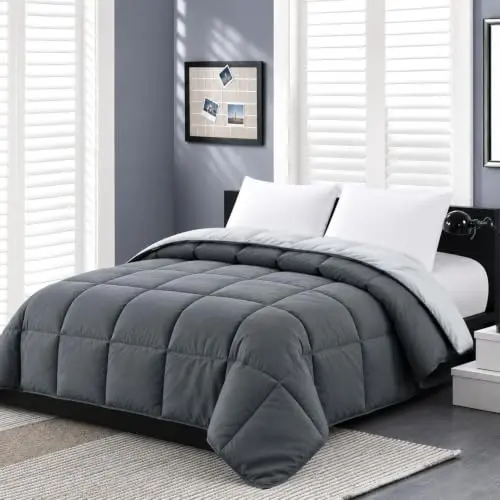
Reversible Duvet Insert – Lightweight Clump-Free Layer
A reversible grey and light-grey duvet insert with a lightweight microfiber fill, four corner tabs, and a clump-resistant design. It can be used alone or inside a duvet cover.
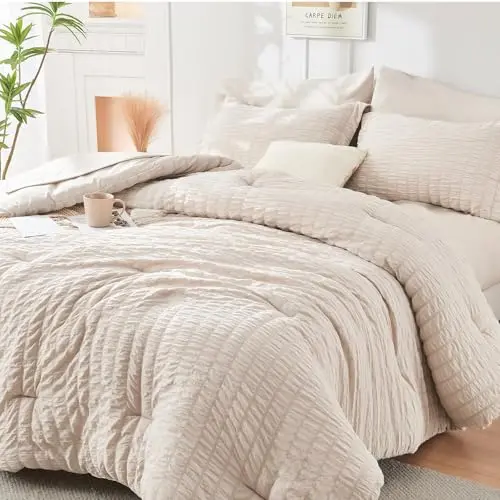
Seersucker Bed in a Bag – Complete Seven-Piece Set
A seven-piece queen bed-in-a-bag set with a seersucker comforter, sheets, pillowcases, and shams. The textured cover and deep-pocket fitted sheet make it a complete bedding refresh.
How We Evaluated These Light Comforters
We didn’t run long-term wash-cycle durability testing or sleep trials across every body type. What we did: cross-referenced 8 light comforter models from 7 distinct brands across five decision axes – fill weight and loft, breathability, cover fabric, attachment tabs, and washability. We triangulated published specifications, feature sets, and real-world feedback where available, then mapped each option against realistic shopper profiles: hot sleepers, guest-room setups, dorm rooms, and primary bedrooms where bedding needs to look finished.
The scoring framework weighted real-world fit (70%) – how well each comforter delivers on its stated use case – against feature differentiation (30%) – the construction details and design choices that separate one option from another. We have no commercial relationship with any of the brands featured; recommendations track fit and differentiation, not brand preference. If you want one versatile layer for most beds, the Bedsure Comforter Duvet Insert is the safest starting point. If you sleep warm and want a cooler hand feel, the COHOME All-Season Cooling Comforter is the better route.
We also weighed qualitative price tiers, because a light comforter should not require a premium spend to be breathable and washable. Thin data was not padded with invented use cases; where a product had a clear limitation, we noted it. The result is a lineup built for different sleep temperatures and bed setups rather than a single best label applied to every shopper.
How to Choose the Right Light Comforter
1. What Makes a Comforter Light Enough for Year-Round Use
A light comforter is not just a thinner version of a winter comforter. The best ones are engineered around breathability, even fill distribution, and a cover fabric that feels cool rather than slick or heavy. That matters because most people use a light comforter as a year-round layer, not as a single-season blanket. If the fill is too dense, the comforter traps heat; if the shell is too stiff, it feels clammy even when the fill is light.
Start by looking at how the brand describes the fill. A down-alternative fill can feel light and airy, but the finished weight matters more than the label. Box stitching is another quiet indicator: it keeps the fill from sliding into one end, which is what makes a light comforter feel lumpy or cold in spots. For hot sleepers, the COHOME All-Season Cooling Comforter is a useful reference point because it pairs a lightweight fill with a breathable cover.
2. Fill Weight, Loft, and Breathability in a Light Comforter
Fill weight is the clearest shorthand for how warm a comforter will sleep, but it is not the only number that matters. Loft is how much the comforter puffs up, and it affects whether the bed feels cloud-like or flat. A light comforter can have low fill weight and still feel cozy if the fibers are lofted well; a heavier fill can feel suffocating if the shell does not breathe.
Look for language like all-season, breathable, and lightweight, but treat those as starting points rather than guarantees. The Bedsure Comforter Duvet Insert is a good example of the middle ground: it has enough structure to look finished on the bed without the dense, heavy feel of a winter comforter. If you sleep hot or live in a warm climate, lean toward the lower-loft options first.
3. Standalone Comforter vs. Duvet Insert: Which Light Comforter Fits Your Bed
A standalone comforter is meant to be seen, so the cover fabric and stitching matter more. A duvet insert is designed to live inside a cover, which is why it often has a simpler shell and more attachment points. Neither is inherently better; the right choice depends on whether you want to wash one piece or two.
If you like changing your bedding look with the seasons, an insert with corner tabs or loops gives you more flexibility. If you want a bed that looks pulled together in one step, a set with shams is the easier route. The Homelike Moment Reversible Comforter Set is a good example of the set approach, while the DOWNCOOL Queen Duvet Insert is the lighter, cover-friendly route.
4. Cover Fabric, Stitching, and Tabs That Keep a Light Comforter in Place
Cover fabric decides how the comforter feels against your skin. Brushed microfiber is soft and affordable, while polyester shells are common because they are durable and easy to wash. The tradeoff is that some polyester covers can feel warm or slippery, so look for language like breathable or cooling if you sleep hot.
Stitching is the other durability marker. Box stitching creates pockets that hold the fill in place; quilting or ultrasonic pressing can serve a similar purpose in lighter bedspreads. If the stitching is sparse, the fill may migrate after a few washes. Attachment tabs are worth checking if you plan to use a duvet cover, because they keep the insert from bunching at the foot of the bed.
5. How to Wash and Maintain a Light Comforter
Most light comforters are machine washable, but the care details still matter. Wash in cold water on a gentle cycle, then tumble dry on low heat or air-dry. High heat can break down the fill and make a light comforter feel flat. For larger sizes, a front-loading or large-capacity machine gives the comforter room to move, which helps it rinse and dry evenly.
Shake the comforter out before drying and check that the fill has not clumped in the corners. A duvet insert may need a few hours of airing after unpacking to recover its loft, especially if it arrived vacuum-sealed. If you use a cover, wash the cover more often than the insert to keep the bedding fresh without over-washing the fill.
Frequently Asked Questions
1. What's the difference between the Bedsure Comforter Duvet Insert and the COHOME All-Season Cooling Comforter?
The Bedsure Comforter Duvet Insert is the more versatile all-rounder: it has eight attachment tabs, a box-stitched build, and enough structure to work as a standalone comforter or inside a cover. The COHOME All-Season Cooling Comforter leans more toward breathability and a cooler hand feel, which makes it the better match for hot sleepers or warm rooms. Both are light enough for year-round use, but Bedsure is the safer pick if you want one comforter to do both jobs. The Bedsure Comforter Duvet Insert is the one I’d choose for a primary bed; the COHOME All-Season Cooling Comforter is the better hot-weather layer.
2. How does the Homelike Moment Reversible Comforter Set compare with the Bare Home Ultra-Soft Comforter Set?
The Homelike Moment Reversible Comforter Set is the lighter, more budget-friendly option with a reversible grey finish, two shams, and OEKO-TEX certified fabric. The Bare Home Ultra-Soft Comforter Set feels more substantial thanks to its double-brushed microfiber and 300 GSM fill, so it is better for someone who wants a soft, cozy layer rather than the airiest feel. If you sleep warm or want a guest-room set on a tighter budget, Homelike Moment is the practical pick. If you want a more polished, slightly heavier set for a primary bedroom, Bare Home is the better fit.
3. Are light comforters warm enough for winter?
Yes, if you treat them as part of a layering system rather than a single winter blanket. A light comforter works well over flannel sheets or under a quilt when temperatures drop, and it is easier to regulate than a heavy comforter. The key is loft and fill distribution: a low-loft comforter with box stitching traps less heat than a dense, high-loft one. If you sleep cold, look for a mid-weight fill and add a blanket on top rather than sizing up to a winter comforter.
4. Should I use a light comforter as a duvet insert or standalone?
It depends on how you want to wash and style the bed. A standalone comforter should have a finished cover and neat stitching because you will see it every day. A duvet insert is usually simpler and is designed to be covered, so corner tabs or loops matter more than the shell pattern. If you like changing colors with the seasons, an insert plus a cover is more flexible. If you want one-step bed making, a set with shams is the easier choice.
5. How do I keep a light comforter from clumping after washing?
Wash it on a gentle cycle in cold water, then dry it on low heat with a few clean dryer balls or tennis balls to break up damp pockets. Take it out halfway through and shake it vigorously, then finish drying until the fill is completely dry. Box stitching helps prevent clumping, but a front-loading machine also gives the comforter more room to move. Never use high heat, which can flatten the down-alternative fill and make the comforter feel thin.
Final Verdict
For most shoppers, the Bedsure Comforter Duvet Insert is the light comforter to beat. It has the right balance of breathable all-season fill, box-stitched structure, and eight attachment tabs, so it works as a standalone layer or inside a duvet cover. If you sleep hot, the COHOME All-Season Cooling Comforter is the better match with its cooler hand feel. If you want a complete set on a tighter budget, the Homelike Moment Reversible Comforter Set covers the bed with two shams and a reversible look. And if you want the airiest feel in the lineup, the DOWNCOOL Queen Duvet Insert is the one to choose. Start with your sleep temperature and whether you want a set or a single insert, and the right pick becomes obvious.
