
Best Lightweight Comforters For Hot Sleepers – 2026 Reviews

A hot sleeper knows the drill: you kick off the duvet, flip the pillow, and hunt for the cool spot. The problem usually isn’t the room temperature alone. It’s a comforter that traps heat, feels clammy, or carries more loft than your body wants at 2 a.m. A genuinely lightweight comforter for hot sleepers should move air, wick moisture, and feel cool to the touch without turning into a flimsy sheet.
The market splits into two broad camps. Traditional down-alternative comforters keep things airy and affordable, while cooling-fabric comforters use technical weaves and Q-Max ratings to pull heat away faster. Both can work; the right answer depends on whether you run hot all night or just need a lighter layer in an air-conditioned bedroom.
We cross-shopped lightweight comforters across major brands and focused on the details that matter for hot sleepers: breathability, fill distribution, drape, and how each option handles washing. Below, you’ll find picks for different budgets and sleep styles, not a single-brand parade.
Best Lightweight Comforters for Hot Sleepers – 2026 Reviews

Cooling Comforter Queen – Double-Sided Q-Max Chill
A double-sided cooling comforter with Q-Max 0.45+ fabric, moisture-wicking performance, and a silky hand feel for hot sleepers and night sweats.
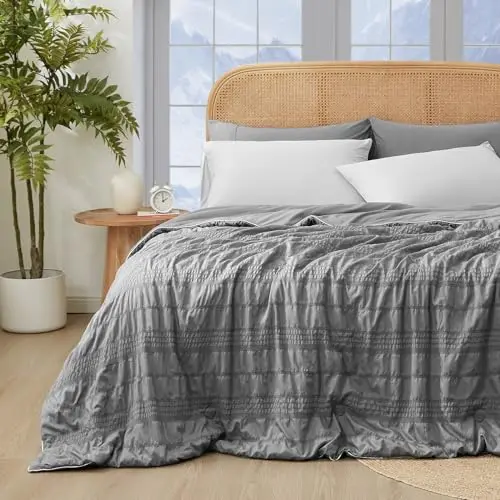
Seersucker Cooling Comforter – Reversible Cool-to-Textured
A reversible cooling comforter with a Q-Max 0.45+ face, textured seersucker reverse, and lightweight down-alternative fill.
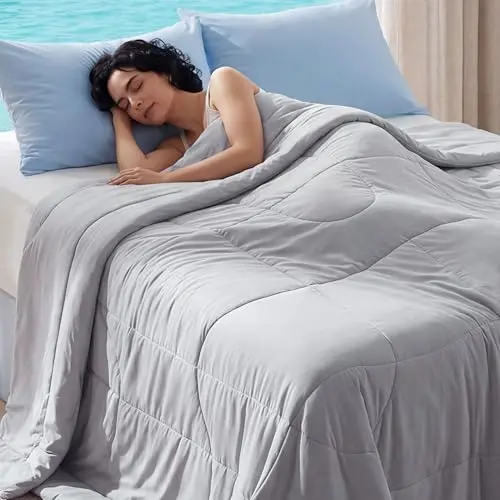
Cooling Comforter – Dual-Sided Cool Tech
A premium cooling comforter with dual-sided cool-tech fabric, Q-Max 0.4+ performance, and silky ultra-fine fibers for hot sleepers.

Cooling Comforter Queen – Budget Night-Sweat Relief
A budget-friendly cooling comforter with dual-side cooling fibers, honeycomb quilting, and an anti-static finish for warm sleepers.
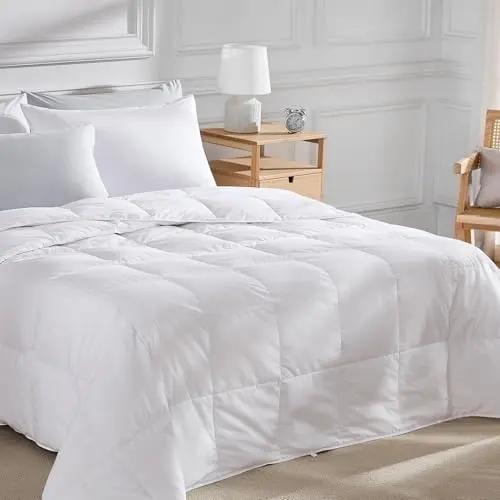
Lightweight Goose Feather Down Comforter – Hotel-Style Breathability
A lightweight goose feather and down fiber comforter with a breathable cotton-blend shell, eight duvet tabs, and hotel-style drape.

All-Season Duvet Insert – Lightweight Down Alternative
A lightweight all-season duvet insert with whole-piece polyfill, box stitching, and eight corner tabs for secure coverage.
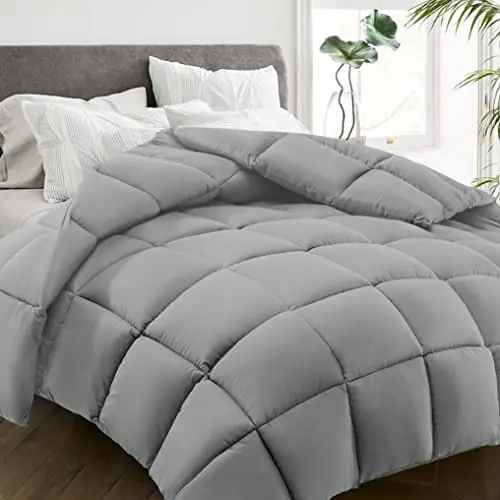
All-Season Comforter – Cooling Down Alternative
A soft all-season comforter with down-alternative fill, box-stitch quilting, and corner tabs for a lightweight layer.
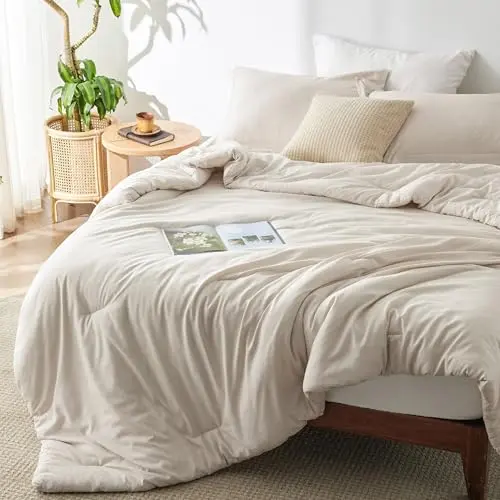
Cationic Dyed Comforter Set – Soft 3-Piece Bedding
A soft three-piece comforter set with brushed microfiber, a heathered cationic finish, and matching pillow shams.
How We Evaluated These Lightweight Comforters for Hot Sleepers
We didn’t run climate-chamber tests or sleep under each comforter for weeks. What we did: cross-referenced 8 lightweight comforter models from 7 distinct brands across 6 decision axes – cooling touch and Q-Max claims, breathability and airflow, fill material and distribution, drape and weight, care requirements, and fit for hot sleepers. We triangulated published specifications, feature sets, owner feedback where available, and use-case fit against the realities of night sweats, warm bedrooms, and air-conditioned sleeping. We also mapped how each comforter behaves as a standalone layer versus a duvet insert, because hot sleepers often switch between the two.
The scoring framework weighed real-world fit for hot sleepers (70%) – how well each option moved heat, avoided clamminess, and stayed comfortable through the night – against feature differentiation (30%) – cooling technology, fill design, tabs or loops, and care practicality. We have no commercial relationship with any brand featured; recommendations track fit and differentiation, not brand preference. A few things we can’t tell you: how each fabric feels against your skin or how it performs in your specific bedroom humidity. What we can: show which designs are built for heat, which are simply lightweight all-season comforters, and where the tradeoffs sit. If you want the most complete cooling package, the EASELAND Cooling Comforter Queen is the strongest match; if you prefer a reversible textured finish, the Cozy Bliss Seersucker Cooling Comforter is the better route.
How to Choose the Right Lightweight Comforters for Hot Sleepers
1. What Makes a Comforter Lightweight Enough for Hot Sleepers
A comforter can be labeled lightweight and still sleep hot if the shell doesn’t breathe. The useful definition combines fill weight, a breathable shell, and enough air movement to keep humid air from pooling under the covers. A hot sleeper usually wants a low-loft comforter that still drapes over the body instead of a paper-thin layer that leaves cold spots.
Look for box stitching or honeycomb quilting to keep fill even, plus corner tabs if you plan to use a duvet cover. If you want the most cooling-specific build in this roundup, the EASELAND Cooling Comforter Queen is the pick; it pairs a cool-to-touch face with a lightweight drape.
2. Cooling Tech and Breathability: Q-Max, Airflow, and Moisture Wicking
Cooling fabric is often described with a Q-Max rating, which measures how quickly a surface pulls heat away from skin. A higher value generally means a stronger cool-to-touch sensation, but it isn’t the only thing that matters. Moisture-wicking performance and airflow decide whether you stay dry after the initial chill fades.
Double-sided cooling comforters are useful because both faces can feel cool, while reversible designs may pair a cooling face with a textured or breathable reverse. For a reversible option with a strong cooling face, the Cozy Bliss Seersucker Cooling Comforter is the better match.
3. Fill Materials for Hot Sleepers: Down Alternative vs. Feather vs. Cooling Synthetics
Fill choice changes how a comforter traps or releases heat. Down-alternative fill is common in affordable lightweight comforters because it stays fluffy without much weight. A feather-and-down blend can feel airier and more natural, but it often requires dry cleaning. Cooling synthetics such as nylon and spandex are used on the shell for a cool hand feel, not usually as the main fill.
If you want a natural fill and hotel-style drape, the Pacific Coast Lightweight Goose Feather Down Comforter is the route to take, provided you’re comfortable with spot cleaning or dry cleaning.
4. Size, Drape, and Fit for a Cooling Comforter
Queen comforters commonly land around 88 to 90 inches square, but a few inches of difference affects coverage on deep mattresses. Check the corner tabs or loops if you use a duvet cover; they keep the insert from bunching at the foot of the bed. Drape matters too. A lightweight comforter should settle over your body without pressing down or leaving your shoulders exposed.
5. Care and Maintenance for Lightweight Comforters
Most lightweight comforters are designed for machine wash cold and a low tumble dry. High heat can damage cooling fibers, shrink the shell, or break down fill loft. Wash them alone or with a few towels to rebalance the load, and avoid bleach unless the care label allows it. Feather and down blends are the exception; check whether the brand recommends dry cleaning or spot cleaning before you buy.
6. Budget, Mid-Range, and Premium Comforters: What Changes
Entry-level comforters usually focus on basic lightweight coverage, while mid-range options add cooling fabric, better quilting, or reversible designs. Premium picks tend to combine technical cooling fibers with finer shells, more secure duvet attachments, and stricter certifications. You don’t need the most expensive comforter to sleep cooler, but the entry-level and premium tiers differ most in fabric feel, cooling longevity, and care demands.
Frequently Asked Questions
1. What's the difference between the EASELAND Cooling Comforter and the Cozy Bliss Seersucker Cooling Comforter?
The EASELAND leans on a smooth cooling nylon-spandex face on both sides, with a Q-Max 0.45+ rating and a moisture-wicking finish. It feels sleek and is the better choice if you want consistent cooling across the whole comforter. The Cozy Bliss uses a reversible seersucker design: one side is cool-to-touch, the other is textured and breathable. It is the pick if you want a decor-friendly look and don’t mind a slightly more casual feel. For a textured reverse, go with the Cozy Bliss Seersucker Cooling Comforter.
2. Are lightweight comforters warm enough for hot sleepers in air-conditioned rooms?
Yes, as long as the comforter has enough loft to trap a little warmth. Lightweight doesn’t mean uninsulated; it means the fill and shell are designed to release heat rather than hold it. In air-conditioned bedrooms, a breathable lightweight comforter with even fill distribution is usually more comfortable than a heavy quilt. If you sleep cold despite running the AC, look for a low-loft comforter with a soft, close drape rather than the thinnest option available.
3. What's the difference between the Bedsure Cooling Comforter and the DOWNCOOL Cooling Comforter?
The Bedsure is the more polished option, with a silky ultra-fine fiber shell, a Q-Max 0.4+ rating, and four corner rings for duvet-cover use. It feels more premium and has a smoother, cooler hand. The DOWNCOOL is the budget-friendly route, with dual-side cooling fibers, honeycomb quilting, and an anti-static finish that helps with pet hair. Choose Bedsure for a silky feel and premium finish; choose DOWNCOOL for solid cooling on a tighter budget.
4. Do cooling comforters actually help with night sweats?
They can help, but they aren’t a medical fix. A Q-Max cooling fabric pulls heat from your skin at contact, and a moisture-wicking shell moves sweat away instead of letting it sit. The bigger wins come from a breathable lightweight layer combined with room ventilation and moisture-wicking sheets. If night sweats are persistent or severe, treat bedding as one part of the solution and talk to a healthcare professional about underlying causes.
5. How do I keep a lightweight comforter from sliding off the bed?
Start with corner tabs or loops and a duvet cover that ties at all four corners. A textured reverse can add friction against smooth sheets, while a smooth cooling face may slide more. If your comforter still wanders, tuck the foot end loosely or use a duvet clip; the goal is to reduce movement without pressing the comforter against your body.
Final Verdict
For most hot sleepers, the EASELAND Cooling Comforter Queen is the clear starting point. It pairs a Q-Max 0.45+ cooling surface with a lightweight double-sided build that actually feels cool without turning into a sheet. If budget is the deciding factor, the DOWNCOOL Cooling Comforter delivers credible dual-side cooling for less. If you want the most premium, silky feel, the Bedsure Cooling Comforter is the splurge, though its smooth fabric can slide. And if natural fill matters more than machine-wash convenience, the Pacific Coast Lightweight Goose Feather Down Comforter brings hotel-style breathability with dry-clean care. Start with EASELAND for the best balance; move to DOWNCOOL for value, Bedsure for polish, or Pacific Coast for a natural fill.
