
Best Lightweight Duvet Covers – 2026 Reviews

There’s a particular kind of regret that comes from buying a gorgeous duvet cover and realizing, three nights in, that you’ve essentially sealed your comforter inside a plastic bag. A cover that photographs crisp but sleeps hot is worse than a plain one that breathes.
Lightweight isn’t a marketing word here. It’s a real difference in fabric weight, weave, and how much air moves through the cloth. A washed cotton percale and a brushed microfiber can feel equally light in the hand and sleep completely differently – and neither one rescues you if the insert underneath is running hot.
The second axis shoppers consistently underweight is hardware. Eight interior ties and a full-length hidden zip versus four ties and a row of buttons is the difference between a bed that stays made and one you wrestle every morning. We cross-shopped the market on both fronts – cotton, sateen, and microfiber – plus sizing accuracy and how each one holds up in the wash.
Best Lightweight Duvet Covers – 2026 Reviews

Washed Cotton Linen-Like Set – Relaxed, Breathable Lightweight Feel
A three-piece queen set in 100% washed cotton with a deliberately rumpled, linen-adjacent hand. Hidden zip closure, eight interior corner ties, and two envelope-closure pillowcases, all machine washable.

Washed Cotton Duvet Set – Linen Feel With a Soft Wrinkle
100% washed cotton in a solid cornflower blue with a rumpled, linen-style finish. The queen set includes a 90×90 cover, two pillowcases, eight interior ties, and a hidden zipper.

400 Thread Count Sateen Cover – Smooth, Hotel-Crisp Cotton
A single 400 thread count long-staple cotton sateen duvet cover in bright white, with a button closure and four interior corner ties. Cover only – pillow shams and insert are sold separately.

Prewashed Duvet Cover Set – Cotton-Like Softness, Entry Price
A prewashed polyester microfiber set built to feel cotton-adjacent, with a soft brushed hand, hidden zipper, eight corner ties, and two pillow shams. OEKO-TEX certified and genuinely light.

Cotton Leaf Duvet Cover Set – Patterned Without Losing Breathability
100% cotton in a blue leaf print, with a wide hidden zipper, eight corner ties, and two pillowcases. A patterned option that keeps breathable cotton construction instead of defaulting to microfiber.

Brushed Microfiber Duvet Cover Set – Wrinkle-Resistant and Easy
A soft brushed microfiber set in true white with a concealed zipper, two pillowcases, and a wrinkle-resistant finish that holds its shape through regular washing.
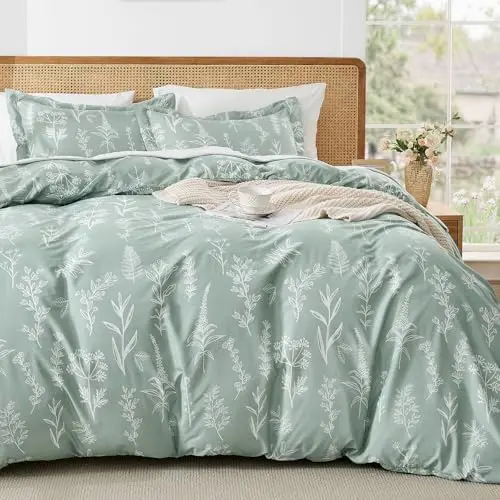
Reversible Floral Duvet Cover Set – Two Botanical Looks in One
A brushed microfiber queen set with a reversible botanical print, hidden zipper, and corner ties. Two distinct looks from a single cover at the entry tier.
How We Evaluated These Lightweight Duvet Covers
We didn’t launder every one of these covers through a dozen wash cycles or sleep under them through a full summer. What we did: cross-referenced 7 duvet cover models from 7 distinct brands across six decision axes – fabric composition, weave and thread count, thermal feel and breathability, closure and tie systems, care requirements, and sizing accuracy. We triangulated published product specifications, aggregated owner feedback where available, and mapped each set against real buyer profiles, from hot sleepers to guest-room furnishers working to a budget.
The scoring framework weighted real-world fit (70%) – how well a cover actually delivers the light, breathable sleep its fabric promises – against feature differentiation (30%) – closure design, tie count, certifications, and the construction details that separate one set from another. We audited claims like washed-cotton softness and wrinkle resistance against what owners report, and we discounted inflated thread counts that don’t reflect real fabric weight. Where owner feedback was thin or contradictory, we leaned on published specifications rather than guessing.
We have no commercial relationship with any of the brands featured; recommendations track fit and differentiation, not brand preference. If your priority is cool breathability with a relaxed hand, the MooMee Washed Cotton Set is the match; if you’d rather spend the least and still get a light, soft cover, the Bedsure Prewashed Set serves you better.
How to Choose the Right Lightweight Duvet Covers
1. What Makes a Duvet Cover Genuinely Lightweight
Weight comes from three things: the fiber, the weave, and how much fabric sits per square yard. A percale weave spreads yarn evenly and openly, which is why washed-cotton sets feel airy and matte. A sateen weave floats more yarns across the surface for a smooth sheen, and it reads slightly heavier against skin. Brushed microfiber can be genuinely light too – polyester filaments are fine and dense – but it doesn’t move moisture the way cotton does.
The trap is assuming a lightweight cover makes a cool bed. It doesn’t, on its own. Cover weight controls how much bulk sits against you; the insert controls the temperature. A light cover over a heavy all-season duvet is still a warm bed.
2. Washed Cotton vs Sateen vs Microfiber: Which Sleeps Coolest
Washed cotton – the MooMee and BESTOUCH approach – is the coolest-feeling of the three for most sleepers. Pre-washing breaks down surface starch so the fabric is soft from day one, and the matte finish doesn’t trap heat against skin. It wrinkles. That’s the trade.
Cotton sateen is smoother and slicker, with a light sheen that reads hotel-luxury. It’s still cotton, so it breathes, but the weave sits warmer. If that’s the feel you’re chasing, the California Design Den 400 Thread Count is the pick here. Polyester microfiber is the wildcard: soft, affordable, wrinkle-resistant, and light – but for sleepers who run hot or sweat overnight, cotton still wins on moisture handling.
3. MooMee vs BESTOUCH: Choosing Between Two Washed Cottons
These two sets are close enough that the decision comes down to palette and hand feel. Both are 100% washed cotton, both are three-piece queen sets with eight interior ties and a hidden zipper, and both soften with washing.
The difference: MooMee’s heathered tannish-grey hides creasing beautifully and reads neutral in almost any room, which makes the MooMee Washed Cotton Set the safer choice. BESTOUCH starts a touch crisper and offers a solid cornflower blue that holds its color, so the BESTOUCH Washed Cotton Set is the one to choose if you want the bed to carry the color rather than the walls. Neither is wrinkle-free; both are honest about it.
4. Thread Count, Weave, and Why the Numbers Mislead
Thread count is the most abused number in bedding. A 1,200 count printed on a washed cotton set is a marketing figure, not a fabric property – thread count only means something alongside fiber quality and weave. A well-made 200 count percale can feel better than a padded 600 count sateen.
What actually predicts how a cover sleeps: fiber length, weave structure, and fabric weight. Long-staple cotton spins into smoother, stronger yarn; a plain weave breathes; a dense sateen drapes. If a listing leads with an implausible thread count and says nothing about fiber or weave, treat the rest of the spec sheet with the same skepticism.
5. Zippers, Buttons, and Corner Ties: Details That Decide Your Night
A hidden zipper is faster and keeps the insert fully enclosed; the tradeoff is that a cheap zip can fail. A button closure never snags or breaks but takes longer and leaves small gaps. Either works – just check that the zip runs most of the cover’s width so you aren’t stuffing a duvet through a foot-long opening.
Ties matter more than most shoppers expect. Four corner ties stop the insert rotating, but it can still slide along the long edges. Eight ties – corners plus midpoints – are the better setup, and some sets still skip mid-side ties entirely. If a cover has four ties only, expect to adjust the duvet now and then.
6. Sizing and Care for Lightweight Duvet Covers
Measure your insert before ordering, not your mattress. A standard queen duvet is 90×90 inches, which matches most of the covers here; if you want a draped, floor-grazing look, size the cover up rather than the insert. A too-large cover on a too-small insert means a baggy bed with cold spots at the edges.
Care is simple across the board: machine wash cool or warm, tumble dry low, skip bleach, and avoid high heat – that’s what shrinks cotton and dulls microfiber’s finish. A lightweight cover is also the reason to wash bedding more often, since you’re laundering a thin shell rather than a whole comforter, which makes the cycle quicker and gentler on the fill.
Frequently Asked Questions
1. Are lightweight duvet covers warm enough for winter?
Yes, if you pair them with the right insert. Cover weight and insert warmth are separate variables: a light washed-cotton cover over a warm down-alternative duvet makes a perfectly comfortable winter bed, especially in a heated room. Where lightweight covers genuinely shine is the shoulder seasons, when a heavy cover is too much but a sheet alone is too little.
Think of the cover as the breathable layer and the insert as the insulation. Swap the insert, not the cover, when the seasons turn.
2. What's the difference between the MooMee and BESTOUCH washed cotton sets?
Less than you’d expect. Both are 100% washed cotton three-piece queen sets with eight interior ties and a hidden zipper, and both soften with washing. The practical differences are color and initial hand: MooMee’s heathered tannish-grey is a neutral that hides creasing, while BESTOUCH’s cornflower blue is a solid that carries a room’s palette and starts a touch crisper. The MooMee Washed Cotton Set is the safer neutral; go BESTOUCH if color is the point.
3. Is a polyester duvet cover as breathable as cotton?
Not quite, but the gap is smaller than the labels suggest. A brushed polyester microfiber set like the Bedsure Prewashed Set is light, soft, and doesn’t hold heat the way old-school polyester did, which is why hot sleepers often find it comfortable. What it doesn’t do as well is wick moisture – cotton pulls dampness away from skin more effectively.
If you sleep cold or just want an easy-care cover, microfiber is a smart budget call. If you sweat overnight, washed cotton like the OAITE set is the safer bet.
4. Do lightweight duvet covers wrinkle?
Cotton ones do, and that’s by design. Washed cotton and percale are supposed to look relaxed; the creasing is part of the linen-adjacent look. If visible wrinkles bother you, a sateen weave creases less dramatically and a brushed microfiber cover drapes nearly smooth out of the dryer. None of these is a true no-iron hotel finish, though – that’s a different fabric category entirely.
5. What size duvet cover fits a queen insert?
Match the insert, not the mattress. A standard queen insert wants a 90×90 inch cover, which is the size most sets on this list ship in. If your insert is oversized or you want extra drape, check the cover’s dimensions against the insert’s before ordering – a cover that’s too big lets the insert bunch at the corners even with eight ties holding it.
6. How often should you wash a lightweight duvet cover?
Weekly to biweekly if it’s against your skin, which is more often than most people manage. The upside of a lightweight shell is that it’s easy to launder – cool or warm water, tumble dry low, no bleach – so the chore stays quick. Rotating two covers helps both last longer, since each one sees less wash wear over the year.
Final Verdict
For most people, the MooMee Washed Cotton Set is the answer. It nails the lightweight brief – breathable washed cotton, a relaxed linen-like texture, eight ties, and a hidden zip – without asking you to accept a synthetic hand feel. If budget is the constraint, the Bedsure Prewashed Set gets you a light, soft, well-tied cover for entry-level money; just know you’re getting polyester rather than cotton. Want a smooth, cool, hotel-style bed instead of a rumpled one? The California Design Den 400 Thread Count is the sateen pick. And if a patterned room is the goal, the OAITE Cotton Leaf Set is the rare cotton option that doesn’t force you into a solid.
