
Best Lightweight King Comforters – 2026 Reviews

A king bed already takes up a lot of visual and physical space, so the comforter you put on it has to do two jobs at once: look generous enough to drape properly and feel light enough that you’re not kicking it off at 2 a.m. That’s the tricky part of shopping for a lightweight king comforter. Too thin and it feels like a sheet; too lofty and you’ve lost the whole point.
The lightweight label gets used loosely. Some comforters are airy because they use a real down fill, others because the synthetic fill is spread thin, and a few just have a breathable shell over a surprisingly warm core. The best options balance breathability, loft, and drape without making you choose between summer comfort and cool-night warmth.
We compared the category across brands and sleep styles, from budget-friendly down alternatives to hotel-luxury down fiber. The goal is simple: help you find the right lightweight king comforter for your bedroom, not just the most heavily marketed one.
Best Lightweight King Comforters – 2026 Reviews

Comforter Duvet Insert – Hotel-Soft All-Season Pick
A lightweight down-alternative comforter with a soft brushed shell, box-stitch construction, and eight corner tabs. It’s designed to work year-round as a standalone comforter or a duvet insert.

Summer Down Comforter – Extra-Lightweight for Hot Sleepers
An extra-lightweight king comforter filled with real down and feathers, built for hot sleepers and warm rooms. The cotton-blend shell is designed to stay quiet, and eight corner tabs keep it secured inside a duvet cover.
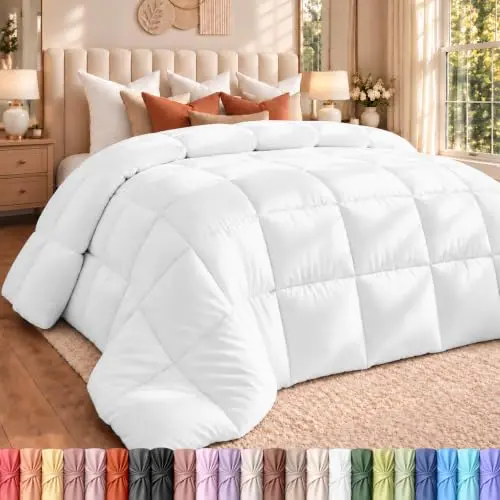
Comforter King Duvet Insert – Budget-Friendly All-Season Fluff
A budget-friendly down-alternative duvet insert with a soft, fluffy hand feel and box-stitched construction. Corner tabs and machine-washable care make it a practical year-round option.
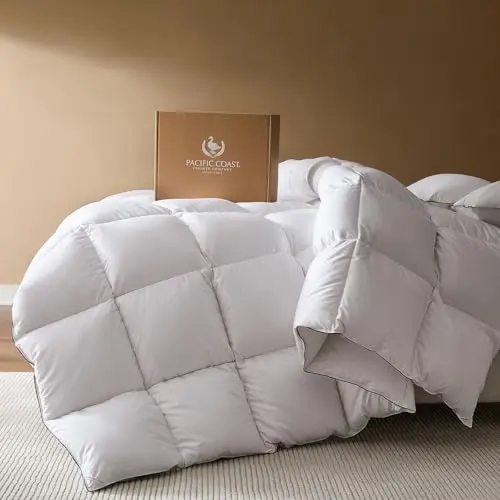
Goose Feather Down Fiber Comforter – Hotel-Luxury Warmth
A luxury down-fiber comforter with a 3D baffle-box build, eight corner loops, and a soft cotton-blend shell. It’s aimed at hotel-style warmth with all-season versatility.
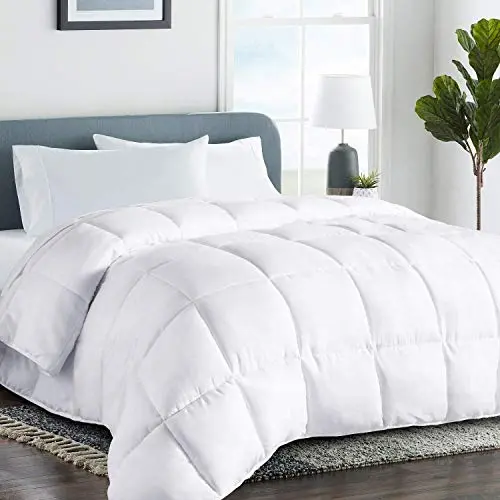
All-Season Cooling Comforter – Soft Noiseless Duvet Insert
An all-season down-alternative comforter with a noiseless brushed cover, anti-clump fill, and eight secure tabs. It’s designed for year-round use as a standalone comforter or duvet insert.
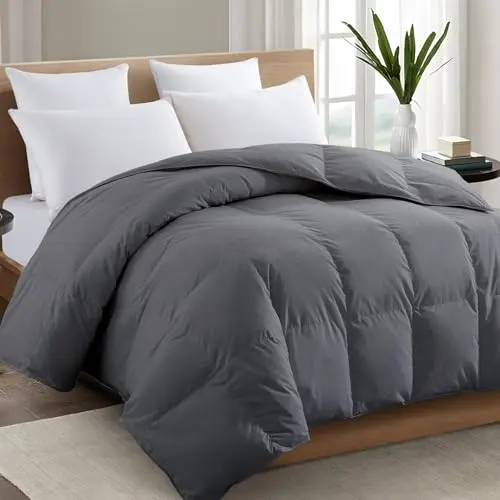
4D Spiral Fiber Comforter – Cloud-Light Down Alternative
A lightweight down-alternative comforter using 4D spiral fiber and baffle-box stitching to limit shifting. Eight corner loops and machine-washable care make it easy to live with.

Cationic Dyed Comforter Set – Soft Heathered Refresh
A three-piece king comforter set with a soft cationic-dyed finish, matching shams, and a lightweight all-season build. Four corner loops let the comforter work inside a duvet cover.

Sage Green Comforter Set – Soft Boho Bedding Set
A three-piece king comforter set in sage green with down-alternative fill and matching pillowcases. The lightweight build is aimed at year-round layering and easy machine washing.
How We Evaluated These Lightweight King Comforters
We didn’t run a sleep lab or put these comforters through repeated wash-cycle durability trials. What we did: cross-referenced 8 lightweight king comforters from 7 distinct brands across five decision axes – fill material, breathability, weight and loft, size and drape, and care requirements. We triangulated published specifications, feature sets, owner feedback where available, and use-case fit against representative buyer profiles for hot sleepers, year-round sleepers, and duvet-cover users. We also weighed how each design handled the tricky balance between airy lightness and enough warmth for cool bedrooms. We mapped care instructions against real-world laundry habits too, since a lightweight comforter only earns its place if it stays fresh without fuss. Where the data was uneven, we kept the analysis shorter rather than padding with guesses.
The scoring framework weighted real-world performance (70%) – how well each option delivers lightweight warmth without overheating – against feature differentiation (30%) – unique construction, corner-tab systems, and care practicality. We have no commercial relationship with any of the brands featured; recommendations track fit and differentiation, not brand preference. If you want the most balanced lightweight king comforter, the Bedsure Comforter Duvet Insert is the pick; if you sleep hot and want real down, the Globon Summer Down Comforter is the better match. We audited the lineup for oversized drapes, duvet-insert hardware, and wash instructions so the guide reflects real bedrooms, not just spec sheets.
How to Choose the Right Lightweight King Comforter
1. What Makes a King Comforter Truly Lightweight?
Lightweight doesn’t mean flimsy. In a king comforter, the feel comes down to fill weight, loft, and breathability. A comforter can be thin but still trap heat if the shell doesn’t breathe, and a slightly loftier comforter can feel airy if the fill is distributed well. For a king bed, you also want enough material to drape over the sides without looking skimpy.
Think about the sleep environment first. A warm bedroom calls for a genuinely airy build, while a cool bedroom may need a lightweight comforter with a little more loft. The best lightweight king comforters give you coverage without that heavy, tucked-in feeling.
2. Down vs. Down Alternative in Lightweight King Comforters
Real down fill tends to deliver more warmth per ounce, which is why a down comforter can feel light yet still take the chill off. Down-alternative fill is usually easier to wash and a better fit for shoppers who prefer synthetic materials. Look for clumping resistance in either category, since shifting fill is the quickest way for a lightweight comforter to lose its even feel.
If you want real down without a heavy feel, the Globon Summer Down Comforter is the pick; if you prefer a synthetic fill with a hotel-soft hand, the Bedsure Comforter Duvet Insert is the stronger match. Neither approach is inherently better – it’s about your temperature, care routine, and whether you want a duvet insert or a standalone comforter.
3. Size, Drape, and Corner Tabs for King Beds
King comforters aren’t all cut the same. A common size is around 90 x 102 inches, but some brands run closer to 106 x 90 inches or offer oversized king dimensions. Check the actual measurements against your mattress and bed frame, especially if you like a generous drape. Corner tabs or loops matter if you plan to use a duvet cover; they keep the insert from migrating while you sleep.
Pay attention to drape as well as length and width. A comforter that’s too small can leave the sides of the mattress exposed, while an oversized one may pool on the floor. Corner hardware and a true-to-size cut are the practical details that make a lightweight king comforter easier to live with.
4. Breathability and Temperature Regulation for Hot Sleepers
Hot sleepers should prioritize a breathable shell and a fill that doesn’t trap heat. A lightweight comforter with a cotton-blend or brushed microfiber shell can feel quite different from one with a slick, occlusive finish. If you overheat easily, look for language around cooling, moisture-wicking, or noiseless fabric, and avoid comforters that feel dense before you even get under them.
The goal isn’t to be cold – it’s to avoid overheating while still getting some coverage. Lightweight comforters for hot sleepers often work best as part of a layered setup, with a sheet underneath and a blanket nearby for cooler nights.
5. Washing, Loft Recovery, and Long-Term Care
Most lightweight king comforters are machine-washable care friendly, but the details matter. Use cold water on a gentle cycle, avoid harsh detergents, and choose low-heat or no-heat drying when possible. Loft recovery is the other half of the equation: many comforters arrive compressed and need a day or two to fluff up fully after unpacking.
If the comforter has a down fill, check the care instructions before washing, since some down products prefer spot cleaning or professional care. Synthetic fills are generally more forgiving, but frequent washing can still affect longevity. A little care upfront helps the comforter keep its shape and even fill distribution.
6. How to Match a Lightweight King Comforter to Your Sleep Style
Start with your sleep style: hot sleepers should lean toward the airiest builds, while people who sleep cool may want a lightweight comforter with a bit more loft. Then decide whether you want a standalone comforter, a duvet insert, or a set with matching shams. A duvet insert needs corner tabs and a cover you actually like; a set is easier if you want the bed styled in one purchase.
If you want the best value, the Utopia Bedding Comforter is the budget-friendly route; for a polished set, the Bedsure Cationic Dyed Comforter Set is the easier styling choice. Match the fill and care routine to your habits, and the lightweight king comforter will feel like the right purchase instead of a compromise.
Frequently Asked Questions
1. Are lightweight king comforters warm enough for winter?
It depends on fill and layering. A lightweight down comforter like the Globon can work in summer and layer under a blanket in cooler months, while a down-alternative comforter with box stitching traps air for moderate warmth. If you keep your bedroom cool, look for corner tabs and a breathable shell so the comforter stays put without feeling heavy.
2. What's the difference between the Bedsure Comforter Duvet Insert and the Globon Summer Down Comforter?
The Bedsure is a synthetic down-alternative with a hotel-soft feel and easy machine washing; it suits year-round sleepers who want a versatile duvet insert. The Globon uses real down and feathers for extra-lightweight warmth and a noiseless cotton-blend shell, making it the better fit for hot sleepers who don’t mind down care. Choose the Bedsure Comforter Duvet Insert for all-season versatility, or the Globon for summer-first cooling.
3. How does the Utopia Bedding Comforter compare with the COHOME All-Season Cooling Comforter?
Both are down-alternative comforters with machine-washable care, but the Utopia is the more budget-friendly pick with a straightforward box-stitched build. The COHOME adds a noiseless brushed fabric and an anti-clump fill story, which may appeal if you want a softer hand feel and don’t mind spending a bit more. For the lowest-cost route, the Utopia Bedding Comforter is the practical choice.
4. Do lightweight king comforters work as duvet inserts?
Yes, if the comforter has corner tabs or loops and matches your duvet cover’s dimensions. A 90 x 102 inch comforter is a common king size, but some brands run oversized or slightly smaller, so check the drape you want. Box stitching helps the fill stay evenly distributed once the insert is inside a cover.
Final Verdict
For most buyers, the Bedsure Comforter Duvet Insert is the answer – it nails the lightweight brief with a soft hand feel, solid box-stitch construction, and enough breathability for year-round use. If you sleep hot, the Globon Summer Down Comforter is the more targeted pick, thanks to its real down fill and extra-lightweight build. Budget-conscious shoppers should look at the Utopia Bedding Comforter; it delivers the core lightweight comfort without the premium tier. And if you want hotel-luxury loft with a more substantial hand, the Pacific Coast Goose Feather Down Fiber Comforter is the splurge that makes sense. Match the comforter to your sleep temperature first, then your care routine – that’s the fastest route to a king bed you actually want to climb into.
