
Best Lightweight Luggage For Traveling – 2026 Reviews

Lightweight luggage sounds like a simple brief until you’re lifting a stuffed carry-on into an overhead bin on a full flight. A bag that feels fine in the store can turn into a chore by the second terminal, especially if the wheels drag or the handle wobbles. That’s why empty weight matters, but it’s only one part of the equation.
The best lightweight luggage for traveling balances three things: a low carry weight, enough capacity for the trip you actually take, and a wheel-and-handle setup that stays stable when the bag is full. Hardside shells protect contents and resist scratches; softside bags flex into tight bins and add exterior pockets. We looked across major brands to find the options that get that balance right for different travelers.
Best Lightweight Luggage for Traveling – 2026 Reviews
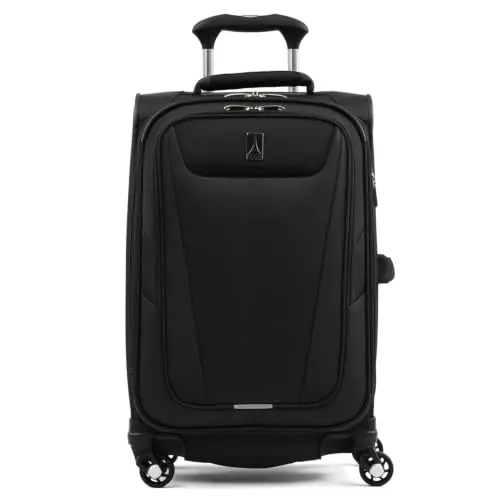
Maxlite 5 21-Inch – Ultralight Softside Spinner
A softside carry-on built around low carry weight and real-world maneuverability. The Maxlite 5 uses a 46L expandable body, 360-degree spinner wheels, and a PowerScope Lite handle to keep long airport walks manageable.
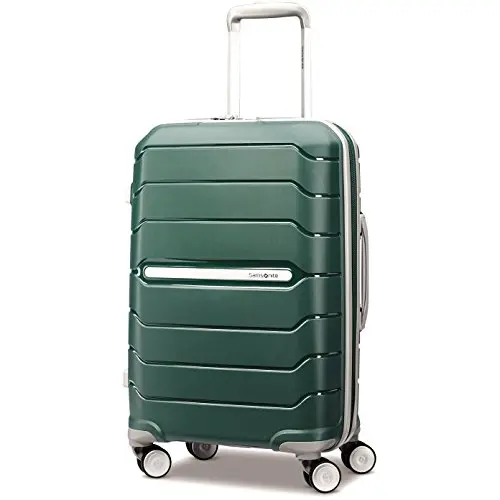
Freeform Hardside 21-Inch – Double-Spinner Carry-On
A hardside carry-on with a notably low empty weight for its class. The Freeform pairs a 34L expandable shell with double spinner wheels, a recessed TSA lock, and a 10-year warranty.
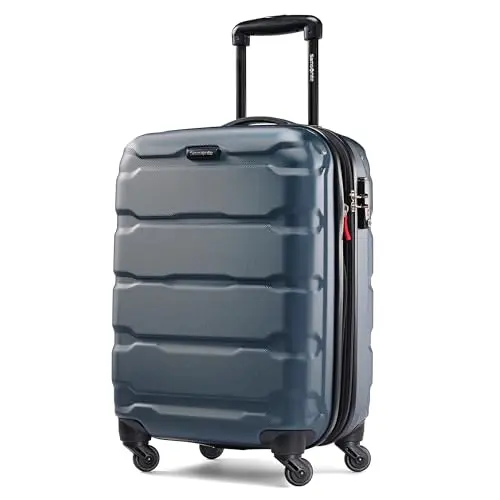
Omni PC Hardside 20-Inch – Scratch-Resistant Carry-On
A scratch-resistant polycarbonate carry-on with a side-mounted TSA lock, oversized spinner wheels, and expansion for longer trips. It’s a practical hardside option for domestic travel.
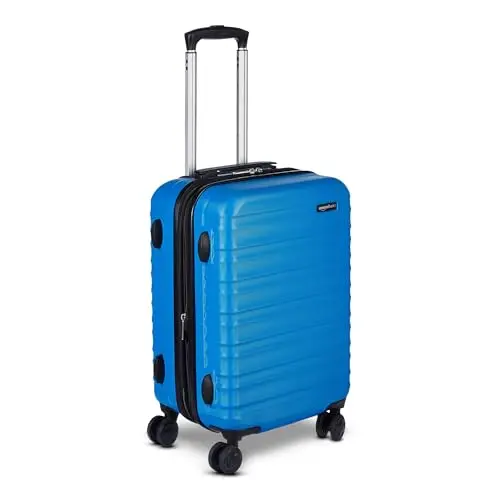
21-Inch Hardside Carry-On – Budget-Friendly Expandable Spinner
A budget-friendly 21-inch hardside carry-on with a scratch-resistant finish, 34L capacity, and expandable packing space. It’s a straightforward option for short trips and budget airlines.
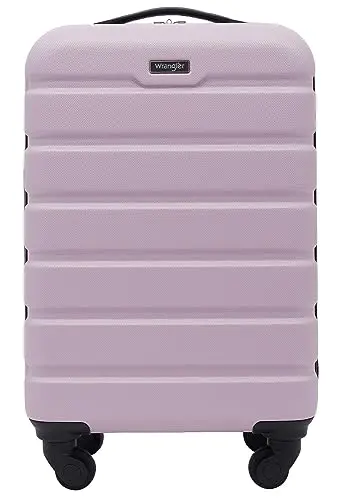
22-Inch Hardside Carry-On – Lightweight ABS Spinner
A 22-inch hardside carry-on with a 6.4-pound ABS shell, 360-degree spinner wheels, and a locking trolley handle. It’s a colorful, low-cost option for carry-on-only trips.
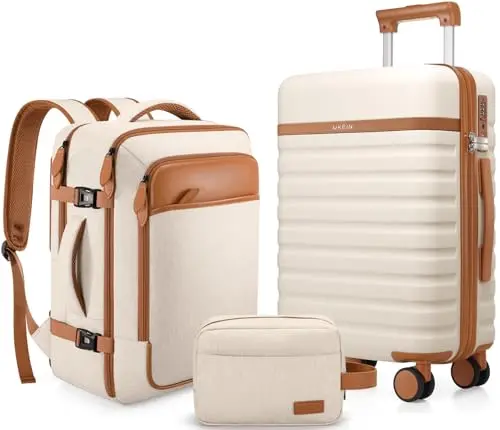
3-Piece Carry-On Set – Suitcase, Backpack, and Toiletry Bag
A three-piece carry-on set with a polycarbonate hardside suitcase, an 18-inch travel backpack, and a toiletry bag. The suitcase includes a TSA lock, alloy zippers, and dual spinner wheels.
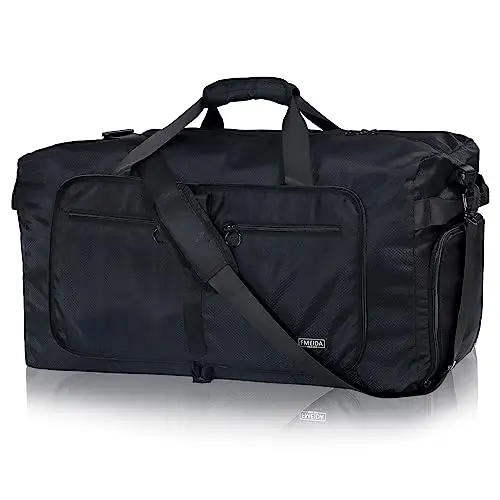
65L Foldable Travel Duffel – Packable Secondary Bag
A 65L foldable duffel that packs down small and works as a secondary travel bag. It has a separate shoe compartment, multiple pockets, and a luggage sleeve for stacking on a suitcase.
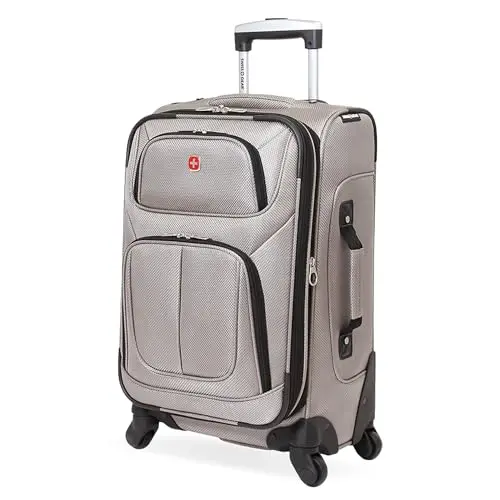
Sion Softside Carry-On – Expandable Front-Pocket Spinner
A softside carry-on with a 45L expandable body, quick-access front pockets, and four spinner wheels. It’s built for travelers who want organization and easy access.
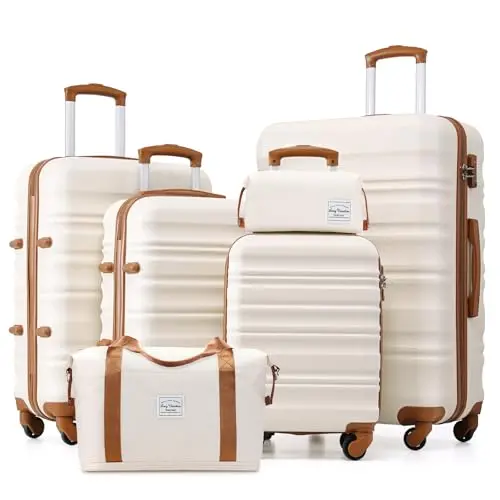
6-Piece Hardshell Luggage Set – Family Travel Kit
A six-piece hardshell luggage set with 20-inch, 24-inch, and 28-inch suitcases plus a duffel, toiletry bag, and travel backpack. It uses ABS+PC shells, TSA locks, and YKK zippers.
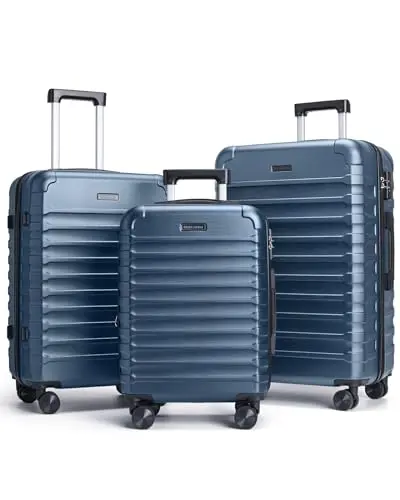
3-Piece Hardside Set – 20/24/28-Inch Spinners
A three-piece hardside luggage set with 20-inch, 24-inch, and 28-inch spinners. The ABS shells, TSA combination lock, and dual TPU wheels are built for checked and carry-on travel.
How We Evaluated These Lightweight Luggage Options for Traveling
We didn’t run a multi-airport travel trial or lab-test wheel durability. What we did: cross-referenced 10 luggage models from 9 distinct brands across six decision axes – carry-on weight, packed capacity, shell material, wheel and handle setup, expansion and organization, and warranty coverage. We audited published specifications for every model, mapped feature sets against the realities of carry-on travel, and triangulated owner feedback where available. We also weighed each option against representative traveler profiles: solo weekend flyers, business travelers who live out of a carry-on, families checking bags, and packable-secondary-bag users. That matters because a 5.4-pound softside and a 6.5-pound hardside can both be ‘lightweight’ while solving different packing problems. We treated weight as a starting point, not a trophy, and compared how each bag carried when loaded for a realistic trip.
The scoring framework weighted real-world fit and performance (70%) – how well each option delivers on lightweight travel – against feature differentiation (30%) – unique technical advantages and use-case specificity. We have no commercial relationship with any of the brands featured; recommendations track fit and differentiation, not brand preference. If you want the lowest carry weight with full-size capacity, the Maxlite 5 is your match; if you prefer a hardside shell, the Freeform serves you better. The harder question is whether you prioritize expansion, front-pocket access, or a packable second bag – that’s where the rest of the lineup separates. The final order reflects how well each model would serve a specific buyer, not a blanket brand ranking.
How to Choose the Right Lightweight Luggage for Traveling
1. What Makes Luggage Genuinely Lightweight for Traveling
Empty weight is the first thing to check, but it’s not the whole story. A sub-6-pound carry-on is genuinely light, yet a bag that’s slightly heavier but rolls well can feel easier to travel with. Look at shell material and wheel quality together, because lightweight luggage only works when those parts hold up. If you want the lowest carry weight with full-size capacity, the Maxlite 5 is the pick.
2. Carry-On Size and Capacity: Matching Lightweight Luggage to Your Trip
Carry-on rules vary by airline, so compare both packing dimensions and overall dimensions before you buy. A 20-inch or 21-inch bag usually fits domestic overhead bins, but the exterior measurements include wheels and handles. Capacity matters too: a 34-liter hardside suits short trips, while a 46-liter softside gives you more room for a week. If you prefer a rigid shell, the Freeform balances 34 liters with a low empty weight.
3. Hardside vs Softside: Which Lightweight Luggage Fits Your Travel Style
Hardside bags protect contents better and resist scratches, but they don’t compress into tight bins. Softside bags have more give, extra exterior pockets, and usually a bit more packing flexibility. The tradeoff is that softside fabric can absorb stains and may need more care. Choose polycarbonate or polypropylene if you want a hard shell that handles impacts; choose polyester if you value flex and access.
4. Wheels, Handles, and Real-World Mobility
Spinner wheels are standard, but not all spinner setups feel the same. Double spinner wheels track better when a bag is loaded, while oversized single wheels can handle rough pavement. Check the telescoping handle for wobble and make sure it locks at a height that suits you. For a packable secondary bag, the Fmeida 65L is the pick.
5. Expansion, Organization, and Packing Discipline
Expansion is useful, but it changes the bag’s footprint. A 25% expansion zipper can turn a tight carry-on into a weekender, yet overpacking can make the bag harder to lift and more likely to tip. Look for compression straps to hold clothes flat and a mesh divider to keep the two halves from spilling into each other. Packing cubes help, but the bag’s interior layout matters more than accessories.
6. Warranty and Long-Term Value for Traveling with Lightweight Luggage
Warranty coverage is the quiet differentiator in lightweight luggage. A 10-year warranty gives you a reasonable safety net, while a limited lifetime warranty is the strongest signal that the maker expects the bag to survive repeat trips. Read the fine print: some coverage excludes wheel and handle damage, and airline damage may need a separate claim. If you travel often, the warranty can matter as much as the empty weight.
Frequently Asked Questions
1. What's the difference between the Travelpro Maxlite 5 and Samsonite Freeform?
The Maxlite 5 is a softside carry-on with a 5.4-pound build and 46-liter capacity, so it prioritizes packing room at low weight. The Freeform is a hardside carry-on with a 6.5-pound shell and 34 liters, trading some capacity for a rigid exterior and double spinner wheels. If you want the lightest full-size softside, the Maxlite 5 is the better fit; if you prefer hardside protection, the Freeform makes more sense.
2. How does the Samsonite Omni PC compare with the Amazon Basics hardside carry-on?
The Omni PC uses a micro-diamond polycarbonate shell, a side-mounted TSA lock, and oversized spinner wheels, so it feels more polished and scratch-resistant. The Amazon Basics 21-inch uses an ABS shell, skips the built-in lock, and focuses on expandable packing space and a lower price tier. Choose the Omni PC for a more durable hardside; choose the Amazon Basics for a budget-friendly carry-on.
3. Are lightweight luggage options durable enough for frequent traveling?
Lightweight doesn’t automatically mean fragile, but the shell material matters. Polycarbonate and polypropylene shells generally handle impacts better than basic ABS, while softside polyester can flex without cracking. Pay attention to wheel construction, since wheels are a common wear point. A lightweight bag with a limited lifetime warranty is the safer bet for frequent flying.
4. Which lightweight luggage is best for a week-long trip?
For a week-long trip, look for a 46-liter carry-on or a bag with expansion. The Maxlite 5 is the strongest all-around choice because it combines low empty weight, a softside expandable body, and smooth spinner wheels. If you pack bulky items, a hardside with compression straps can help, but you’ll usually trade some capacity for shell protection.
5. Is a softside or hardside lightweight suitcase easier to fit in overhead bins?
Softside bags usually have more give when an overhead bin is tight, which can matter on regional jets. Hardside bags offer more structural protection and a predictable packing shape, but they don’t compress. If you fly smaller aircraft often, a softside carry-on like the Maxlite 5 is more forgiving. If you check bags and want scratch resistance, a hardside shell is the better pick.
Final Verdict
For most travelers, the Maxlite 5 is the answer. It’s the rare carry-on that feels genuinely light in hand while still offering a 46-liter expandable body and a smooth spinner setup. If you’re budget-conscious, the Amazon Basics 21-inch gets you a lightweight hardside carry-on with expansion and a scratch-resistant shell for far less. If you prefer a rigid exterior, the Freeform is the hardside pick, with a low empty weight and double spinner wheels. And if you need a packable overflow bag for souvenirs or a second leg, the Fmeida 65L folds down small and adds almost no weight. Start with the Maxlite 5 unless one of those specific use cases fits you better.
