
Best Linen Blackout Curtains – 2026 Reviews

There’s a specific disappointment that comes from buying ‘blackout’ curtains and still waking up with a stripe of sun across the bed. It usually isn’t the fabric’s fault alone. Light sneaks in at the rod, through the side gaps, or through a backing that blocks glare but not full daylight. With linen blackout curtains, there’s a second tension: the woven, natural look people want often comes from a faux-linen face, while the blackout performance comes from a coating or a separate liner.
That’s why the useful questions are less about the label and more about construction. Does the curtain use a white or grey liner? Does the top edge sit close to the rod, or does a grommet leave a gap? Is the ‘linen’ real, blended, or a polyester lookalike? And how much care are you willing to give a large textile – machine wash, dry clean, or spot treatment only?
We compared the cross-brand market with those tradeoffs in mind, from budget-friendly pairs to more tailored pinch-pleat sets. The goal is to help you choose the right linen blackout curtain for your room, your rod, and your sleep schedule, not to crown a single brand.
Best Linen Blackout Curtains – 2026 Reviews
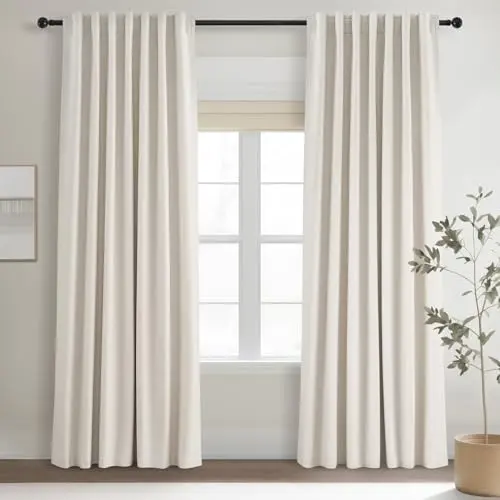
Cream Linen Pinch Pleat – Full Blackout with Hooks and Rings
These cream linen-blend drapes combine a 30% linen, 70% polyester face with a white blackout liner. The set includes two 52-by-84-inch panels plus metal hooks and rings, so you can hang them as pinch pleat, back tab, rod pocket, or track-mounted curtains.
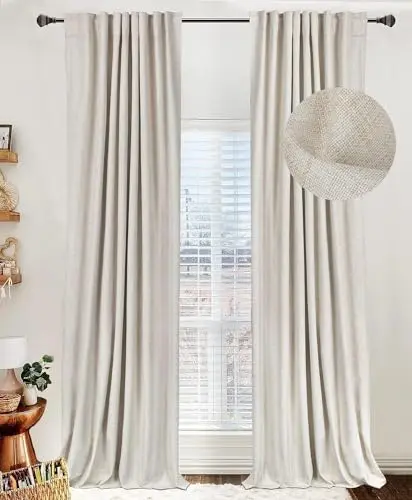
Linen Total Blackout – Back Tab and Rod Pocket Drapes
These cream, linen-textured drapes use a polyester face and a blackout liner to create a fully dark room. Each set includes two 50-by-84-inch panels, and the back tab plus rod pocket top gives you a clean, tailored hang without extra hardware.
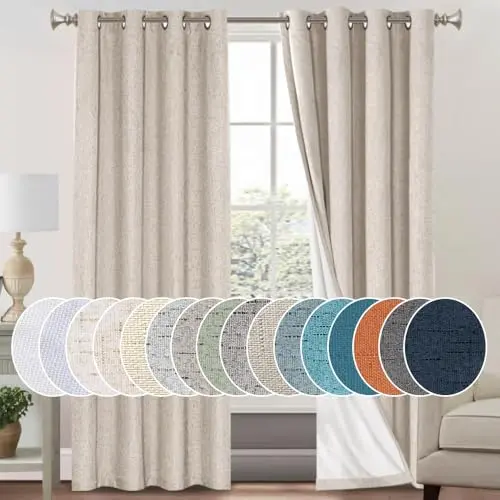
Natural Linen Blackout – Grommet Drapes with White Backing
PrinceDeco’s natural-finish drapes pair a faux-linen face with a white blackout coating for total light blocking. The set includes two 52-by-84-inch panels with eight anti-rust grommets per panel, so they slide easily on a standard rod.
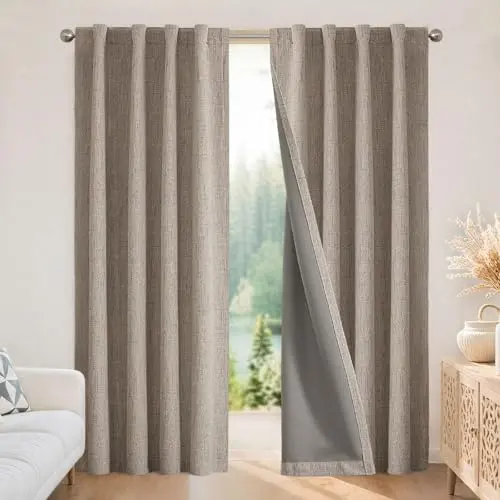
Natural Linen Blackout – 90-Inch Drapes for Long Windows
Joydeco’s linen-look blackout curtains come in a 52-by-90-inch pair, making them a better fit for tall windows and high ceilings. The dual rod pocket and back tab top gives you a tailored or classic hang, and the dedicated liner blocks light and UV rays.
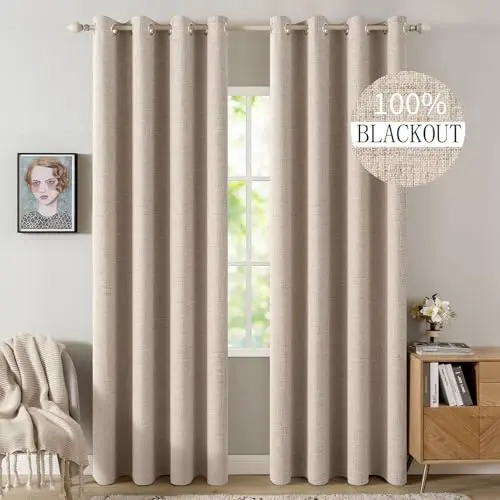
Linen Textured Blackout – Grommet Drapes for Bedrooms
MIULEE’s beige blackout curtains use a triple-weave polyester fabric with a linen-like surface and a lined back. The set includes two 52-by-84-inch panels with eight grommets per panel, and the neutral color suits bedrooms and small living rooms.
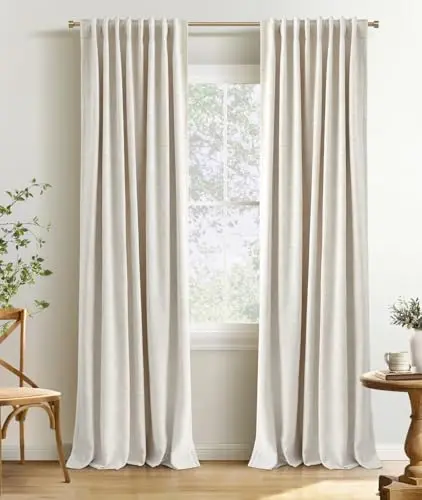
Cream Linen Blackout – 3-in-1 Hanging Drapes
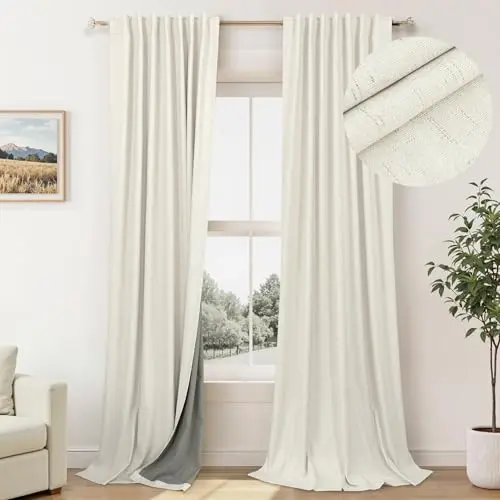
INOVADAY’s cream blackout curtains are built with a linen-look face and a grey liner, and each set includes two 50-by-84-inch panels. The 3-in-1 top supports back tab, rod pocket, or clip-ring hanging for a cleaner top edge than grommets.
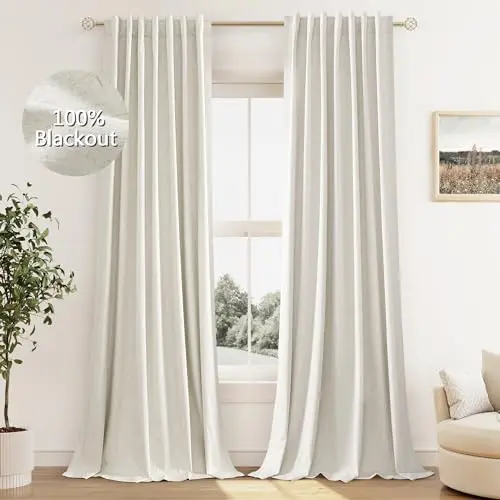
Cream Linen Blend Blackout – Budget Back Tab Drapes
Guken’s cream curtains use a linen-blend face with a white blackout coating and come as two 52-by-84-inch panels. The back tab and rod pocket top gives you a clean hang, and the set is machine washable with a cool-iron caveat on the coated side.
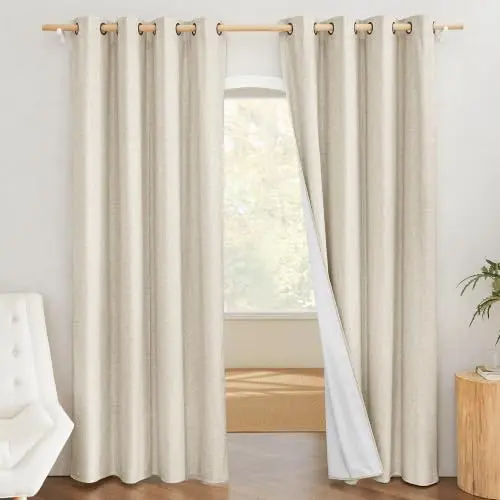
Natural Linen Blend Blackout – Grommet Drapes
NICETOWN’s natural curtains use a 30% linen, 70% polyester blend with a lined back and a grommet top. The set includes two 52-by-84-inch panels that block light, reduce noise, and add a casual linen texture to bedrooms and living rooms.
Neutral Boho Linen Blackout – Back Tab Drapes
Pitalk’s neutral curtains use a 250gsm polyester fabric with a linen-style texture and a blackout coating on the back. The set includes two 52-by-84-inch panels with back tab, rod pocket, or clip-ring hanging options.
How We Evaluated These Linen Blackout Curtains
We didn’t hang these curtains in a test bedroom for a full season or run light-meter readings at every hour. What we did: cross-referenced nine linen blackout curtain models from nine distinct brands across five decision axes – blackout construction, linen content and texture, hanging style, care requirements, and size coverage. We triangulated published specifications, feature sets, and owner feedback where available, then mapped each option against representative buyer profiles for bedrooms, living rooms, and light-sensitive sleepers.
A few things we can’t tell you: how these panels will look under your specific lighting, how they’ll hold up after repeated washes, or whether a particular cream will match your paint. What we can do is compare the published specs, the hardware in the box, and the recurring themes in owner feedback to narrow the field. The scoring framework weighted real-world fit (70%) – how well each curtain blocks light, suits the claimed linen look, and works with common rods and windows – against feature differentiation (30%) – unique hanging options, liner design, and care advantages. We have no commercial relationship with any of the brands featured; recommendations track fit and differentiation, not brand preference. If you want the most complete linen-blend package with included hardware, the Topfinel Cream Linen Pinch Pleat is the natural starting point. If you want a simpler machine-washable blackout-first set, the 100% Blackout Shield Linen Total Blackout is the stronger match.
How to Choose the Right Linen Blackout Curtains
1. What Linen Really Means in Linen Blackout Curtains
In this category, faux linen usually means a polyester fabric woven to mimic linen, while a linen blend includes real linen, often around 30%, with polyester for durability. A blackout liner or coating is what actually blocks light; the linen content is mostly about texture and breathability. Neither faux linen nor a blend is automatically better. Faux linen tends to be smoother and more uniform, while a blend has more natural slub and a slightly drier hand.
If the label only says ‘room darkening,’ expect some light through the fabric. True blackout usually comes from a coated back or a separate lined layer.
2. Blackout Construction and the White Backing Question
True 100% blackout curtains rely on a coated back or a lined layer, but the weak point is often the top edge. Grommet headings slide easily and leave a small gap at the rod; back tabs, rod pockets, and pinch pleats sit closer and block more light. If you’re a light-sensitive sleeper or a shift worker, prioritize top-edge coverage over convenience.
A white backing looks cleaner from the street and suits light rooms. A grey or dark liner can feel more cocooning but may show through lighter fabrics.
3. Hanging Style and Rod Fit for Bedrooms and Living Rooms
Grommet tops are the easiest to slide and the most rental-friendly, but they create a casual look and a small light gap. Back tabs create soft pleats and sit closer to the rod. Rod pockets give a classic gathered look but can be harder to open and close. Pinch pleat and track systems are the most tailored. Check the rod diameter before buying; most grommet curtains fit rods up to about 1.5 inches, while some back-tab and rod-pocket styles fit up to 3 inches.
For a simple grommet glide in a bedroom, the PrinceDeco Natural Linen Blackout is a straightforward match. For a more tailored top edge with included hardware, the Topfinel Cream Linen Pinch Pleat is the stronger choice.
4. Care, Wrinkles, and Realistic Expectations for Linen-Look Curtains
Machine washability varies more than you’d expect. Some faux-linen curtains are cold-wash and tumble-dry low; others are dry-clean only, and coated backs can’t be ironed directly. Always iron the front side only on a cool setting. Packaging wrinkles are common across the category, even on pricier panels, so a handheld steamer is worth having. If the curtains face direct sun, treat the coating as the most delicate part and avoid sharp objects or repeated high heat.
A linen blend may soften over time, while a faux-linen polyester tends to hold its shape but can feel less breathable.
5. Sizing, Length, and Room Coverage for Linen Blackout Curtains
Most sets are sold as two panels, and the pair width matters more than the single-panel number. For a standard bedroom window, 84-inch length is the safe default. For high ceilings or tall windows, 90-inch length prevents the floating-curtain look. Measure from the rod to the floor, then subtract for floor clearance if you don’t want puddling.
If you have a wide window, don’t assume one pair is enough. Two pairs often look better than stretching a single pair flat.
6. Budget, Mid-Range, and Premium Linen Blackout Curtains
The budget tier gets you faux-linen polyester, a basic blackout coating, and simple back-tab or grommet construction. The mid-range tier adds better liners, more hanging options, and sometimes a real linen blend. The premium tier is less about performance and more about tailoring, hardware, and a more convincing linen texture. In this category, you don’t need to spend a lot to get full blackout; you’re often paying for texture, heading style, and care convenience.
If you want a true linen blend with included hooks and rings, the Topfinel set sits in the mid-range sweet spot. If you want a simple machine-washable set, the 100% Blackout Shield pair is the value-led option.
Frequently Asked Questions
1. Are linen blackout curtains actually made of linen?
Not always. Many are faux linen, which is polyester woven to mimic the texture. Others are a linen blend, often around 30% linen with polyester for strength and shape. A few use a higher linen content, but a 100% blackout build usually depends on a coated back or a separate liner rather than the linen itself. If texture is the priority, look for a blend; if easy care matters more, faux linen is usually the practical choice.
2. What's the difference between the Topfinel Cream Linen Pinch Pleat and the 100% Blackout Shield Linen Total Blackout?
The Topfinel Cream Linen Pinch Pleat uses a 30% linen blend and includes hooks and rings for four hanging methods, including pinch pleat and track. The 100% Blackout Shield Linen Total Blackout is a polyester curtain with a simpler back-tab and rod-pocket top, and it is machine washable. Choose Topfinel if you want a more tailored heading and a real linen component. Choose 100% Blackout Shield if you want a straightforward, washable blackout curtain at a lower price tier. Both block light fully, but the top-edge coverage and hardware differ.
3. Do linen blackout curtains really block 100% of light?
They can block all direct light through the fabric, but the room may still have a glow around the rod and side edges. A back-tab or rod-pocket heading reduces the top gap compared with grommets. For a truly dark bedroom, pair full blackout curtains with a wrap-around rod or side returns, and make sure the panels are wide enough to overlap in the center.
4. What's the difference between the Joydeco Natural Linen Blackout and the MIULEE Linen Textured Blackout?
The Joydeco Natural Linen Blackout comes in a 90-inch length and uses a rod pocket and back tab top, which suits tall windows and high ceilings. The MIULEE Linen Textured Blackout is a 52-by-84-inch grommet set with a triple-weave build and a lined back. Joydeco is the better fit for long windows; MIULEE is the simpler bedroom choice if you want a standard length and easy grommet glide. Check the care instructions closely, because the two sets differ on washing guidance.
5. Can linen blackout curtains be machine washed?
Some can, some can’t. Machine-washable models usually specify cold water and low tumble dry, while dry-clean-only or spot-clean panels need more care. Coated backs should not be ironed directly, and high heat can damage the blackout layer. Always check the care label before washing a full set, especially if the curtains have a linen blend.
Final Verdict
For most buyers, the Topfinel Cream Linen Pinch Pleat is the linen blackout curtain to beat. It pairs a 30% linen blend with a white blackout liner, includes hooks and rings, and gives you four hanging methods – a rare combination in this category. If you want a simpler machine-washable set, the 100% Blackout Shield Linen Total Blackout is the value-led alternative, with a back-tab and rod-pocket top that sits close to the rod. For tall windows, the Joydeco Natural Linen Blackout in its 90-inch length is the better fit. And if budget is the deciding factor, the Guken Cream Linen Blend Blackout gets you full blackout and a linen-blend look for less. Start with your window height and rod type, then choose the curtain that closes the light gaps first.
