
Best Loud Alarm Clocks – 2026 Reviews

Phone alarms fail for a simple reason: they’re easy to dismiss, easy to sleep through, and often tucked under a pillow. A dedicated loud alarm clock changes the equation because it can attack from more than one direction – a piercing speaker, a bed shaker, flashing lights, or a slow volume ramp that doesn’t startle you awake. The trick is figuring out which kind of wake-up you’ll actually respond to at 6 a.m., not just which clock claims the highest decibel number.
The loud alarm clock market splits into a few clear camps: sound-first digital clocks with adjustable volume, shaker-based systems for deep sleepers, twin-bell analog clocks that rely on a mechanical ring, and feature-rich bedside units that add dimmers, night lights, dual alarms, and USB charging. A high decibel rating can be useful, but it isn’t the whole story. You also want control over volume, a display that doesn’t light up the room, and a snooze or alarm-duration setup that matches how you wake.
We looked across major brands and compared the practical stuff – volume ceiling, vibration strength, ease of setup, display legibility, and power backup – so you can choose the loud alarm that fits your bedroom rather than the one with the boldest box copy.
Best Loud Alarm Clocks – 2026 Reviews

Sonic Bomb SBB500SS – Bed Shaker for Heavy Sleepers
A bedside clock built around a powerful bed shaker and an adjustable high-volume alarm. It offers vibration-only, buzz-only, or combined modes, plus customizable alarm duration and snooze timing.
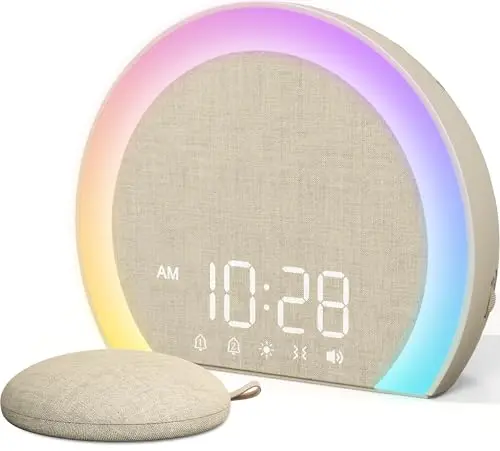
KX213-Latte – Wireless Shaker with Light and Sound
A feature-rich bedside alarm with a wireless rechargeable shaker, loud front-facing speaker, dual alarms, and a customizable night light. It is designed for deep sleepers who want multiple wake cues in one device.
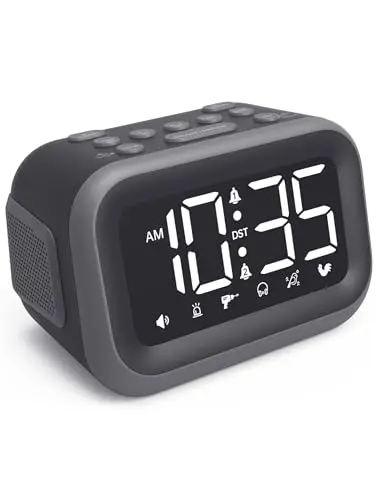
L01 – 115dB Dual-Alarm Wake-Up
A high-volume digital alarm with dual schedules, six alarm sounds, and a large LED display. It is aimed at heavy sleepers and shift workers who need a straightforward, loud wake-up call.
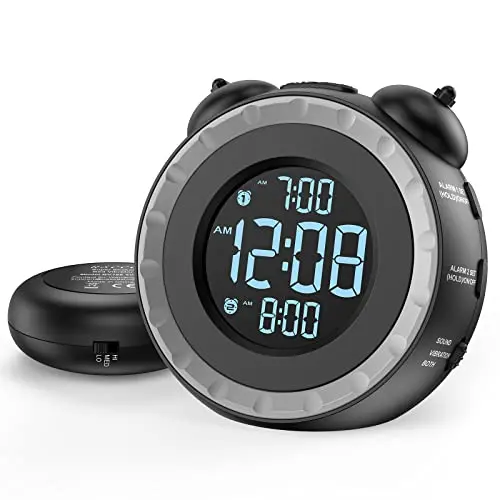
UE-188 – Adjustable Shaker and Dimmer
A compact dual-alarm clock with a three-level bed shaker, adjustable display brightness, and a USB charging port. It is built for heavy sleepers and shared bedrooms.
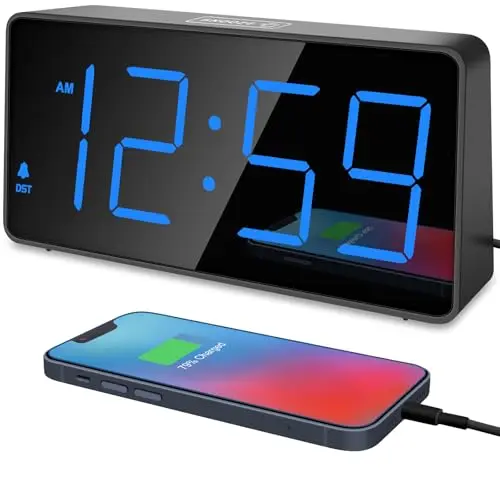
MHP6010 – Large-Display Loud Alarm
A large-display digital alarm with adjustable volume and brightness, a USB charging port, and battery backup for outage alarms. It is a practical loud clock for seniors and anyone who wants big numbers.
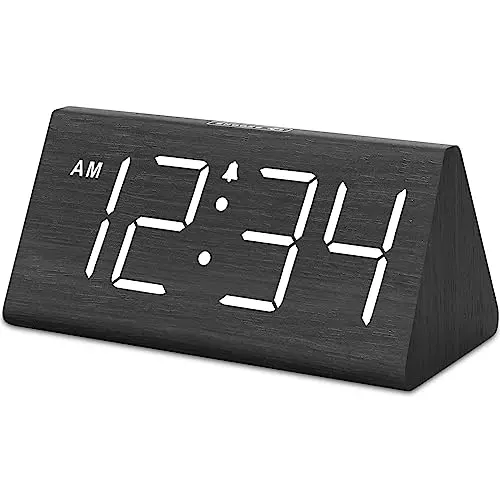
DS2201 – Wooden Loud Alarm with USB
A wooden-finish digital alarm with large numbers, five brightness levels, adjustable alarm volume, and a USB charging port. It is a decorative bedside clock that still gets loud when needed.
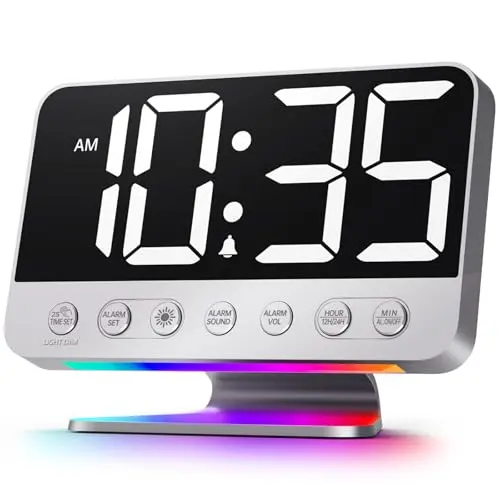
U2 – Extra-Loud Alarm with Night Light
A silver digital alarm with a wide volume range, multiple wake sounds, a dimmable display, and an eight-color night light. It is designed for heavy sleepers who still want a calm bedside look.
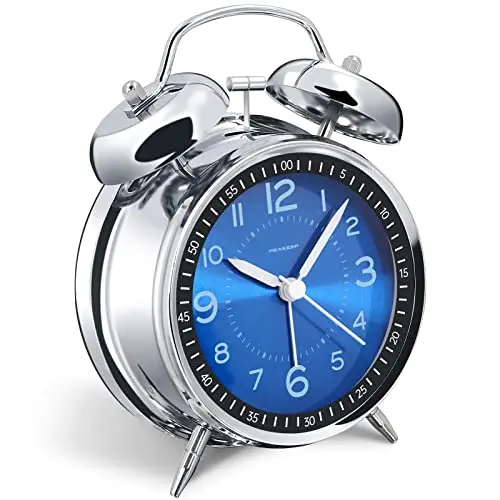
MHP3122 – Twin-Bell Analog Alarm
A metal twin-bell analog clock with a loud mechanical ring, silent quartz movement, and battery operation. It is a simple, screen-free option for heavy sleepers who like a traditional bedside clock.

Digital Alarm Clock – Simple Keyboard Controls
A compact digital alarm with physical keyboard-style controls, a large snooze button, and red LED digits. It is a no-frills bedside clock for people who want simple operation.
How We Evaluated These Loud Alarm Clocks
We didn’t run a calibrated sound-lab test or a clinical sleep study. What we did: cross-referenced 9 loud alarm clock models from 8 distinct brands across five decision axes – volume ceiling and adjustability, wake method (sound, vibration, light), ease of setup, display usability, and power/backup behavior. We triangulated published specifications, feature sets, owner feedback where available, and use-case fit for different sleeper profiles. We also audited claims like ‘extra loud” against whether the clock offers meaningful volume control, a shaker option, or gradual wake sounds, because raw decibel numbers don’t tell the whole story.
The scoring framework weighted real-world wake-up fit (70%) – how well each alarm matches its stated job for heavy sleepers, couples, shift workers, or light sleepers – against feature differentiation (30%) – unique wake methods, display controls, backup behavior, and bedside convenience. We have no commercial relationship with the brands featured; recommendations track fit and differentiation, not brand preference. We mapped each model to buyer profiles rather than treating a high decibel claim as automatically better. The goal is a clock you can set once, tolerate at night, and trust to wake you, not just one with the boldest box copy. If you want the strongest sound-plus-vibration combo, the Sonic Bomb SBB500SS is the benchmark. If you’d rather have a feature-rich shaker with light and USB-C charging, the ANJANK KX213-Latte is the stronger match.
How to Choose the Right Loud Alarm Clock
1. What Makes a Loud Alarm Clock Actually Loud?
A high decibel rating is a useful starting point, but it isn’t a standardized guarantee across brands. What matters more is whether the clock gives you a volume ceiling you can actually use, a speaker that projects toward the room, and enough sound options to find a tone that cuts through sleep. A single piercing beep is not automatically better than a rising chime if the beep becomes background noise by week two.
Look for adjustable volume rather than a fixed siren, and pay attention to alarm duration – a clock that rings for two minutes behaves very differently from one that keeps going. If you want a high ceiling with multiple sounds and dual schedules, the Acedeck L01 is a strong value-focused pick.
2. Sound, Vibration, or Light: Pick Your Wake Method
Most loud alarm clocks rely on sound alone, but a bed shaker adds a second channel that can be more effective for deep sleepers or people with hearing loss. A flashing light or night-light glow can also help, though light alone is usually gentler than sound or vibration. The best choice is the method you will not sleep through – not necessarily the loudest one.
For a combined sound-and-vibration approach, the Sonic Bomb SBB500SS is the benchmark, with a dedicated bed shaker and adjustable alarm duration. If you want a simpler shaker setup with dual alarms and a dimmer, the uscce UE-188 is easier to live with.
3. Volume Control and Snooze Behavior Matter More Than a Decibel Sticker
A loud alarm is only useful if you can control when it escalates. Gradual volume can help light sleepers, while a fixed high volume may be better for heavy sleepers who tune out soft sounds. Check the snooze interval and whether the alarm has a maximum duration; a clock that stops after a few seconds is easy to ignore.
If you share a bed, dual alarms are worth prioritizing, and a top-mounted snooze button is easier to hit in the dark. The uscce UE-188 is a practical couples pick because it pairs a three-level shaker with dual alarms and a wide dimmer.
4. Display Brightness, Setup, and Bedside Manners
The display can make or break a loud alarm clock. A dimmable display or a full-off setting is important if you’re sensitive to light, while large digits help you read the time without glasses. Physical controls with clear labels are easier to manage at 3 a.m. than touch-sensitive buttons or hidden menus.
Also consider the clock’s footprint and whether the night light is optional. A bright, feature-heavy clock can be useful, but it can also dominate a small nightstand.
5. Power Backup and Battery Caveats for Loud Alarm Clocks
Most loud alarm clocks are plug-in devices, and battery backup usually does one of two things: it preserves time and alarm settings, or it actually sounds the alarm during an outage. Read the fine print. Some clocks will trigger the alarm on battery power but keep the display dark, while others lose vibration and USB charging when unplugged.
If outages are common where you live, prioritize a clock with a clear battery-backup alarm rather than one that only saves settings.
6. Budget vs. Premium Loud Alarm Clocks: What Changes
At the entry level, you get a loud alarm, basic snooze, and maybe a dimmer. Moving up the range usually adds stronger vibration, dual alarms, better display controls, USB charging, night lights, and more sound options. The premium end is less about raw volume and more about flexibility and bedside polish.
Spend more only if you need a specific feature – a shaker, dual schedules, or a display that can go completely dark. A simple clock with the right volume and controls can be easier to live with than a feature-packed model you never fully learn.
Frequently Asked Questions
1. Are loud alarm clocks actually louder than normal alarm clocks?
Not automatically. Some models are built around a high-volume speaker, a bed shaker, or both, while others simply have a standard alarm with a ‘loud” label. The useful question is whether the clock gives you a volume ceiling you can adjust, a sound option that cuts through sleep, and a wake method that matches your habits. A 113dB claim matters less if the alarm is easy to snooze or stops quickly.
2. What's the difference between the Sonic Bomb SBB500SS and the ANJANK KX213-Latte?
The Sonic Bomb SBB500SS uses a dedicated bed shaker, a very loud adjustable alarm, and customizable alarm duration; it is the more old-school, sound-plus-vibration workhorse. The ANJANK KX213-Latte adds a wireless rechargeable shaker, a night light, USB-C charging, and dual alarms, but it does not have battery backup. Choose the Sonic Bomb for a no-frills shake-and-buzz setup; choose the ANJANK KX213-Latte if you want more bedside features.
3. What's the difference between the uscce UE-188 and the Peakeep MHP6010?
The uscce UE-188 is built around a three-level bed shaker and dual alarms, so it suits heavy sleepers and couples. The Peakeep MHP6010 is a more conventional loud digital clock with large 2-inch digits, five volume settings, and a USB charger, but no vibration. If you need physical wake-up feedback, go with the uscce; if you mainly want a big, readable display and adjustable sound, the Peakeep is the simpler fit.
4. Do loud alarm clocks work for hearing-impaired sleepers?
They can help, but the feature that matters most is usually vibration, not volume. A bed shaker or flashing light adds a non-audio cue that can be more reliable for people with hearing loss. Models like the Sonic Bomb and ANJANK are designed around this idea, though they are not medical devices and should not replace advice from a hearing professional.
5. Can a loud alarm clock be too loud for a shared bedroom?
Yes. A clock that wakes you instantly can also wake your partner, so adjustable volume, gradual wake sounds, and a bed shaker are useful compromises. If you share a room, look for dual alarms and a display that can dim or turn off completely. The loudest setting is not always the most livable one.
Final Verdict
For most people shopping for a loud alarm clock, the Sonic Bomb SBB500SS is the safest bet – the bed shaker and high-volume alarm give you two independent wake-up cues, and the adjustable duration makes it hard to ignore. If you want a more feature-rich shaker with a wireless pad, night light, and USB-C charging, the ANJANK KX213-Latte is the better modern pick. If you don’t need vibration and just want a high-volume bedside clock with dual alarms and multiple sounds, the Acedeck L01 is the value-focused choice. And if you prefer an analog twin-bell ring with no menus, the Peakeep MHP3122 is the nostalgic alternative. Start with the wake method you’ll actually tolerate, then choose the loudest clock that fits that method.
