
Best Low Flow Shower Heads – 2026 Reviews

The shower is the first thing most of us do in the morning, and it’s also the first place a weak municipal line or a scaled-up old pipe announces itself. A thin stream doesn’t just feel disappointing – it makes rinsing shampoo take twice as long, which quietly cancels out whatever water you thought you were saving by going low flow.
That’s the tension at the heart of this category. A genuinely low flow shower head runs somewhere around 1.8 to 2.0 gallons per minute, and the good ones use nozzle count, orifice size, and spray pattern to make that smaller volume feel dense instead of drippy. Two axes separate the winners: the flow rate out of the box and whether a restrictor can be swapped in or pulled out, and spray control – how many patterns you get, how they switch, and whether they survive hard water.
Below you’ll find fixed heads, handhelds, and rain-plus-handheld combos from brands across the market, with notes on which plumbing situation each one actually suits. If your building’s pressure is the problem, a three-inch concentrator will do more for you than a wide rain plate. If your water bill is the problem, start with the GPM number – and don’t stop reading there.
Best Low Flow Shower Heads – 2026 Reviews
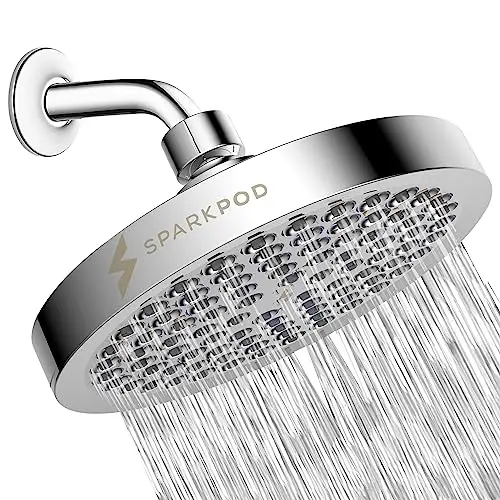
6-Inch Round Rain – Low-Flow Rainfall Without the Sputter
A six-inch round rainfall head with 90 rubber nozzles that ships set to a water-saving 1.8 GPM and includes a 2.5 GPM restrictor if you want more volume.

6-Function Luxury – Six Sprays, One Water-Saving Mode
A six-setting fixed head with a brass ball joint, silicone anti-clog nozzles, and a removable flow restrictor for dialing volume where your plumbing allows.
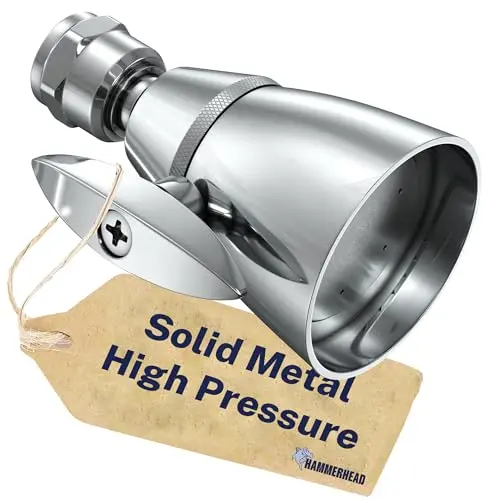
2-Inch Metal – All-Metal Pressure Booster
A two-inch all-metal fixed head that forces water through metal nozzles at the maximum flow rate, with a knob-adjustable spray pattern and an oversized brass pivot.
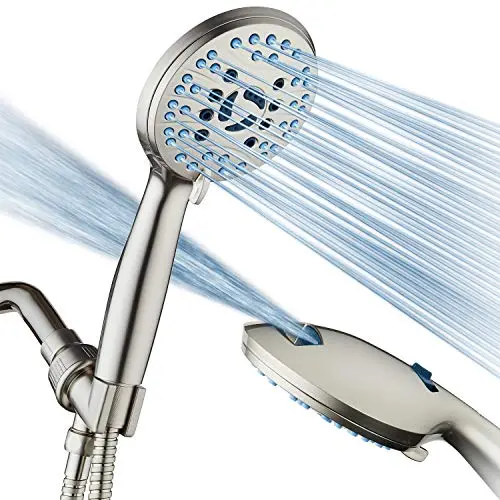
8-Mode Handheld – Built-In Power Wash for Tub and Pet
A handheld with eight spray settings, a built-in two-mode power wash for tubs and pets, self-cleaning nozzles, and a six-foot stainless hose with two mounting brackets.
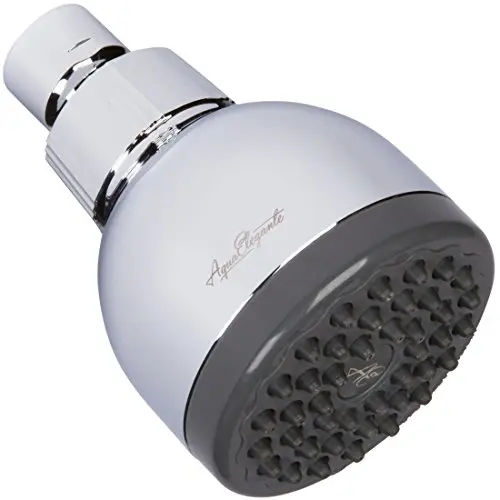
3-Inch High Pressure – Focused Spray for Weak Plumbing
A three-inch fixed head with 42 concentrated jets, a brass swivel joint, and a removable flow restrictor – one strong spray pattern with nothing to fiddle with.

3-Inch Fixed Rain – Real Low Flow on a Budget
A three-inch fixed rain head rated at 1.8 GPM with 45 self-cleaning silicone nozzles, a full-swivel joint, and a flow restrictor under the mesh filter.
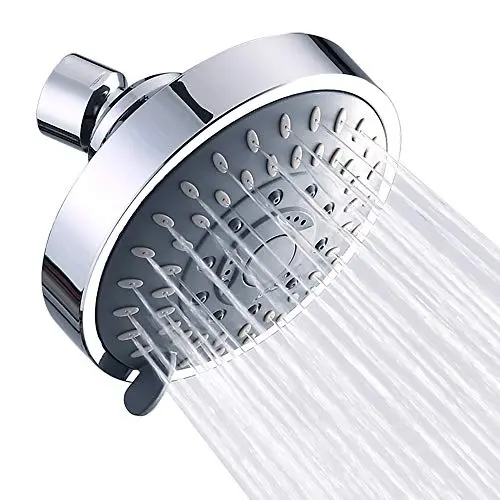
5-Mode Rain 4.1-Inch – Five Sprays on a Small Face
A 4.1-inch fixed head with five spray modes selected by a side lever, a full-rotation brass swivel, and self-cleaning nozzles.
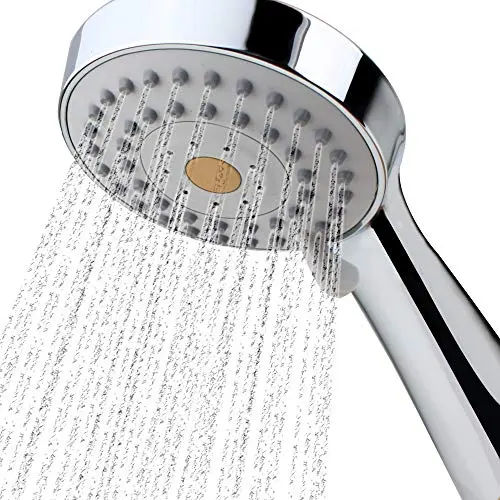
High Pressure Handheld – 79-Inch Reach for Weak Pressure
A three-mode handheld with a 79-inch stainless hose, a rotatable mount, and rubber anti-clog nozzles – built for weak-pressure lines and long reach.
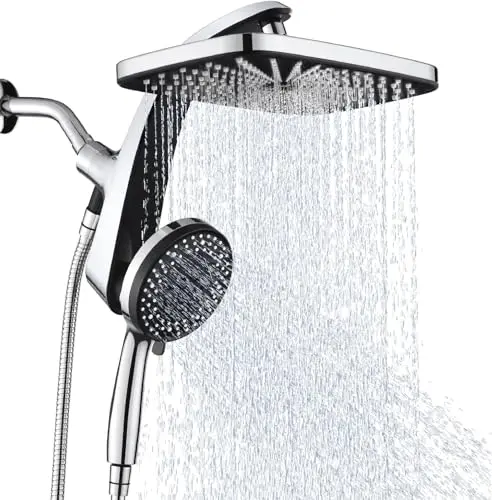
12-Inch Rain + Handheld Combo – Dual-Head Coverage
A dual-head setup pairing a 12-inch square rainfall plate with a nine-spray magnetic handheld, switchable between heads or both, at a low flow rating.
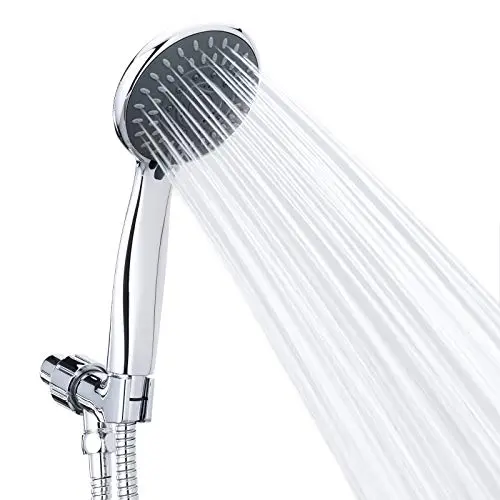
5-Setting Handheld – Lightweight Low-Flow Kit
A lightweight handheld rated at 1.8 GPM with five spray modes, a 59-inch stainless hose, an adjustable overhead bracket, and an internal debris filter.
How We Evaluated These Low Flow Shower Heads
This review didn’t involve a flow meter, a plumbed test bench, or a season of showers in a hard-water house. What it’s built on: three signal sources – published flow rates and nozzle specifications, the documented feature sets each manufacturer ships, and owner feedback where available. We cross-referenced 10 shower head models from 8 distinct brands across six decision axes – rated flow rate and restrictor design, spray pattern range, nozzle material and anti-clog behavior, connection and mounting hardware, build material, and installation effort. Where a spec sheet was thin, we leaned on what a model actually does rather than what the listing claims.
Scoring weighted real-world fit at 70% – how well each head delivers a usable shower at reduced flow, in the mounting situations people actually have – against feature differentiation at 30% – spray variety, hose length, power-wash modes, metal versus plastic construction. We audited every claim against the product documentation and mapped each head to a buyer profile: renter with weak line pressure, family with clashing preferences, pet owner who bathes a dog indoors. We have no commercial relationship with any brand here; recommendations track fit and differentiation, not brand preference.
If you want the shortest path to real water savings, the SparkPod 6-Inch Round Rain is the pick. If your household argues about spray settings, the Aqua Elegante 6-Function settles it.
How to Choose the Right Low Flow Shower Head
1. What Actually Makes a Shower Head Low Flow
Low flow is a flow-rate claim, not a marketing mood. In the US the ceiling for a standard shower head sits at 2.5 gallons per minute, and the more meaningful benchmark is around 2.0 GPM or below – that’s the range water-efficiency programs treat as genuinely efficient, and the range where a head earns the label.
Read the flow rate description in the specs, not the headline. Some heads ship at 1.8 GPM and include a 2.5 GPM restrictor you can swap in; others arrive at 2.5 and let you pull a restrictor out. Those designs point in opposite directions. If saving water is the goal, you want the first kind. If feeling more pressure on a weak line is the goal, the removable restrictor is the feature to look for – a head that can only run at the ceiling saves you nothing.
2. Flow Rate Is Only Half the Story: Nozzles, Orifice Size, and Spray Feel
Two heads at 1.8 GPM can feel completely different. Nozzle count and orifice size decide whether that water arrives as a dense sheet or a sad trickle. A 90-nozzle rain face spreads the same volume across more jets, which reads as wider and softer; a small face with fewer, tighter jets reads as sharper and more forceful.
That’s the trade in this category: coverage versus intensity. A three-inch head at low flow feels punchy but covers a narrow band. A six-inch rain head feels enveloping but soft. Neither is wrong – it’s whether you want pressure or width. Adjustable spray patterns are the compromise, letting one head span both ends.
3. Fixed, Handheld, or Dual Head: Matching the Shower Head to Your Bathroom
A fixed head is the simplest swap and the least likely to break. A handheld adds reach – for rinsing a tub, bathing a pet, or helping a kid – at the cost of a hose and bracket that both become wear points. A dual-head combo gives you both with a diverter switch, and takes the most vertical space on the arm.
Think about the bracket before you buy. An overhead bracket plus a low-reach wall bracket changes how usable a handheld is for a shower chair or a senior bather. In a rental with a plastic arm, a heavy dual-head combo may not hang well. If cleaning is the real job, the AquaCare 8-Mode Handheld does more work than any spray pattern.
4. Hard Water, Silicone Nozzles, and Why Anti-Clog Matters
Mineral scale is the quiet killer of shower performance. Calcium builds inside plastic orifices, the spray fans out sideways, and suddenly your low-flow head feels like it lost half its output. Silicone nozzles are the fix – they flex, so you wipe scale off with a thumb instead of picking at it with a pin.
On hard water or a well, this is the most important spec after flow rate. Self-cleaning nozzle arrays and a mesh inlet filter both help. So does a brass ball joint and brass threads: they hold a seal longer than plastic, and plastic collars are usually what cracks first.
5. Budget, Mid-Range, and Premium Shower Heads: What the Money Buys
The entry-level tier gets you a working low-flow head with silicone nozzles and a chrome finish over ABS. It’s a real upgrade over a clogged builder-grade head, and it’s the cheapest way to find out whether 1.8 GPM suits you.
The mid-range adds metal fittings, more spray settings, and better pivots – this is where most people should land, because the parts that fail are the parts that get upgraded. The premium tier brings all-metal bodies, longer hoses, dual-head configurations, and multi-year warranties. You’re paying for longevity and coverage more than a fundamentally better shower. The jump from entry-level to mid-range is the one you’ll feel immediately; the jump to premium is the one you’ll appreciate in five years.
6. SparkPod vs Aqua Elegante: Two Routes to a Stronger Low-Flow Shower
These two represent the category’s main fork. The SparkPod 6-Inch Round Rain starts at 1.8 GPM on a wide, soft rain face – the water-savings pick – and the included 2.5 GPM restrictor lets you add volume later if the low setting disappoints.
The Aqua Elegante 6-Function goes the other way: six spray patterns including a dedicated water-saving mode, a brass joint, and a removable restrictor, all on a compact face that concentrates output. If your household has strong opinions about settings, that one ends the argument. If you want the widest, calmest spray at the lowest flow, SparkPod is the better match.
Frequently Asked Questions
1. Are all low flow shower heads actually low flow?
No. Plenty of heads marketed as efficient run at the 2.5 GPM federal ceiling and include a removable restrictor you can pull out for more flow. That’s a pressure-boosting product, not a water-saving one.
Check the flow rate description before anything else. Genuinely low-flow heads are rated around 1.75 to 2.0 GPM out of the box, sometimes lower. A head that ships at 1.8 and offers a 2.5 swap-in gives you both options; a head that only hits 2.5 with the restrictor in place is saving water only if the restrictor stays in.
2. What's the difference between the Aqua Elegante 3-Inch and the Aisoso 3-Inch?
Both are three-inch fixed heads built to concentrate water, but they solve different problems. The Aqua Elegante 3-Inch runs at 2.5 GPM with 42 nozzles, a removable restrictor, and a brass ball joint – it’s the pressure-boost pick for old plumbing.
The Aisoso 3-Inch is rated 1.8 GPM and leans on 45 self-cleaning nozzles to spread that smaller volume evenly. It’s the water-savings pick and the more affordable of the two. Choose Aqua Elegante for brute force, Aisoso for genuine low flow on a tight budget.
3. HO2ME vs BRIOUT: which handheld is the better buy?
They’re close on paper – both are multi-setting handhelds with stainless hoses – but the practical split is reach versus flow. The HO2ME’s 79-inch hose is unusually long and its rotatable mount arm repositions without tools, which suits a big tub or a pet bath.
The BRIOUT runs at 1.8 GPM and ships with an internal inlet filter, which matters on older pipes. Its bracket grip is the weaker part, so expect to adjust the holder. For reach, HO2ME. For lower flow and filtration, BRIOUT.
4. Will a low flow shower head fix weak water pressure?
Partly. A low-flow head with concentrated nozzles and a removable restrictor makes a weak line feel considerably stronger – that’s exactly what high-pressure heads in this category are engineered for. What it can’t do is create water the line isn’t delivering.
If your pressure problem is scale inside the head itself, a silicone nozzle face you can wipe clean helps more than any spec. If it’s the plumbing, choose a small face with dense jets rather than a wide rain plate.
5. Do low flow shower heads actually lower a water bill?
Only if the flow is genuinely reduced and the restrictor stays in. A head rated 1.8 GPM that you leave alone uses meaningfully less water than a 2.5 GPM head, and the difference shows up fastest in households with long showers.
The catch is duration. If a weak spray makes you stand there twice as long rinsing shampoo, you’ve handed the savings back. That’s why spray density matters as much as the flow number – a low-flow head that feels satisfying is the only one that actually saves anything.
Final Verdict
For most people, the SparkPod 6-Inch Round Rain is the answer: it ships at 1.8 GPM, spreads that flow across 90 nozzles so the rain feels generous, and includes a 2.5 GPM restrictor if you later decide you want more volume. It’s the rare low-flow head that doesn’t ask you to compromise on the shower itself.
If your household can’t agree on a spray, the Aqua Elegante 6-Function gives you six settings and a brass joint for a bit more money. If you’re working with a tight budget and a small stall, the Aisoso 3-Inch is the cheapest honest 1.8 GPM head here. And if you’re replacing something that died from a cracked plastic collar, the HammerHead 2-Inch Metal won’t repeat the pattern.
Start with your flow rate and your shower arm, then pick the spray you’ll actually use.
