
Best Low Profile Bed Frames – 2026 Reviews

A low bed changes the whole feel of a room. It drops the sightline, makes small spaces breathe, and can turn a mattress into a more grounded, minimalist setup. But “low profile” is not one measurement. It can mean a 4-inch metal platform, a 7- to 10-inch wood floor bed, or a 1-inch slat base under a Japanese futon.
The tricky part is that height alone does not make a good low profile bed frame. You also need to think about support, mattress movement, access, and whether you want any clearance underneath. A frame that sits too low can be hard to get out of; one that sits too high loses the point.
This guide compares low profile bed frames across brands and styles, from budget metal platforms to rounded-leg designs and foldable futon bases. We will help you match the frame to your mattress, room, and the way you actually sleep.
Best Low Profile Bed Frames – 2026 Reviews
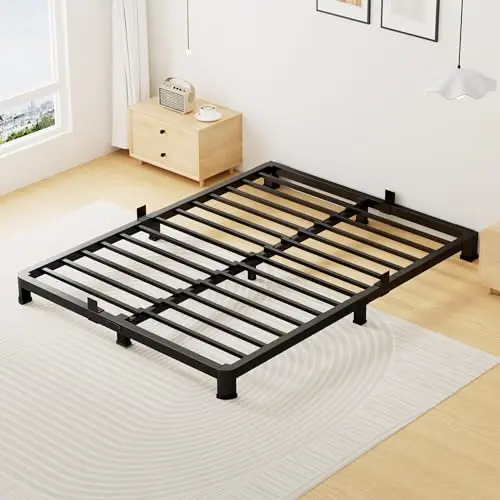
4 Inch Queen Bed Frame – Rounded-Leg Low Profile with Mattress Stoppers
A 4-inch queen platform that keeps the mattress close to the floor without feeling like a bare slab. The rounded legs soften the frame’s footprint, while folding steel supports and nine legs give it a substantial stance. Mattress stoppers and silicone foot caps address the two common low-profile annoyances: sliding and scratched floors.
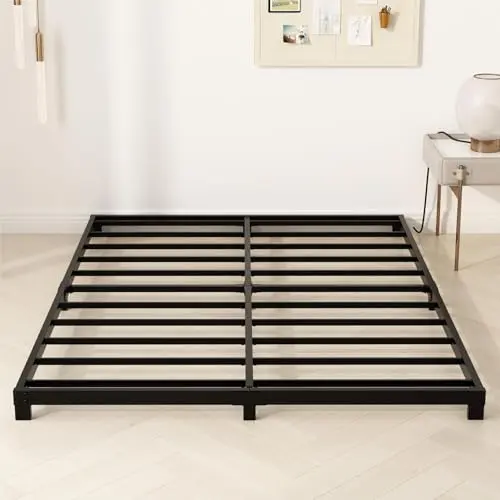
4 Inch Queen Bed Frame – Budget Metal Platform with Noise-Free Build
A straightforward 4-inch queen platform for shoppers who want the low-profile look without paying for extras. The metal frame uses close-fitting parts and foot pads to keep things quiet, and it accepts a mattress directly with no box spring.
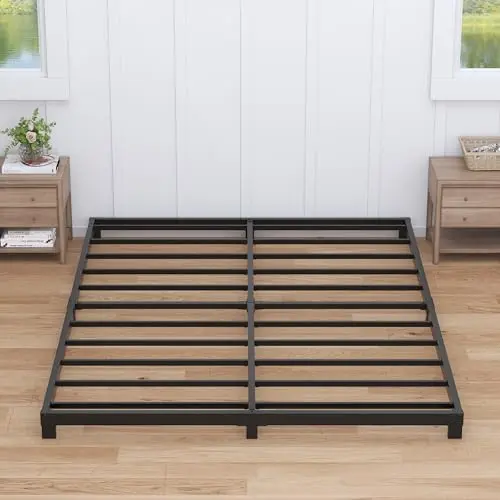
4 Inch Queen Bed Frame – Heavy-Duty Low Profile for Kids and Toddlers
A 4-inch queen frame built for sleepers who want to stay close to the floor, including kids’ rooms and guest spaces. Nine reinforced legs and side rails create a dense support grid, while anti-slip foot pads keep the metal off your flooring.
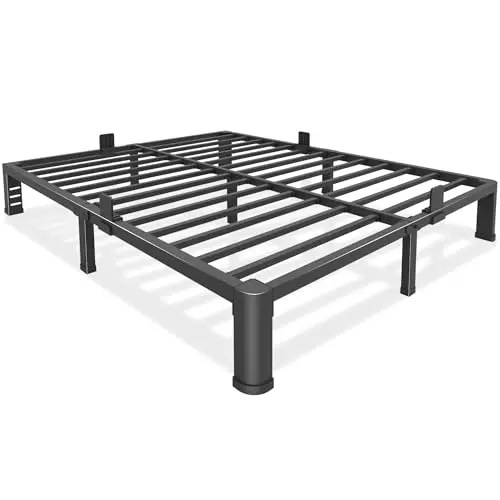
10 Inch Full Bed Frame – Low Profile with Under-Bed Storage
A 10-inch full platform that sits low but still leaves useful space underneath. Rounded front legs soften the corners, the center folds for easier handling, and the frame is ready for a headboard if you want to add one later.
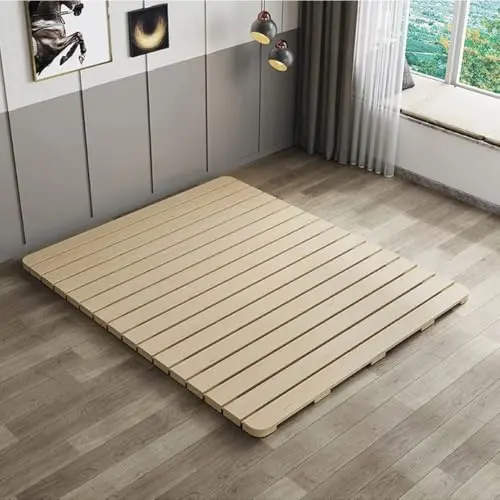
Foldable Floor Bed Frame – Japanese Futon Base with Roll-Up Slats
A foldable slat base for a Japanese futon or floor-sleeping setup. The one-piece pine slats sit just over an inch off the floor, and the whole base rolls up for storage without tools or assembly.
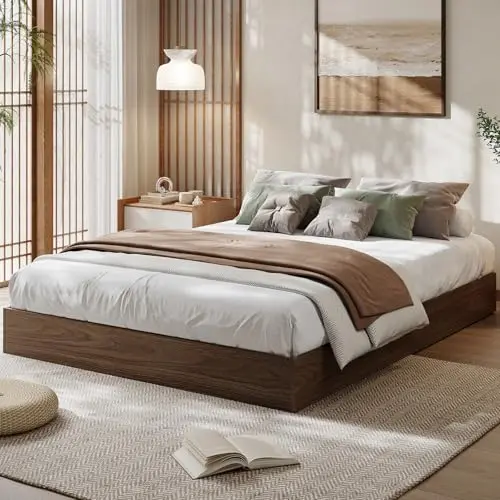
Wood Platform Bed Frame – Floor-Level Minimalist Design
A wood platform bed that sits fully on the floor for a clean, built-in look. The low 7.7-inch height and no-headboard design make it easy to place under a window or in a compact room, and the slat support means no box spring.
How We Evaluated These Low Profile Bed Frames
We didn’t perform long-term load testing or multi-month durability trials. What we did: cross-referenced six low profile bed frames from six brands across five decision axes – frame height and clearance, support structure and weight capacity, assembly and maintenance, noise and mattress stability, and size or headboard compatibility. We triangulated published specifications, feature sets, owner feedback where available, and use-case fit against common buyer profiles, from kids’ rooms to Japanese futon setups. We also audited the details that matter when a bed sits close to the floor: slat spacing, leg design, mattress stoppers, and the hardware that keeps a frame quiet.
The scoring framework weighted real-world fit (70%) – how well each frame delivers on the low profile promise without creating mattress or access problems – against feature differentiation (30%) – rounded legs, mattress stoppers, storage clearance, and other details that separate one frame from another. We mapped each option to the room or sleeper it suits best rather than ranking on specs alone. A frame that reads well on paper can still be the wrong choice if the mattress slides or the clearance does not match your storage needs. We have no commercial relationship with the brands featured; recommendations track fit and differentiation, not brand preference. If you want the strongest all-around low profile pick, the Superay is our starting point; if budget is the priority, the YUSENHEEI is the value route.
How to Choose the Right Low Profile Bed Frame
1. What Counts as a Low Profile Bed Frame?
Low profile is a range, not a single spec. You will see 4-inch metal platforms that sit close to the floor, 7- to 10-inch wood frames that feel low without being floor-level, and 1-inch futon bases built for Japanese-style sleep setups. The right choice depends on whether you want a true floor-adjacent look, some under-bed clearance, or a base that rolls away when not in use.
2. Frame Height, Clearance, and Mattress Fit
A low frame changes how you get in and out, so match the height to the sleeper. A 4-inch profile is great for kids and minimalist rooms, but it can be hard on knees or mobility. If you want storage, look for under-bed clearance closer to 8 inches. Mattress thickness matters too: a thick mattress on a very low base can end up higher than expected. If you want a balanced 4-inch queen platform, the Superay is our reference point.
3. Support Structure and Weight Capacity for Low Profile Bed Frames
Low frames still need real support. Metal platforms typically rely on steel slats, reinforced joints, and multiple legs; wood frames use solid wood slats or engineered wood with cross beams. Check the stated weight capacity and look for leg count and joint design, especially on queen and king sizes. If the frame is going in a kid’s room, the Nailsong pairs a low 4-inch stance with nine reinforced legs and a kid-friendly height.
4. Noise, Stability, and Mattress Movement
Squeaks usually come from metal-on-metal contact, loose joints, or a mattress sliding on slats. Look for EVA mute bars, silent sponges, and anti-slip foot pads. Mattress stoppers can help, but they are not a substitute for a properly sized mattress. If you want built-in stoppers and rounded corners, the Bilily is the more thoughtful pick here.
5. Assembly, Storage, and Headboard Compatibility
Some low profile frames use foldable slats and include a ratchet wrench to cut setup time; others arrive as a roll-up base with no assembly. If you want a headboard later, look for headboard-ready legs with pre-drilled holes. For small rooms, roll-up storage is a real advantage. If you sleep on a Japanese futon, the LOBOTOU is built for that exact setup.
6. How Much Should You Spend on a Low Profile Bed Frame?
Entry-level metal frames cover the basics: a low platform, slat support, and no box spring. Mid-range frames add rounded legs, better hardware, mattress stoppers, or more clearance. Specialty wood and futon bases sit at the top of the range because they solve a narrower problem, not because they are automatically better for every bedroom. Spend up only when the extra feature matches your room.
Frequently Asked Questions
1. What's the difference between the Superay and Nailsong 4-inch queen bed frames?
Both are 4-inch queen platforms, but they aim at slightly different buyers. The Superay adds rounded corner legs, a 3,500-pound capacity, and mattress stoppers for a more finished feel. The Nailsong is the budget-friendly alternative with nine reinforced legs and a 3,000-pound capacity. For most sleepers, the Superay is the easier default; the Nailsong makes sense when the lower price tier matters more than the extra details.
2. How does the Bilily 10-inch full frame compare with the GarveeHome wood platform bed?
The Bilily is a metal platform with a 10-inch stance, 3,500-pound capacity, rounded front legs, and under-bed storage plus headboard-ready legs. The GarveeHome is a floor-standing wood design with a 7.7-inch height, a no-headboard silhouette, and a 1,000-pound capacity. Choose the Bilily if you want clearance and headboard flexibility; choose the GarveeHome if you want the bed to sit fully on the floor with a wood look.
3. How low is too low for a low profile bed frame?
There is no universal cutoff, but a 4-inch platform is close enough to the floor that mattress thickness and mobility needs matter a lot. Kids and toddlers often do fine with a very low bed; older sleepers or anyone with knee issues may prefer 7 to 10 inches. Measure the mattress plus frame height and practice getting in and out before committing.
4. Do low profile bed frames work with memory foam mattresses?
Yes, as long as the frame has a solid, closely spaced support surface. Memory foam needs even slat support and a properly sized mattress to avoid sagging or sliding. Check the frame’s slat spacing and weight rating; a queen frame should match a queen mattress, not a slightly different size.
5. Can I use a low profile bed frame with a Japanese futon?
Yes, but the frame needs narrow slat spacing and a breathable base. The LOBOTOU is designed for this with its 1.18-inch profile, 17 pine slats, and 1-inch slat spacing. It also rolls up for compact storage, which makes it a better fit for small rooms than a standard platform bed.
Final Verdict
For most buyers, the Superay is the low profile frame to beat. It pairs a true 4-inch stance with rounded legs, a 3,500-pound capacity, and mattress stoppers-details that make a floor-level bed feel more intentional and less like a compromise. If you want the lowest entry point, the YUSENHEEI gets you a quiet 4-inch metal platform without the extras. Need storage or a headboard? The Bilily is the better fit at 10 inches with 8.4 inches of clearance. And if your mattress is a Japanese futon, the LOBOTOU is the specialist: a 1.18-inch pine slat base that rolls up and needs no assembly. Start with the Superay unless your room or mattress clearly points to one of those alternatives.
