
Best Luxury Shower Heads – 2026 Reviews

There is a specific disappointment in stepping into a beautifully tiled bathroom and getting a thin, stinging drizzle from a fixture that looks the part. The head at the end of the arm is the one part of the room that decides whether a shower feels expensive or merely looks it. Change it and the whole bathroom reads differently. Leave it and no amount of tile work fixes the experience.
That gap is what separates genuine luxury from a nice finish in this category. Luxury in a shower head comes down to how the water is shaped, how much of your body it reaches at once, and whether the hardware feels mechanical in the hand rather than hollow. A small brass head with well-engineered plungers will out-soak a wide plastic face with loose jets every time. Price tracks those things loosely at best.
We compared the options that matter across the market, from a solid brass head built to commercial spec to oversized rainfall faces, dual-head combos with a handheld on a diverter, and filtered heads aimed at hard water. Some are near-permanent fixtures; others are five-minute upgrades you can undo when you move out. Below is how they sort out, and which kind of bathroom each one actually suits.
Best Luxury Shower Heads – 2026 Reviews
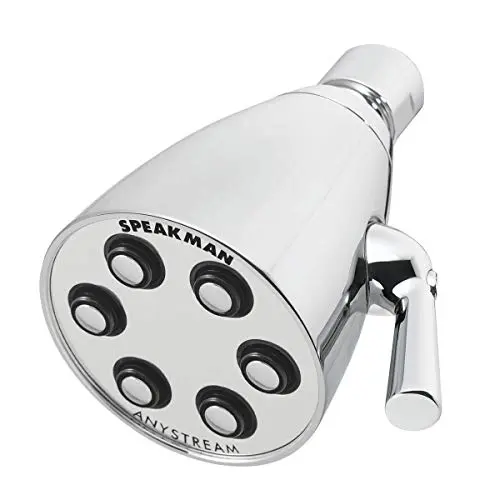
S-2252 Signature Icon Anystream – Solid Brass High-Pressure Head
A bathroom fixture that behaves like plumbing equipment. The solid brass body and side-mounted lever control three Anystream settings, and internal plungers concentrate the flow so a weak supply line still feels forceful. Six jets, self-cleaning plungers, and a lifetime limited warranty.
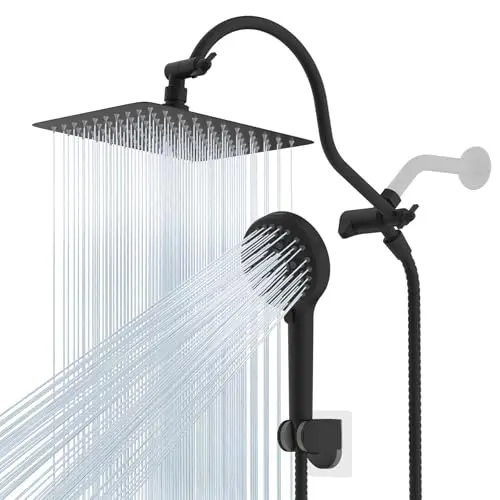
10-Inch Square Rain Combo – All-Metal Dual Head with Adjustable Arm
A complete dual-head setup: a 10-inch square stainless steel rainfall head up top, a 10-setting handheld on a 71-inch hose, and a height-adjustable 12-inch extension arm that keeps the rain head level. The integrated three-way diverter switches between them without the sway of add-on valves. cUPC certified.
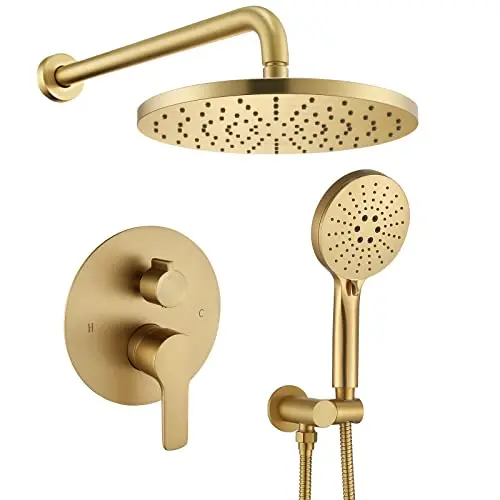
Brushed Gold Shower System – 10-Inch Rain with Pressure-Balance Valve
A full wall-mounted system rather than a head swap: 10-inch round rainfall head, three-setting handheld, 16-inch brass arm, stainless hose, brass holder, and a mixer valve with a pressure-balance cartridge that guards against sudden temperature swings. Standard NPT half-inch connections.
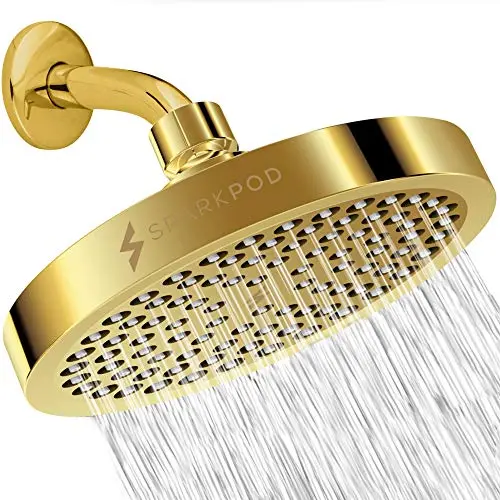
6-Inch Round Rain Head – Swappable Restrictors in Egyptian Gold
A six-inch round rain head with 90 rubber nozzles and one genuinely useful trick: it ships at 1.8 GPM with a 2.5 GPM restrictor and a screened washer in the box, so you can tune the flow to your plumbing. Hand-tightens onto any standard half-inch shower arm.
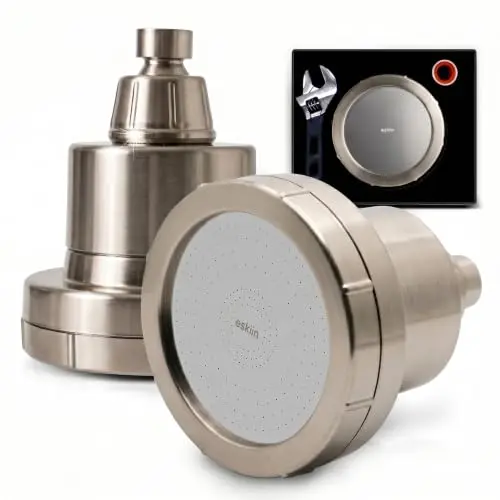
Filtered Shower Head – Replaceable Cartridge for Hard Water
A rain head built around a replaceable filter cartridge aimed at chlorine, sediment, and heavy metals in municipal water. Standard half-inch threading, a rainfall-plus-waterfall spray mix, and a welcome kit that includes the wrench, plumber’s tape, and a first filter.
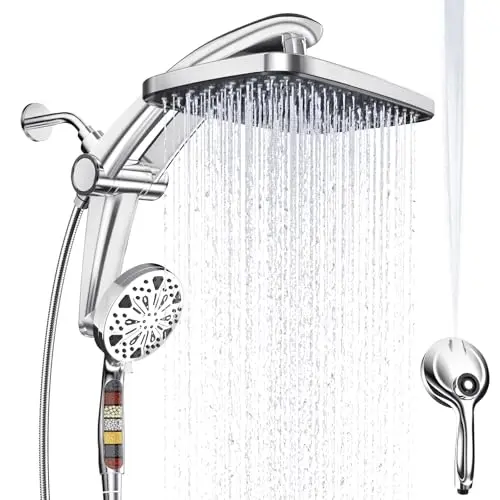
12-Inch Rainfall Combo – Magnetic Handheld and Adjustable Arm
A 12-inch square rainfall head paired with a magnetic handheld on a one-piece bracket that adjusts both height and angle. Nine spray settings on the wand, including a concentrated power jet, with a 59-inch stainless hose and a 24-month warranty.
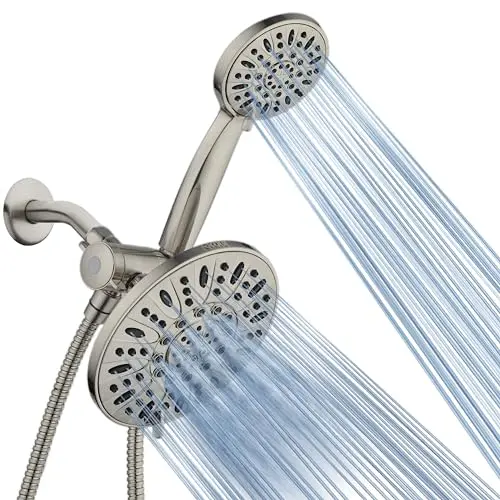
7-Inch Rain & Handheld Combo – Two Six-Setting Heads on One Diverter
Two heads on one diverter: a seven-inch six-setting rain head overhead and a four-inch six-setting handheld, each with a click lever dial and rub-clean jets. A five-foot stainless hose, plumber’s tape, and a tool-free install are in the box.
How We Evaluated These Luxury Shower Heads
We didn’t install these heads in our own showers and live with them for a month. What we did: cross-referenced seven shower head models from seven distinct brands across six decision axes – build material and finish, spray geometry and settings count, face size and body coverage, flow rate and pressure behavior, installation and plumbing compatibility, and long-term care plus warranty terms. We triangulated published specifications, manufacturer documentation, and owner feedback where available, then mapped each option against the bathroom it actually suits: low-pressure apartments, rentals, hard-water households, and full remodels. We also weighed what each head demands after purchase – a five-minute hand-tighten, a filter cartridge on a twelve-week cycle, or a valve that goes behind the wall.
The scoring framework weighted real-world fit (70%) – how convincingly a head delivers the shower it promises – against feature differentiation (30%) – what it brings that the rest of the lineup does not, whether that is a machined brass body, an anti-scald valve, or a replaceable filter. We have no commercial relationship with any brand featured here, and recommendations track fit and differentiation rather than brand preference. We’ll be straight about the limits: this review didn’t involve flow-meter testing, spray-force measurement, or years of finish wear. It’s built on specs, documentation, and owner experience. If you want the shortest path to a hotel-feeling shower, the Speakman S-2252 is it; if a rainfall head plus a handheld for cleaning is the goal, the Hibbent 10-inch square is the better route.
How to Choose the Right Luxury Shower Heads
1. What Actually Makes a Shower Head Feel Luxurious
Luxury in this category comes down to three things you register within the first thirty seconds: stream density, meaning how much water arrives per square inch; coverage, meaning how much of your body gets wet at once; and mechanical solidity, whether the lever or dial feels like a switch or a toy. None of those require a bigger plumbing budget.
A brass body with a well-engineered nozzle array will feel more expensive than a larger plastic head with loose jets, every time. The giveaways are consistent: plastic lever wobble, misting instead of soaking, and a spray pattern that collapses at the edges of the face.
2. Build Material: Solid Brass, Stainless Steel, or ABS
The biggest fork in the category is metal versus plastic. Solid brass resists scale, holds threads tight for decades, and is why commercial bathrooms look the way they do. SUS 304 stainless steel rain heads give you a wide face without the weight. ABS plastic is not automatically bad – it is lighter, cheaper, and easier to mount – but it is also where most durability complaints in this category originate.
Finish matters as much as the body. Plated finishes chip at the edges where the hose attaches, while real metal ages without blistering. If you would rather buy once, the Speakman S-2252 is the metal-bodied pick in this lineup.
3. Spray Geometry: Face Size, Nozzle Count, and Settings
Face size and nozzle count do different jobs. A larger face spreads water across shoulders and back; a higher nozzle count on a smaller face concentrates it into something that feels forceful. Neither is inherently better, because they solve different problems.
Settings are the most oversold spec in the category. Three genuinely distinct patterns beat nine that all feel like the same spray at different volumes. The useful ones are a wide rain, a focused massage, and a pause or trickle for shaving or washing a pet.
4. Flow Rate, Water Pressure, and Low-Pressure Homes
Most heads sit between 1.75 and 2.5 GPM. Higher flow feels fuller; lower flow is easier on utility bills and often required by local code. The surprise is that nozzle engineering matters more than raw flow – plungers and air injection can make 1.8 GPM feel stronger than a plain 2.5 GPM head.
If your building pressure is genuinely weak, look for heads that address it explicitly: plunger-driven jets, a swappable restrictor, or any design that ships with a removable flow regulator you can pull out in a minute.
5. Installation Reality: Head Swap vs. Full System
Three tiers exist. A head swap takes five minutes of hand-tightening on a standard half-inch arm. A dual-head combo adds a diverter and hose but still needs nothing beyond the tape in the box. A full system with a mixer valve is a plumbing job, because the valve goes behind the wall, and that is a different weekend entirely.
Know which one you are buying before you order. If you are opening the wall anyway, the Iriber Brushed Gold system bundles valve, trim, and both heads into one purchase; if you want rain plus handheld without demolition, the Hibbent 10-inch square is the middle path.
6. What Luxury Shower Heads Cost at Each Tier
Entry-level rain heads sit in the budget range and are almost always ABS, which makes them a sensible way to test whether you even like a wide spray. The mid-range band is where dual-head combos and better finishes live. The premium tier means metal construction, filtration, or a complete valve-and-trim system.
Spending more buys materials, engineering, and warranty length rather than a better shower automatically. A well-designed budget head routinely beats a poorly finished premium one, and very few people regret starting modest.
7. Care, Scale, and Replacement Parts
Hard water is the long-term enemy of any head. Rubber or silicone nozzles that wipe clean with a finger are worth more than an extra spray setting, and self-cleaning plungers handle scale automatically between cleanings. Filter heads add a replaceable cartridge on a roughly twelve-week cycle, which is a running cost worth budgeting for before you commit.
Check the warranty language too. Lifetime limited coverage on a metal body means something different from twelve months on a plated plastic one.
Frequently Asked Questions
1. What makes a shower head genuinely luxury rather than just expensive?
Three things show up immediately: stream density, face coverage, and how the controls feel in your hand. A wide face that mists is worse than a smaller face that soaks. An expensive but plastic-bodied head will feel cheaper in two years than a brass fixture that costs less today. Warranty length is the quiet tell, since a lifetime limited warranty usually signals a manufacturer who expects the part to survive.
2. Speakman S-2252 vs. SparkPod 6-inch: which should you pick?
They solve different problems. The Speakman S-2252 is about pressure and permanence: plunger-driven jets, three settings, solid brass, and a spray that stays forceful on a weak line. The SparkPod 6-inch is about coverage and cost: a wide rainfall face, 90 rubber nozzles, and swappable restrictors so you can dial flow up in a low-pressure apartment. Choose the Speakman if you want the shower to feel mechanical and permanent; choose SparkPod if you want a broad, soft rain spray and can accept ABS construction.
3. Hibbent 10-inch square vs. AquaDance 7-inch combo, which dual-head system is better?
For build quality and adjustability, the Hibbent 10-inch square wins: a stainless steel rain head, an extension arm that raises and lowers while staying level, an integrated diverter, and a much longer hose. The AquaDance is the friendlier first purchase, since it is lighter, simpler to hang, and its two six-setting heads cover rain and handheld duty without fuss. Pick Hibbent for a primary bathroom you plan to keep; pick AquaDance for a guest bath or a rental you will eventually leave.
4. Do filtered shower heads like the Eskiin really help with hard water?
They help with what they are built to catch. The Eskiin targets chlorine, sediment, and heavy metals at the cartridge, and owner feedback leans toward softer-feeling hair and less scalp irritation within a few weeks. What a shower filter will not do is remove calcium hardness, so if scale is your main problem, a whole-home softener is the real fix. Budget for a replacement cartridge roughly every twelve weeks, because a spent filter performs worse than none.
5. Can you install a rainfall shower head without a plumber?
For a head-only swap or a combo with a diverter, yes. Everything hand-tightens onto a standard half-inch shower arm using the tape that ships in the box, and most people finish in well under fifteen minutes. What you cannot do yourself is install a pressure-balance valve, which sits behind the wall and requires shutting off water and opening tile or drywall. If your current arm is fixed and you want a rain head to hang level, an adjustable extension arm solves it with no plumbing work at all.
Final Verdict
For most bathrooms, the Speakman S-2252 is the answer. It is the only head here built like a commercial fixture, the Anystream settings deliver three genuinely different showers, and the lifetime limited warranty turns the purchase into a one-time decision rather than a replacement habit. If you want a broad rain spray on a small budget, or you rent and cannot touch the plumbing, the SparkPod 6-inch gets you most of the sensation for entry-level money, with swappable restrictors to compensate for weak pressure. And if you are already opening the wall, the Iriber Brushed Gold system is the one that makes the shower feel like a proper fixture, with a pressure-balance valve, coordinated trim, and a finish that looks deliberate. Everyone else sits in between, so pick based on whether coverage, filtration, or a handheld matters most to you.
