
Best Mattress Protectors For Allergies – 2026 Reviews

You strip the bed, wash everything on hot, vacuum the rug, and still wake up congested at 3 a.m. The mattress is usually the last place anyone looks, and it happens to be the one piece of the equation you can’t put in the washing machine.
That’s the whole reason mattress protectors exist as a category, but the word “protector” covers two quite different products. A fitted pad guards the top surface against spills and sweat. A zippered encasement seals all six sides so whatever already lives inside the mattress stays there, and that distinction matters enormously when dust mites are driving your symptoms. The second axis is care: a barrier you can’t launder at high heat is a barrier you’ll clean less often than you should.
We compared encasements and fitted pads across the market, from entry-level to premium, and sorted them by how well they fit an allergy household’s actual routine. Here’s what earns its place on the bed and what’s essentially a waterproof sheet with better marketing.
Best Mattress Protectors for Allergies – 2026 Reviews
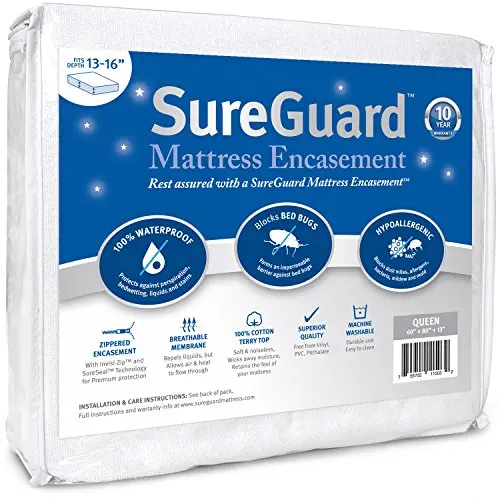
Mattress Encasement – Six-Sided Allergen Seal
A six-sided zippered encasement with a cotton terry top that feels like a mattress pad rather than a plastic shell. It fits queen mattresses between roughly 13 and 16 inches deep, blocks liquids on every panel, and is machine washable and dryable. GREENGUARD Gold certification and a vinyl-free, PVC-free, phthalate-free build make it the easiest recommendation for a chemically sensitive bedroom.
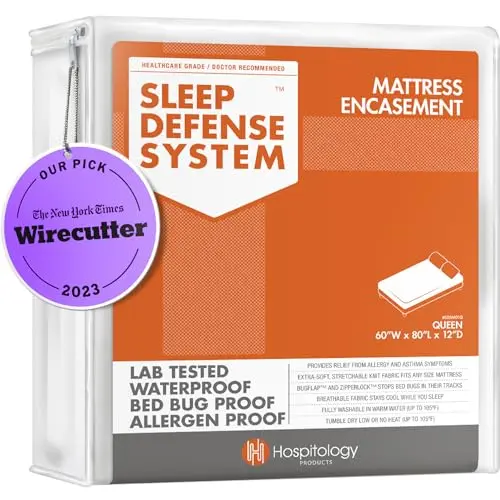
Mattress Encasement – Breathable Sleep Defense
A stretch-knit encasement with a polyurethane lining that seals all six sides while flexing over mattresses from roughly 12 to 18 inches deep. The polyester face is soft rather than slick, the membrane is engineered to let heat escape instead of trapping it, and the whole thing goes in the washing machine and a low dryer. A five-year limited warranty backs it.
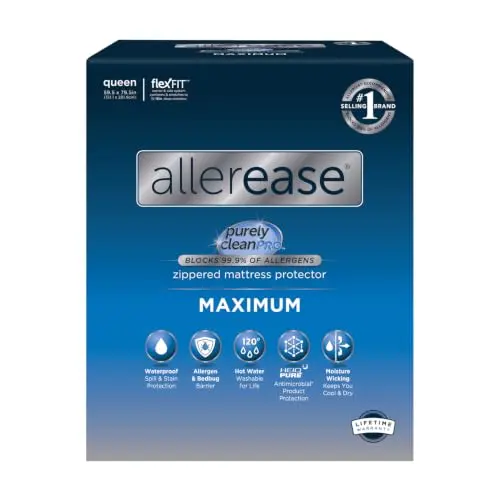
Maximum Allergy Zippered Protector – Hot-Wash Allergen Barrier
A zippered encasement built specifically around allergy care. The top fabric is soft and quiet, backed by a waterproof layer, and the sidewall construction fits queen mattresses up to 15 inches deep. The care instructions are the standout feature: machine wash hot with non-chlorine bleach when needed, then tumble dry on the lowest setting. A lifetime warranty covers it.
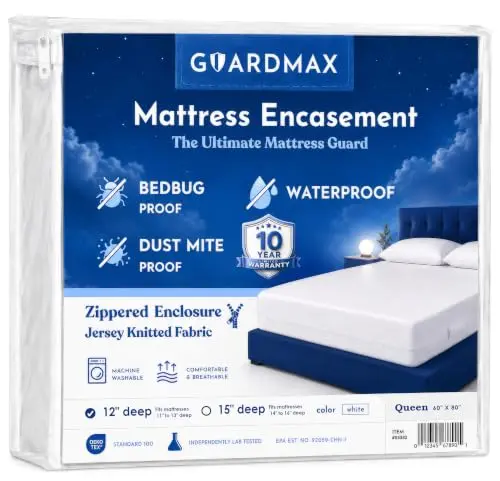
Zippered Mattress Encasement – Soft Jersey Knit Barrier
A six-sided zippered encasement with a jersey knit face that feels closer to a t-shirt than a vinyl cover. The nylon zipper runs around three sides and tucks under a stitched guard flap so there’s no open gap at the pull. It’s waterproof, dust mite proof, OEKO-TEX Standard 100 certified, and machine washable, sized for queen mattresses up to about 13 inches deep.
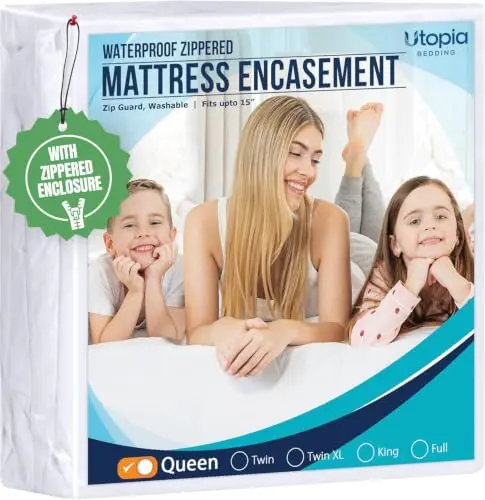
Zippered Mattress Encasement – Six-Sided Value Pick
A budget-minded zippered encasement that covers all six sides of a queen mattress up to 15 inches deep. The knitted polyester face lies flat without feeling stiff, a TPU backing runs around every panel, and the wrap-around zipper is designed to hold a tight seal. Machine washable with a low tumble dry.
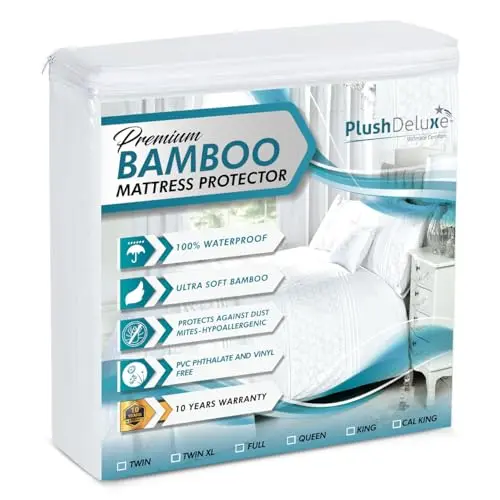
Bamboo Waterproof Mattress Protector – Cool-Touch Fitted Cover
A fitted protector rather than an encasement. The viscose-from-bamboo surface stretches over mattresses up to 18 inches deep, backed by a noiseless waterproof membrane. It’s hypoallergenic, breathable, and machine washable, and it’s aimed squarely at comfort: no crinkle, no plastic feel.
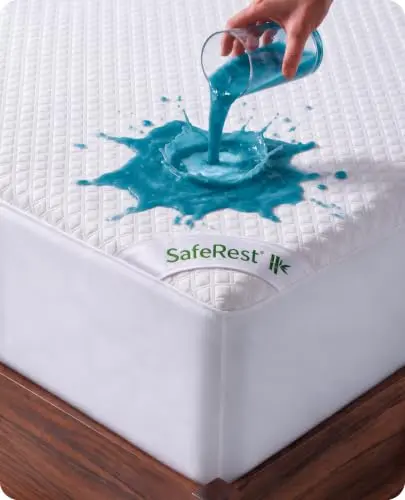
Bamboo Viscose Mattress Protector – Quiet Fitted Barrier
A fitted protector with a viscose blend surface and a deep stretch skirt that pulls over mattresses up to 18 inches. It’s OEKO-TEX Standard 100 certified, machine washable, and built without zippers or added padding, making it a quiet, low-profile barrier against sweat and spills.
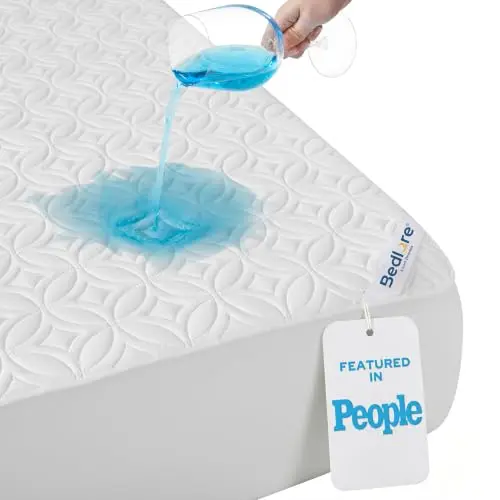
Waterproof Mattress Protector – Quilted Deep-Pocket Cover
A quilted fitted protector with a brushed microfiber surface and a TPU waterproof layer, cut to fit mattresses from 6 to 18 inches deep with a 360-degree elastic skirt. It’s noiseless, machine washable, and designed to add a little padding rather than just a barrier.

Waterproof Mattress Protector – Terry-Top Fitted Pad
A terry-top fitted protector with a waterproof TPU backing, all-around elastic, and deep pockets that fit queen mattresses up to 17 inches. The surface is soft and absorbent, it’s quiet in use, and it’s machine washable on a cold, gentle cycle.
How We Evaluated These Mattress Protectors for Allergies
We didn’t run allergen-lab assays on these protectors or sleep on each one through a full dust-mite season. What we did: cross-referenced 9 mattress protectors from 8 distinct brands across five decision axes – barrier completeness, allergen-barrier construction and third-party certification, breathability and heat retention, wash-and-care requirements, and fit across mattress depths. We triangulated published specifications, feature sets, and owner feedback where available, then mapped every option against how an allergy household actually uses a bed.
Barrier completeness carried the most weight. A fitted pad covers the top of a mattress. A zippered encasement seals all six sides. If dust mites are the problem, that gap is the entire argument, so a comfortable fitted protector can’t outscore a competent encasement here. We also weighed wash heat, because care instructions decide whether you can launder at the temperature that strips allergens out of the fabric. A protector that survives a hot cycle earns real ground over one that has to be washed cold.
The scoring framework weighted real-world fit for an allergy sleeper (70%) – how well each option blocks, washes, and sleeps – against feature differentiation (30%): certifications, fabric engineering, depth range, and warranty support. We have no commercial relationship with any brand featured; recommendations track fit and differentiation, not brand preference. If you want the most complete barrier, the SureGuard Mattress Encasement is the pick; if you sleep hot and need stretch, the Hospitology Mattress Encasement is the better match.
How to Choose the Right Mattress Protector for Allergies
1. Why Allergies Call for a Zippered Encasement, Not Just a Fitted Pad
Dust mites don’t live on your sheets. They live in the mattress, and their allergens settle into fabric layers you can’t launder. A fitted pad protects the top surface, which is genuinely useful for spills, sweat, and pet dander, but it leaves the sides and underside of the mattress open. A six-sided encasement zips shut around the whole thing, so the dust mite allergen already inside stays sealed in and new mites can’t set up house.
That’s the single biggest fork in this category. If your allergy plan is built around dust mites, start with an encasement: the Guardmax, AllerEase, SureGuard, Hospitology, and Utopia zippered models here all cover six sides. The AllerEase Maximum Allergy Protector is a sensible starting point because its care instructions are built for allergy laundering. If your triggers lean more toward dander and spills than mites, a well-made fitted protector gets you most of the benefit with less hassle.
2. Fabric, Breathability, and Heat: What Allergy Sleepers Should Weigh
The fabric you sleep against decides whether you’ll actually keep the protector on the bed. Cotton terry tops breathe well and wick moisture. Jersey knits feel soft and stay silent. Viscose from bamboo is cool to the touch and good at moving moisture away from the body. Brushed microfiber with quilting adds loft but runs warmer.
Underneath, most of these use a polyurethane backing to block liquid. The spec sheet won’t tell you how hot it sleeps, but a breathable membrane and thinner backing generally run cooler than a thick coated panel. If you already wake up overheated, prioritize a knit or bamboo surface over a quilted one. The PlushDeluxe Bamboo Protector is the coolest-feeling option here, though it only covers the top of the mattress.
3. Certifications Worth Checking on an Allergy Mattress Protector
Third-party certification is the closest thing to a shortcut in this category. GREENGUARD Gold screens for chemical emissions in the sleep environment. OEKO-TEX Standard 100 tests the finished fabric for harmful substances. Both are auditable claims rather than marketing language, and both show up on protectors here.
The word hypoallergenic is not regulated, so treat it as positioning rather than a guarantee. More useful is whether a brand spells out what it excludes. SureGuard states outright that its encasement is free of vinyl, PVC, phthalates, and fire retardants, which is the level of specificity worth looking for. Depth range and closure type are just as telling: a certified fabric over a zipper that gaps doesn’t buy you much.
4. SureGuard vs. AllerEase vs. Hospitology: Three Encasement Approaches
These three solve the same problem in different ways, and the right pick depends on your bedroom rather than the spec sheet. SureGuard leads with a cotton terry surface, GREENGUARD Gold certification, and a 13-to-16-inch depth range, making it the premium, chemically-careful option. AllerEase leads with hot-water washable care and a lifetime warranty, and it fits up to 15 inches. Hospitology leads with a stretch knit that spans roughly 12 to 18 inches paired with a breathable membrane.
The practical fork: if you wash the encasement often and want the freedom to use non-chlorine bleach, AllerEase. If your mattress is thick and you sleep warm, the Hospitology Mattress Encasement is the better physical fit. If chemical sensitivity is part of the picture, SureGuard’s certification set is the strongest of the three.
5. Washing for Allergies: Heat, Frequency, and Care
Read the care label before you buy, because it determines how useful the protector stays over time. Hot water is what allergy households want, and only some products allow it: AllerEase explicitly permits hot wash with non-chlorine bleach, while the Utopia fitted protector specifies cold, gentle cycles. Guardmax calls for a warm wash and low tumble dry.
On frequency, most households land somewhere between weekly sheet washing and a monthly encasement wash. One practical note: encasements take two people to remove and refit on a queen, so many allergy households keep a fitted protector on top for easy weekly laundering and clean the encasement less often.
6. Fit, Depth, and Price Tiers for an Allergy Mattress Protector
Measure the mattress depth before anything else, and measure rather than guess, since a topper changes the number. Encasements here run from about 13 inches on the Guardmax up to 18 inches on the Hospitology, and the fitted protectors reach 18 as well. A protector at the edge of its range will strain at the seams; one that’s too roomy bunches under the sheet.
On tiers, entry-level money buys a fitted pad with a waterproof backing: fine for spills, limited for mites. Mid-range gets you a full six-sided encasement. The premium tier buys certification, a cotton terry surface, and longer warranty coverage. None of these are luxury purchases, and the jump between tiers is smaller than most people expect.
Frequently Asked Questions
1. Do I need a zippered mattress encasement for dust mite allergies, or is a fitted protector enough?
For dust mites, an encasement is the more complete answer. Mites colonize the whole mattress, not just the top, and a fitted protector leaves the sides and underside exposed. A six-sided encasement seals everything inside, so the allergen reservoir stays contained instead of drifting into your bedding.
That said, fitted protectors aren’t pointless. They’re easier to wash weekly, easier to install, and they handle sweat, spills, and pet dander well. Plenty of allergy households run both: an encasement on the mattress and a fitted pad on top for frequent laundering.
2. What's the difference between the SureGuard Mattress Encasement and the AllerEase Maximum Allergy protector?
Both are zippered six-sided encasements, so the difference comes down to materials and care. SureGuard uses a cotton terry top and carries GREENGUARD Gold certification, with a 13-to-16-inch depth range and a ten-year quality guarantee. AllerEase is built around hot-water washing with non-chlorine bleach and backed by a lifetime warranty, fitting mattresses up to 15 inches.
Choose the SureGuard Mattress Encasement if you want the most chemically vetted build and a fabric surface that wicks. Choose AllerEase if hot washing is central to your routine and you want the longest coverage term. Both seal all six sides, which is the part that actually matters.
3. How does the Hospitology Mattress Encasement compare to the Guardmax encasement?
Hospitology is the stretch option. It covers roughly 12 to 18 inches of mattress depth and uses a breathable waterproof membrane that runs cool. Guardmax is the softness option, with a jersey knit face, a zipper guard flap, and OEKO-TEX Standard 100 certification, but it tops out around 13 inches of depth.
If you have a thick pillow-top or hybrid and sleep warm, go with the Hospitology Mattress Encasement. If your mattress is standard depth and you want the quietest, softest feel under the sheet, the Guardmax encasement is the better match. Either way, confirm your depth first.
4. How often should I wash a mattress protector for allergies?
Weekly for anything that touches your sheets and body, including fitted pads and pillow protectors. Encasements can go longer, roughly monthly, unless there’s an accident or illness in the house.
What matters more than the interval is the wash temperature. Check the care label: some protectors allow hot water and non-chlorine bleach, while others specify cold and gentle. If yours can’t take heat, build in more frequent washes to compensate. A spare fitted pad also helps, so wash day never means a bare mattress.
5. Are bamboo mattress protectors good for allergies?
They’re good for comfort and moisture, less so for dust mites. Viscose from bamboo sleeps cool, wicks sweat, and feels soft, which are real advantages if you overheat at night. But the bamboo protectors here are fitted designs, so they cover the top of the mattress and leave the rest open.
That makes them a solid pick for dander and spill protection, or as a comfort layer over an encasement. If dust mites are the primary trigger, pair one with a zippered barrier underneath rather than relying on it alone.
Final Verdict
For most allergy households, the SureGuard Mattress Encasement is the answer. It seals all six sides, uses a cotton terry surface that breathes and wicks, and carries GREENGUARD Gold certification, which is the combination you want when the goal is keeping allergens contained rather than just keeping the mattress clean.
If you sleep hot or have a thick mattress, the Hospitology Mattress Encasement is the smarter fit, with a stretch knit that spans deep mattresses and a membrane built to let heat escape. Budget-conscious buyers can still get a full six-sided barrier from the Utopia Bedding zippered encasement and spend the difference on a spare.
And if your triggers are spills and dander rather than mites, a fitted protector is a reasonable shortcut. Just don’t expect it to do an encasement’s job.
