
Best Mattress Protectors For Bed Wetting – 2026 Reviews

A wet bed at 2 a.m. is a logistics problem before it is an emotional one. You need to strip the bed, clean the sheets, and get everyone back to sleep without turning the mattress into a permanent stain. A mattress protector for bed wetting has one job: stop liquid before it reaches the mattress, then survive the wash cycle often enough to do it again next week.
The tricky part is that ‘waterproof” on the package does not always translate to reliable protection in the bed. The better protectors pair a waterproof backing with a soft, quiet top, a secure deep-pocket fit, and washability that holds up to frequent accidents. For bed wetting specifically, we weighted real-world leak resistance and fit depth heavily, then checked noise, breathability, and ease of care.
This guide compares mattress protectors across major brands and sizes, from budget fitted covers to full zippered encasements. The goal is simple: help you choose the right protector for the bed, the sleeper, and the laundry schedule you actually have.
Best Mattress Protectors for Bed Wetting – 2026 Reviews
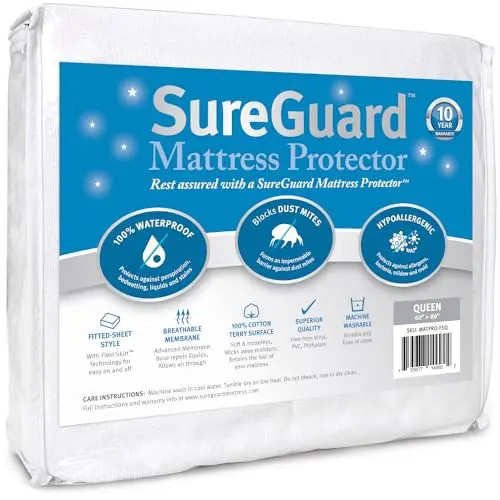
Cotton Terry Waterproof Protector – Deep-Pocket Bed-Wetting Shield
A fitted cotton terry protector with a noiseless waterproof backing and a stretchable skirt that accommodates deep mattresses. It is built for daily bed-wetting protection without the plastic-crinkle feel.

Cotton Blend Waterproof Protector – Quiet Twin-Size Defense
A cotton-blend terry protector with a quiet waterproof laminate and stretchable pockets. The twin-size fit makes it a natural match for kids’ beds and guest setups.
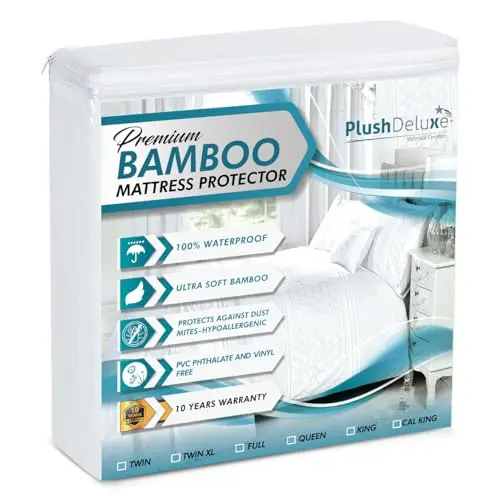
Bamboo Waterproof Protector – Soft Noiseless Full-Size Cover
A bamboo-viscose protector with a soft, noiseless surface and a waterproof membrane. The full-size cut and deep pockets suit older kids and adults who want a quieter sleep surface.
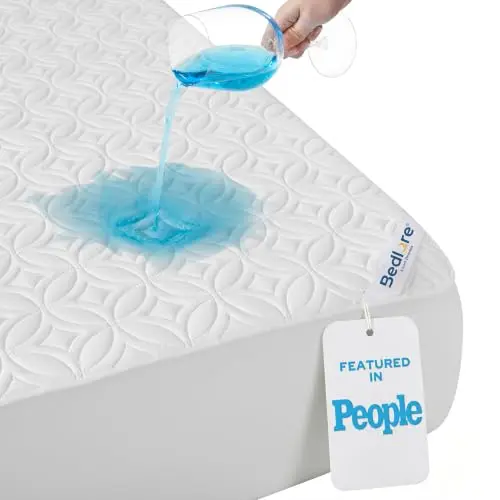
Quilted Waterproof Protector – Noiseless Deep-Pocket Cover
A quilted microfiber protector with a waterproof TPU layer and a deep elastic skirt. The noiseless build is aimed at everyday bed-wetting protection with a softer top.

Zippered Mattress Encasement – Six-Sided Waterproof Coverage
A six-sided zippered encasement that wraps the whole mattress in waterproof fabric and blocks bed bugs and dust mites. It is the most complete coverage option in this lineup.
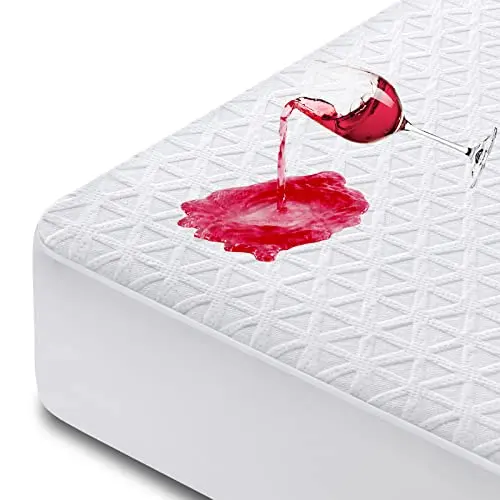
3D Air Waterproof Protector – Cooling Deep-Pocket Cover
A cooling 3D air fabric protector with a bamboo-viscose blend and a waterproof TPU back. The deep pockets fit thick mattresses and toppers.
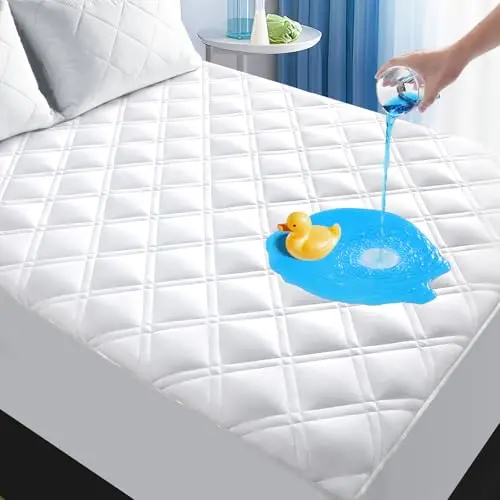
Quilted Waterproof Mattress Pad – Deep-Pocket Family Cover
A diamond-quilted waterproof pad with a deep stretch skirt and OEKO-TEX certified fabric. It is positioned for family and pet households that need frequent washing.
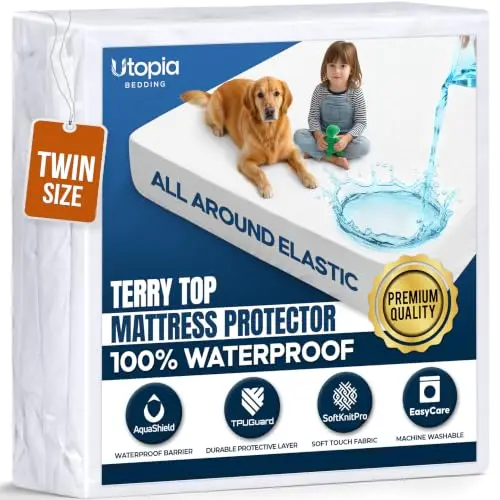
Fitted Waterproof Protector – Budget-Friendly Twin Cover
A budget-friendly fitted protector with a soft polyester surface and a TPU waterproof backing. It fits standard twin mattresses and is easy to wash and replace.
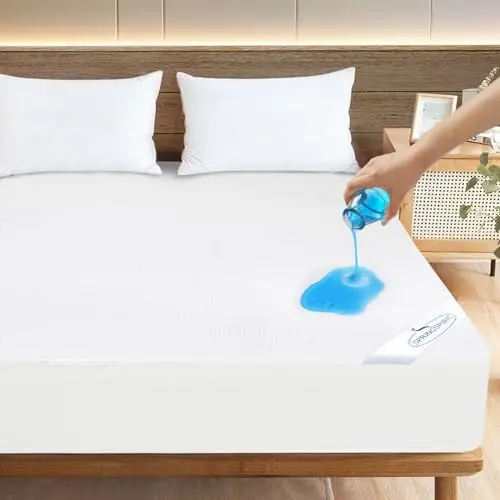
Terry Waterproof Protector – Deep-Pocket Queen Cover
A fitted queen protector with a short terry surface, a waterproof polyethylene reverse, and a lifetime guarantee. It is aimed at spill protection with a towel-like feel.
How We Evaluated These Mattress Protectors for Bed Wetting
We didn’t run controlled liquid-volume tests or repeated wash-cycle trials. What we did: cross-referenced nine mattress protectors from eight brands across seven decision axes – waterproof barrier design, fit depth, noise, breathability, washability, encasement coverage, and comfort under sheets. We triangulated published specifications, feature sets, and fit notes where available, then mapped each protector to common bed-wetting scenarios: young children in twin beds, older kids and adults in larger beds, and households that need full encasement rather than a fitted cover. Because bed wetting ranges from occasional accidents to nightly saturation, we separated protectors by coverage style and depth range instead of treating every waterproof cover as interchangeable. We also noted whether each cover names its waterproof layer clearly, because vague claims make comparison harder.
The scoring framework weighted real-world fit for bed wetting (70%) – how well each protector is designed to block liquid, stay in place, and survive frequent washing – against feature differentiation (30%) – useful extras like deep pockets, quiet fabrics, hypoallergenic materials, and zippered coverage. We also weighed how easy each cover is to remove, wash, and reinstall, since a protector that is hard to manage tends to get skipped. We have no commercial relationship with any brands featured; recommendations track fit and differentiation, not brand preference. If you want the most complete cotton-terry package, the SureGuard is the lead pick; if you need a twin-bed specialist, the SafeRest is the better route.
How to Choose the Right Mattress Protectors for Bed Wetting
1. What Bed-Wetting Protection Really Needs
For bed wetting, the non-negotiable is a reliable waterproof barrier, not just a stain-resistant top. Look for a protector that names its waterproof layer-TPU, polyurethane laminate, or polyethylene-and describes how it is bonded to the fabric. A soft terry or quilted surface makes the cover livable, while a noiseless backing matters for light sleepers.
Absorbency and fit are the supporting cast. A protector that pools liquid on top can be easier to clean in the moment, but one with a moisture-wicking top and a secure skirt tends to feel more normal under the sheets. For bed wetting, buy for the worst night you expect, not the average one.
2. Fit and Depth: Why Mattress Protectors Slip or Stay Put
Depth range is the quiet spec that decides whether a mattress protector stays smooth or bunches under the sheets. A stretchable skirt with strong elastic handles thicker mattresses and toppers; a shallow pocket can pop off during the night. Check the stated depth range before buying, especially if your bed has a mattress pad or topper.
Fitted protectors are quicker to remove and wash, while zippered encasements wrap the whole mattress and stay put with a six-sided closure. If you need full coverage for bed wetting and allergen control, the Utopia Bedding zippered encasement is the decision-anchor pick.
3. Noise, Breathability, and Comfort Under the Sheets
The best protector is the one that does not announce itself. Cotton terry, bamboo viscose, and brushed microfiber all feel softer than basic vinyl, and a noiseless membrane keeps movement quiet. Breathability is the tradeoff: a fully waterproof layer can run warm, so look for a breathable top fabric if hot sleepers share the bed.
If comfort is the priority and you want a full-size cover with a soft bamboo face, the PlushDeluxe bamboo protector is the comfort-led choice.
4. Fitted Protector vs. Zippered Encasement for Bed Wetting
A fitted protector is faster to change and easier to wash, which matters when accidents happen nightly. A zippered encasement covers all six sides and is better at keeping liquid away from the mattress edges and underside. The tradeoff is more effort to install and a zipper to maintain.
For most bed-wetting setups, a fitted cover plus a spare is the practical routine. Choose an encasement if the mattress itself needs full protection from urine, dust mites, or bed bugs.
5. Washability, Spares, and Long-Term Value
Frequent washing is the real test for a bed-wetting protector. Look for machine-washable construction, low-heat drying, and a fabric that resists stiffness after repeated cycles. Buying two covers is not upsell fluff; it is what lets you strip a wet bed and remake it without waiting for laundry.
If you want a low-cost spare for a twin bed, the Utopia Bedding fitted protector is the value pick.
Frequently Asked Questions
1. What's the difference between the SureGuard and SafeRest mattress protectors?
Both use a cotton terry surface and a waterproof backing, but they target different beds. The SureGuard is a queen-size fitted protector with a 6-to-20-inch depth range, a 10-year guarantee, and GreenGuard Gold certification. The SafeRest is a twin-size cotton-blend cover with stretchable pockets and a quiet laminate. For a kid’s bed, SafeRest is the simpler fit; for a primary queen bed, SureGuard has the deeper coverage and longer warranty.
2. How does the PlushDeluxe bamboo protector compare with the BEDLORE quilted protector?
They solve the same problem with different feels. The PlushDeluxe uses a bamboo viscose face and a noiseless waterproof membrane, with a full-size cut and an 18-inch depth range. The BEDLORE has a quilted microfiber surface, a TPU waterproof layer, and a 360 elastic skirt. Choose PlushDeluxe for a softer, cooler-feeling top; choose the BEDLORE if you want a bit more quilted cushioning and a deep-pocket fit.
3. Should you choose a fitted protector or a zippered encasement for bed wetting?
Choose a fitted protector if speed matters: it goes on like a sheet, washes easily, and is simple to swap at night. Choose a zippered encasement if you need six-sided coverage for the mattress edges and underside, or if allergens are also a concern. For frequent bed wetting, many households keep two fitted protectors in rotation and add an encasement only when the mattress itself needs full containment.
4. Do waterproof mattress protectors really stay quiet?
The quietest options use a soft fabric face over a thin waterproof membrane, rather than a stiff vinyl shell. Cotton terry, bamboo viscose, and brushed microfiber tend to mute crinkle best. A noiseless design still matters more for light sleepers and for anyone who moves a lot in bed.
5. How many mattress protectors should you keep for bed wetting?
Two is the practical minimum for a bed-wetting household: one on the bed, one clean and ready. If accidents happen nightly or the bed is shared, a third cover can reduce laundry pressure. For a budget-friendly backup, the MEELUS quilted protector is a reasonable spare with a broad depth range.
Final Verdict
For most bed-wetting setups, the SureGuard is the answer – its cotton terry surface, deep-pocket fit, and 10-year guarantee make it the most complete primary-bed protector. If you are making up a twin bed for a child, the SafeRest is the simpler, softer fit.
Budget-conscious households should keep a Utopia Bedding fitted protector on rotation, while anyone who wants full mattress containment should step up to the Utopia Bedding zippered encasement. The right pick depends on bed size and how often you need to wash, but those four cover the main bed-wetting routes.
