
Best Mattress Toppers For Hot Sleepers – 2026 Reviews

There’s a specific kind of bad night that hot sleepers know well. You drift off fine, then wake at 3 a.m. with a damp back and a pillow you’ve flipped three times. The mattress is usually part of the problem, but replacing it is expensive and disruptive. A topper is the cheaper experiment, and for someone who runs warm it can be the difference between a full night and a broken one.
The catch is that this category is crowded with products labeled cooling that don’t cool anything. Two things separate the good options from the rest: what the face fabric is made of, and how much material sits between your body and the airflow. A cool-touch bamboo cover over a thick foam slab behaves very differently from a cotton quilted pad, even though both claim to regulate temperature.
We worked through the lineup with heat in mind, from cotton faces and bamboo viscose blends to gel foams and waterproof barriers, and sorted out which builds actually suit a sleeper who runs warm. Some are breathable by construction. Others trade a little airflow for pressure relief or spill protection. Here’s how they compare.
Best Mattress Toppers for Hot Sleepers – 2026 Reviews
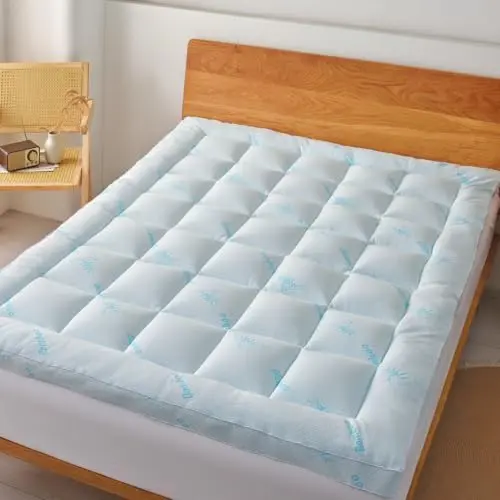
Bamboo Viscose Pillow Top – Cooling Loft With a Washable Build
A quilted pillow-top topper with a bamboo viscose and polyester face over a dense down-alternative fill. It’s built like a fitted sheet, with a deep elastic skirt that stretches over mattresses up to 21 inches, and it goes through the washing machine like bedding rather than needing spot treatment.
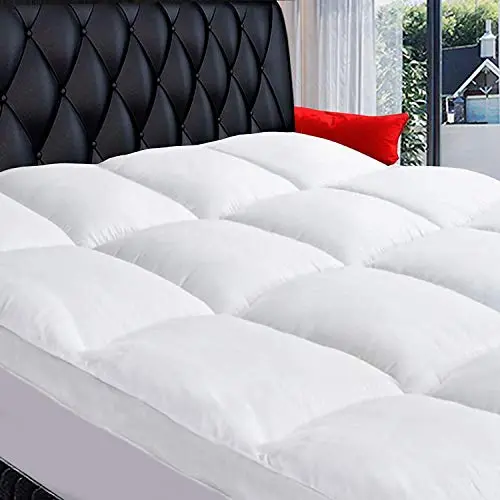
Extra Thick Cotton Pillow Top – Breathable Loft for Warm Sleepers
A cotton-topped pillow top with a 400 thread count face and an overfilled core, built to soften a firm mattress. The elastic deep pocket wraps mattresses up to 21 inches and the whole pad is machine washable. It ships compressed and needs a short tumble dry to reach full loft.
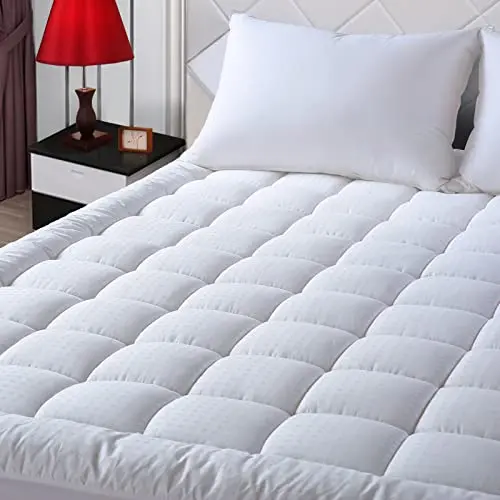
Cotton Pillow Top Pad – Budget-Friendly Cotton Breathability
A fitted-sheet-style cotton pillow top with a 300 thread count face and down-alternative fill, sized for mattresses up to 21 inches deep. It’s a straightforward way to add softness and a breathable cotton surface to a bed without a big outlay.
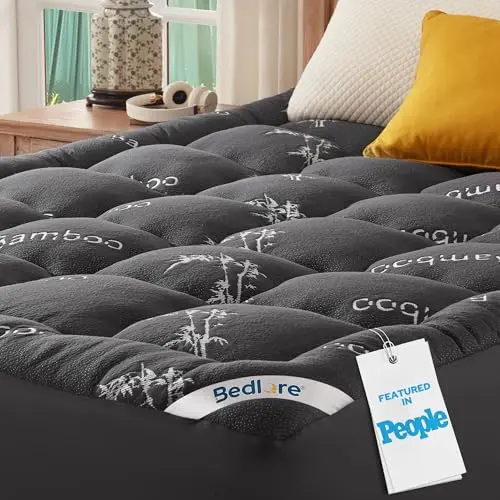
Bamboo Blend Pillow Top – Soft, Breathable, Easy to Wash
A quilted pillow top with a knit face made from a bamboo viscose and polyester blend, finished with stretchable pockets that fit mattresses from 6 to 18 inches. It’s machine washable and comes in a dark gray that hides wear better than white.

5 Inch Cooling Air-Layer Topper – Layered Cooling With Foam Support
A 5-inch topper with a cooling air-layer face (bamboo viscose, polyethylene cooling fiber and a polyester waffle weave) over a gel memory foam and blended foam core. The full-perimeter elastic skirt wraps the mattress, and the build is OEKO-TEX certified.
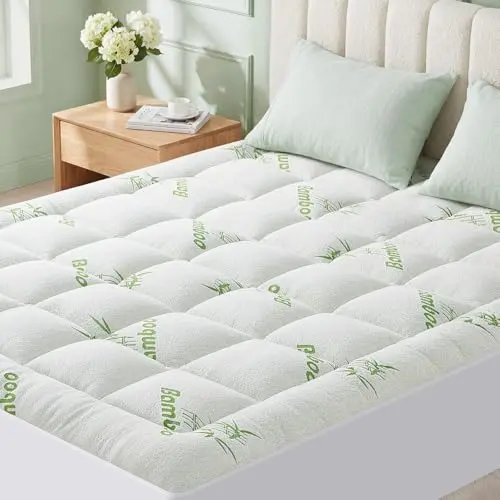
Bamboo Viscose Quilted Topper – Low-Cost Cooling Cover
A quilted pillow top with a bamboo viscose and polyester face, a full-perimeter elastic skirt that fits mattresses from 6 to 18 inches, and a machine-washable build. It ships compressed and expands over a day or two.
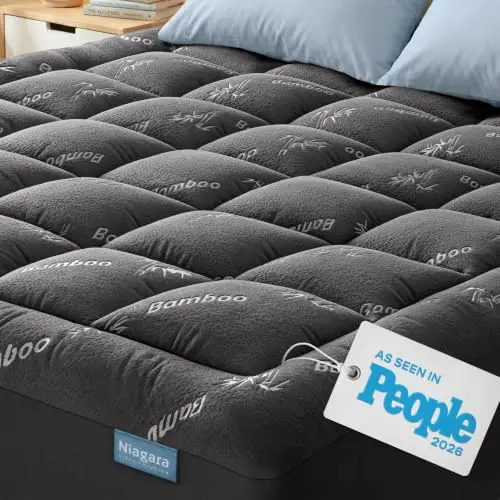
Rayon from Bamboo Topper – Plush Support With a Cool-Touch Face
A plush pillow-top topper with a face made from rayon derived from bamboo, deep pockets that fit mattresses up to 20 inches, and a machine-washable build. It arrives compressed and needs shaking out or a short tumble dry before it reaches full loft.
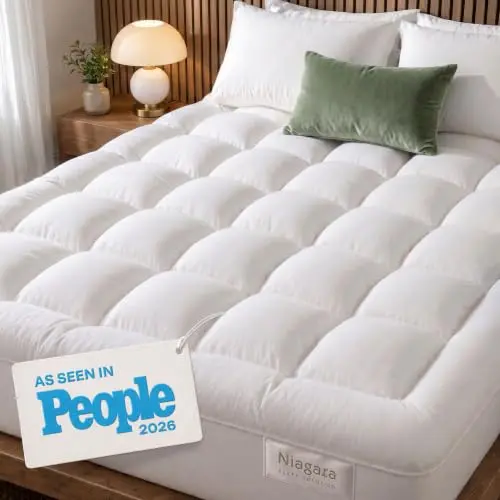
Cotton Top Mattress Pad – Simple, Skin-Friendly Breathability
A cotton-topped mattress pad with a 300 thread count face, deep pockets for mattresses from 8 to 20 inches, and a machine-washable, chemical-free build. It’s a light comfort layer rather than a thick rebuild.
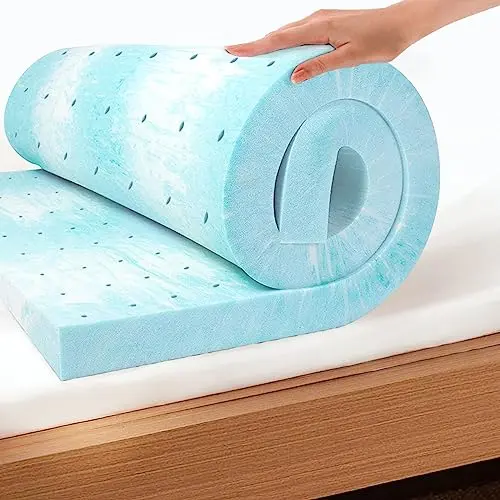
EGO 3 Inch Gel Memory Foam – Pressure Relief With Ventilation
A 3-inch gel-infused memory foam topper with a ventilated hole pattern and CertiPUR-US certification. It ships rolled in a box, expands over a day or two, and carries a limited warranty.
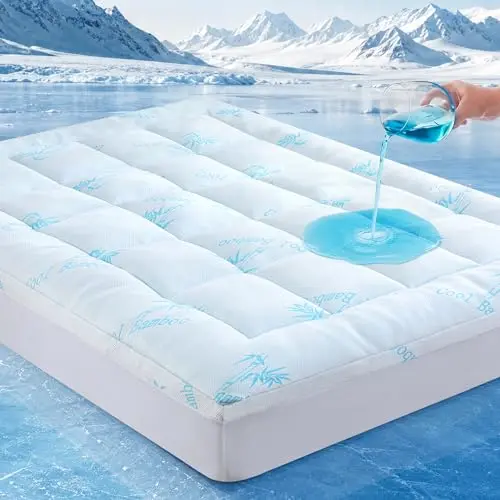
Waterproof Bamboo Topper – Spill Protection With a Cooling Face
A pillow-top topper with a cooling fiber face and a waterproof barrier underneath, plus a thin gel memory foam and 3D fiber layer for pressure relief. It fits mattresses from 8 to 21 inches and is spot clean only.
How We Evaluated These Mattress Toppers for Hot Sleepers
We didn’t sleep on each of these toppers for a month or run wash-cycle durability trials. What we did: cross-referenced 10 mattress toppers from eight distinct brands across six decision axes – face fabric and breathability, fill type and loft, cooling construction, fit and pocket depth, care requirements, and how each build behaves for someone who runs warm. We triangulated published specifications, aggregated owner feedback where available, and pressure-tested every cooling claim against the materials actually listed.
A bamboo face over polyester fill is not the same proposition as a denser cotton face, and the lineup reflects that distinction rather than the label on the packaging. The scoring framework weighted real-world fit for hot sleepers (70%) – how well a topper’s face, fill and structure move heat and moisture through a night – against feature differentiation (30%), meaning what each build offers that the others don’t. We have no commercial relationship with any brand featured, and recommendations track breathability and construction rather than brand preference. If you want the most balanced cooling build, the Favorland is your match; if you’d rather stay in cotton, the COONP serves a warm sleeper better.
How to Choose the Right Mattress Topper for Hot Sleepers
1. Why Breathability Matters More Than the Word Cooling
Almost every topper in this category claims to be cooling. Very few explain how. The useful question is what happens to heat and moisture once they leave your body – a cover that wicks sweat away and lets air move will outperform a thick slab with a cool-sounding name.
A cool-touch finish can feel pleasant for the first few minutes. What sustains comfort across eight hours is airflow through the build and a face that doesn’t hold moisture against your skin. That’s why the strongest options here use cotton or bamboo viscose on the face rather than a treated synthetic. If you want the build that balances both sides of that equation, the Favorland is the pick.
2. Cotton vs. Bamboo Viscose: Which Face Fabric Suits Hot Sleepers
Cotton is the known quantity. It absorbs moisture, breathes, and feels dry rather than slick against the skin. A 300 to 400 thread count cotton face is the sweet spot in this lineup – dense enough to feel smooth, open enough to move air.
Bamboo viscose, often labeled rayon from bamboo, has a cooler, silkier hand-feel and wicks well too, which is why so many warm-sleeper toppers use it. The catch is that most are blends; a 40 percent viscose face over polyester backing still inherits some of that polyester’s heat retention. If you want the all-cotton route, the COONP is the pick.
3. Fill and Loft: How Much Cushioning a Hot Sleeper Actually Needs
Loft is a trade-off. A thick pillow top softens a firm mattress and relieves pressure, but more fill means more material between you and airflow. A thin quilted pad sleeps cooler but won’t fix a mattress that feels like a board.
If your main goal is stopping the overheating, a light-to-medium loft is usually the better bet. If pressure points are the problem, a high-loft topper with a breathable face is worth the compromise. Down-alternative polyester fill is common and plush, but it isn’t a cooling material – the face fabric is what does that work.
4. Deep Pockets and Fit: What Hot Sleepers Should Check on a Topper
A topper that bunches underneath you is a topper you’ll strip off the bed at 2 a.m. Look for a full-perimeter elastic skirt rather than corner straps, and check the stated depth range against your mattress. A 8 to 21 inch range covers most setups, but plenty of options stop at 18.
Thicker toppers need a more secure fit. A 5-inch slab with weak elastic will migrate, and no amount of cooling fabric fixes a pad that’s folded under your hip by midnight. Fitted-sheet designs consistently rate better for staying put, and they make bed-making less of a wrestling match.
5. Where Gel Memory Foam Fits, and Where It Doesn't
Gel-infused memory foam earns its place when pressure relief is the priority. It conforms to shoulders and hips in a way quilted fill can’t, and ventilated hole patterns do help move some heat out of the core.
But foam is still foam. It insulates, and no gel infusion fully cancels that. If you already wake up sweating on a memory foam mattress, adding more foam is a gamble; a bamboo or cotton-faced fiber topper is the safer play. If the real problem is a mattress that’s too firm rather than too hot, foam is the better answer.
6. Pricing Tiers for Mattress Toppers
Budget covers in this category are thin quilted pads with a cotton or bamboo-blend face – enough to add a breathable layer and take the edge off a firm mattress. The HYLEORY sits firmly in this tier.
Mid-range buys denser fill, higher thread counts, better pocket construction and more consistent loft. Premium options add layered construction: cooling fiber faces, gel foam cores, waterproof barriers, or extra thickness. Pay for the layer that solves your problem, not for the longest spec sheet.
7. Care, Washing, and Keeping the Loft Alive
Machine-washable covers are the practical choice for a hot sleeper, since sweat and body oils build up whether or not you notice. Cold water, gentle cycle, low tumble dry, and expect the loft to return once it’s fully dry.
Foam toppers are spot clean only, so a washable cover or a mattress protector over the top does a lot of the work for you. Compressed toppers of any type need a day or two, or a short low-heat tumble, to reach full loft. Judging one straight out of the bag is unfair to it.
Frequently Asked Questions
1. Do mattress toppers actually help hot sleepers stay cool?
They can, though not the way the marketing suggests. A topper doesn’t refrigerate anything; it changes what’s against your skin. A breathable cotton or bamboo viscose face moves moisture away and lets air circulate, which is what stops the clammy 3 a.m. wake-up. A thick foam topper does the opposite, even with gel added.
The biggest cooling gain usually comes from replacing a hot surface – memory foam, a vinyl protector, a synthetic pad – with a wicking fabric face. If the overheating is mild, a thin pad is enough. If you’re sweating through sheets, a bamboo-faced topper with moderate loft is the more realistic fix.
2. What's the difference between the Favorland bamboo topper and the COONP cotton topper?
Both are quilted pillow tops with deep pockets and washable builds. The difference is the face and the density. The Favorland uses a bamboo viscose blend with a dense 900 GSM fill, so it has a cooler, silkier hand-feel and more loft. The COONP uses a 400-thread-count cotton face, which sleeps dry and familiar rather than slick.
Choose the Favorland if you run hot and want maximum cool-touch feel with real cushioning. Choose the COONP if you prefer cotton against your skin and want a plush, hotel-style surface.
3. Is gel memory foam a good choice for a hot sleeper?
Only if pressure relief matters more than temperature. Gel infusion and ventilated hole patterns do help relative to plain foam, but foam is still an insulator, and cooling feedback across the foam toppers in this lineup is genuinely split.
If you’re adding a topper because your mattress is too firm, the MLILY EGO is the better tool for that job. If you’re adding one because you wake up hot, start with a cotton or bamboo-faced fiber topper instead.
4. How does the EASELAND cotton pad compare with the Niagara cotton pad?
They’re close cousins. Both are cotton-faced quilted pads with deep pockets and machine-washable care. The EASELAND pairs a 300-thread-count cotton face with down-alternative fill and a deeper pocket range. The Niagara cotton pad pairs a similar cotton face with a noiseless, non-slip backing and a slightly narrower depth range.
Pick the EASELAND if you want the fluffier pad and more depth flexibility. Pick the Niagara if a quiet, low-slip surface under the sheet matters more to you.
5. How long does a compressed mattress topper take to reach full loft?
Usually 24 to 48 hours, and most makers suggest a shortcut: a 20-minute low-heat tumble dry restores most of the loft right away. Shake it out and pat it first, then let it sit.
Don’t judge thickness straight out of the bag. Most complaints about a topper being thinner than expected trace back to a compressed product that simply hadn’t expanded yet.
Final Verdict
For most hot sleepers, the Favorland is the answer. A cool bamboo viscose face, dense fill that actually changes how a mattress feels, and a washable build is the combination that solves the problem without creating a new one.
If you’d rather stay in cotton, the COONP gives you a breathable cotton face with a plusher loft. On a tighter budget, the EASELAND applies the same cotton-breathability principle for far less. And if pressure relief is the real reason you’re shopping, the DOWNCOOL 5 Inch is the only topper here with enough thickness and foam support to genuinely rebuild a hard mattress, as long as you can live with hand washing.
Match the face fabric to your problem first. Everything else is detail.
