
Best Mattress Toppers For Side Sleepers With Lower Back Pain – 2026 Reviews

You know the morning. You slept seven hours, and your lower back still feels like someone has been pressing a thumb into it all night. The shoulder you favor is half numb. The mattress seems fine when you sit on it, so what exactly is going wrong?
If you sleep on your side, the answer is usually load. A side sleeper concentrates body weight on a hip and a shoulder, and the space between them is where your lumbar spine either stays neutral or sags. A topper that’s uniformly soft lets your pelvis sink and your back curves; one that’s uniformly firm turns your hip into a pressure point. The options that actually work give you pressure relief on the surface and structure underneath, and that’s the split we judged every pick against.
Below we’ve gathered mattress toppers from across the market – gel memory foam slabs, dual-layer hybrids, and breathable fiberfill pillow tops – and sorted them by who they genuinely suit. Some are for a mattress that’s simply too hard. Some are for a back that needs support, not more squish. None of them is the right answer for everyone, which is rather the point.
Best Mattress Toppers for Side Sleepers with Lower Back Pain – 2026 Reviews
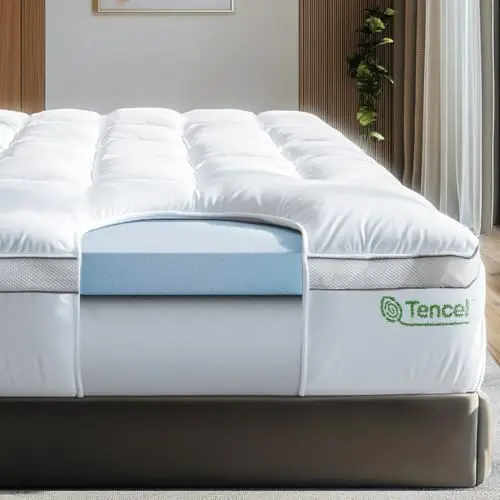
Rescue 4 Inch Hybrid – Plush Relief Without the Sink-Through
A box-quilted pillow top with roughly twice the fiberfill of typical hybrid toppers, sitting over gel-infused CertiPUR-US memory foam. Plush where you feel it, structural where you need it – the idea being hip and shoulder relief without dropping through to the firm mattress you’re trying to escape.
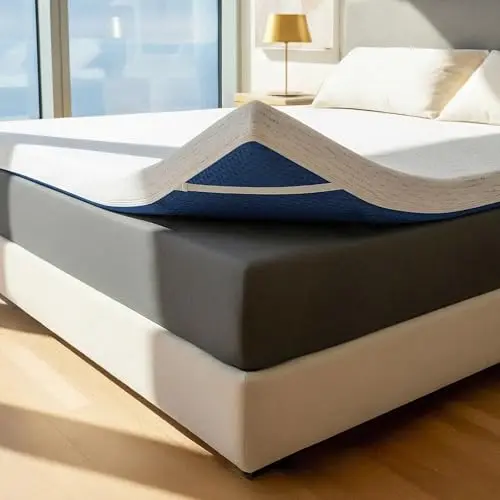
Select High Density 3 Inch – Medium-Firm Support for Aching Lower Backs
A solid block of medium-firm, gel-infused memory foam rated above three pounds per cubic foot. No scooped-out underside, no glued layers – just consistent support that holds its shape and gives your spine a level platform to rest on.

Dual Layer 5 Inch – Two Toppers in One Across Seasons
A two-inch gel memory foam base with a three-inch overfilled quilted cover on top. Run them together for a plush, supported hybrid surface, or separate them and use the foam alone when the weather turns warm.
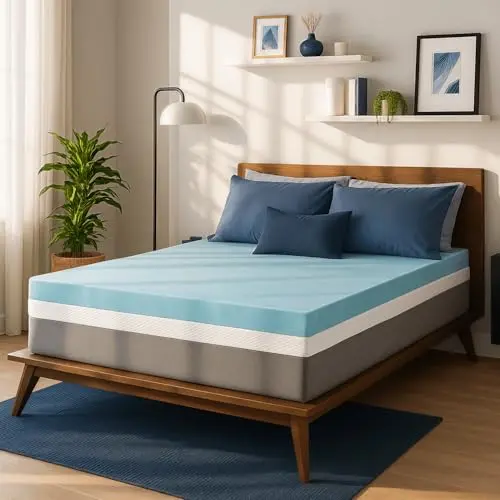
Gel Swirl 3 Inch – Straightforward Memory Foam Pressure Relief
A no-nonsense three-inch gel-swirl memory foam slab with open-cell construction, meant to soften a firm or aging mattress without a separate comfort layer bolted on top.
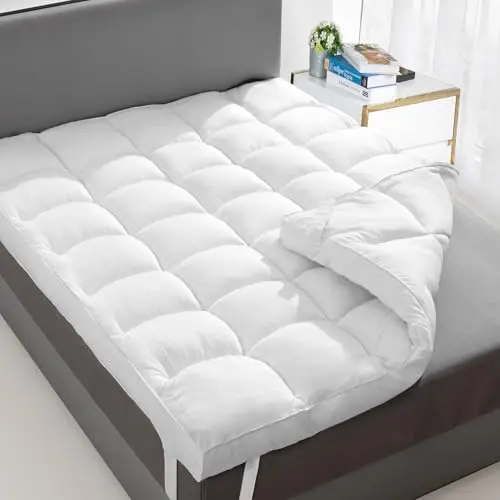
1400 GSM Plush Pillow Top – Cloud Cushioning Without the Foam
A thick, box-quilted pillow top filled with down-alternative gel fiber – no memory foam at all, so it adds softness and cushions pressure points without trapping heat the way foam slabs do.
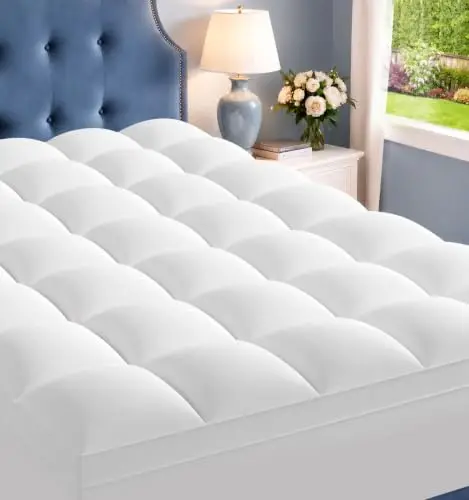
Overfilled Down-Alternative Pad – Soft, Washable, Deep-Pocket Comfort
A tightly woven brushed microfiber pad double-filled with 3D snow-down alternative and box-sewn to keep the fill evenly distributed. Deep pockets and full machine washability make it an easy everyday layer.
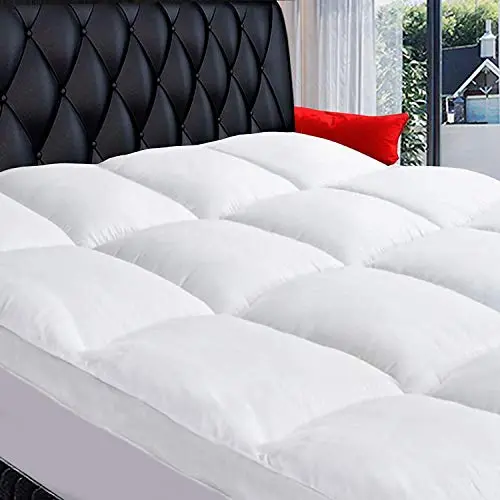
Cotton Pillow Top Pad – Breathable Cushioning for Hot Sleepers
An overfilled pillow-top pad with a pure cotton sleep surface, deep elastic pockets, and full machine washability – built for people who want softness without a foam slab under the sheets.
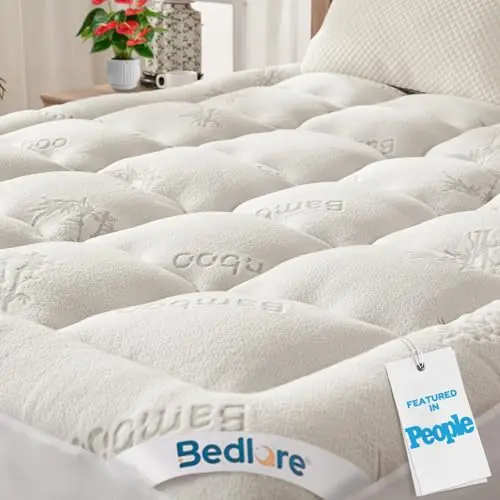
Bamboo Viscose Pillow Top – Budget Comfort With Stretch Pockets
A pillow-top pad built on a 40% bamboo viscose, 60% polyester knit surface with stretchable pockets that grip mattresses from 6 to 18 inches deep. Machine washable and easy to live with.
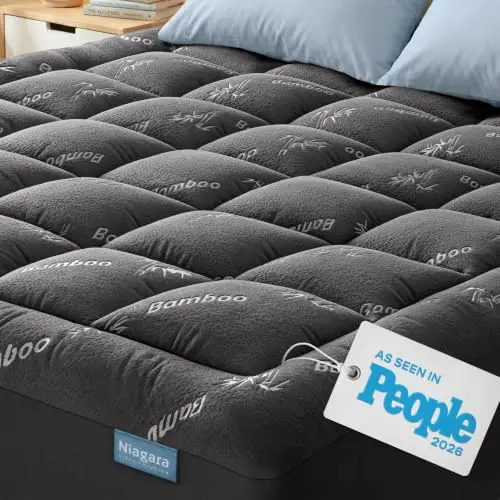
Bamboo Rayon Pillow Top – Deep-Pocket Softness on a Budget
A rayon-from-bamboo pillow-top pad with extra-length stretchy sides that fit mattresses up to 20 inches deep. Ships compressed and fluffs up after a shake or a short tumble dry.
How We Evaluated These Mattress Toppers for Side Sleepers with Lower Back Pain
We didn’t sleep a full month on each of these toppers or measure spinal alignment with lab equipment. What we did: cross-referenced 9 mattress topper models from 8 distinct brands across 6 decision axes – build type and foam density, thickness, firmness and support, temperature regulation, fit and pocket depth, and cover care plus warranty coverage. We triangulated published specifications, absorbed owner feedback where available, and mapped each option against the two buyer profiles this category actually serves: the side sleeper whose hip and shoulder take the load, and the sleeper whose lower back complains because the mattress underneath is either too firm or already breaking down.
The scoring framework weighted real-world fit for the use case (70%) – how well an option relieves hip and shoulder pressure without letting the pelvis drop out of alignment – against feature differentiation (30%) – build approach, cooling design, adjustability, and warranty coverage. Foam and hybrid toppers were judged on whether they hold their shape under a hip. Fiberfill pads were judged as comfort layers, because that is what they are, and holding them to a support standard they were never designed for would be dishonest. We have no commercial relationship with any of the brands featured, and recommendations track fit and differentiation, not brand preference. If you’re working around a mattress that is simply too hard, the Rescue 4 Inch is your match; if your lower back needs a level, supportive platform rather than plushness, the High Density 3 Inch is the better answer.
How to Choose the Right Mattress Topper for Side Sleepers With Lower Back Pain
1. Why Side Sleepers With Lower Back Pain Need a Different Topper
Side sleeping puts the most concentrated load on the body’s two narrowest contact points. Your hip and shoulder take the weight, and if the surface under them gives way, your pelvis drops and your lumbar spine curves out of neutral. That’s the mechanism behind the dull ache that shows up around four in the morning. The surface has to do two things at once: cushion the hip and shoulder and hold the pelvis level. Most toppers manage one or the other.
This is why a topper that feels amazing in the showroom can leave you stiff by morning. Plush fiberfill relieves the pressure points and does nothing for alignment. A dense foam slab holds alignment and can bruise a shoulder. The picks worth considering either layer the two functions or use a foam firm enough to support without feeling hard. If your mattress is the too-firm kind, the Rescue 4 Inch is the pick here; it’s built specifically around that problem.
2. Memory Foam vs. Fiberfill Mattress Toppers
Memory foam toppers contour to your body and give you the pressure relief side sleepers need, and denser foams keep doing it after the first month. The tradeoffs are heat retention and the risk of bottoming out if the foam is light. Fiberfill and down-alternative pads breathe better, wash easily, and cost less, but they compress under a hip and offer almost no structural support. Hybrid toppers pair a quilted comfort layer with a foam base, which is the closest thing to having both.
For lower back pain specifically, foam content matters more than loft. A generous fiberfill pad will make a hard mattress feel kinder for a few weeks; a foam or hybrid topper is what actually changes how your spine sits. If you want the flexibility to run foam alone in summer and add the quilted layer in winter, the Dual Layer 5 Inch is the clearest expression of that hybrid idea in this lineup.
3. How Thickness Changes Support for Side Sleepers
Two inches is a light touch – enough to take the edge off a firm surface without changing the mattress’s character. Three inches is the sweet spot for most side sleepers: enough depth to cushion a hip, not so much that you lose the support underneath. Four to five inches is for mattresses that are genuinely punishing, or for heavier sleepers who compress thinner foam straight through.
Going thicker isn’t automatically better. Past three inches, softer foams start letting your pelvis drop, and a tall topper changes how your fitted sheets sit and how high off the floor you sleep. Match thickness to the problem – a topper is a corrective layer, not a competition.
4. Firmness, Spinal Alignment, and the Sinking Problem
For a side sleeper with lower back pain, medium-firm is usually the safest zone. Firm enough that your hip dips and then stops. Soft enough that your shoulder isn’t bearing a bruise. The failure mode to watch for is the sinking topper – one that feels luxurious on night one and has you sleeping in a bowl by night thirty, because the foam compressed exactly where you needed it most.
Density is the tell. Foam rated above 3 pounds per cubic foot resists that kind of breakdown far better than lightweight foam, and single-block construction avoids the glued seams and scooped undersides where dips form. If your priority is a level platform rather than a cloud, the High Density 3 Inch is the pick in this lineup.
5. Cooling, Breathability, and Hot Sleepers
No topper is a cooling device, whatever the label suggests. Gel infusion helps marginally and mostly at the surface. What actually makes a difference is open-cell foam that lets air move through, a cover that wicks rather than seals – TENCEL, cotton, and bamboo viscose all beat plain polyester – and whether the design puts a fiberfill layer between you and the foam.
If you overheat easily, a foam-free pad is the safer bet, and a hybrid with a thick quilted top runs cooler than a bare memory foam slab. Just don’t buy a fiberfill pad for the cooling and expect it to fix your back at the same time.
6. Deep Pockets, Straps, and Keeping the Topper in Place
Measure your mattress before you buy. Pocket depth is the spec that decides whether a topper stays put or migrates to one side of the bed by morning, and the range across this category is wide – some pads grip from six inches, others stretch past twenty. Add your existing mattress topper to the height if you use one.
Foam slabs mostly stay put on their own, though a corner-strap or full-skirt design helps. Two-piece hybrids are the ones that tend to slide, since the quilted cover isn’t anchored to the foam. If you toss and turn, favor a design with a skirt over one that simply lies on top.
7. What Mattress Toppers Cost at Each Tier
The entry tier is dominated by fiberfill and down-alternative pillow tops. These are inexpensive, washable, and genuinely good at softening a hard mattress – they’re just not support layers, and the pricing reflects that. Expect the deepest discounts here and the shortest lifespans.
The mid-range is where gel memory foam and dual-layer hybrids live. This is the tier most side sleepers with lower back pain should be shopping, because it’s the first point where you get real foam density, a proper cover, and a warranty longer than a single season. Premium toppers are high-density single-block foam or well-built hybrids with long trial windows and multi-year warranties – you’re paying for foam that won’t collapse and a company that will still answer the phone.
Frequently Asked Questions
1. How does the ViscoSoft Rescue compare to the Sure2Sleep Gel Swirl?
They solve the same problem from opposite directions. The Rescue 4 Inch is a dual-layer hybrid: a quilted fiberfill pillow top over gel memory foam, so you get a plush landing plus a base that stops you sinking into the mattress below. It’s aimed squarely at a mattress that’s too firm and a sleeper whose hips and shoulders hurt.
The Sure2Sleep Gel Swirl is a single 3-inch memory foam slab with a gel infusion and a three-year warranty. It’s simpler, more affordable, and easier to live with if you just want the hard edge taken off. Go with the Rescue 4 Inch if you need structure and don’t mind a heavier setup; go with the Sure2Sleep if simplicity matters more than depth.
2. Is a firm or a soft mattress topper better for side sleepers with lower back pain?
Neither extreme wins. A soft topper relieves the hip and shoulder but lets your pelvis drop, which flattens the lumbar curve and creates the ache you’re trying to solve. A firm topper holds alignment but concentrates pressure on a single point at your hip. What works is medium-firm with a softer top layer – support underneath, cushioning on the surface.
The practical test: lie on your side for ten minutes. If your hip feels bruised, it’s too firm. If your lower back feels compressed or your hips sit noticeably below your shoulders, it’s too soft. You want to feel like you’re resting on the surface, not in it.
3. BDEUS dual layer vs. D & G plush pillow top – which should you pick?
Different tools for different problems. The BDEUS Dual Layer 5 Inch contains 2 inches of gel memory foam under a quilted cover, so it changes how your spine sits, and you can separate the layers for warmer months. The D & G 1400 GSM pillow top is pure fiberfill – plush, breathable, machine washable, and completely unsupportive in the structural sense.
Pick the Dual Layer 5 Inch if you want a softer surface without giving up support. Pick the D & G if your mattress is hard but your spine is fine, or if you overheat in foam and simply want cushioning.
4. How thick should a mattress topper be for side sleeping?
For most side sleepers, three inches is the right depth – deep enough to cushion a hip, shallow enough that you still feel the support below. If your mattress is exceptionally hard or you’re a heavier sleeper, four to five inches makes sense. If you only want to soften the surface slightly, two inches is enough.
Be wary of going thicker than you need. Beyond three inches, soft foams start allowing the pelvis to drop, and a tall topper changes how your sheets fit.
5. Will a mattress topper actually fix lower back pain?
It can fix a mattress problem. If your lower back aches because the surface is too firm, too old, or sagging in the middle, a topper that restores pressure relief and alignment will make a real difference – that’s the situation most side sleepers are actually in. It won’t fix a disc issue, a strength imbalance, or a posture habit.
Give any topper a few weeks before you judge it, and use the return window. Foam needs time to fully expand, and your body needs time to adjust to a different surface. If you’re still waking up stiff after that, the topper isn’t the answer and it’s time to look at the mattress itself.
Final Verdict
For most side sleepers dealing with lower back pain, the Rescue 4 Inch is the answer. It’s the one topper here that gives you a genuinely plush landing on your hip and shoulder while still holding a supportive base underneath, and the deep-pocket skirt with a five-year warranty means you’re not fighting it every night.
If your back needs a level, supportive platform more than a soft one, the High Density 3 Inch is the better call – medium-firm foam that stops your pelvis from dropping. On a tighter budget, the Dual Layer 5 Inch gets you memory foam plus a real comfort layer for less, with the bonus of running the layers separately in summer. And if your mattress is hard but your spine is fine, the 1400 GSM pillow top softens it without any foam heat.
