
Best Mattress Toppers For Side Sleepers With Shoulder Pain – 2026 Reviews

You know the move: you’re on your right side, the shoulder starts to throb, so you flip to the left. Twenty minutes later it’s the same ache in the mirror image. Side sleeping funnels your whole upper body through one small patch of shoulder, and if the surface underneath doesn’t give, you’re the one absorbing all of that pressure.
A mattress topper is the least disruptive way to change that. But it isn’t a matter of throwing anything soft on the bed. Two things separate a topper that genuinely helps from one that just feels nice on day one: whether it gives under your shoulder without letting your hip drop out of line, and whether it stays cool enough that you’re not waking up to flip for a completely different reason.
The options below take different routes to the same goal. Some are dense memory foam built to hold a shoulder at a fixed depth. Others are plush fiber or bamboo-viscose pillow tops designed to bury a hard mattress in cushioning. We’ll walk through which approach suits your mattress and your sleep temperature, then match you to a specific topper.
Best Mattress Toppers for Side Sleepers with Shoulder Pain – 2026 Reviews
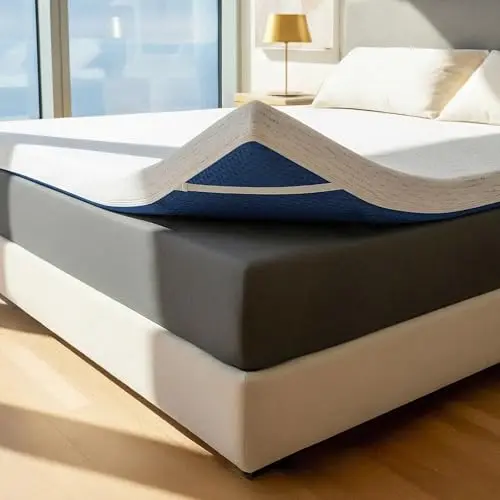
High Density 3 Inch – Medium-Firm Pressure Relief
A single block of high-density memory foam with a medium-firm feel, gel infusion for heat, and a removable cover you can wash. It’s the most pressure-specific option in the lineup – built to let a shoulder sink in without the rest of your body following.
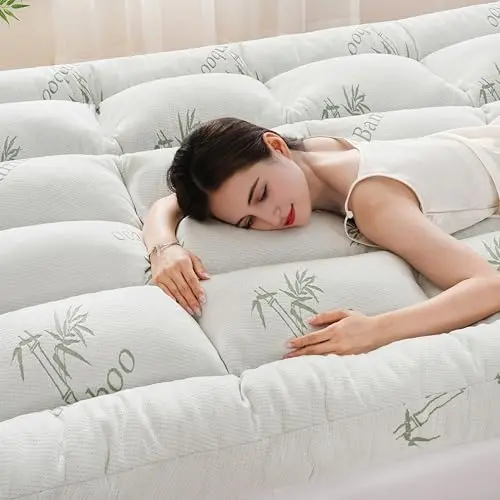
3 Inch Bamboo Viscose Air Layer – Cooling Memory Foam Hybrid
A hybrid that pairs a thin gel memory foam layer with airy polyester fiber under a bamboo-viscose 3D air-layer top. It aims for the middle: some conforming give at the shoulder, noticeably more airflow than a solid foam slab.
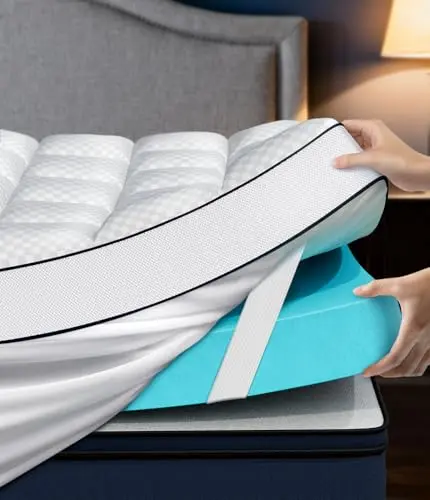
4 Inch Dual Layer – Adjustable Firmness and Support
Two stacked 2-inch layers – a gel memory foam base and a diamond-stitched 3D air mesh pillow top – that you can use together or split apart to shift the feel. Four corner straps and a 360 skirt handle the stay-put problem.
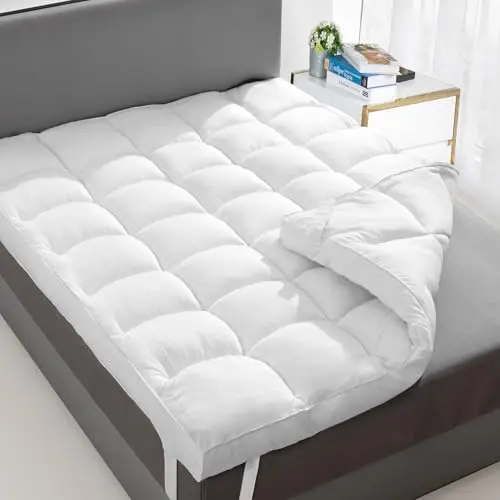
1400 GSM Pillow Top – Extra-Thick Plush Cushioning
A thick down-alternative pillow top with no memory foam anywhere in the build. Box quilting keeps the gel-fiber fill evenly distributed, four elastic corner straps hold it down, and the whole thing goes in a washing machine.
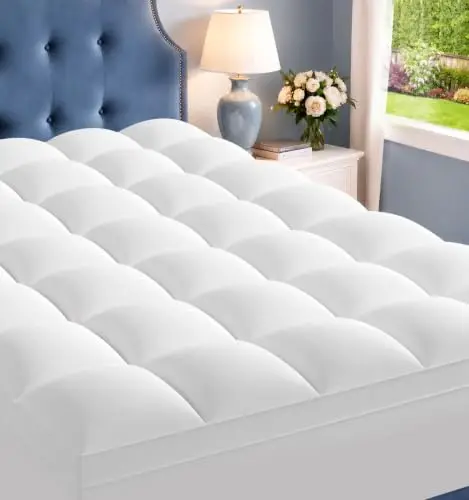
Overfilled Down Alternative – Soft Pressure-Relief Pad
A generously overfilled down-alternative pad with box-sewn channels and a brushed microfiber shell. It targets the shoulders and hips with soft cushioning and stays cooler than foam by design.
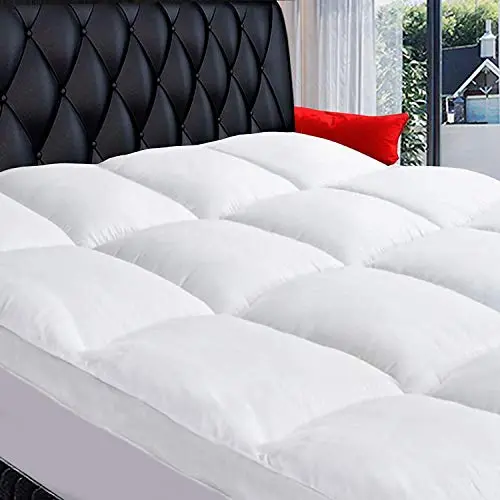
Cotton Pillow Top – Breathable All-Cotton Surface
A quilted pillow top with a 100% cotton top surface at 400 thread count, overfilled for loft. The cotton face is the point here – it handles heat far better than the synthetic tops most toppers at this tier use.
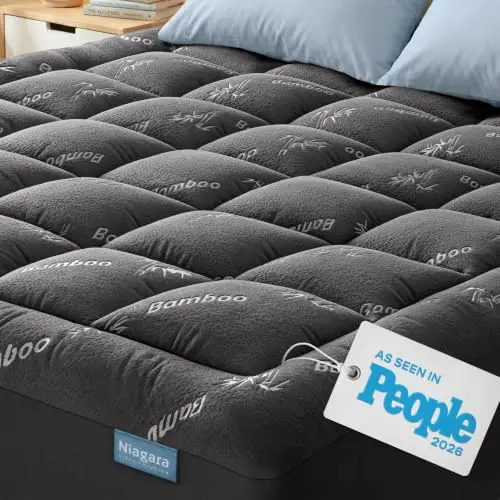
Ultra Soft Pillow Top – Entry-Level Bamboo Comfort
A bamboo-derived rayon top over a plush quilted body, with the widest elastic fit in the lineup at 20 inches. It’s the low-cost way to find out whether a topper helps your shoulder at all.
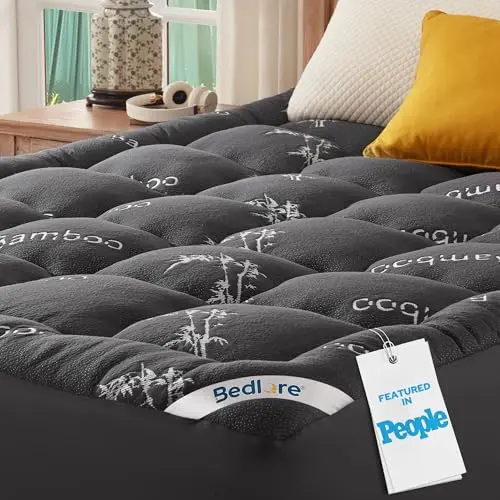
Bamboo Viscose Pillow Top – Lightweight Affordable Cushioning
A bamboo-viscose blend knit top over a quilted pillow-top layer, with a stretchable skirt that grips mattresses from 6 to 18 inches. Best suited to a bed that’s already close to comfortable.
How We Evaluated These Mattress Toppers for Side Sleepers with Shoulder Pain
We didn’t sleep on each of these toppers for a full month or measure shoulder pressure with sensor mats. What we did: cross-referenced 8 mattress topper models from 8 distinct brands across five decision axes – loft and density, pressure-relief construction, temperature behavior, fit and stability, and care requirements. We triangulated published specifications, material breakdowns, and owner feedback where available, then mapped each option against the mechanics of side sleeping: a shoulder that needs to sink in without the hip dropping out of alignment.
The scoring framework weighted real-world fit for side sleepers with shoulder pain (70%) – how well a topper relieves concentrated shoulder pressure and holds up under body weight – against feature differentiation (30%) – cooling design, cover construction, pocket depth, and certification. We audited firmness claims against material density and fill weight rather than marketing language. We have no commercial relationship with any brand here; recommendations track fit and differentiation, not brand preference. If you want the most dependable pressure relief, the ViscoSoft High Density is the pick; if you overheat at night, the DOWNCOOL 3 Inch is the better match.
One thing worth stating up front: a topper changes the top two to four inches of your sleep surface. It can soften a too-firm mattress or add cushioning over a worn one, but it can’t rescue a mattress whose core has already collapsed.
How to Choose the Right Mattress Topper for Side Sleepers with Shoulder Pain
1. Why Side Sleepers With Shoulder Pain Need a Different Kind of Topper
Side sleeping funnels your upper body weight through one shoulder and one hip. On a firm surface, that contact patch takes all of it, which is why the ache shows up in the same spot every morning. A topper helps by adding a layer that gives way under the shoulder before the mattress does.
The balance is delicate. Go too soft and you bottom out – the shoulder sinks, the hip follows, and you wake with lower-back complaints instead. Go too firm and nothing changes. What you want is a surface that’s soft on contact and supportive underneath, so the shoulder gets relief while your spinal alignment stays neutral.
2. Memory Foam vs. Down-Alternative: Which Mattress Topper Relieves Shoulder Pressure Better?
Foam conforms. That’s the whole argument for it. A high-density memory foam topper molds around the shoulder, spreads the load, and – critically – resists collapsing, so the weight doesn’t keep travelling downward. The tradeoff is heat and a slower, more deliberate feel when you roll over.
Down-alternative and fiber pillow tops are the opposite trade: breathable, washable, springy, and much better at softening a hard surface. They also compress over time right where your shoulder digs in, and their pressure relief is shallower because the fill shifts rather than conforms.
If you want targeted, lasting shoulder relief, foam or a foam-fiber hybrid is the better bet. If you mainly want your bed to feel plusher and cooler, fiber is easier to live with. The ViscoSoft High Density is the foam-first answer; the hybrid options split the difference.
3. Loft, Density, and Firmness: Reading Mattress Topper Specs for Side Sleepers
Thickness gets all the marketing attention, but 2 to 4 inches covers nearly every side sleeper’s need. The number that actually predicts durability is density. For memory foam, look for density above three pounds per cubic foot – lighter foam feels great in week one and develops permanent divots by month six. For fiber toppers, a higher fill weight (measured in GSM) means more loft that lasts.
Firmness is where listings get vague. Treat phrases like medium-firm as a starting point and check what the product is actually made of: a dense single block reads firmer than a scooped or layered design of the same thickness. If your mattress is already firm and you want maximum plush on top, the D & G 1400 GSM pillow top is the more cushioned route.
4. Cooling and Breathability for Side Sleepers Who Run Hot
Foam traps body heat; that’s physics, not a design flaw, and no gel infusion fully reverses it. What gel-infused foam and perforated or 3D air mesh layers do is speed up heat dissipation so the surface doesn’t feel actively warm. It’s an incremental improvement, not air conditioning.
Fiber and bamboo-viscose toppers start cooler because air moves through the fill. If night sweats are a bigger problem than shoulder pressure, weight the decision toward a breathable top layer. The DOWNCOOL 3 Inch is the closest thing here to a true hybrid – foam for conforming, an air-layer bamboo top for airflow.
5. Fit, Deep Pockets, and Staying Put Night After Night
Pocket depth is the spec people ignore until the topper bunches up at 2 a.m. Measure your mattress – including any existing protector – and buy a topper whose deep pocket range comfortably covers it. Ranges from 6 to 18 inches handle most standard beds; a few go to 21 or 22.
Elastic skirts work like a fitted sheet and cope with everyday movement fine. Corner straps add insurance on thick or adjustable beds, where a skirt alone tends to ride up. If you sleep on an adjustable base, prioritize a topper with straps and a stretchy skirt.
6. ViscoSoft High Density vs. DOWNCOOL 3 Inch: Two Routes to Shoulder Relief
These two represent the fork in the road. The ViscoSoft is a foam purist’s topper: one dense block, medium-firm, built to hold your shoulder at a fixed depth. The DOWNCOOL is a hybrid that accepts slightly less conformity in exchange for cooler airflow and a plusher first impression.
Neither is better in the abstract. If your shoulder pain comes bundled with overheating, the hybrid is the more livable choice. If it comes from a mattress that’s simply too firm, the foam-first design does more work. And if you’d rather tune the feel yourself, the Panyu 4 Inch dual-layer topper lets you stack or separate its two layers.
7. What Mattress Toppers Cost Across Tiers
The budget tier gets you fiber and bamboo-viscose pillow tops that soften a bed and wash easily, but they loft modestly and pack down over a year or two. The mid-range is where most side sleepers land: better fill weights, deeper pockets, more durable covers, and the entry point for certified foams.
Premium pricing buys density, layer count, and certification – heavier memory foam, dual-layer designs, OEKO-TEX and CertiPUR-US documentation, and longer guarantees. For shoulder pain specifically, that extra spend tends to show up as pressure relief that’s still there after a year rather than a topper that’s flattened where you sleep.
Frequently Asked Questions
1. Will a mattress topper actually help shoulder pain for side sleepers?
Sometimes, and it depends on why the shoulder hurts. Side sleeping puts your full upper-body weight through a small contact patch. If the mattress surface is too firm, that patch takes the load directly and you wake with a numb or achy shoulder. A topper adds two to four inches of give, which spreads that load.
What a topper can’t do is fix a mattress whose core has collapsed. If your hip sits noticeably lower than your shoulder when you lie down, the problem is deeper than the top layer. Look at loft, density, and whether the topper holds up under body weight rather than how plush it feels in the bag.
2. What's the difference between the ViscoSoft High Density and the DOWNCOOL 3 Inch?
One is foam-first, the other is a hybrid. The ViscoSoft leans on high-density memory foam for a firmer, more supportive surface that stops your shoulder from travelling too far. The DOWNCOOL mixes gel memory foam with 3D polyester fiber under a bamboo air-layer top, which trades some of that support for airflow and a softer landing.
Choose the DOWNCOOL 3 Inch if you overheat easily. Choose the ViscoSoft if your shoulder needs firmer resistance and you don’t mind a warmer sleep surface.
3. How does the Panyu 4 Inch compare to the D & G 1400 GSM pillow top topper?
Different jobs. The Panyu 4 Inch is two stackable layers – gel memory foam plus 3D air mesh – so you can dial firmness toward soft or supportive, and it’s CertiPUR-US certified. The D & G is 1400 GSM gel-fiber fill with no foam at all: plusher-feeling, cooler, machine washable, and much better at softening a genuinely hard mattress.
If you want to shape the support, go Panyu. If you want to bury a hard bed under cushioning, go D & G.
4. How thick should a mattress topper be for a side sleeper with shoulder pain?
Two to three inches is the useful range for most side sleepers. Two inches softens the surface without changing how the mattress supports you; three inches gives the shoulder enough room to sink in. Four inches can work, especially when the layers are separable, but a thick soft topper on an already-soft mattress tends to push your hips out of alignment.
Match thickness to the mattress you have. Firm mattress: go thicker. Medium mattress with a shoulder complaint: two to three inches is plenty. Pay attention to fill weight and foam density too – a dense three-inch topper holds up better than a loose four-inch one.
5. How long does a compressed mattress topper take to reach full loft?
Fiber and down-alternative toppers usually recover within 20 minutes in a low-heat dryer, or a few hours of shaking and patting. Memory foam hybrids need longer – most manufacturers ask for 48 to 72 hours in a ventilated room. Don’t judge thickness on day one; nearly every topper here looks thin straight out of the bag.
Expect a faint factory scent during that window. It fades, but give the room some air. If a topper still feels flat after three days, that’s a real signal about the fill, not a setup problem.
Final Verdict
For most side sleepers with shoulder pain, the ViscoSoft High Density is the answer. It puts dense, medium-firm foam exactly where your shoulder lands, and it doesn’t collapse into a divot after a few months – the failure mode that makes people feel like a topper was a waste of money.
If you run hot, the DOWNCOOL 3 Inch trades a little conformity for real airflow and still cushions the shoulder. Want to tune the feel yourself? The Panyu 4 Inch dual-layer lets you add or pull support. And if you’re not ready to spend much before you know a topper helps at all, the Niagara Sleep Solution is the low-risk test.
