
Best Medical Grade Air Purifiers – 2026 Reviews

Walk into a bedroom after a wildfire-smoke week or a winter of closed windows, and the air has a weight to it. If you’re shopping for a ‘medical grade’ air purifier, you’re probably trying to cut through marketing language and find something that actually captures fine particles, handles odors, and runs quietly enough to leave on overnight.
Here’s the catch: ‘medical grade’ isn’t a formal consumer certification. In practice, we treated it as shorthand for true HEPA filtration with verified particle capture, sensible room-size coverage, low-ozone operation, and independently tested safety marks. The best models also pair strong filtration with auto mode, filter alerts, and a noise level that won’t banish them to the basement.
We compared the major brands in this space and focused on the tradeoffs that matter: filtration depth, real-world room coverage, sleep-friendly operation, smart sensors, and long-term filter costs. Some picks are budget-friendly; others are built for larger spaces or pathogen-focused claims. The goal is to help you choose the right fit, not the loudest label.
Best Medical Grade Air Purifiers – 2026 Reviews
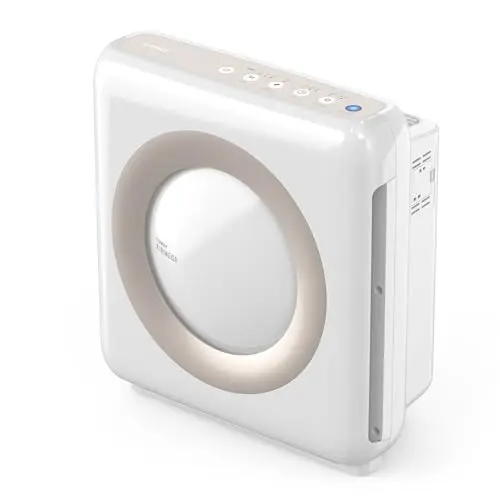
AP-1512HH(W) – Four-Stage Filtration with Auto Mode
The AP-1512HH(W) is a four-stage air purifier built for medium-to-large rooms, with a washable pre-filter, deodorization filter, bipolar device, and HEPA filter. Auto mode tracks air quality and adjusts fan speed in real time, while the LED indicator gives a quick read on room conditions. Filter alerts take the guesswork out of maintenance.
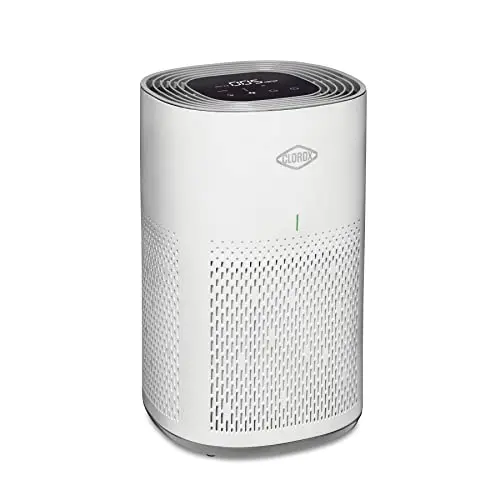
Medium Room – True HEPA with Virus & Bacteria Reduction
The Clorox Medium Room uses a 3-stage 360-degree filter to capture allergens, particulates, viruses, and bacteria, with a true HEPA layer and active carbon for odors and VOCs. Auto mode responds to the PM2.5 sensor, and the digital display gives real-time feedback. It’s designed for medium rooms and can clean larger spaces at a lower air-exchange rate.
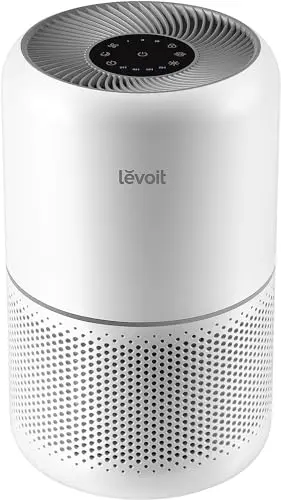
Core 300-P – Quiet HEPA Value for Bedrooms
The Core 300-P is a compact HEPA purifier with a 3-in-1 filter, 143 CFM smoke CADR, and a sleep mode that drops to a near-silent 24 dB. It’s AHAM Verifide, CARB compliant, ETL listed, and FCC certified, with a filter change indicator and a simple touch interface. It suits bedrooms, offices, and smaller living spaces.
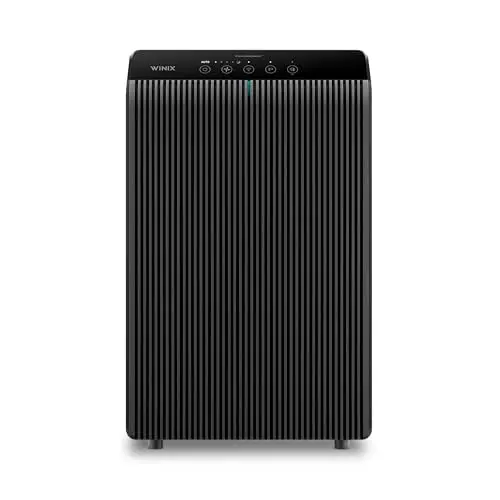
5510 – Large-Room HEPA with Smart App
The Winix 5510 is a True HEPA purifier with a high-deodorization carbon filter, washable fine mesh pre-filter, and smart sensors that adjust fan speed in auto mode. It’s AHAM Verifide for 392 sq ft and can clean larger rooms up to 1,882 sq ft in an hour. The Winix Smart app adds remote control, and sleep mode automatically activates in dark rooms.
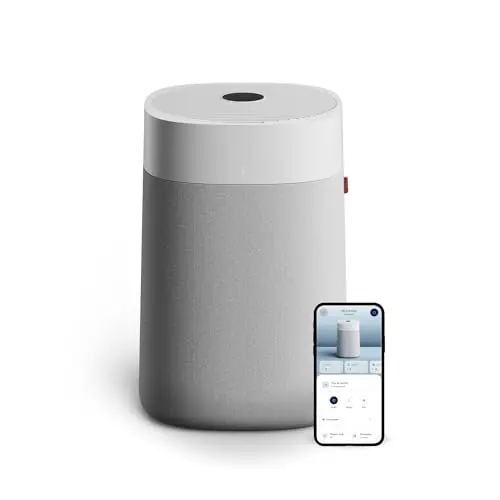
211i Max – HEPASilent for Open-Concept Spaces
The Blue Pure 211i Max is built for large living rooms and open floor plans, cleaning up to 3,235 sq ft in an hour with HEPASilent dual filtration. It pairs a washable pre-filter with particle and carbon filtration, and adds built-in air quality sensors, auto mode, and WiFi app control. Quiet operation and a minimalist design help it blend into shared spaces.
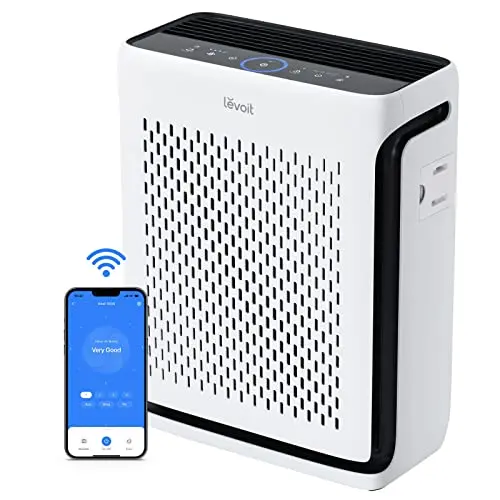
Vital 100S-P – Pet-Focused Smart HEPA
The Vital 100S-P is a smart HEPA purifier with a washable pre-filter, pet mode, and a U-shaped inlet designed to catch pet fur and larger particles. It offers AHAM Verifide performance, a 25 dB sleep mode, app and voice control, and scheduling through the VeSync app. It’s a good fit for pet households and allergy-focused bedrooms.
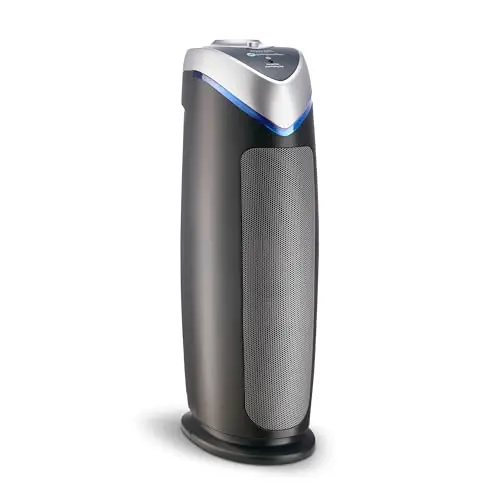
AC4825E – UV-C HEPA Tower for Small Rooms
The GermGuardian AC4825E is a tower purifier with a HEPA Pure filter, activated carbon layer, and optional UV-C light. It circulates air in a small bedroom every 12.5 minutes and larger spaces hourly, with three speeds including a quiet sleep mode. It’s CARB certified, ETL certified, and Zero Ozone Verified.
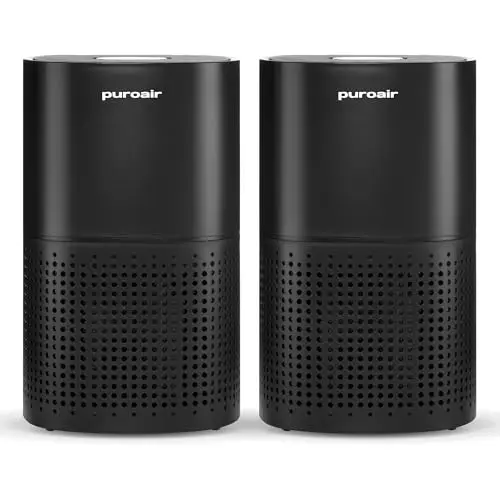
240 2PK – Two-Unit Smart HEPA for Whole Home
The PuroAir 240 is a 3-layer HEPA purifier with a pre-filter, HEPA layer, and activated carbon, plus a smart particle sensor and auto mode. This two-pack covers up to 1,000 sq ft per unit, with a quiet sleep mode, 360-degree intake, and CARB, ETL, ISO, and UL certifications. It’s a practical way to put filtration in two rooms at once.
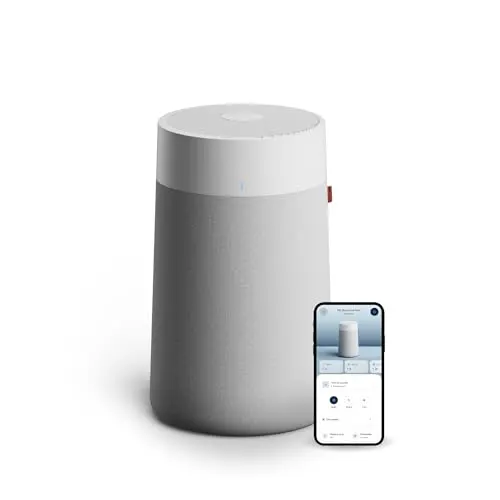
311i Max – Compact HEPASilent with App Control
The Blue Pure 311i Max is a midsize HEPASilent purifier for bedrooms, living rooms, and home offices. It cleans 439 sq ft in 12.5 minutes and up to 2,107 sq ft in an hour, with a washable pre-filter, built-in sensors, auto mode, and WiFi app control. QuietMark-certified operation keeps it suitable for nurseries and shared spaces.
How We Evaluated These Medical Grade Air Purifiers
We didn’t run lab particle-count tests or measure CADR in a sealed chamber. What we did: cross-referenced 9 air purifier models from 7 distinct brands across five decision axes – particle capture claims, room coverage and CADR, filtration stages and odor control, noise and sleep operation, and smart sensors plus certifications. We triangulated published specifications, feature sets, and owner feedback where available, then mapped each model to realistic buyer profiles for bedrooms, open living spaces, pet households, and allergy-focused rooms. Because ‘medical grade’ is not a standardized consumer label, we treated it as a practical benchmark: true HEPA or HEPA-grade filtration, verified particle capture, low-ozone operation, and certifications that back up safety and performance.
The scoring framework weighted real-world fit (70%) – how well each purifier delivers on its stated room size, filtration job, and daily usability – against feature differentiation (30%) – unique filtration advantages, sensor quality, app control, and maintenance design. We also weighed filter replacement intervals, included filter quality, and whether the smart features solve a real problem or just add an app. We have no commercial relationship with the brands featured; recommendations track fit and differentiation, not brand preference. If you want the most balanced starting point, the Coway AP-1512HH(W) is the pick; if virus and bacteria reduction is your priority, the Clorox Medium Room is the more targeted choice.
How to Choose the Right Medical Grade Air Purifier
1. What 'Medical Grade' Actually Means in an Air Purifier
There’s no single medical grade certification for consumer air purifiers, so treat the phrase as shorthand rather than a regulated badge. What you want is true HEPA filtration or a HEPA-grade filter that captures at least 99.97% of particles at 0.3 microns, plus a sealed filter path so air doesn’t bypass the media. Independent marks such as AHAM Verifide, CARB compliance, ETL listing, and Zero Ozone Verification are more useful than a vague medical claim.
2. Match HEPA Filtration and Room Coverage to Your Space
Room coverage claims are only useful when you know the air-exchange rate. A purifier that cleans 1,000 sq ft once per hour is working much harder than one that cleans 200 sq ft nearly five times per hour. Look for CADR ratings for smoke, dust, and pollen, then match the unit to the room you’ll actually use. For a medium-to-large bedroom or living room, the Coway AP-1512HH(W) is a balanced starting point; for a smaller bedroom on a tighter budget, the Levoit Core 300-P is the more sensible route.
3. Filtration Stages, Carbon, and Odor Control in Medical Grade Air Purifiers
A pre-filter catches hair and large dust, a HEPA layer handles fine particles, and an activated carbon layer targets odors and VOCs. If smoke, cooking, or pets are part of your daily life, carbon quality matters as much as HEPA capture. Some models add UV-C light as an optional stage; it’s a nice extra, but it shouldn’t replace a good HEPA filter. Washable pre-filters reduce replacement costs, while proprietary filter cartridges lock you into a maintenance schedule.
4. Noise, Sleep Mode, and Bedroom-Friendly Air Purifier Operation
Noise is the spec that determines whether a purifier actually stays in the bedroom. Look for a sleep mode with a low decibel rating, display dimming or off options, and a fan curve that doesn’t constantly hunt. A unit rated around 23-25 dB on low is usually quiet enough for light sleepers. Auto mode helps here because the purifier idles down when the air is clean instead of running at a fixed speed all night.
5. Smart Sensors, Filter Alerts, and Long-Term Air Purifier Costs
Air quality sensors and auto mode are genuinely useful, but they’re not all equal. A PM2.5 readout gives you more information than a simple color light, and filter alerts based on actual runtime beat calendar reminders. Budget for replacement filters before you buy; the cheapest purifier can become the most expensive one if cartridges are pricey and short-lived. Washable pre-filters and standard filter sizes keep long-term costs more predictable.
6. Coway vs. Levoit vs. Winix: Comparing Medical Grade Air Purifier Approaches
These three brands take different routes. Coway leans on a four-stage filtration stack and a strong auto-mode experience. Levoit focuses on quiet operation and value, with compact units that fit bedrooms. Winix pushes large-room coverage and odor control, and adds app support on newer models. If you need a bigger room handled without stepping into premium territory, the Winix 5510 is the practical pick; if you want the most balanced filtration and sensor behavior, the Coway remains the safer default.
Frequently Asked Questions
1. What makes an air purifier 'medical grade'?
In practice, a medical grade air purifier should mean a unit with true HEPA filtration, verified particle capture, a sealed filter path, and low-ozone operation. Look for AHAM Verifide performance, CARB compliance, and ETL or UL listing. The label itself isn’t standardized, so the specs and certifications matter more than the wording.
2. Coway AP-1512HH(W) vs. Levoit Core 300-P: Which is the better medical grade air purifier?
The Coway AP-1512HH(W) is the stronger all-around unit for a medium-to-large room: it adds a four-stage filtration stack, auto mode, and a 3-year warranty. The Levoit Core 300-P is the better fit for a smaller bedroom or a tighter budget, with a 24 dB sleep mode and AHAM Verifide performance. Choose Coway for broader coverage and more filtration stages; choose Levoit for compact, quiet value.
3. Winix 5510 vs. Blueair 211i Max: Which handles large rooms better?
The Blueair 211i Max has the higher coverage claim, rated for up to 3,235 sq ft in an hour, so it’s the better match for a true open-concept space. The Winix 5510 is rated for 1,882 sq ft in an hour and adds a high-deodorization carbon filter plus a lower price tier. If maximum square footage is the goal, go Blueair; if odor control and value matter more, Winix is the practical choice.
4. Do medical grade air purifiers help with viruses and bacteria?
Some models make specific virus and bacteria reduction claims, but the evidence is tied to independent lab testing and the filter system used. The Clorox Medium Room is the clearest example in this lineup, with a true HEPA layer and a stated 99.9% reduction for viruses and bacteria. No purifier replaces ventilation, masking, or cleaning, so treat these claims as one part of a broader indoor-air strategy.
5. How often should I replace filters in a medical grade air purifier?
Most HEPA cartridges last around 6-12 months, but runtime, pets, smoke, and dust levels can shorten that. Follow the filter alert if the unit has one, and rinse washable pre-filters every few weeks. Buying genuine replacement filters matters for fit and performance; off-brand cartridges can compromise airflow and filtration.
Final Verdict
For most buyers, the Coway AP-1512HH(W) is the best medical grade air purifier to start with. It pairs four-stage filtration with auto mode, filter alerts, and quiet operation, so it works in a bedroom or a living room without becoming a chore. If you’re budget-conscious, the Levoit Core 300-P gets you true HEPA filtration and a genuinely quiet sleep mode for far less. For a large open-concept space, the Blueair 211i Max is the coverage leader, while the Clorox Medium Room is the one to choose if virus and bacteria reduction is your main reason for buying. The right answer depends on room size and the contaminant you care about most, but the Coway is the safest all-around bet.
