
Best Memory Foam Mattress Toppers For Back Pain – 2026 Reviews

Back pain has a way of turning mattress shopping into a research project. You start out looking for something softer, and somewhere around the third article you realize the problem might be the opposite: a mattress with no support under your lower back, or one worn enough that your hips sink below your spine. A topper is the cheaper experiment.
The trouble is that memory foam toppers get sold almost entirely on plushness. Sink-in comfort photographs well; lumbar support doesn’t. For back pain specifically, the two axes that separate a good topper from a mediocre one are how firm it stays under your hips and how quickly the foam recovers – a topper that lets your pelvis drop is worse than no topper at all.
We looked at the memory foam mattress toppers sold across major brands and compared them on support profile, thickness and foam construction, cooling, cover design, and how they behave on real mattresses. Some are built for people who need to soften a hard bed; others are built to firm up a soft one. Those are different products, and the rest of this guide gets into which is which.
Best Memory Foam Mattress Toppers for Back Pain – 2026 Reviews
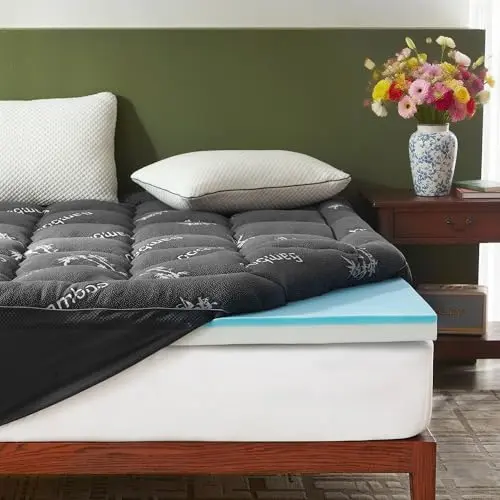
4 Inch Dual Layer Topper – Adjustable Firmness for Back Pain
The BEDLORE stacks a two-inch gel memory foam base under a two-inch quilted pillow top, and either layer works on its own. For back-pain shoppers that flexibility is the whole point – firmer on the foam alone, softer and more pressure-relieving with the pillow top zipped back on.
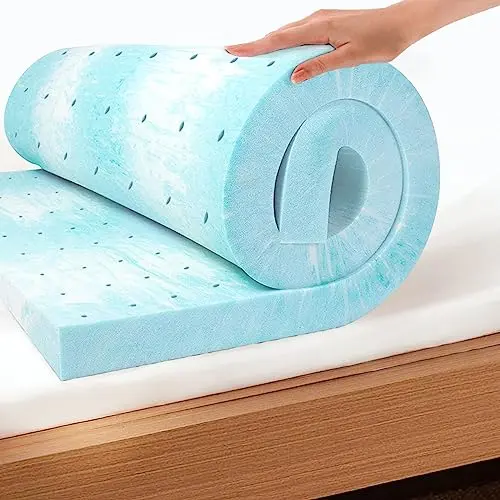
EGO 3 Inch Gel Topper – Medium Support Pressure Relief
A single three-inch slab of AeroFusion gel memory foam with a medium feel and a ventilated hole pattern. No cover, no layers – straightforward pressure relief that sits between the firm budget toppers and the plush ones.
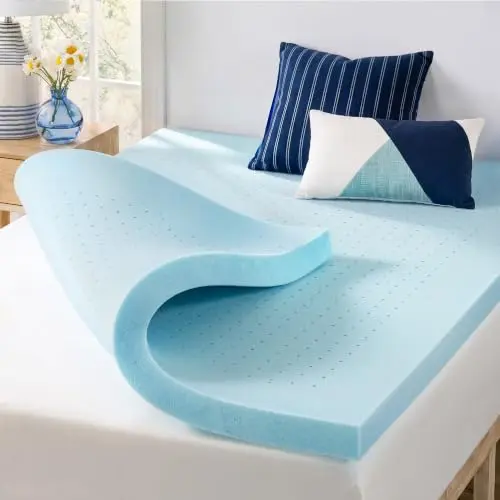
3 Inch Ventilated Gel Topper – Firm Support on a Budget
A three-inch gel-infused topper that lands on the firm end of memory foam. It’s the most affordable way into the category, and for back-pain sleepers who hate sinking, the firmness is the feature rather than a flaw.
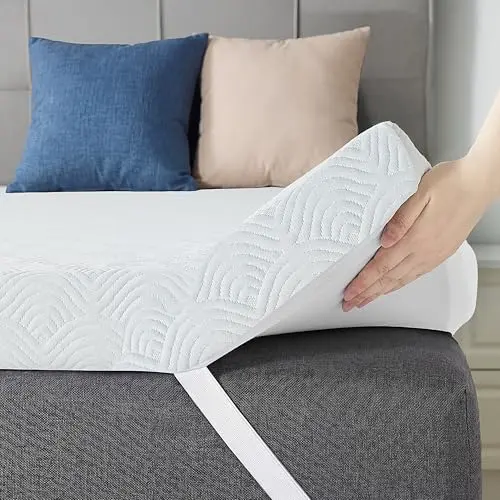
3 Inch Ventilated Gel Topper – Washable Cover and Non-Slip Base
A three-inch gel memory foam topper wrapped in a removable, machine-washable polyester cover with a wave-pattern surface and elastic corner straps. It’s the practical pick if you want something you can actually clean.

3 Inch Gel Memory Foam Topper – Plush Feel for Firm Beds
A three-inch gel-infused topper with a distinctly plush feel, designed to soften a mattress that’s too hard rather than to firm one up. Straightforward, widely available, and easy to set up.
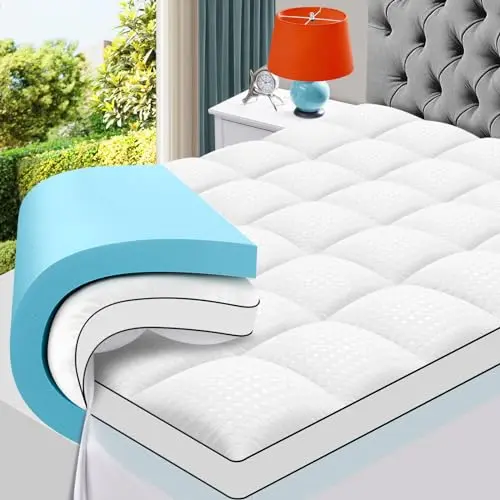
Dual Layer 4 Inch Topper – Pillow Top Over Gel Foam
A two-part system: two inches of gel memory foam with a two-inch quilted pillow top layered over it. Run both for a four-inch medium-support surface, or use the foam alone for less cushioning. This configuration ships in King size.
How We Evaluated These Memory Foam Mattress Toppers for Back Pain
We didn’t sleep on these toppers for weeks or run pressure-mapping tests. What we did: cross-referenced six mattress toppers from five distinct brands across six decision axes – firmness and support profile, thickness and foam construction, pressure-relief design, cooling and airflow, cover and washability, and how each one fits and stays put on a mattress.
We triangulated published specifications, foam construction details, feature sets, owner feedback where available, and use-case fit against a specific buyer profile: someone whose back pain flares at night and who needs a topper to change how the mattress supports them, not just how soft it feels. Claimed firmness and thickness got weighed against what people actually experienced after the foam had settled. Anything that read as a styling choice rather than a support variable got set aside.
The scoring framework weighted real-world fit for back-pain sleepers (70%) – support under the lumbar curve, pressure relief at shoulders and hips, and honest firmness claims – against feature differentiation (30%) – washable covers, adjustable layers, certifications, and warranty length. A topper is a compromise device by nature, so we scored each one on how well it compensates for the mattress underneath. We have no commercial relationship with any of the brands here; recommendations track fit and differentiation, not brand preference. If you want a topper that can go firm or plush on demand, the BEDLORE 4 Inch Dual Layer is your match. If you’d rather keep it simple, the MLILY EGO delivers comparable pressure relief in a single slab.
How to Choose the Right Memory Foam Mattress Topper for Back Pain
1. Firmness and Support: What Back-Pain Sleepers Actually Need
Most people assume back pain means they need a softer bed. Often it’s the reverse: a mattress that’s lost its support lets the pelvis drop and the lower back arch out of neutral, and softening the surface makes that worse. What you want is a topper that fills the gap under your lumbar curve without turning the whole bed into a hammock.
Medium to medium-firm is where most back-pain sleepers land. Firm memory foam holds your hips up; plush foam lets them sink. The honest test is what happens after twenty minutes – if you can slide a hand under your lower back with no gap and no fight, the support level is roughly right.
The wrinkle is that firmness labels are unreliable across brands. A medium from one manufacturer can feel like another’s firm. That’s why adjustable designs earn their keep here: if you want to hedge, the BEDLORE 4 Inch Dual Layer lets you run the foam alone for a firmer surface or add the pillow top back for pressure relief.
2. How Thickness and Foam Density Affect a Memory Foam Mattress Topper
Three inches is the practical minimum if you’re trying to mask a genuinely bad mattress. Two-inch toppers are a refresh – they soften a surface that’s already decent, but they bottom out over a sagging spring or a worn foam core. Four inches and up starts changing how your sheets fit and how far you sink getting into bed.
Density matters as much as thickness, and it’s the spec manufacturers hide most often. Lower-density foam feels great in the first week and packs down within months; denser foam costs more and holds its shape. Neither number tells you much without a firmness rating next to it.
One practical note: gel memory foam toppers ship compressed and look thin out of the box. Give any topper two to three days to fully expand before deciding it’s the wrong thickness – most too-thin complaints are really impatience.
3. Cooling, Airflow, and What Gel Infusion Really Does
Memory foam traps heat. Gel beads, ventilated hole patterns, and open-cell formulations all help at the margins, but no topper in this category is a cooling product. If you sleep hot, expect a gel topper to feel warm-but-tolerable rather than cool.
What actually moves the needle is surface airflow and the cover material. A ventilated hole pattern gives trapped heat somewhere to escape. A bamboo viscose or breathable knit cover feels cooler to the touch than a polyester quilted top and lets moisture move. A bare foam slab under a cotton sheet sits somewhere in between.
Be skeptical of temperature claims in listing copy. The most reliable signal is whether sleepers stay comfortable through the night or wake up warm – and even then, two people on the same topper will disagree.
4. Choosing a Memory Foam Mattress Topper for Back Pain by Sleep Position
Back sleepers need the most support: medium-firm foam that keeps the pelvis level. Too plush and the lower back arches; too firm and the shoulder blades and sacrum take all the pressure.
Side sleepers are usually chasing pressure relief at the shoulder and hip, so a medium feel with some give tends to work better. This is where a three-inch medium topper beats a firm one, and where the MLILY EGO earns its place – the feedback that matters is about shoulders and hips, not overall softness.
Stomach sleepers need the firmest surface of the three, because a sinking midsection pulls the lower back into extension. A firm three-inch topper is the safer bet; if that describes you, the Best Price Mattress 3 Inch Ventilated Topper is the pick here.
5. Covers, Washability, and Keeping the Topper in Place
Most memory foam toppers are bare foam with a spot-clean-only instruction, which is fine until someone spills something. A removable, machine-washable cover is a genuine quality-of-life upgrade and one of the clearest ways to separate tiers in this category.
Retention matters too. Foam on a smooth mattress surface will migrate. Look for elastic corner straps, a non-slip backing, or a fitted skirt rated for your mattress depth – deep-pocket designs typically cover anything from about six to twenty-one inches, so check that range against your own bed before ordering.
6. What to Expect at Each Price Tier
Entry-tier toppers are usually a single three-inch slab of firm or medium gel foam, spot-clean only, with a short warranty. They’re the right call if you mainly need to firm up a soft mattress and you don’t care about covers.
Mid-range buys better foam, ventilated designs, longer warranties, and occasionally a washable cover. This is where most buyers should sit – the jump in support quality over entry tier is real.
Premium is where dual-layer and pillow-top designs live, along with bamboo covers and thicker profiles. You’re paying for adjustability and laundering more than for dramatically better pressure relief. Worth it if the mattress underneath is staying put for years.
Frequently Asked Questions
1. Do memory foam mattress toppers actually help back pain?
They can, but only when the source of the pain is the mattress surface rather than something structural. A topper helps by redistributing pressure and filling the gap under the lumbar curve – it can’t fix a mattress with a collapsed core or a broken frame, and it won’t do much for pain that isn’t positional.
The pattern that shows up most often is a mattress that’s too firm, where a medium or plush topper takes pressure off the shoulders and hips. The second most common is a mattress that’s too soft, where a firm topper restores some hip lift. Pick the topper to correct the specific direction your mattress is failing in.
2. What's the difference between the BEDLORE dual-layer topper and the MLILY EGO?
They solve the same problem from opposite directions. The BEDLORE 4 Inch Dual Layer is two separate pieces – a two-inch gel foam base and a two-inch quilted pillow top – so you can run firm, plush, or stacked. The MLILY EGO is a single three-inch slab of medium-feel ventilated foam with no cover.
Practically: the BEDLORE gives you a firmness dial and a washable cover, while the MLILY gives you a simpler, lower-profile topper with a longer warranty and a well-liked pressure-relief feel. If your back pain fluctuates or you’re unsure which firmness you need, the adjustable one is the safer buy.
3. How does the Best Price Mattress topper compare with the Linenspa gel topper?
Firmness is the whole story here. The Best Price Mattress topper is a firm three-inch slab built to add support to a soft or sagging mattress. The Linenspa is extra plush and built to soften a hard one.
Choose the Best Price Mattress if your lower back aches because your hips are sinking. Choose the Linenspa if you’re on a rock-hard mattress and your shoulders and hips hurt from pressure. They’re both three-inch gel toppers at similar tiers; the difference is which direction they push the bed.
4. How thick should a memory foam mattress topper be for back pain?
Three inches is the practical sweet spot. It’s thick enough to change how the mattress supports you without altering your sheet fit or making the bed awkward to get out of. Two inches is a comfort refresh; four inches and up is a bigger change that suits people who need heavy pressure relief.
Thicker isn’t automatically better for back pain. A four-inch plush topper on a soft mattress just adds more sink. If support is the goal, thickness matters less than firmness.
5. Will a memory foam topper make me sleep hot?
Probably a little, yes. Memory foam is not a breathable material by nature, and gel infusion reduces heat retention rather than eliminating it. A ventilated hole pattern helps more than gel beads do, and a breathable cover helps more than either.
If overheating is your main complaint about your current setup, a topper is a partial fix at best. A bamboo or cotton-covered topper over ventilated foam is about as much as you can reasonably ask from this category.
6. How long does a compressed topper take to fully expand?
Plan on two to three days. Most manufacturers quote 24 to 72 hours, and foam expands faster in a warm room than a cold one. It will look thinner than advertised on day one – that’s normal, not a defect.
Unroll it flat on the bed or floor, give it some air, and let it sit. A mild odor is common and fades within a few days. Judging firmness before the foam has fully lofted is the most common way people end up returning a perfectly good topper.
Final Verdict
For most people shopping this category, the BEDLORE 4 Inch Dual Layer is the answer. It’s the only topper here that lets you dial firmness in either direction – run the gel foam alone when your back needs support, stack the pillow top back on when it needs cushioning – and it backs that up with a washable bamboo cover, deep pockets, and the certifications to match.
If you’d rather not fuss with layers, the MLILY EGO delivers comparable pressure relief in one medium-feel slab with a longer warranty. And if the problem is a mattress that’s too soft rather than too hard, skip both and go with the Best Price Mattress 3 Inch Ventilated Topper – firm foam is the corrective, and it’s the most affordable route to it.
