
Best Merino Wool Compression Socks – 2026 Reviews

Merino wool and compression are an odd couple on paper. One is soft, breathable, and temperature-regulating; the other is tight, structured, and built to squeeze. The best merino wool compression socks get the balance right: enough graduated pressure to feel supportive through the calf, but enough softness and moisture control that you actually want to wear them on a long flight or a 12-hour shift.
The tricky part is that ‘merino wool’ on a label doesn’t tell you how much merino is actually inside. Some socks use a small wool blend for softness, while others push merino content much higher and reinforce with synthetic fibers for durability. Compression level matters just as much. A 15-20 mmHg sock is a moderate everyday option; a 20-30 mmHg sock is firmer and better suited to specific support needs.
We looked across brands in this category to find the pairs that make sense for different buyers, not just the ones with the best marketing. The goal is simple: match wool content, compression level, and fit to how you’ll actually wear them.
Best Merino Wool Compression Socks – 2026 Reviews
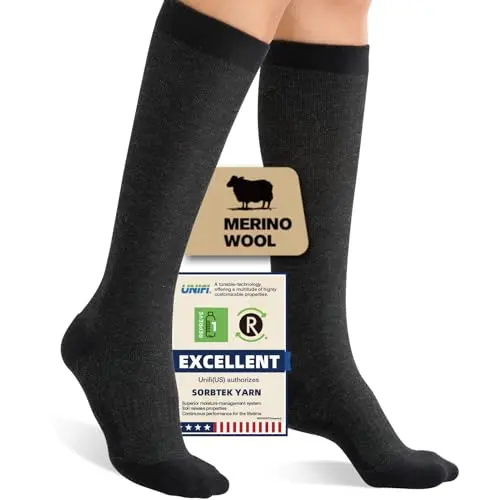
Merino Wool Compression Socks 15-20 mmHg – Soft Travel and Running Support
These knee-high merino-blend compression socks pair a moderate 15-20 mmHg graduated fit with bamboo viscose softness. The four-zone design supports the arch and calf, while Sorbtek fibers manage moisture for travel, running, or long days on your feet.
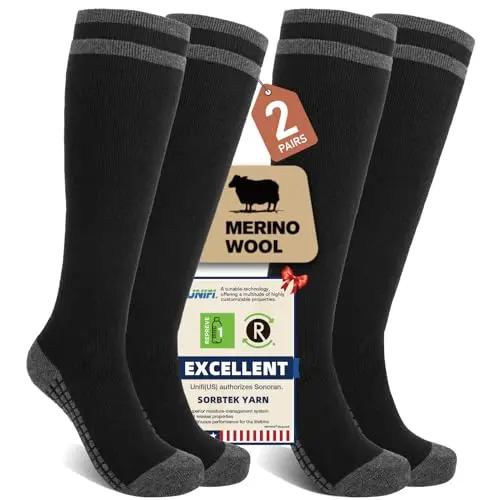
Merino Wool Compression Socks – Warm Knee-High Support
A knee-high merino-blend compression sock with a warmer, thicker knit and a 15-20 mmHg graduated fit. The non-slip cuff stays over the calf, while REPREVE Sorbtek fibers and a reinforced sole add moisture control and durability for cold-weather wear.
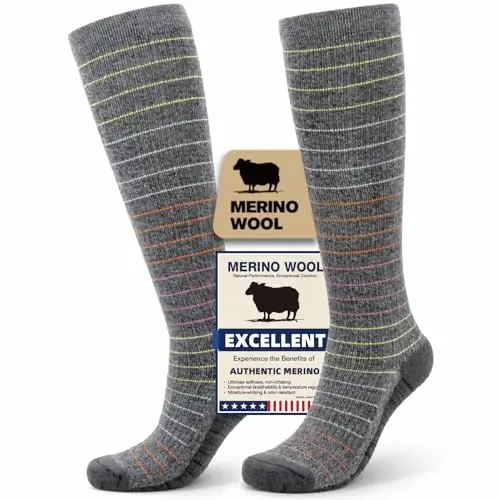
Merino Wool Compression Socks 20-30 mmHg Dryarn – Firm Support for Long Shifts
A firmer 20-30 mmHg knee-high compression sock built with a 54% merino blend and Dryarn reinforcement. The graduated fit is strongest at the ankle, with arch lift, a cushioned terry sole, and a seamless toe for long shifts or travel days.
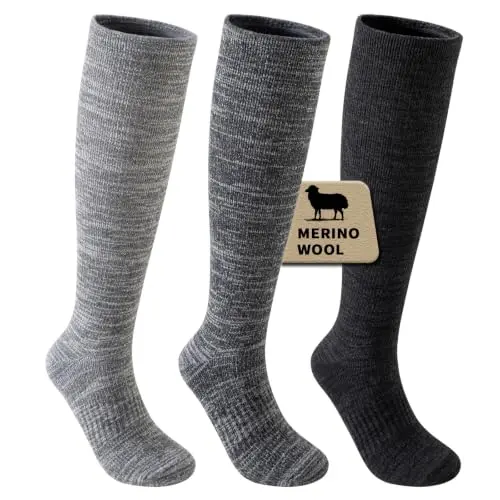
Merino Wool Compression Socks 15-20 mmHg – Three-Pair Travel Value
A three-pair set of knee-high compression socks with a 15-20 mmHg graduated fit and a 70% merino wool blend. Arch support, a seamless toe, and a non-slip cuff make them a practical choice for travel, running, or all-day standing.
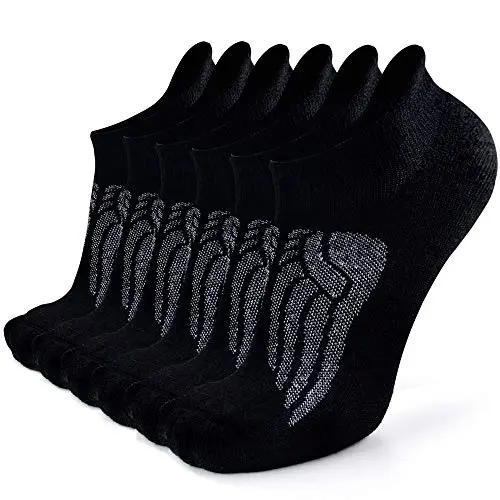
Merino Wool Low-Cut Compression Socks – Six-Pair Athletic Pack
A low-cut merino wool blend sock with light compression support, cushioned sole, and a heel tab for athletic wear. The six-pair pack is designed for running, walking, and everyday workouts rather than knee-high graduated compression.
How We Evaluated These Merino Wool Compression Socks
We didn’t wear these through a full season of shifts, flights, and long runs. What we did: cross-referenced 5 merino wool compression sock models from 4 distinct brands across five decision axes – merino content and blend, compression level and graduated fit, moisture-wicking and thermoregulation, cushioning and arch support, and care and durability. We triangulated published specifications, feature sets, and owner feedback where available, then mapped each sock to realistic buyer profiles: frequent travelers, runners, nurses and other people who stand all day, and cold-weather wearers. We also weighed how each blend handled odor, washability, and cuff behavior, because those details decide whether a compression sock gets worn or stays in the drawer.
The scoring framework weighted real-world fit and performance (70%) – how well each sock delivers usable compression, comfort, and temperature control for its intended wearer – against feature differentiation (30%) – meaningful design choices like wool percentage, targeted arch support, seamless toes, and reinforced wear zones. We have no commercial relationship with any of the brands featured; recommendations track fit and differentiation, not brand preference. If you want a balanced everyday pair, the Iambamboo Merino Wool Compression Socks 15-20 mmHg is the place to start. If warmth and a thicker knit matter more, the SONORAN Merino Wool Compression Socks is the better match. The result is a practical shortlist for different compression needs rather than a single one-size-fits-all ranking.
How to Choose the Right Merino Wool Compression Socks
1. What Merino Wool Actually Adds to Compression Socks
Merino wool is valued for softness and temperature regulation, but it is rarely the only fiber in a compression sock. Most pairs blend merino with nylon, polyester, spandex, Lycra, or bamboo viscose to add structure, elasticity, and durability. That’s not a shortcut; compression socks need recovery and shape retention to keep their graduated fit after repeated washes.
The merino percentage is the clearest signal of how much natural comfort you’re getting. A higher share can mean a softer, more temperature-stable sock, but it can also wear faster without synthetic reinforcement. Lower-merino blends may feel more durable and hold compression better over time. The right balance depends on whether you prioritize next-to-skin comfort or long-term shape retention.
2. Match Compression Level to Your Day
Compression socks are usually sold in ranges. 15-20 mmHg is the moderate tier most people start with: it’s noticeable but manageable for travel, running, and long days of standing. 20-30 mmHg is firmer and more supportive, often chosen by people who want stronger leg fatigue relief or have been advised to use firmer compression. The fit should feel snug and graduated, never painfully tight or rolling at the cuff.
If your doctor has told you to look for a firmer 20-30 mmHg sock, the Iambamboo Merino Wool Compression Socks 20-30 mmHg Dryarn is the pick in this lineup. For most everyday wear, a moderate 15-20 mmHg pair is easier to live in.
3. Wool Content and Blend Labels on Compression Socks
Don’t assume a sock labeled ‘merino wool’ is mostly wool. Some products list a specific percentage; others only mention the fiber in the marketing copy. Look for the fiber breakdown and pay attention to LYCRA or spandex content, which drives stretch and recovery. Bamboo viscose and polyester are common additions for moisture management and durability.
If merino percentage is your top priority, the ORVYTHA Merino Wool Compression Socks 15-20 mmHg lists the highest share in this lineup. Just keep in mind that a high wool percentage isn’t automatically better if the sock loses its shape or feels too warm for your climate.
4. Fit, Cuff Behavior, and Sizing Checks
Compression socks live or die by fit. The cuff should stay over the calf without pinching, and the toe box should leave enough room to wiggle your toes. Sizing charts matter more than shoe size alone, especially for knee-high socks, because calf circumference often decides whether a pair feels supportive or restrictive. A non-slip cuff is helpful, but it shouldn’t leave deep marks.
If a roomier toe box matters more, the SONORAN Merino Wool Compression Socks is the better fit. If you’re between sizes, check the brand’s calf measurements before ordering.
5. Moisture, Warmth, and Seasonal Comfort
Merino’s biggest practical advantage is breathability. It can feel warm in cool weather without turning into a sweat box indoors, especially when the sock uses open-knit zones or mesh ventilation. That makes merino blends more versatile than thick thermal socks for travel and everyday wear.
For summer, look for lighter knits and moisture-wicking fibers rather than the thickest cushioning. For winter, a terry sole or thicker knit adds warmth without necessarily making the sock less breathable.
6. Care and Durability for Merino Blends
Treat merino blends gently. Wash in cool water and skip the dryer when you can; heat is hard on wool fibers and elastic. A mesh laundry bag helps prevent snags, and air-drying keeps the cuff and compression zones from stretching out. Rotating pairs between washes also gives the elastic time to recover.
Frequently Asked Questions
1. Are merino wool compression socks actually made mostly of merino wool?
Not usually. Many compression socks use merino wool blends because pure wool doesn’t stretch or recover well enough on its own. You’ll see percentages ranging from about 30% to 70% in this category, with the rest made up of nylon, polyester, spandex, Lycra, or bamboo viscose. Those fibers add structure and elasticity, plus durability, which matter for a sock that has to hold graduated pressure all day.
A higher merino percentage can mean a softer, more temperature-stable feel, but it isn’t automatically the better buy. The right blend depends on whether you prioritize natural comfort or shape retention. If high merino content is your priority, the ORVYTHA Merino Wool Compression Socks 15-20 mmHg lists the highest share in this lineup.
2. What's the difference between Iambamboo 15-20 mmHg and SONORAN Merino Wool Compression Socks?
The Iambamboo pair is the softer, more breathable option, with a merino-bamboo blend and a moderate 15-20 mmHg graduated fit. It’s designed for travel, running, and all-day wear, and the seamless toe and four-zone support make it easy to forget you’re wearing compression. The SONORAN sock is warmer and thicker, with a more substantial knit and a non-slip over-the-calf cuff that suits cold weather and long standing shifts.
Choose the Iambamboo Merino Wool Compression Socks 15-20 mmHg if you want a lighter, softer everyday pair. Choose SONORAN if cold-weather warmth and a more padded feel matter more than a minimal knit.
3. How do Iambamboo 20-30 mmHg Dryarn socks compare with ORVYTHA 15-20 mmHg socks?
The Iambamboo Dryarn sock is the firmer 20-30 mmHg option, built for people who want stronger support through the ankle and calf. Its 54% merino blend is reinforced with Dryarn for durability, and the terry sole adds cushioning without making the sock feel bulky. The ORVYTHA sock is a more moderate 15-20 mmHg pair with a higher merino percentage and a three-pair pack that makes rotation easy.
If you’re new to compression or want an all-day travel sock, the ORVYTHA fit is easier to live in. If you need firmer support for long shifts, swelling, or recovery, the Iambamboo Dryarn pair is the more targeted choice.
4. Can merino wool compression socks be worn in summer?
Yes, especially if you choose a lighter knit and a blend with moisture-wicking fibers. Merino is naturally temperature-regulating and odor-resistant, so it can feel less clammy than thick synthetic socks in warm weather. The key is avoiding heavy cushioning and looking for breathable mesh zones or open-knit panels.
That said, a thick winter compression sock will still feel warm in summer. Match the sock’s weight to the season, and treat breathability as a more important spec than wool percentage alone when the temperature climbs.
Final Verdict
For most people, the Iambamboo Merino Wool Compression Socks 15-20 mmHg is the right starting point: it pairs moderate graduated support with a soft merino-bamboo blend that works for travel, running, and long days on your feet. If you want a warmer, thicker sock for cold weather, the SONORAN Merino Wool Compression Socks is the more substantial pick. If you need firmer support for long shifts or travel swelling, step up to the Iambamboo Merino Wool Compression Socks 20-30 mmHg Dryarn. And if high merino content and a multi-pair value are your priorities, the ORVYTHA Merino Wool Compression Socks 15-20 mmHg makes the most sense. The Busy Socks low-cut pack is a fine casual athletic option, but it’s not a true knee-high compression sock.
