
Best Mid-Range Espresso Machines – 2026 Reviews

The mid-range espresso machine is where the category gets interesting – and a little frustrating. You’re past the plasticky entry-level tier, but you’re not yet in fully automatic territory, so the right choice depends on how much control you actually want.
The biggest separators are build quality, temperature control, and whether the machine includes a grinder. A manual steam wand and a 58mm portafilter can matter more to one buyer than a built-in grinder matters to another. This guide maps those trade-offs across the market so you can pick the machine that fits your counter and your morning routine, not just the one with the longest feature list.
Best Mid-Range Espresso Machines – 2026 Reviews
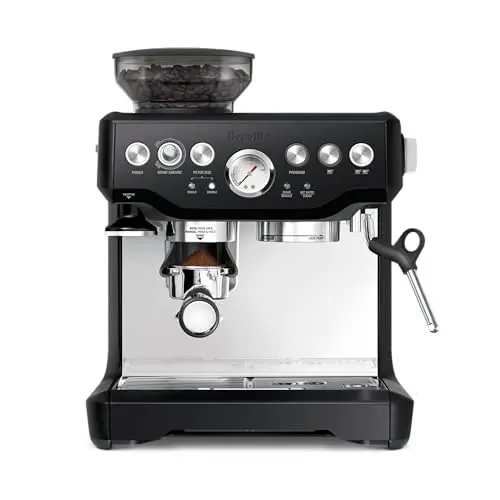
Barista Express BES870BTR – Built-In Grinder All-Rounder
The Barista Express is the do-it-all option in the mid-range tier: a conical burr grinder, PID temperature control, and a manual steam wand in one countertop footprint. It suits buyers who want to learn dialing-in without adding a separate grinder.
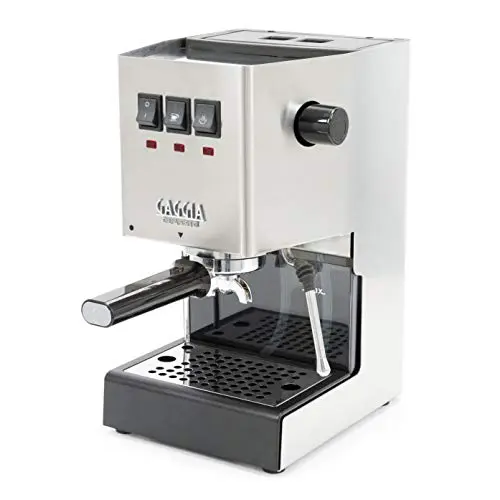
Classic Evo Pro RI9380/46 – Commercial-Style Manual Espresso
A deliberately old-school mid-range machine with commercial-style parts: a 58mm portafilter, three-way solenoid, and 9-bar extraction. It rewards buyers who want to tinker, maintain, and upgrade over time.
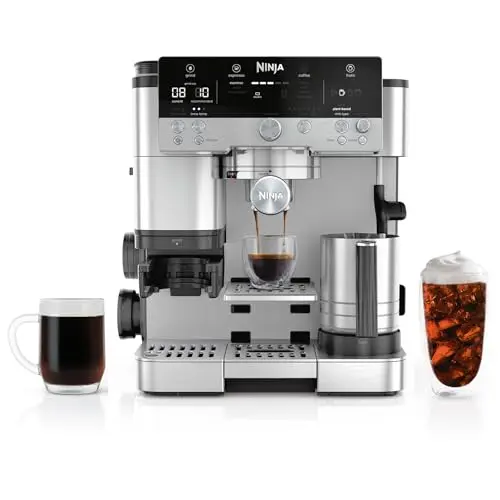
Luxe Cafe Premier ES601 – Guided 3-in-1 Convenience
A 3-in-1 mid-range machine that combines espresso, drip coffee, and cold brew with a built-in grinder, guided dosing, assisted tamping, and hands-free frothing. It’s built for convenience-first households.
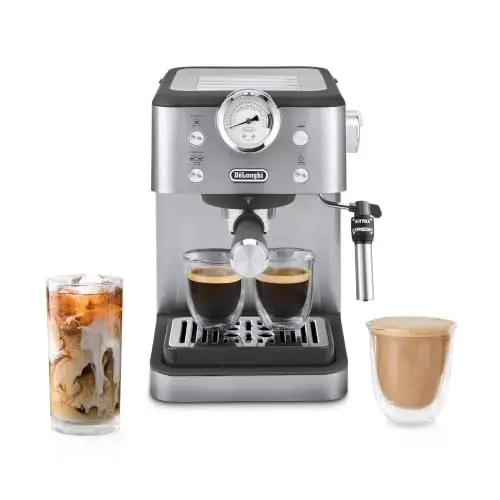
Classic Signature EM450M – Compact Preset Espresso
A compact semi-automatic with Thermoblock heating, preset single and double shots, and an adjustable two-setting steam wand. It’s a straightforward step up from entry-level machines.
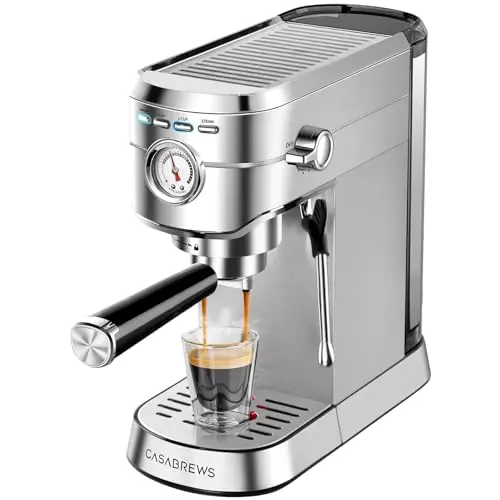
CM5418 – Compact Pressure-Gauge Espresso
A compact 20-bar semi-automatic with a built-in pressure gauge and a powerful steam wand. It’s the budget-friendly entry into the mid-range conversation.

ECMG0 – Budget 20-Bar Espresso with Steam Wand
A compact 20-bar machine with pre-infusion, a pressure gauge, and a hot water function. It’s an affordable way into semi-automatic espresso with manual frothing.
How We Evaluated These Mid-Range Espresso Machines
We didn’t pull repeated shots on a calibrated scale or measure milk texture with lab equipment. What we did: cross-referenced six mid-range espresso machine models from six distinct brands across five decision axes – extraction pressure and temperature control, milk-frothing method, grinder integration, footprint and workflow, and repairability. We triangulated published specifications, feature sets, owner feedback where available, and use-case fit against representative buyer profiles for this tier. That meant mapping each machine to the buyer it actually serves: the manual tinkerer, the grinder-free upgrader, the convenience-first household, and the compact-counter cook. We treated build and repairability as practical ownership factors, not spec-sheet decoration. We also checked whether the advertised pressure matched the basket and steam setup, since a big pump number can hide a modest brew path. We kept the focus on how each machine would feel in daily use, not just on paper.
We weighed real-world performance (70%) – how well each machine delivers on its stated workflow – against feature differentiation (30%) – unique technical advantages and use-case specificity. The scoring favored machines that reduce compromise rather than simply stack features. We have no commercial relationship with any of the brands featured; recommendations track fit and differentiation, not brand preference. If you want the most complete all-in-one, the Breville Barista Express is the natural starting point; if you want a traditional commercial-style workflow, the Gaggia Classic Evo Pro is the alternative we’d map first.
How to Choose the Right Mid-Range Espresso Machines
1. What Makes an Espresso Machine Truly Mid-Range?
Mid-range espresso machines are less about a single headline spec and more about fewer daily compromises. The jump from entry-level usually shows up in build quality, steadier temperature control, better steam performance, and more credible long-term serviceability. You’ll also see a split between machines with a built-in grinder and machines that expect you to own a separate one.
That split matters more than the badge on the front. A machine with great milk-frothing control but no grinder can still be the right mid-range pick if you already have a good burr grinder. Conversely, an all-in-one saves counter space but puts more components in one chassis. We treat repairability and parts availability as part of the value equation, not an afterthought.
2. Pressure, Temperature, and Extraction in the Mid-Range Tier
Don’t shop by pump pressure alone. 9-bar extraction is the traditional espresso target, while many mid-range machines advertise 15-bar or 20-bar pumps; the extra pressure is often headroom rather than a guarantee of better shots. More important is how the machine manages temperature. PID temperature control and stable Thermoblock heating can make day-to-day shots more repeatable, especially when you switch beans.
Pre-infusion is another useful marker: it wets the puck gently before full pressure, which can help reduce channeling. If you want a traditional 9-bar workflow with commercial-style parts, the Gaggia Classic Evo Pro is the clearest fit in this lineup.
3. Manual Steam Wand vs Automatic Frother
A manual steam wand gives you control over microfoam and is the better fit if you want to learn latte art or texture dairy and plant milks differently. It also adds a small skill curve. An automatic frother trades some control for consistency and hands-free convenience, which is why convenience-first households often gravitate toward it.
If you want the machine to handle frothing while you finish other tasks, the Ninja Luxe Cafe Premier is the obvious route. If you want full manual control, favor a machine with a proper steam wand and enough steam power to recover quickly.
4. Built-In Grinder or a Separate Grinder?
A built-in grinder simplifies the workflow and reduces counter clutter, but it also means you’re buying a machine with more integrated parts. A separate grinder usually gives you more upgrade flexibility and can be replaced independently. The key is grind consistency: fresh, evenly ground coffee matters more than the number of grind settings.
If you want one compact all-in-one for learning the full workflow, the Breville Barista Express is the natural starting point. If you already own a grinder you trust, put the budget toward build and steam quality instead.
5. Footprint, Water Tank, and Daily Maintenance
Measure your counter before you fall for a spec sheet. A compact footprint helps in small kitchens, but a larger water tank means fewer refills. Removable drip trays and accessible steam wands make routine cleaning less annoying, and regular descaling is non-negotiable if you want the machine to last.
Think about the morning sequence too: fill, grind, dose, tamp, brew, froth, clean. The machine that fits that sequence with the fewest interruptions is usually the one you’ll actually use.
6. Reliability, Repairability, and the Mid-Range Ownership Experience
In this tier, reliability is the wild card. Some machines use commercial-style parts that can be serviced or replaced; others are more sealed and depend on warranty support. Before buying, check whether the portafilter size, baskets, and steam wand are serviceable, and whether replacement parts are easy to find.
A mid-range machine should feel like a long-term tool, not a disposable appliance. If you like to tinker, prioritize repairability. If you want low-friction ownership, prioritize a clear warranty and simple cleaning.
Frequently Asked Questions
1. Breville Barista Express vs Gaggia Classic Evo Pro: Which Mid-Range Espresso Machine Should You Choose?
Choose the Breville Barista Express if you want a built-in grinder, PID temperature control, and a guided all-in-one workflow. Choose the Gaggia Classic Evo Pro if you already own a grinder and want a 58mm commercial portafilter, three-way solenoid valve, and a more traditional manual experience. The Breville is friendlier; the Gaggia is more repairable and upgrade-friendly.
2. Is a 20-Bar Espresso Machine Better Than a 9-Bar Machine?
Not automatically. 9-bar extraction is the traditional espresso target, while a 20-bar pump gives headroom that the machine may or may not use well. What matters more is temperature stability, basket quality, and whether the pump is paired with a sensible pre-infusion strategy. A well-tuned 9-bar machine can beat a poorly implemented 20-bar one.
3. Ninja Luxe Cafe Premier vs De'Longhi Classic Signature: Which Is Easier for Beginners?
The Ninja Luxe Cafe Premier is easier for beginners because it automates grinding, dosing, tamping, and frothing with Guided Barista Assist and a dual froth system. The De’Longhi Classic Signature is simpler in a different way: preset single and double shots and an adjustable steam wand keep the workflow manual but approachable. If you want less technique to learn, pick the Ninja; if you want a more compact semi-automatic, pick the De’Longhi.
4. What Actually Separates Mid-Range Espresso Machines From Budget Models?
Mid-range espresso machines usually make fewer compromises on build quality, temperature stability, and steam performance. You’re more likely to get a serviceable portafilter, better baskets, and a steam wand that can produce consistent microfoam. Budget models can still make good espresso, but they often ask you to accept more plastic, less stable temperature, or shorter service life.
5. Do I Need a Built-In Grinder on a Mid-Range Espresso Machine?
Not if you already own a good burr grinder. A built-in grinder is about convenience and counter space, not magic. If you want one integrated workflow, it’s worth prioritizing. If you already have a separate grinder you trust, spend the mid-range budget on build quality, temperature control, and steam performance instead. Grind consistency matters more than where the grinder lives.
Final Verdict
For most buyers, the Breville Barista Express is the answer – it combines a built-in grinder, PID temperature control, and a manual steam wand in one mid-range package. If you want a more traditional, repairable machine and already own a grinder, the Gaggia Classic Evo Pro is the enthusiast’s pick. For convenience-first households, the Ninja Luxe Cafe Premier automates grinding, tamping, and frothing without giving up drink variety. And if you want the lowest-commitment entry into this tier, the CASABREWS CM5418 delivers a pressure gauge and manual steam wand in a compact body. Match the machine to your workflow, not the badge count.
