
Best Mini Fridges For Truck Drivers – 2026 Reviews

Truck stops sell ice by the bag for a reason. A cooler works for a day, then turns into a soggy bin of half-melted drinks and floating lunch meat, and you’re dumping water out the door at a rest area. A real mini fridge in the cab changes the math – actual food, dairy that stays good, leftovers you’ll eat instead of bin.
But “mini fridge” means two very different machines once you’re shopping for a rig. There are household AC compact fridges: roomy, shelf-organized, and completely useless unless you’ve got an inverter or shore power. And there are 12V compressor coolers built to run off the truck’s DC system, ride out voltage sag, and stay strapped down at highway speed. Mixing those two up is the most common mistake in this category – people buy a dorm fridge, plug it into a weak inverter, and wonder why it never gets properly cold.
The second fork is abuse tolerance. A fridge that slides off a bunk on a hard brake, or quietly drains your starting battery overnight at a truck stop, is worse than no fridge at all. We looked at both camps – the 12V chest coolers aimed squarely at road life and the compact AC fridges that make sense in a sleeper with real power – and sorted them by what a working driver actually needs: cold that holds overnight, a footprint that fits the bunk, and enough battery sense not to strand you. Here’s how the market shakes out for 2026.
Best Mini Fridges for Truck Drivers – 2026 Reviews
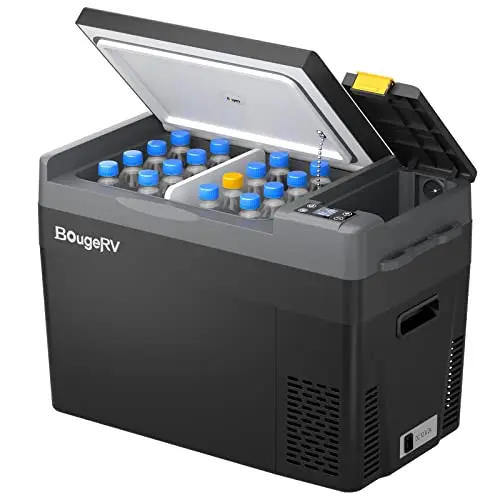
CRPRO 30 – 30-Quart Truck Fridge with Tie-Down Points
A 30-quart chest-style compressor fridge that runs on 12/24V DC in the truck or AC back home. It holds fridge or freezer temperatures, runs around 45 dB, and ships with a storage box sized for a compact power station.
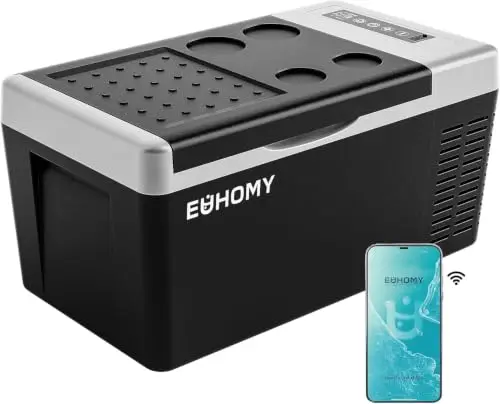
CFC-18 – Quiet 19-Quart 12V Cooler with App Control
A 19-quart compressor cooler with app control, a magnetic lid seal, and a 42 dB noise rating – the quietest 12V unit in this lineup. Runs on 12/24V DC or household AC.
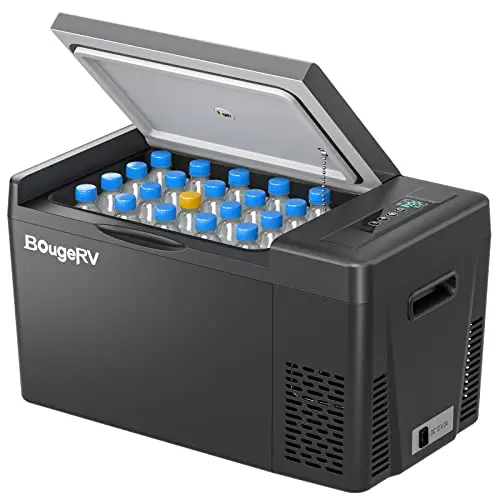
CR22 – Fast-Cooling 23-Quart Compressor Fridge
A 23-quart compressor fridge that drops from room temperature to 32F in about 15 minutes and runs on 12/24V DC or AC. Fridge or freezer, 45 dB, roughly 22 pounds.
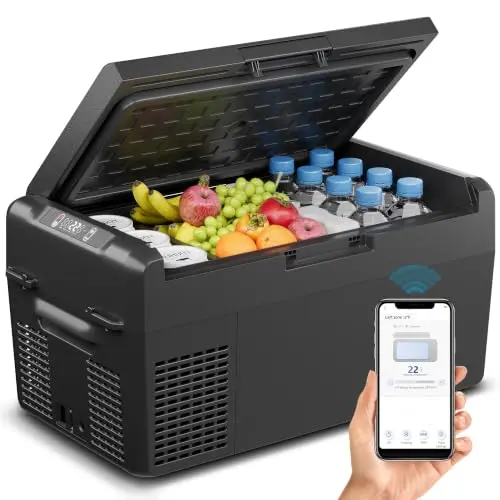
CF027-20 – 21-Quart Freezer with 50-Hour Cold Hold
A 21-quart compressor freezer with phone control, four anti-shake anchor points, and a claimed 50 hours of cold retention with the included ice pack. Runs on 12/24V DC and AC.
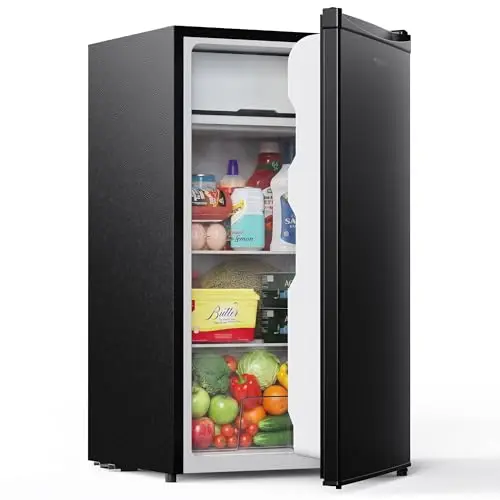
BR321 – 3.2 Cu Ft Sleeper-Cab Refrigerator
A 3.2 cu ft upright with a separate 0.3 cu ft freezer, two adjustable glass shelves, a crisper drawer, and a reversible door. Household AC only – it needs an inverter or shore power in the cab.
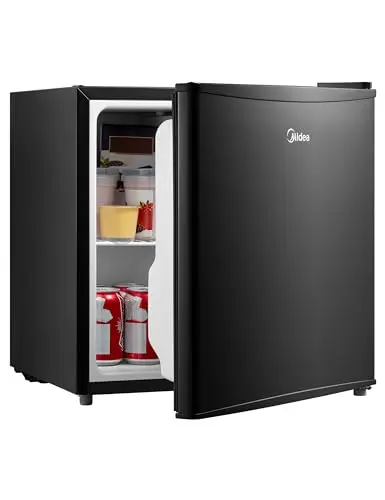
WHS-65LB1 – Compact 1.6 Cu Ft Fridge for Tight Sleepers
A 1.6 cu ft compact fridge with a mechanical thermostat, reversible door, removable glass shelf, and a chiller box for fast drink cooling. Household AC power.
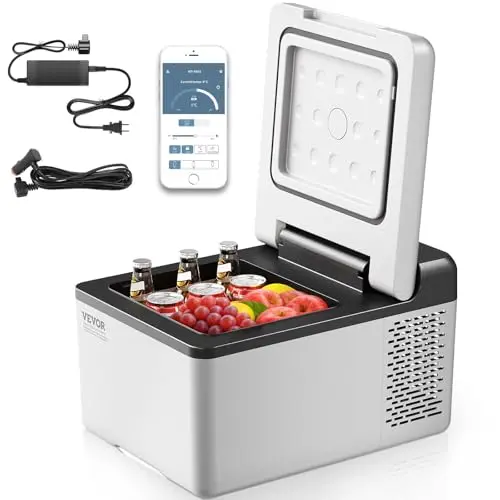
C9 – 10-Quart Mini Freezer for Day Cabs
A 10-quart compressor fridge with a touch panel, USB charging port, three-level battery protection, and stability up to a 45-degree tilt. Runs on 12/24V DC or AC.
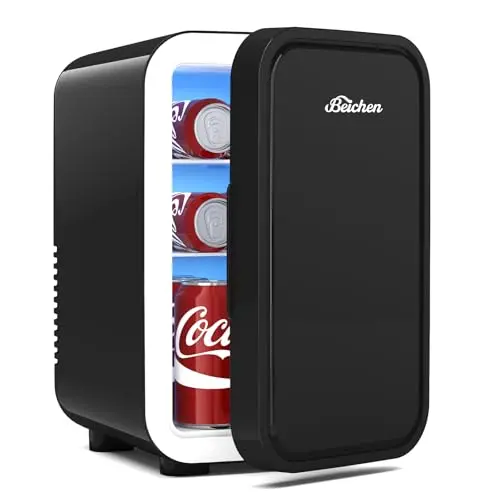
MAF-6L-H – 6-Liter Cooler and Warmer for the Cab
A 6-liter thermoelectric cooler and warmer with both AC and DC cords, capable of holding up to 149F in warming mode. It is not a compressor fridge.
How We Evaluated These Mini Fridges for Truck Drivers
We didn’t spend a full season living out of these fridges in a sleeper cab. What we did: cross-referenced 8 mini fridges from 7 brands across six decision axes – power source, cooling method, usable capacity, footprint against typical bunk and day-cab dimensions, battery-drain protection, and mounting security. We triangulated published specifications, feature sets, owner feedback where available, and use-case fit against realistic driver scenarios, from an overnight at a truck stop to a week of back-to-back runs.
The scoring framework weighted real-world fit for a working driver (70%) – whether the unit holds temperature overnight, survives being strapped down and bounced around, and keeps its draw low enough to protect a starting battery – against feature differentiation (30%) – the design choices that separate one model from another, whether that’s app control, tie-down points, or a true freezer compartment. We benchmarked capacity claims against physical dimensions and pressure-tested the marketing on cooling speed against what owners actually describe. We have no commercial relationship with any brand here; recommendations track fit and differentiation, not brand preference.
The honest limit: this review didn’t involve instrumented temperature logging or a road test. It’s built on manufacturer specifications, published feature documentation, and aggregated owner experience. If you want the most purpose-built truck unit, the CRPRO 30 is it; if quiet running is the priority, the CFC-18 runs noticeably softer.
How to Choose the Right Mini Fridge for Truck Drivers
1. 12V Compressor Fridges vs AC Mini Fridges for Truck Drivers
There are two honest paths, and the right one depends on how your truck is wired. 12V compressor fridges – chest-style units like the CRPRO 30 – run straight off the truck’s DC system, tolerate voltage sag, and are built to be strapped down. They’re narrower in shape, sealed with a top lid, and designed around the fact that your power source comes and goes.
AC mini fridges are the upright, door-swinging kind. They give you more usable volume per inch, real shelves, and better organization, and they cost less for the capacity. The catch is power: they need an inverter or shore power, and a low-output inverter will struggle to start a compressor. If your rig has a proper inverter and a permanent spot for a fridge, the BR321 is a legitimate sleeper-cab refrigerator. If you’d rather not depend on an inverter at all, the CR22 runs on the truck’s 12V directly.
2. Why Compressor Cooling Beats Thermoelectric in a Hot Cab
Thermoelectric coolers use a Peltier plate, and their weakness is physics: they can only pull a fixed amount below the air around them. In a cab baked to triple digits, that’s a cooler that holds drinks merely cool – not food-safe, and nowhere near freezing. Compressor fridges work against an absolute target instead, which is why they’re rated to specific temperatures and can hold them regardless of how hot the cab gets.
That’s the biggest spec to check on any listing. If it only promises a drop “below ambient,” you’re looking at thermoelectric cooling, which won’t cut it in July. If it names a target like -4F to 68F, it’s a compressor unit and it’ll behave.
3. Battery Protection and Overnight Draw for Truck Drivers
Every 12V fridge here runs on a duty cycle – the compressor kicks on, chills, then rests. Real-world draw lands well under a kilowatt-hour a day in eco modes, which matters when you’re parked for a ten-hour reset. Look for three-level battery protection: it lets you choose the voltage at which the fridge shuts itself off, so it never strands you with a dead starting battery.
If your truck cuts accessory power when the engine’s off, insulation and cold retention become the spec that matters most. A unit with an included ice pack and heavy walls coasts through the gaps instead of warming up every time the power drops. Pair that with a modest eco mode draw and you can stretch an overnight on the starting battery alone.
4. Sizing a Mini Fridge to Your Sleeper Cab and Bunk
Measure the space before you fall in love with a capacity number. Three dimensions decide everything: height (does it clear the bunk shelf), depth (does it block the aisle), and how the lid or door opens. A top-lid chest needs clear air above it; a door-swing unit needs room to swing, and a reversible door helps in tight corners.
Rough guide: a 10-quart box handles drinks and snacks for a day or two. Something in the 19 to 30-quart range covers several days of real food. A 3.2 cu ft upright is a week’s groceries plus a small freezer, but it stands over three feet tall and wants a permanent install.
Don’t overlook mounting. Tie-down points or anchor holes matter more than most shoppers expect – an unsecured fridge becomes a projectile on a hard brake.
5. How Quiet Is Quiet Enough in a Truck Cab
Ratings in this category run from the high 30s to the mid 40s in decibels, and the difference isn’t academic when the fridge sits two feet from your pillow. A unit at 38 to 42 dB is generally unobtrusive. Mid-40s is audible when the compressor cycles at night, especially in a quiet cab.
Two things matter as much as the number: how often the compressor cycles, and where you put the unit. A well-insulated fridge that holds temperature runs less often, and setting it a few degrees warmer overnight – still food-safe – cuts cycling further.
6. Reading the Price Tiers on Truck-Friendly Fridges
Pricing splits roughly into three bands. Entry tier gets you a small thermoelectric cooler or a compact AC fridge – fine for drinks, limited for real food. Mid-range is where 12V compressor units live, and it’s the sweet spot for most drivers: real freezing, battery protection, and a footprint that fits a bunk.
Premium buys capacity, deeper insulation, app control, and the mounting hardware that keeps a heavier box locked down. Pay for what you’ll actually use. If you’re parking with shore power most nights, the WHS-65LB1 covers drinks and basics at entry-level money and tucks under almost anything.
Frequently Asked Questions
1. What's the difference between the BougeRV CRPRO 30 and the EUHOMY CFC-18?
They’re the two ends of the 12V sweet spot. The CRPRO 30 is the bigger box – 30 quarts, a true freezer range, and four tie-down points molded into the shell, plus a storage box sized for a power station. Buy it if you’re hauling a week of food and want the fridge locked down.
The CFC-18 is 19 quarts and trades capacity for app control, a 42 dB rating, and a magnetic lid that seals firmly for constant opening. Buy it if quiet and remote control matter more than volume. Both run on DC or AC and both offer battery protection; the CRPRO simply holds more and mounts more securely.
2. Can I run a mini fridge overnight in my truck without draining the starting battery?
Usually yes, if the fridge has three-level battery protection and you’re realistic about capacity. Set the cutoff to the highest setting, use eco mode, and expect the compressor to run on a duty cycle rather than constantly. A modest 12V unit pulls well under a kilowatt-hour a day at those settings.
If you’re parked for multi-day resets, the safer architecture is a small unit like the CR22 paired with a dedicated battery or power station, so the starting battery never carries the load at all.
3. Is a 12V fridge better than an AC mini fridge for a truck driver?
For most drivers, yes – a 12V compressor fridge removes the inverter from the equation entirely and is built for a space that moves. AC mini fridges still make sense if your truck has a solid inverter and a permanent spot: you get more usable volume, real shelves, and a separate freezer for less outlay per cubic foot. The deciding question is simple – will the fridge have reliable AC power every night, or not?
4. BougeRV CR22 or Feelfunn 21QT for a sleeper cab?
The CR22 wins on fast cooling and a lighter, more compact body. It drops to fridge temps in about 15 minutes and weighs roughly 22 pounds, which matters if you move it often.
The Feelfunn wins on cold retention – its ice pack and insulation are rated to hold contents for up to 50 hours unpowered, which is the better answer if your truck cuts accessory power overnight.
5. How much fridge space does a truck driver actually need?
Think in days, not quarts. A 10-quart box covers drinks and snacks for a day or two. 19 to 23 quarts is a realistic few days of food. 30 quarts gets you close to a week, and a 3.2 cu ft upright handles a week plus frozen goods. Overbuying is common: a bigger box eats cab space and takes longer to cool when it’s half empty.
Final Verdict
For most drivers, the CRPRO 30 is the answer. It’s the only unit here built around the realities of a working truck – four anchor points, a storage box that swallows the cords, freezer capability, and a shell that doesn’t care about rough pavement. If your rig runs an inverter and you want a real refrigerator with a separate freezer, the BR321 is the sleeper-cab upgrade. Watching every dollar? The WHS-65LB1 gets you a genuine compressor fridge in a footprint that fits almost anywhere. And if cab space is the binding constraint, the C9 is small enough to live on the passenger floor and still keeps drinks properly cold.
