
Best Moka Coffee Makers – 2026 Reviews

There’s a specific sound a moka pot makes just before the coffee is done – a soft gurgle that tells you to kill the heat. Getting to that moment with a cup you actually want to drink comes down to the pot itself: how evenly the base heats, how cleanly the two halves seal, and whether the thing is sized for the amount of coffee you actually drink in a morning.
The failure modes are consistent and boring. Thin-walled pots scorch the grounds before the water ever reaches them. Pots with sloppy seams leak steam, the pressure never builds, and you end up with brown water. Neither problem is about your technique – both are design problems you can spot before you buy.
We compared moka coffee makers across major brands – aluminum classics, stainless induction-ready pots, and a glass-topped model you can actually watch work – and sorted them by what each one is genuinely good at. Whether you’re pulling a single demitasse before work or filling a carafe for guests, there’s a pot in here that fits your burner and your batch size.
Best Moka Coffee Makers – 2026 Reviews
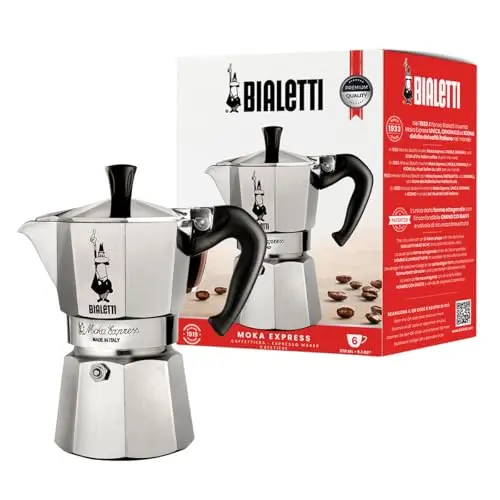
Moka Express – The Original Italian Stovetop Brewer
The pot that started the category and still the reference point. The Moka Express has been made in Italy since the 1930s with the same faceted aluminum body, and it brews six espresso-cup servings in a single go. A patented safety valve releases pressure if the bottom chamber clogs, the handle stays usable while the base is hot, and it works on gas and electric burners – induction needs Bialetti’s separate adapter plate. Rinse with water, skip the detergent, and that’s the entire maintenance routine.

Diego – 12-Cup Stainless Built for Induction
A twelve-cup stainless steel moka pot built for households that brew for a table. The Diego is 18/8 stainless with a mirror-polished body and a heavy magnetic base that works on gas, electric, and induction burners alike. The lid and handle use a hollow insulated design so they stay comfortable through the pour, a safety valve handles pressure, and an included coffee reducer lets you brew a smaller batch without over-extracting. Unlike the aluminum pots here, it’s dishwasher safe.

Venus – Compact Induction-Ready Steel
The Venus is Bialetti’s stainless answer to its own aluminum classic: 18/10 steel, a four-cup body that fits small kitchens, and compatibility with every hob including induction – no adapter plate required. The polished finish and cleaner lines make it the more modern-looking pot on the shelf, and the smaller footprint heats quickly on a single burner. Rinse only, no detergent, no dishwasher.

Milano – Nine-Cup with Burn Guard
A nine-cup aluminum pot that leans into safety and comfort details. The Milano uses an enlarged soft-touch handle, a burn guard around the base, an Italian safety valve, and a reusable filter screen that lifts out for washing. It brews on gas, electric, and camping stoves, and its capacity lands squarely between a personal pot and a crowd-sized one. Hand wash only.

Classic Stovetop Espresso – Six-Cup Workhorse
A cast aluminum six-cup moka pot that does the fundamentals without charging for them. The Primula brews on electric, ceramic, and gas burners – including propane camp stoves – with a flip-top lid, a heat-resistant knob and handle, and a reusable filter. It’s offered in five sizes, comes with a one-year limited warranty, and rinses clean in warm water.

Stovetop Espresso Maker – Minimalist Six-Cup Build
A minimalist six-cup aluminum pot with the safety basics covered. Bellemain keeps the design plain – no busy graphics, just an uncoated aluminum body that heats quickly and evenly. Stay-cool handles and a lid knob protect your fingers, and a pressure valve regulates internal temperature during the brew. It makes up to six two-ounce demitasse servings on any gas or electric stovetop.

Aluminum Stovetop Espresso Maker – Entry-Level Cuban Classic
The budget entry point into stovetop moka brewing, and a long-standing favorite for Cuban coffee. Imusa’s six-cup aluminum pot has a cool-touch bakelite handle and knob, a flip-up top lid, and a side pour spout for controlled serving. It sits on gas, ceramic, and electric coil burners, and its compact body packs easily for camping or a cramped kitchen.

Moka Pot – Matte Black with Wood-Tone Handle
A six-cup aluminum moka pot that leans on looks. The Mongdio pairs a matte black body with a wood-tone handle and knob, plus a heat-resistant grip, a built-in safety valve, and a pour spout. It’s available in three-, six-, nine-, and twelve-cup sizes, brews on standard stovetops in a few minutes, and carries a two-year guarantee. Rinse only – no dishwasher.

Glass-Top Moka Pot – Watch the Brew Rise
The only pot here with a borosilicate glass top, which lets you watch the coffee rise and cut the heat at exactly the right moment. The SIXAQUAE pairs that glass chamber with 304 food-grade stainless steel, a BPA-free heat-resistant handle, and an Italian safety valve, and it works on induction, ceramic, gas, and electric burners. Six-cup capacity, roughly 240 ml.
How We Evaluated These Moka Coffee Makers
We didn’t line these pots up on a gas range and pull shots side by side. What we did: cross-referenced nine moka coffee makers from eight distinct brands across five decision axes – capacity in espresso cups, body material and wall thickness, stovetop compatibility, cleaning and maintenance requirements, and handle and lid safety design. We triangulated published specifications, feature sets, and owner feedback where available, then mapped each pot against the buyer profile it actually suits: the solo commuter, the two-person household, the induction kitchen, the camper.
The scoring framework weighted real-world brewing fit (70%) – how reliably a pot turns out a clean cup on the stovetop you own – against feature differentiation (30%), meaning the details that separate one pot from another rather than the features everyone claims. We audited capacity claims against espresso-cup sizing so a six-cup pot isn’t mistaken for six mugs, and we weighed sealing and gasket design heavily, since that’s where most moka frustration starts. We have no commercial relationship with any brand featured here; recommendations track fit and differentiation, not brand preference.
What we can’t tell you is how any of these hold up after a year of daily brewing, or which handle fails first on your specific burner. That isn’t something we can test from a desk. If you want the safest all-around choice, the Bialetti Moka Express is it; if you cook on induction and brew for a group, the Easyworkz Diego is the better match.
How to Choose the Right Moka Coffee Maker
1. Aluminum vs. Stainless Steel Moka Coffee Makers
Most pots here are aluminum, and that’s not an accident. Aluminum conducts heat quickly and evenly, which is exactly what you want when water needs to climb through a bed of grounds at a controlled pace. The tradeoff is maintenance: aluminum is reactive and stains easily, and detergent or a dishwasher will strip the surface and leave a metallic taste in the next pot. Rinse with water only and dry it fully before reassembly.
Stainless steel pots cost more but solve most of that. They’re non-reactive and won’t develop a patina, they handle induction burners natively, and they tolerate being left on heat a beat too long. What they give up is a little thermal responsiveness – stainless heats more slowly than aluminum, so you’ll pull the pot off the burner slightly earlier. If you brew daily and hate fussing, the Bialetti Venus is the compact stainless route; if you want the traditional flavor profile, stay with aluminum.
2. Match Your Moka Coffee Maker to Your Stovetop
This is the spec that disqualifies more pots than any other. Aluminum models work on gas, electric coil, and ceramic – but not on induction, because aluminum isn’t magnetic. Bialetti sells a separate adapter plate for its aluminum pots; most other brands don’t offer a solution at all. If you have an induction range, look for a magnetic stainless base and verify it in the listing, since some pots described as stainless turn out to have aluminum chambers.
Campers should check for propane and camp-stove compatibility in the specs, which most aluminum pots handle fine. And if you’re buying for a rental or a shared kitchen, multi-hob compatibility matters more than capacity. When induction is your setup and you brew for several people, the Easyworkz Diego is the straightforward pick.
3. How Espresso-Cup Sizing Actually Works
Every capacity figure on a moka pot is measured in espresso cups, not mugs. One espresso cup is roughly two ounces, so a six-cup pot yields about twelve ounces of very strong coffee – enough for two people, or one person who likes a big morning cup. A twelve-cup pot isn’t for twelve people at breakfast; it’s for a table of four who each want a strong small pour.
The practical rule: count the people, then divide by two. Buying oversized and brewing half-batches works poorly, because the water-to-coffee ratio gets hard to control and the pot extracts unevenly when underfilled. Better to own the right size. If you genuinely need both, look for a pot with a coffee reducer insert that lets you cut the batch without changing your grind.
4. Cleaning Rules That Keep Your Moka Coffee Maker Tasting Right
Moka pots are the rare kitchen item where less cleaning is correct. Rinse every component in warm water, wipe out the gasket channel, and dry everything completely before you screw the halves back together. Detergent is the enemy – it leaves residue in the porous surface of aluminum and flavors the next several brews. Dishwashers are worse: the heat and detergent degrade the gasket and oxidize the metal, and most manufacturers void coverage if you go that route.
The one exception in this lineup is the Easyworkz Diego, which is dishwasher safe because it’s stainless throughout. Everything else is hand wash. A gasket that’s gone stiff or brittle is the usual culprit behind a pot that suddenly leaks, and replacement gaskets are cheap – worth keeping a spare in the drawer.
5. Seals, Valves, and Handles: What Separates a Good Moka Pot
Three details decide whether a pot is pleasant or infuriating. The gasket and seam: if the two halves don’t seat cleanly, steam escapes and the coffee comes out weak and watery. The safety valve should be removable for cleaning and should release predictably rather than whistling. The handle: it should be cool enough to grab bare-handed and attached with hardware that doesn’t loosen.
Handles are also the most common failure point across the category, especially on budget aluminum pots. If you’re hard on equipment, look for an oversized handle with a burn guard or a stainless body. Value shoppers who just want the basics done properly should look at the Primula Classic, which covers the fundamentals for a modest outlay.
6. What You Get at Each Price Tier
Entry-level pots get you working aluminum, a safety valve, and a handle. What they often lack is a durable handle attachment, a removable filter, and any real warranty. That’s fine if you’re testing whether moka brewing fits your routine.
Mid-range pots add better materials, cleaner seams, and sometimes stainless construction. Premium pots layer on induction compatibility, dishwasher-safe stainless, larger capacities, and longer coverage. The gap that actually matters isn’t flavor – a well-brewed entry pot tastes close to a premium one – it’s how long the pot stays pleasant to use.
Frequently Asked Questions
1. Bialetti Moka Express vs. Easyworkz Diego: which moka coffee maker should you buy?
They solve opposite problems. The Bialetti Moka Express is a six-cup aluminum pot built around speed and simplicity – it heats fast, rinses in seconds, and produces the traditional Italian profile. The Easyworkz Diego is a twelve-cup stainless pot built around volume and durability: induction-ready, dishwasher safe, and slower to heat but far harder to damage.
Choose the Bialetti if you brew for one or two people on gas or electric and want the classic routine. Pick the Easyworkz if you have an induction range, brew for a group, or simply want to stop worrying about patina and hand washing.
2. Bialetti Venus vs. Grosche Milano: stainless or aluminum?
The Venus is stainless steel and compact – four cups, induction-ready without an adapter, and forgiving if you leave it on the heat too long. The Grosche Milano is aluminum and larger, with nine cups of capacity, an oversized soft-touch handle, and a burn guard that makes it friendlier for someone new to stovetop brewing.
The deciding question is your stovetop and your batch size. Induction plus one or two drinkers points to the Venus. A gas or electric range plus a household that drinks more points to the Milano. Note that aluminum needs rinsing only, while stainless tolerates a bit more neglect.
3. Do moka coffee makers work on induction cooktops?
Only if the base is magnetic. Aluminum pots won’t work on induction at all unless you buy a separate adapter plate – Bialetti sells one for the Moka Express, and most other aluminum brands offer no solution. Stainless steel pots work natively as long as the base is magnetic stainless rather than a sandwich with an aluminum core.
If you’re on induction, restrict your search to pots that say so explicitly. The Bialetti Venus is four cups and induction-ready out of the box, while larger stainless pots like the Easyworkz Diego handle bigger batches. Check the base material, not the product title.
4. Why does my moka pot coffee taste burnt or bitter?
Usually it’s heat, not the pot. Coffee that sputters and spits out the top has been overheated, and water that’s too hot extracts harsh compounds. Keep the flame low enough that the coffee rises in a slow, steady stream, and pull the pot off the moment it starts to gurgle.
The second cause is packing. Never tamp the grounds; fill the filter basket level and leave it loose. Third is the pot itself: old detergent residue or a worn gasket leaves a metallic or rubbery note regardless of technique. Rinse with water only and replace a stiff gasket.
5. Are moka coffee makers dishwasher safe?
Almost none of them. Aluminum pots should never go in a dishwasher – the detergent oxidizes the surface, the heat degrades the gasket, and most manufacturers void coverage if you try. Rinse with warm water and dry fully before reassembly.
The exception in this lineup is the Easyworkz Diego, which is stainless and explicitly dishwasher safe. Even there, hand drying keeps the mirror finish intact longer.
Final Verdict
For most people, the Bialetti Moka Express is the answer. It’s the pot that defined the format: fast, even heat, a rinse-only cleanup, and a routine you can run half asleep. Buy the size that matches your household and you probably won’t think about moka pots again.
If you cook on induction or routinely brew for four or more, the Easyworkz Diego is the better call – twelve cups, stainless throughout, dishwasher safe, and no adapter plate to hunt down. And if you want a solid six-cup pot without spending much, the Primula Classic covers the fundamentals and is the one pot here that happily runs on a camp stove.
Match the pot to your burner and your batch size, and the coffee takes care of itself.
