
Best Multi-Use Coffee Makers – 2026 Reviews

Most coffee routines are not one thing. Monday is a rushed mug, Saturday is a slow second cup, and guests show up wanting a full pot. That is where multi-use coffee makers earn their counter space: they let one machine handle more than one format, strength, or serving size without making you buy a second brewer.
The trick is separating real flexibility from spec-sheet noise. A genuinely multi-use coffee maker should change how you brew, not just how much. Look for dual brew paths like single-serve plus carafe, pod-plus-grounds compatibility, or brew styles that cover hot, iced, and specialty drinks. Capacity and cleanup matter just as much, because a flexible machine that is annoying to fill or descale stops feeling flexible fast.
We compared the lineup across those axes to find the machines that actually adapt to different mornings. Some are built for pod people who occasionally want a carafe; others are ground-coffee-first machines with a small-batch setting. The right pick depends on which kind of variety you will use most.
Best Multi-Use Coffee Makers – 2026 Reviews
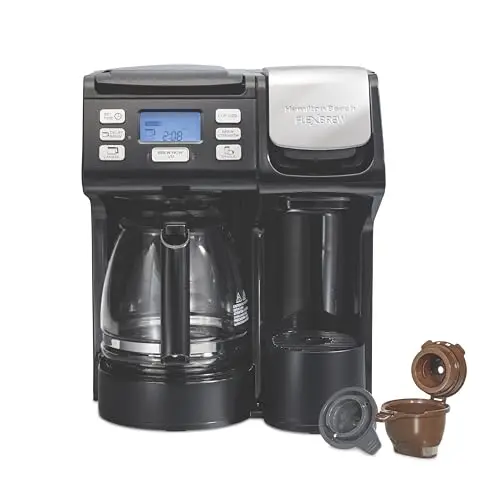
FlexBrew Trio 49902JN – Pod, Grounds, and Carafe Versatility
A three-way brewer that handles K-Cup pods, ground coffee in a single-serve basket, and a full 12-cup carafe. The removable 56-oz reservoir and 90-second single-cup brew make it a strong fit for mixed households.
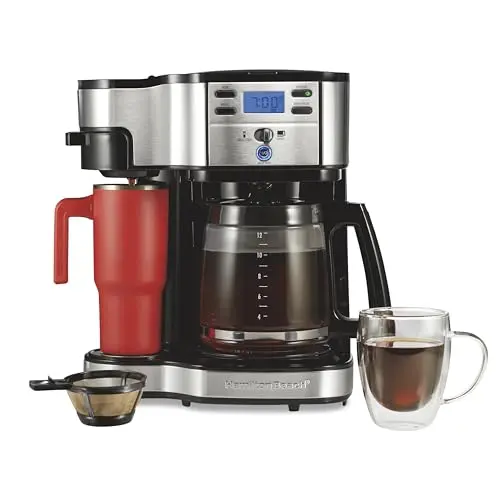
2-Way Programmable 49980RG – Single Serve and 12-Cup Flexibility
A straightforward two-way brewer that makes up to 14 oz in the single-serve side with ground coffee and up to 12 cups in the glass carafe. Separate reservoirs, bold/regular settings, and 24-hour programming keep the routine simple.
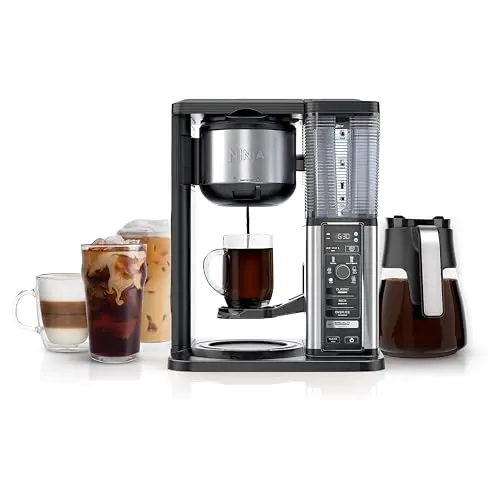
Specialty CM401 – Carafe, Single Cup, and Frother
A specialty brewer with six sizes from a single cup to a full carafe, four brew styles, and a fold-away frother. It handles classic hot coffee, over-ice brewing, and concentrated specialty brews without pods.
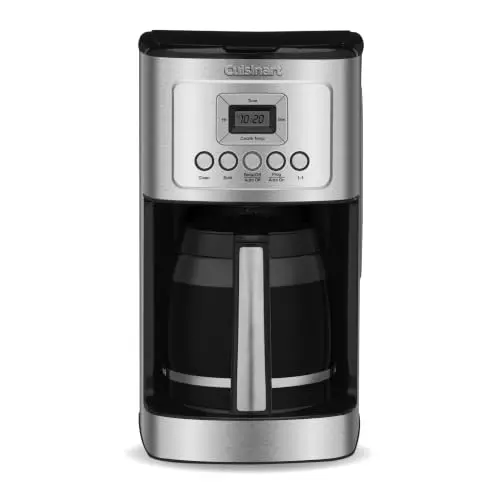
PerfecTemp 14-Cup DCC-3200 – Hotter Brewing for Full Pots
A 14-cup programmable drip brewer built around hotter brewing and an adjustable warming plate. It adds regular/bold strength, a 1-4 cup small-batch setting, and a self-clean cycle.
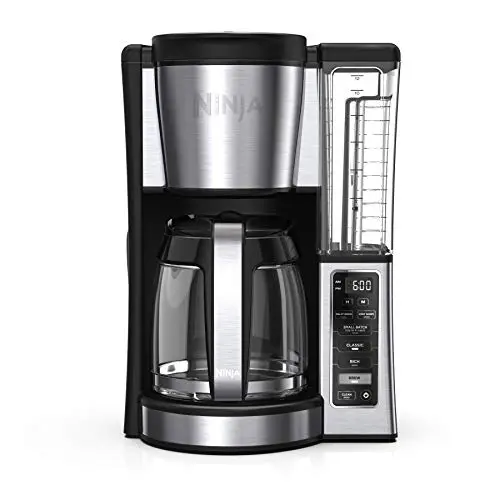
Fresh Brew CE251 – Programmable 12-Cup with Small Batch
A 12-cup programmable brewer with Classic and Rich settings, a small-batch function, and an adjustable warming plate. The removable 60-oz reservoir and mid-brew pause add daily convenience.
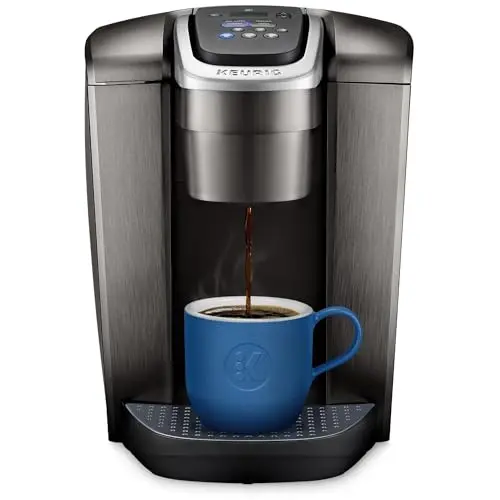
K-Elite – Single-Serve with Iced and Hot Water Options
A single-serve K-Cup brewer with five cup sizes, strong brew, an iced setting, and hot water on demand. The large removable reservoir and programmable controls make it a flexible daily machine.
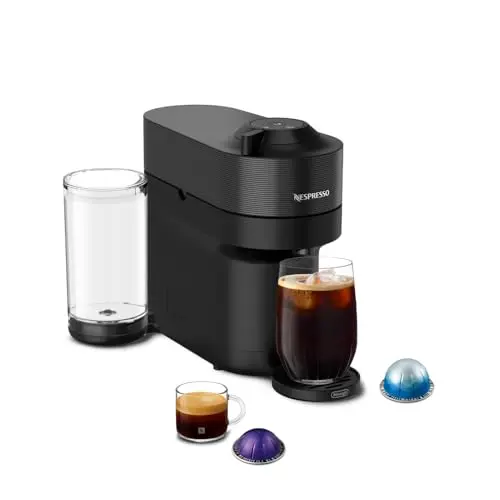
Vertuo Pop+ – Compact Espresso and Coffee
A compact Vertuo capsule machine that brews coffee and espresso in five sizes, including hot or iced. It heats up quickly and uses a side-mounted removable water tank.
How We Evaluated These Multi-Use Coffee Makers
We did not run controlled kitchen lab tests or long-term reliability trials. What we did: cross-referenced seven multi-use coffee makers from five brands across five decision axes – brew formats, capacity, brew controls, maintenance, and footprint. We mapped published specifications, feature sets, owner feedback where available, and use-case fit against common routines like solo-cup mornings, full-pot weekends, and pod-plus-grounds households.
The scoring framework weighted real-world performance (70%) – how well each machine delivers on its stated multi-use promise – against feature differentiation (30%) – unique brew formats, controls, and convenience features that separate one model from another. We have no commercial relationship with any of the brands featured; recommendations track fit and differentiation, not brand preference. If you want pods, grounds, and a full carafe in one machine, the FlexBrew Trio is the closest match; if you want specialty and iced coffee from grounds, the Ninja Specialty CM401 is the better route.
We weighed brew-format flexibility heavily because that is the core of this category. Capacity and reservoir design mattered next, followed by strength and temperature controls, then cleaning routines and counter footprint. A machine that brews three ways but is hard to fill or descale loses ground to a simpler design that fits daily life. We also audited pod compatibility and ground-coffee support where the manufacturer publishes it, and we kept durability notes in view without treating isolated complaints as a verdict. The result is a practical shortlist for buyers who want one machine to do more than one job.
How to Choose the Right Multi-Use Coffee Makers
1. What Makes a Coffee Maker Genuinely Multi-Use
Multi-use should mean more than a programmable timer. The strongest machines change either the brew format (single serve versus carafe), the coffee source (pods versus grounds), or the drink style (hot, iced, specialty, espresso). A 12-cup drip brewer with a clock is convenient, but it is not truly multi-use if it only makes one kind of pot.
Look for a clear second path you will actually use. If you drink one cup on weekdays and a pot on weekends, a single-serve plus carafe design is the most practical kind of multi-use. If you like lattes or iced coffee, brew-style controls and a frother may matter more than a second reservoir. The feature only counts if it fits your routine.
2. Brew Formats: Single Serve, Carafe, Pods, and Grounds
The biggest split is between single-serve brewing and full-carafe brewing. Machines like the FlexBrew Trio cover both, and they add pod support for people who want speed without giving up a carafe. Ground-coffee-only models can be just as flexible if they offer a small-batch setting and a single-cup basket, but they won’t satisfy pod loyalists.
Pod compatibility is convenient, yet it also locks you into a capsule ecosystem or a reusable filter. If you prefer bagged grounds, prioritize a machine with a permanent filter and a clear single-serve path. If you want both, check whether the pod side and carafe side use separate water reservoirs, because that design is usually easier to live with.
3. Capacity and Footprint: Matching Multi-Use Coffee Makers to Your Counter
Capacity is not just about how many cups you can brew; it is about how often you refill. A large removable reservoir is a daily quality-of-life feature on single-serve machines, while a 12- or 14-cup carafe makes more sense for households that brew for several people. Measure your counter depth before you fall for a feature set, especially if the machine has a side tank or a tall brew head.
Think about the tallest cup you use. A removable drip tray or a travel-mug-friendly design can be the difference between a clean pour and a tilted mug. If the machine lives under a cabinet, check the lid and reservoir clearance as well as the base footprint.
4. Brew Controls, Temperature, and Strength Settings
Strength settings are useful when you want a bolder cup without changing beans. Temperature control matters more if you brew a full pot and expect it to stay pleasant after the first cup. An adjustable warming plate gives you some say in that, while a small-batch setting keeps short brews from tasting weak. For specialty drinks, a frother or a concentrated brew mode adds a different kind of flexibility.
If you like iced coffee, look for a dedicated over-ice mode rather than simply pouring hot coffee over ice. The difference is usually in how the brew is concentrated and cooled. For everyday hot coffee, consistent temperature and a clear strength button are more valuable than a long list of presets.
5. Maintenance and Long-Term Ownership
Multi-use machines have more parts, which means more places for coffee oils and mineral buildup to collect. A self-clean cycle or descaling reminder is not glamorous, but it is the difference between a machine that lasts and one that starts tasting stale. Remove and rinse the reservoir, brew basket, carafe lid, and pod holder on a regular schedule. If the manual calls for a charcoal filter or a specific descaling solution, follow it; those details protect both flavor and warranty coverage.
6. How to Choose a Multi-Use Coffee Maker for Your Routine
Start with the format you use most, then add one layer of flexibility. If you are a solo drinker who occasionally hosts, a single-serve machine with a carafe option is smarter than a large drip brewer. If you make full pots most days, a 12- or 14-cup machine with a small-batch setting covers the exceptions without wasting counter space. If your version of multi-use is espresso, iced coffee, and frothy drinks, prioritize brew styles and a frother over carafe size.
For most mixed households, the Cuisinart PerfecTemp is the pick when hot full pots matter, while the Ninja Specialty CM401 is better when drink variety matters. The point is not to collect every feature; it is to buy the one flexibility you will actually use every week.
Frequently Asked Questions
1. What does 'multi-use' actually mean in a coffee maker?
In this category, multi-use means the machine can brew in more than one meaningful way. That could be a single-serve side plus a carafe, pod and ground-coffee support, several brew sizes, or hot/iced/specialty modes. A standard drip brewer with a timer is convenient, but it is not multi-use if it only makes one kind of pot. The feature only counts if it changes how you brew, not just when the machine turns on.
2. What's the difference between the Hamilton Beach FlexBrew Trio and the Ninja Specialty CM401?
The FlexBrew Trio is built around three inputs: K-Cup pods, ground coffee in a single-serve basket, and a 12-cup carafe. That makes it the easier choice for a household that wants pod speed alongside full-pot capacity. The Ninja Specialty CM401 is ground-coffee-only, but it adds four brew styles, six sizes, and a fold-away frother for specialty drinks and iced coffee. If pod compatibility is non-negotiable, the FlexBrew Trio is the pick; if drink variety matters more, the Ninja Specialty CM401 is the better fit.
3. How does the Cuisinart PerfecTemp compare with the Ninja Fresh Brew CE251?
Both are full-carafe drip brewers with small-batch settings, but they emphasize different things. The Cuisinart PerfecTemp leans on hotter brewing, an adjustable warming plate, a 14-cup carafe, and a three-year warranty. The Ninja Fresh Brew CE251 counters with a removable 60-oz reservoir, Classic and Rich settings, and a simpler 12-cup footprint. Choose the Cuisinart if coffee temperature and full-pot capacity are your priorities; choose the Ninja if easier filling and a smaller counter profile matter more.
4. Is a multi-use coffee maker worth it if I mostly drink single cups?
It can be, but only if the second function solves a real problem. If you drink one cup on weekdays and host on weekends, a single-serve plus carafe machine earns its space. If you rarely make more than one cup, a compact single-serve brewer with multiple cup sizes and a strong-brew option may be the better use of counter space. The value comes from actual use, not from the number of features on the box. A multi-use coffee maker that you only use one way is just a more complicated coffee maker.
Final Verdict
For most mixed households, the FlexBrew Trio is the answer. It handles pods, grounds, and a full carafe without making you choose a single brewing style, and the large removable reservoir keeps daily use practical. If you want the simplest ground-coffee version of that idea, the Hamilton Beach 2-Way is the value-minded alternative and skips the pod ecosystem entirely. For specialty drinks and iced coffee, the Ninja Specialty CM401 is the more exciting machine, with a frother and concentrated brew mode. And if your routine is mostly full pots, the Cuisinart PerfecTemp prioritizes hot coffee and generous capacity over single-serve flexibility. Pick the flexibility you will actually use, and the rest of the lineup becomes easy to ignore.
