
Best Neck Pillows For Side Sleeping – 2026 Reviews

You wake up with a dead arm and a knot at the base of your skull, and you know exactly why. Side sleeping puts your neck in the toughest spot of any position – your ear sits well above the mattress, and the pillow either fills that gap or fights it. Most people blame the mattress when the real culprit is a pillow that’s an inch too low or an inch too high.
Two things separate pillows that actually work for side sleepers from the ones that don’t. The first is loft range – not just the height, but whether you can change it once you’ve slept on it. The second is shape, meaning whether there’s a real neck channel or shoulder cutout instead of a flat slab. Get both right and your neck stays stacked from ear to hip all night. Get either wrong and you’re back to tossing.
We looked across the market rather than down a single brand’s catalog, because the right answer depends on your shoulder width, mattress firmness, and how much fiddling you want to do. Below you’ll find picks spanning structured contours, shreddable fills, and adjustable-layer designs, with honest notes on who each one suits.
Best Neck Pillows for Side Sleeping – 2026 Reviews
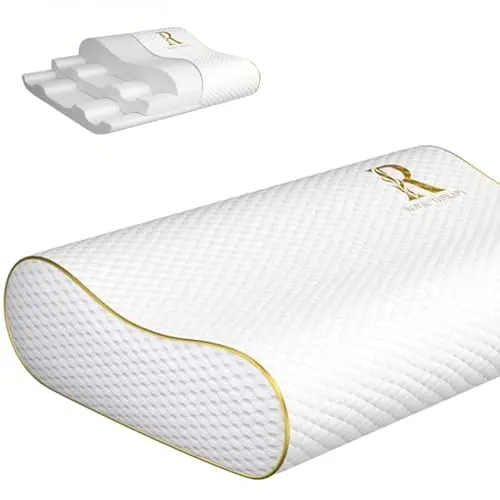
Memory Foam Contour Pillow – Shoulder-Width Support
A three-layer contour pillow with a medium-firm memory foam core and an OEKO-TEX rayon-from-bamboo cover. Pulling the middle foam layer drops the loft so you can match it to your shoulder width.
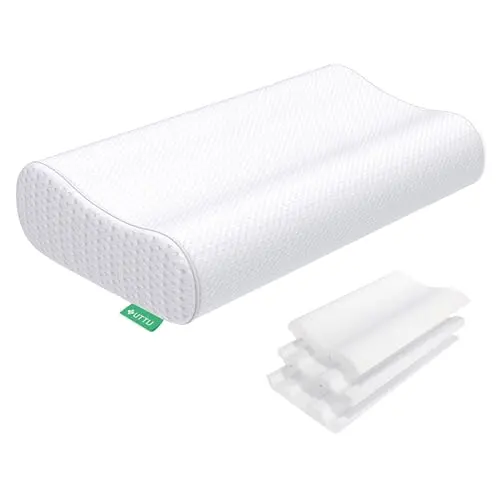
Sandwich Pillow – Adjustable Loft for Side Sleepers
A sandwich-style cervical pillow with removable middle foam, a breathable machine-washable cover, and foam that keeps its feel in cold rooms. Ships with a high and low contour so you can pick your side.
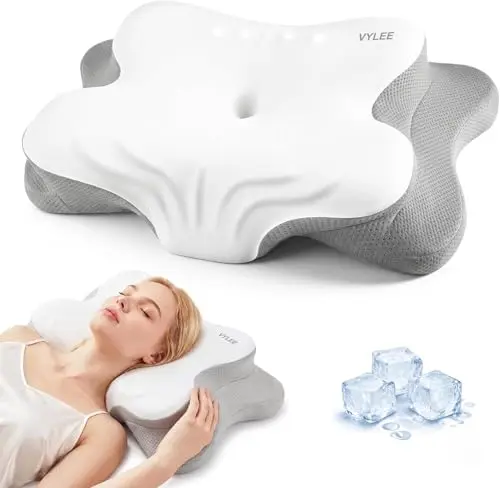
Cervical Neck Pillow – Dual-Height Butterfly Contour
A butterfly-contoured memory foam pillow with two usable heights – 3.9 inches on one side, 4.9 on the other – plus a cooling nylon-and-spandex cover that zips off for washing.

Signature Adjustable Pillow – Moldable Shredded Fill
A shredded memory foam and down-like poly blend wrapped in a bamboo-extracted rayon cover, with a bonus bag of fill so you can build the loft up until your neck sits level.
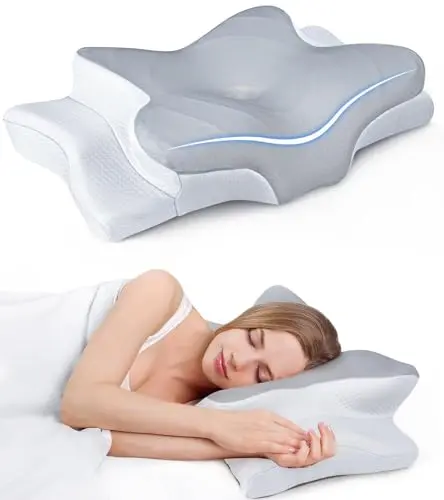
Ultra Pain Relief Cooling Pillow – Hollow Concave Contour
A hollow concave contour tilted at 15 degrees to cradle the head while the rim supports the neck. Rotate it 180 degrees or pull the bottom insert to change height, and the Q-Max cover stays cool to the touch.

Adjustable Curved Pillow – Shredded Fill Customization
A shredded-fill pillow with a curved neck channel and a removable, machine-washable cover. Extra fill is included so you can add loft for side sleeping, and the queen footprint supports the whole shoulder line.
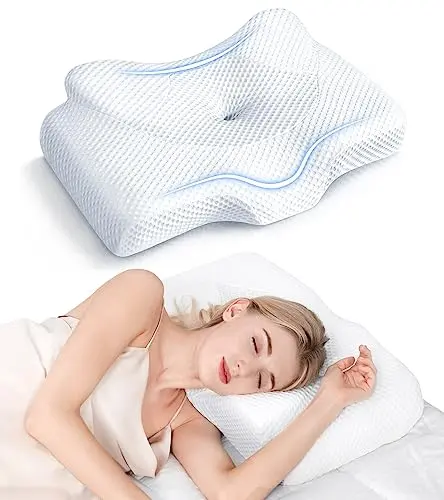
Cervical Pillow – Hollow-Center Pressure Relief
A patent-backed contour with a hollow center that cradles the head instead of pushing up against the cervical curve. Rotate it 180 degrees or remove the bottom insert to set your height.
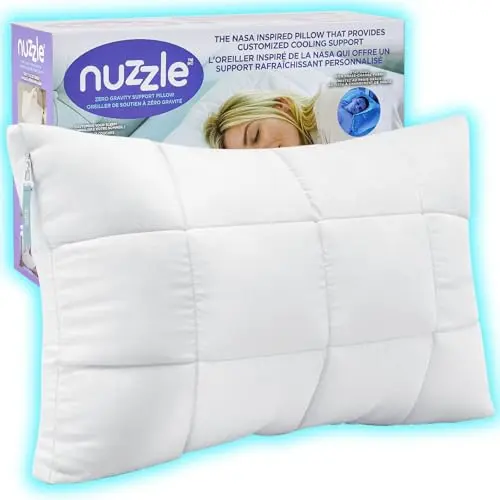
Adjustable Layer Pillow – Hotel-Soft Customization
A layer-based adjustable pillow rather than a contoured block. Use the slim layer for a soft profile or both layers for side sleeping, with a PCM fabric that absorbs and releases heat.
How We Evaluated These Neck Pillows for Side Sleeping
We didn’t run clinical sleep studies or pressure-mapping lab tests. What we did: cross-referenced 8 neck pillow models from 8 distinct brands across 5 decision axes – loft height and contour geometry, adjustability, fill material and firmness, cooling and cover breathability, and side-sleeper shoulder clearance. We triangulated published specifications, feature sets, and owner feedback where available, then mapped each pillow to how a side sleeper actually loads the neck and shoulder overnight.
Side sleeping is unforgiving. The gap between your ear and the mattress is wider than it is for back sleepers, so a pillow that’s too low drops the neck out of alignment and one that’s too high kinks it. That’s why adjustability and loft range carried the most weight in our scoring.
The framework weighted real-world fit for side sleeping (70%) against feature differentiation (30%) – things like dual-height contours, removable inserts, and cooling covers that meaningfully change the experience. We have no commercial relationship with any of the brands featured; recommendations track fit and differentiation, not brand preference. If you want the most shoulder-friendly loft range, the Royal Therapy is your match; if you’d rather dial in firmness layer by layer, the UTTU Sandwich Pillow serves you better.
How to Choose the Right Neck Pillow for Side Sleeping
1. Why Loft Height Is the Whole Game for Side Sleeping
Side sleeping creates a gap the other positions don’t. Your ear sits well above the mattress, so the pillow has to fill the space between your head and your shoulder without levering your neck up or letting it sag. A pillow that’s too low drops the neck out of line and loads the shoulder. One that’s too high kinks the neck toward your chest and strains the muscles along the back of the skull.
The practical target is a pillow that keeps your nose roughly parallel to the mattress and your spine stacked from ear to hip. That’s why loft range matters more than any single number – the right height for you depends on shoulder width, mattress firmness, and how you tuck the pillow. A high contour around 4.5 to 5 inches is a reasonable starting point for most side sleepers, but treat it as a reference rather than a rule.
2. Cervical Contour vs. Shredded Fill: Which Neck Pillow Suits Side Sleepers?
There are two broad families here. Structured contour pillows – molded memory foam with fixed ridges and a neck channel – hold their shape and give predictable support, which is why many side sleepers gravitate to them. Shredded-fill pillows mold around your head and let you add or remove stuffing to change height. The trade-off is honest: contours are more supportive but less flexible, while shredded fill is more adaptable but needs periodic re-fluffing.
If you know you need a tall, firm ledge under your neck, a structured contour like the VYLEE cervical pillow is the simpler call. If your loft needs shift with the seasons or a new mattress, shredded fill gives you room to experiment.
3. How Your Shoulder Width Should Shape the Right Pillow Height
Broad shoulders need more loft. Narrow shoulders need less. This is the most overlooked variable when people shop for a neck pillow for side sleeping, and it’s why so many pillows get returned as ‘too flat’ or ‘too tall.’ A pillow with removable layers or inserts hedges against getting this wrong, because you can subtract height after a few nights instead of guessing at checkout.
Mattress firmness compounds it. A soft mattress lets your shoulder sink, which effectively lowers the gap; a firm mattress holds you higher and may call for more loft. Judge the pillow against your own bed, not the product photos.
4. Adjustable Loft: The Feature Worth Paying For on a Neck Pillow
Adjustability is the difference between a pillow that works for a month and one that works for years. Removable middle layers, shredded fill you can top up, and rotating dual-height designs all give you a way to correct the loft after the fact.
It also protects against change. Bodies shift, mattresses get replaced, and a pillow that was perfect in winter can feel off by summer. A model like the Sidney Sleep adjustable pillow lets you re-tune rather than replace – the extra fill bag is the whole point.
5. Cooling Covers and Breathable Materials for Hot Sleepers
Memory foam traps heat, and side sleepers often notice it most because more of the face and neck rests against the surface. Breathable covers, phase-change or Q-Max fabrics, and 3D mesh weaves all help, though the effect is real but modest – no cover turns memory foam into a cool pillow. The honest expectation is a surface that feels cooler at first contact and doesn’t build heat as fast.
Look for a removable, machine-washable cover regardless of cooling claims. Washability does more for long-term freshness than any fabric technology, and it’s a feature you’ll actually use. The Cozyplayer pillow is the most cooling-forward pick here if warm nights are your main complaint.
6. Budget, Mid-Range, and Premium Neck Pillows: What Changes
At the entry level, you get solid memory foam and a basic contour, often with one adjustable layer. Move to the mid-range and you start seeing better certifications, more refined covers, and multi-layer or dual-height designs. The premium tier buys you engineered fill blends, generous spare stuffing, and covers that feel noticeably nicer against the skin.
None of that guarantees better sleep. More than one affordable contour will out-support a fancier pillow that’s the wrong height for you. Prioritize loft fit and adjustability first, then materials and cooling as budget allows.
Frequently Asked Questions
1. What's the difference between the Royal Therapy pillow and the UTTU Sandwich Pillow?
Both are three-layer contours with removable middle foam, but they solve different problems. Royal Therapy leans firmer and uses CertiPUR-US foam with an OEKO-TEX bamboo cover, so it feels more structured. The UTTU Sandwich Pillow runs slightly softer, adds dynamic foam that doesn’t harden in cold rooms, and gives a wider adjustable range down to about 3.2 inches.
If you want maximum firmness control, go Royal Therapy; if you want a softer contour with a broader loft range, UTTU is the one.
2. How does the DreamyBlue Signature compare to the Sidney Sleep adjustable pillow?
Both use shredded fill, so both are highly customizable. The DreamyBlue Signature blends shredded memory foam with down-like poly tufts and includes a bonus bag of fill, which makes it the more premium, moldable option. The Sidney Sleep adds a curved neck channel to its shredded fill, so it supports the neck more deliberately while still letting you adjust loft.
Choose DreamyBlue for a soft, cloud-like feel and Sidney Sleep if you want a curve built into the shape.
3. How thick should a neck pillow be for side sleeping?
Start around 4.5 to 5 inches of loft at the neck and adjust from there. The real test isn’t the number – it’s whether your nose stays roughly parallel to the mattress and your spine reads straight from ear to hip.
Broader shoulders and firmer mattresses tend to need more height; narrow shoulders and soft mattresses need less. A pillow with removable layers or fill is the safest purchase because you can correct the height after a few nights.
4. Can a contour neck pillow help with arm numbness from side sleeping?
Often, yes – but indirectly. Arm numbness usually comes from shoulder pressure or a neck angle that compresses nerves, both of which a properly lofted contour can reduce by keeping your spine aligned and taking load off the shoulder. A hollow or channeled design, like the Osteo, can further ease pressure at the base of the skull.
It’s not a medical fix, though. If numbness persists, it’s worth talking to a clinician.
5. Do cooling covers actually make a difference for side sleepers?
They help, but modestly. Q-Max and phase-change fabrics feel cooler at first contact and slow heat buildup, and 3D mesh weaves improve airflow. What they don’t do is turn a heat-trapping foam core into a genuinely cool surface.
Treat cooling as a comfort bonus rather than the main reason to buy, and prioritize a removable, washable cover over any specific fabric claim.
Final Verdict
For most side sleepers, the Royal Therapy is the answer – it pairs a three-layer loft you can actually tune with a firm, shoulder-friendly contour that holds alignment overnight. If you’d rather adjust firmness in smaller increments, the UTTU Sandwich Pillow gives you a wider loft range for less, and it’s the better value of the two. And if you want a moldable pillow you can build up until your neck sits level, the DreamyBlue Signature is purpose-built for that.
The honest takeaway: height beats brand. Get the loft right for your shoulders first, then let materials and cooling decide the rest.
