
Best Neck Support Pillows For Back Sleepers – 2026 Reviews

Back sleeping sounds simple until you wake up with a stiff neck because your pillow pushed your chin toward your chest or let your head roll off a too-soft edge. The right neck support pillow for back sleepers keeps the head in a neutral line with the spine, supports the cervical curve, and leaves enough room for the shoulders without forcing the neck into a high wedge.
The useful dividing lines are loft and contour shape. Adjustable or dual-height pillows let back sleepers fine-tune the neck roll instead of guessing, while the contour style matters: a shallow center cradle can feel stable, but too aggressive a hollow can feel restrictive. Cooling covers and washable cases are practical bonuses, not the main event. Our cross-brand guide focuses on those fit decisions so you can pick from the market rather than from one brand’s lineup.
Best Neck Support Pillows for Back Sleepers – 2026 Reviews
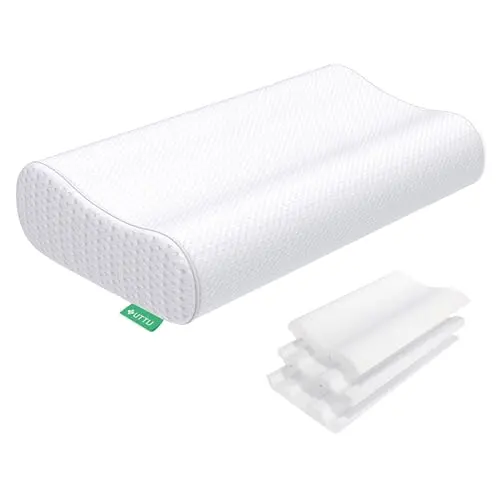
Sandwich Pillow – Adjustable Cervical Support
A three-layer memory foam cervical pillow with a high and low contour. Removing the middle layer lowers both sides, which gives back sleepers a useful range without buying a second pillow. The cover is breathable and machine washable.
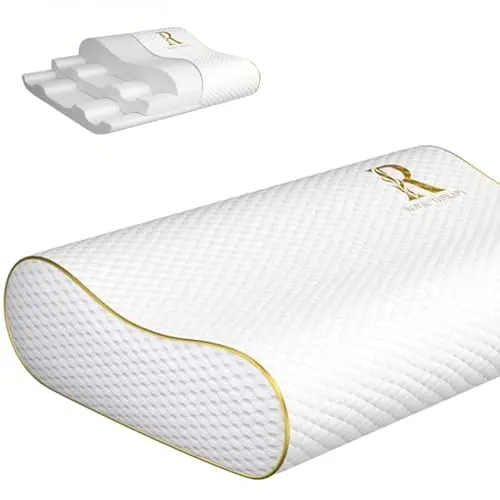
Memory Foam Cervical Pillow – Adjustable Loft
A medium-firm contour pillow with a three-layer memory foam core and a bamboo-derived rayon cover. The middle layer can be removed to tune the loft, and the shape is designed to cradle the neck while leaving shoulder room.
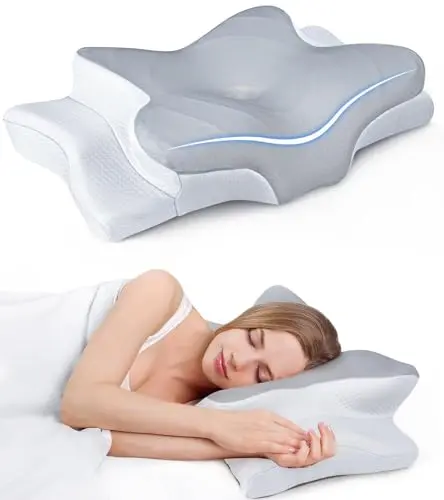
r2 – Cooling Hollow Contour
A hollow-concave contour pillow with a tilted center, six support zones, and a cooling cover. The height can be changed by rotating the pillow or removing the bottom insert.
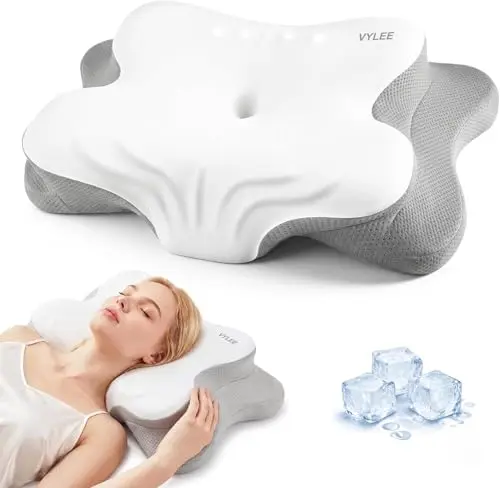
LYM101 – Dual-Height Butterfly Contour
A butterfly-shaped memory foam pillow with two heights and a cooling nylon-spandex cover. The lower side is aimed at back and stomach sleepers, while the taller side gives side sleepers more shoulder clearance.
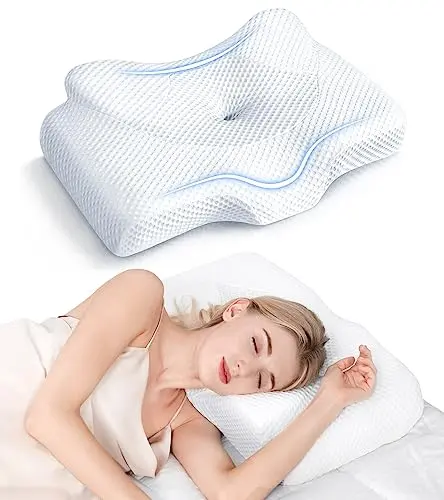
004 – Hollow-Center Orthopedic Support
An orthopedic contour pillow with a hollow center, a 3D mesh cover, and two height options via a 180-degree rotation plus a removable insert. The foam is CertiPUR-US certified and Oeko-Tex approved.
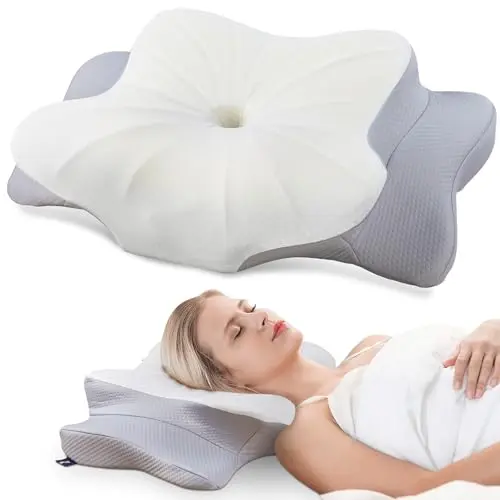
JK79 – Dual-Height Pillow with Armrests
A butterfly-style memory foam pillow with dual heights, armrest grooves, and a breathable cotton-poly cover. It is designed to support back, side, and stomach sleepers without forcing the arms into an awkward position.
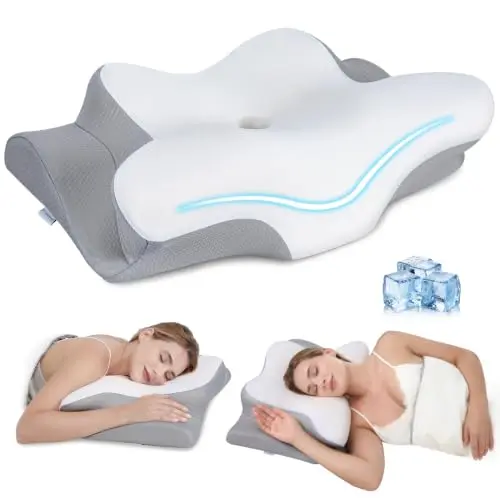
Cervical Neck Pillow – Ice Silk Dual-Height Support
A butterfly-contour memory foam pillow with two heights, an ice-silk cover, and OEKO-TEX plus CertiPUR-US certification. Rotating the pillow changes the contour height.
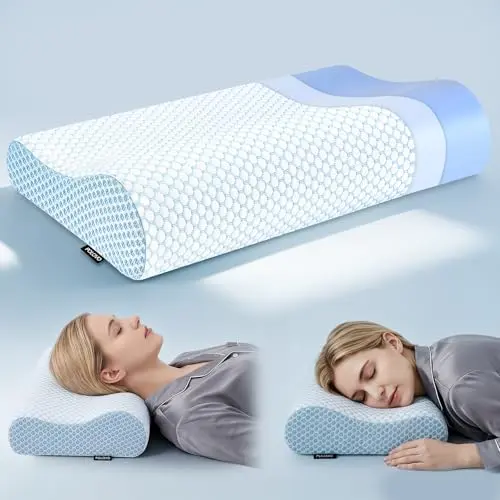
KD209 – Slow-Rebound Contour Pillow
A slow-rebound memory foam contour pillow with two neck-support heights, a removable washable cover, and a breathable mesh side panel. It is aimed at back, side, and stomach sleepers on a tighter budget.
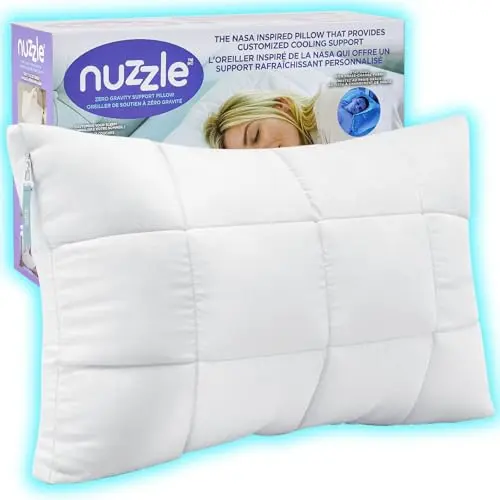
PCM Std Pillow – Adjustable Hotel-Feel Support
An adjustable layered bed pillow with a patented Nanocoil fiber fill and a PCM fabric cover. The slim, medium, and firm layer combinations are meant to suit stomach, back, and side sleepers.
How We Evaluated These Neck Support Pillows for Back Sleepers
We didn’t run long-term load testing or multi-month durability trials. What we did: cross-referenced 9 neck support pillow models from 9 distinct brands across 5 decision axes – contour shape, loft and adjustability, foam or fill behavior, cover breathability and care, and back-sleeper fit. We triangulated published specifications, feature sets, owner feedback where available, and use-case fit against representative back-sleeper profiles, then mapped each pillow to the sleeping posture it serves best. We also weighed how each design handled the small realities of back sleeping: a neutral chin position, room for the shoulders, and enough stability to stay put during position shifts.
The scoring framework weighted real-world fit and performance (70%) – how well each pillow supports a neutral neck line for back sleeping – against feature differentiation (30%) – adjustability, cooling, cover quality, and contour design. We have no commercial relationship with any of the brands featured; recommendations track fit and differentiation, not brand preference. We prioritized back-sleeper usability first, then used feature breadth to separate close calls, so a pillow with extra cooling or a nicer cover does not outrank one that fits the neck better. If you want the most flexible starting point, the UTTU Sandwich Pillow is our top pick; if you prefer a more premium cover and a traditional contour, the Royal Therapy Memory Foam Pillow is the stronger fit.
How to Choose the Right Neck Support Pillows for Back Sleepers
1. Start With Loft, Not Just Firmness
For back sleepers, the pillow loft decides whether your neck stays neutral or gets pushed forward. A pillow that is too tall can tip the chin down; one that is too flat leaves the cervical curve unsupported. Look for a low-to-medium profile first, then use firmness to fine-tune comfort. An adjustable neck support pillow with removable layers or a dual-height design is more forgiving than a fixed loft because you can correct the height after a few nights. If you want the widest adjustment range in this lineup, the UTTU Sandwich Pillow is the pick.
2. Why Contour Shape Matters for Back Sleepers
The contour shape should support the curve of your neck without acting like a rigid brace. A shallow cervical roll and a stable head cradle are usually enough; a deep hollow or aggressive butterfly cut can feel restrictive if you are a true back sleeper. Dual-height contours are useful because the lower side often suits back sleeping while the taller side is there for side sleeping or shoulder clearance. If you run hot and like a more sculpted feel, the Cozyplayer-r2 is the cooling-focused option to consider.
3. Adjustable and Dual-Height Neck Support Pillows
Adjustable loft is the most practical feature for back sleepers because sleep posture changes with mattress firmness, pillowcase thickness, and even seasonal congestion. A three-layer foam core lets you remove a middle slab; a 180-degree rotation gives you a higher and lower side; a removable insert adds another step. More adjustment does not automatically mean better sleep, but it does shorten the trial-and-error period. Check that the cover is removable and machine washable, since you will handle the pillow more while tuning it.
4. Cooling Covers and Washable Cases
Cooling covers are a comfort feature, not a neck-support feature, but they matter if you overheat. Look for breathable mesh or PCM fabric rather than a vague cooling claim. The cover should also be removable and machine washable, because foam cores cannot go in the washer. A cool-to-the-touch surface can make a contour pillow easier to live with, especially if you are adjusting to memory foam for the first time.
5. Budget, Mid-Range, and Premium Neck Support Pillows
The entry-level tier covers basic slow-rebound foam with two heights and a washable cover; it is enough if you mainly need a lower-profile contour. The mid-range tier adds better covers, more refined contour zones, and cooling fabrics. The premium tier buys nicer cover materials, more consistent foam, and sometimes a more generous trial policy. Price tracks materials and finish more than dramatic differences in neck support. If you want the more polished cover and traditional contour feel, the Royal Therapy Memory Foam Pillow sits in the premium tier.
6. A Simple Fit Checklist for Back Sleepers
Start on the lower contour for a week before adding height. Your chin should stay roughly level, not tipped toward your chest. You should feel support under the cervical curve without pressure at the base of the skull. If you wake with a stiff neck, remove a layer or switch sides before deciding the pillow is wrong. Give any new memory foam pillow a few nights and a proper airing-out period; the first night is rarely the final verdict.
Frequently Asked Questions
1. What should back sleepers look for in a neck support pillow?
Back sleepers should prioritize loft, contour depth, and adjustability over plushness. A low-to-medium contour keeps the chin neutral, while a removable layer or dual-height side lets you correct the fit. Cooling covers and washable cases are useful bonuses. If you want a proven starting point, the UTTU Sandwich Pillow has the widest adjustment range in this group.
2. UTTU Sandwich Pillow vs Royal Therapy Memory Foam Pillow: which suits back sleepers?
Both are three-layer adjustable contours with a removable middle layer. The UTTU emphasizes a wider lower range for back sleepers who need a very low profile, while the Royal Therapy feels more medium-firm and uses a bamboo-derived rayon cover. If you need the lowest possible setup, UTTU is more flexible. If you want a softer cover and a more premium finish, Royal Therapy is the stronger pick.
3. Cozyplayer-r2 vs Osteo004: how do the hollow-center designs compare?
Both use a hollow cradle, but Cozyplayer is more sculpted with six contour zones and a Q-Max cooling cover, while Osteo uses a 3D mesh cover and a 180-degree rotation plus removable insert. Back sleepers who run hot may prefer Cozyplayer’s cooling focus; those who want a more orthopedic, less aggressive hollow may lean Osteo. Firmness is subjective, so match the contour depth to your tolerance.
4. Can a neck support pillow help with snoring?
It can help in some cases by keeping the head and neck in a more neutral position, which may open the airway slightly. It is not a treatment for sleep apnea or chronic snoring. Look for a low-to-medium loft, a stable contour, and a washable cover; if snoring persists, talk to a clinician.
5. How long does it take to adjust to a cervical pillow?
Give it several nights, not one. Start on the lower side, keep the cervical curve supported, and adjust height before judging. New foam may need airing out for a day or two. If you still wake with pain after a week of tuning, the shape or loft may be wrong for you. The Polovo KD209 is a budget-friendly way to test a two-height contour before committing to a premium model.
Final Verdict
For most back sleepers, the UTTU Sandwich Pillow is the answer because its three-layer adjustable loft covers the widest range of neck heights without making you commit to one contour. It is the one we would recommend first to a friend who wakes up stiff. If you want a more premium cover and a traditional medium-firm contour, the Royal Therapy Memory Foam Pillow is the upgraded choice. Hot sleepers should look at the Cozyplayer-r2 for its cooling cover and hollow cradle, while budget-minded shoppers can start with the Polovo KD209 and still get two support heights. Match the pillow to your neck line, not the marketing label, and give yourself a week to tune the loft before deciding.
