
Best Non-Toxic Air Purifiers – 2026 Reviews

An air purifier is supposed to take things out of your air, not add anything to it. That’s the entire premise. So it’s a little unsettling to find out that some models clean particles beautifully while quietly generating trace ozone, running a UV lamp, or smelling faintly of hot plastic for the first week.
That gap is what the non-toxic label is trying to cover, and it isn’t a regulated term. In practice it comes down to a handful of concrete questions: does the unit clean with mechanical filtration alone, or does it have an ionizer, bipolar device, or UV stage doing extra work? Does it carry CARB certification, which is the nearest thing this category has to an ozone limit? And does the carbon layer have enough media behind it to handle VOCs and odors instead of just particles?
The other axis separating a good purifier from a frustrating one is sizing honesty. Coverage numbers usually assume a single air change per hour unless stated otherwise, which makes a bedroom unit look like it can handle a whole floor. The picks below span compact bedroom machines, sensor-driven towers, and pet-focused units from several different brands – the goal is matching filtration and footprint to the room you actually have.
Best Non-Toxic Air Purifiers – 2026 Reviews
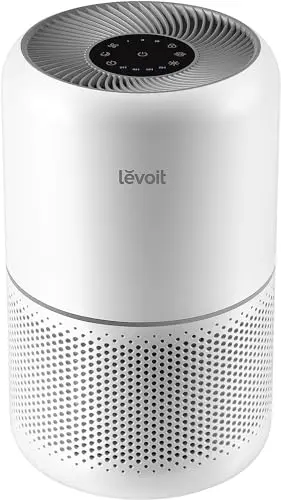
Core 300-P – Quiet True HEPA for Bedrooms
A quiet, fully mechanical HEPA purifier for bedrooms and small apartments. AHAM Verifide CADR numbers, CARB compliance, a 24 dB sleep mode, and no ionizer or UV stage anywhere in the specs.
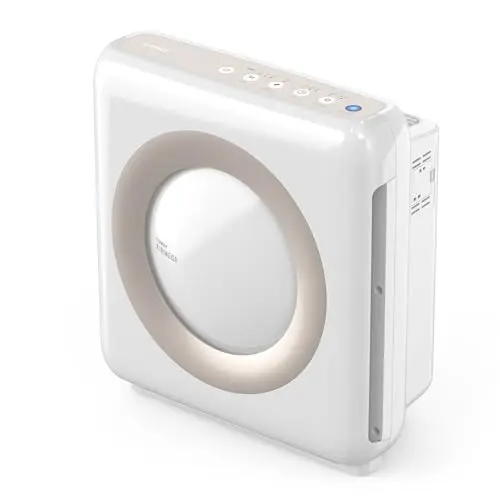
AP-1512HH Mighty – Auto-Mode Filtration for Big Rooms
A four-stage workhorse with a washable pre-filter, deodorization layer, HEPA media, and a bipolar device, plus a real-time air quality indicator and auto mode. Coverage reaches 1,748 sq ft over an hour, and the three-year warranty is the longest here.
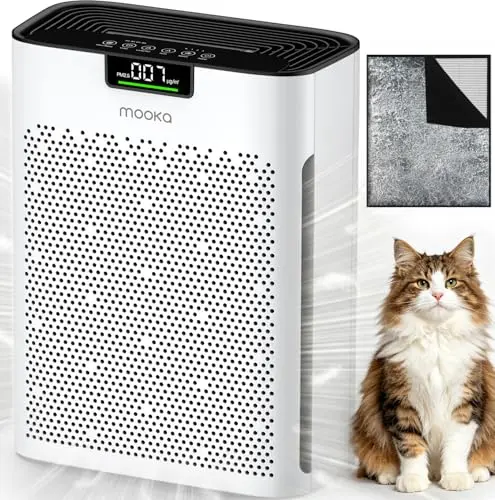
KJ190H – Pet Hair and Odor Specialist with AQI Display
A pet-focused purifier with a washable pre-filter, extra activated carbon, a PM2.5 display, and auto mode. The specs explicitly list no ozone release and no UV light, backed by CARB, ETL, and DOE certification.
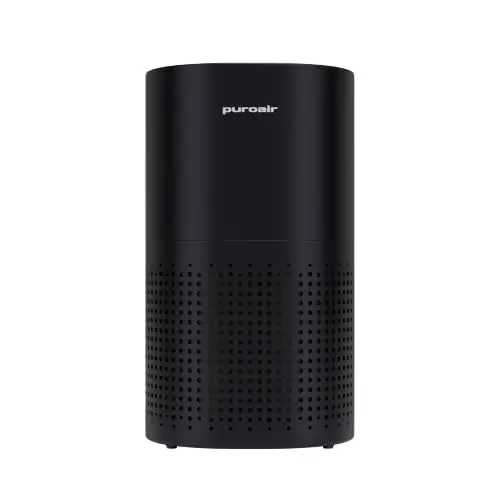
PuroAir 240 – Tall Tower Purification for Open Spaces
A 28-inch tower with a three-layer HEPA and carbon stack, 1,000 sq ft coverage, and a smart particle sensor that runs auto mode for you. Certified by CARB, ETL, ISO, and UL.
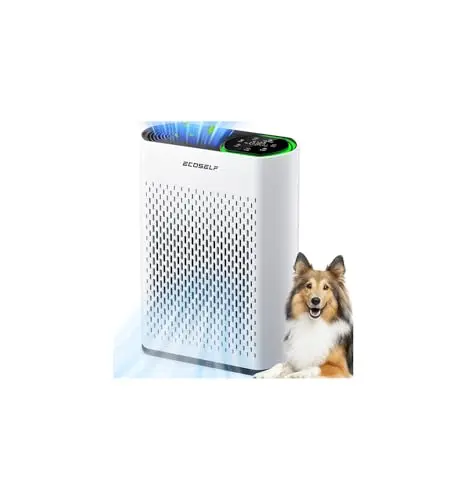
HAP602 – Wide Coverage with Real-Time Air Readings
A feature-dense large-room purifier with a PM2.5 readout, auto mode, child lock, and a 20 dB sleep mode. Coverage is quoted at 2,400 sq ft in 30 minutes.
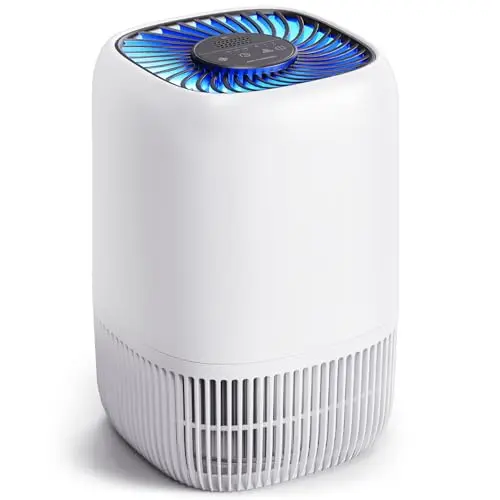
DH-JH12 – Compact Certified Quiet for Small Rooms
A compact, certified purifier for desks and small bedrooms. 360-degree intake, triple-layer filtration, 22 dB operation, and DOE, ETL, FCC, CARB, CE, and ROHS certifications.
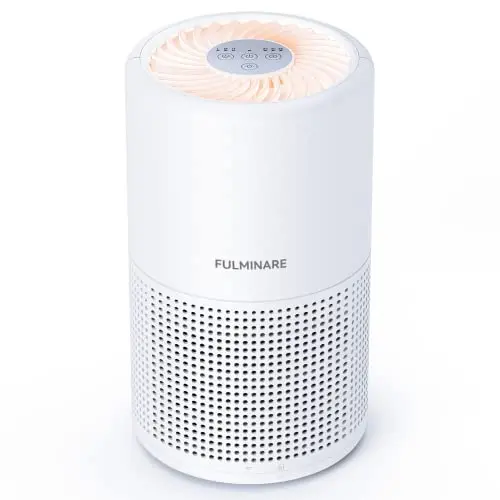
PU-P05 – Tiny Night-Light Purifier for Desks and Nurseries
A tiny H13 HEPA purifier with a built-in night light, five timers, and 20 dB low-speed operation. Best suited to desks, dorms, and nurseries.
How We Evaluated These Non-Toxic Air Purifiers
We didn’t measure ozone output with lab instruments, and we didn’t run sealed-chamber particle counts. What we did: cross-referenced seven non-toxic air purifier models from seven distinct brands across five decision axes – filtration stack construction, ozone-relevant design choices like ionizers and UV stages, published room-coverage math, noise and sleep behavior, and long-term filter cost. We triangulated manufacturer specification sheets, certification listings from CARB, AHAM, ETL, and DOE, owner feedback where available, and realistic room-by-room use-case fit.
The scoring framework weighted real-world fit at 70% – how well a unit serves a bedroom, living room, or pet household without adding particles, ozone, or fragrance to the air – against feature differentiation at 30% – sensor quality, auto-mode logic, washable pre-filters, and quiet-operation engineering. We have no commercial relationship with any of these brands, and recommendations track fit and differentiation rather than brand preference. If a simple, entirely mechanical setup for a bedroom is what you’re after, the Core 300-P is your match. If you’d rather have a bigger room managed automatically, the Coway AP-1512HH makes more sense.
One caveat worth stating plainly: coverage figures are marketing math until you know the air-change rate behind them, so we weighed the assumptions each brand publishes rather than the headline number alone. Quiet-mode decibels are similarly optimistic in real rooms, which is why we compared the claimed floor against the fan speeds you’d actually run overnight.
How to Choose the Right Non-Toxic Air Purifiers
1. What 'Non-Toxic' Really Means for an Air Purifier
There’s no regulated definition. In practice, a non-toxic air purifier does two things: it cleans air with mechanical filtration rather than chemistry, and it doesn’t add anything of its own – no ozone, no fragrance, no off-gassing plastic smell. HEPA media traps particles; activated carbon adsorbs gases and odors. Neither process needs a chemical to work.
The claims that matter are the boring ones. CARB certification is an actual ozone limit for devices sold in California, and it’s the closest thing to a non-toxic stamp in this category. An ETL or UL listing speaks to electrical safety, not air quality. And when a spec sheet lists an ionizer, a bipolar device, or a UV-C lamp, that’s a design choice you should make deliberately rather than inherit by default.
2. HEPA, Carbon, and the Filtration Stack That Actually Cleans
Most of these units follow the same skeleton: a pre-filter for hair and lint, HEPA media for particles down to 0.3 microns, and a carbon layer for VOCs and odors. The differences sit in the details. A washable pre-filter cuts replacement cost and keeps the HEPA stage from clogging early. The amount of activated carbon varies wildly – pellet carbon does far more for pet and cooking odors than a thin carbon-impregnated sheet.
The HEPA number everyone quotes, 99.97% of 0.3-micron particles, is a media rating, not a room result. What matters is the CADR – how much clean air the unit moves – combined with how well the housing seals. Good media in a leaky box underperforms modest media in a tight one.
3. Ozone, Ionizers, and UV: The Non-Toxic Dealbreakers
Ionizers and bipolar devices charge particles so they clump and settle. They can also produce trace ozone as a byproduct, which is precisely what a non-toxic buyer is trying to avoid. UV lamps are another common add-on; a properly enclosed lamp is low risk, but it’s still an extra component with its own replacement interval. If you want nothing but mechanical filtration, read the spec list before you buy – some units let you disable the ion stage, and the published specs won’t always say so.
Fragrance is the other quiet variable. Aromatherapy pads are optional on the MOOKA KJ190H and the VOOPNU DH-JH12, so leave the oil out entirely if scent is a trigger in your house. It’s an easy feature to ignore, and it doesn’t affect filtration either way.
4. Sizing a Non-Toxic Air Purifier to the Room You Actually Have
Coverage numbers are the most misleading spec in this category. A claim like 1,748 sq ft usually means one air change per hour, which is barely maintenance. For a bedroom you want four to five air changes per hour; for a living room with pets, more. Divide the quoted coverage by three or four and you’re closer to reality.
Two practical rules: match the unit to the room you’ll run it in, and don’t buy one giant purifier for a whole apartment. Air doesn’t move between rooms the way a spec sheet implies. If your target is a bedroom or home office, the Core 300-P is sized right; for an open living area, step up to something with auto mode and a bigger fan.
5. Noise, Sleep Mode, and Where to Place It
Manufacturers quote the lowest speed, which is why 20 dB and 24 dB claims all sound identical on paper. The number you’ll actually live with is the medium setting, and that’s rarely published. Sleep modes usually dim or kill the display lights too – worth checking if a glowing ring in a dark room keeps you up.
Placement matters as much as the machine. Give the intake a foot or so of clearance, keep it out of the path of a floor vent, and don’t tuck it behind a curtain. A 360-degree intake unit can sit mid-room; a front-intake tower wants a wall behind it and open air in front.
6. Replacement Filters and the Long-Term Cost Picture
The purifier is the cheap part. Genuine replacement filters every three to six months are the real cost, and off-brand HEPA media can fit poorly enough to let air leak around the seal. Filter indicators help – some track runtime, others watch pressure – but the honest test is visual: a grey pre-filter and a darkened HEPA face mean it’s time.
A washable pre-filter is the single easiest way to stretch filter life, and it’s a big part of why the Coway AP-1512HH and the MOOKA units are less annoying to own over a couple of years. Budget for the filter before you budget for the purifier.
Frequently Asked Questions
1. Do air purifiers give off ozone?
Mechanical HEPA purifiers don’t produce ozone – they push air through a filter and that’s the whole process. Units with ionizers, bipolar devices, or UV lamps can generate trace amounts as a byproduct, and that’s the thing to watch when non-toxic is your priority. CARB certification sets a real ozone ceiling for devices sold in California, so it’s a useful filter when comparing spec sheets.
The practical move is to look for a purifier whose cleaning stages are all mechanical: pre-filter, HEPA, carbon. If a unit has an ion stage, check whether you can turn it off. The MOOKA KJ190H is the most explicit about this – its specs call out no ozone release and no UV light.
2. Coway AP-1512HH vs Levoit Core 300-P: which should you buy?
They solve different problems. The Coway is the large-room unit: 1,748 sq ft of coverage, a pollution sensor driving a color-coded indicator, auto mode, a washable pre-filter, and a three-year warranty. The caveat is its bipolar device, an ion-generating stage the listed specs don’t let you switch off.
The Core 300-P is the bedroom specialist: mechanical filtration only, AHAM Verifide CADR numbers, a 24 dB sleep mode, and a much smaller footprint. If your room is around 300 square feet and you want nothing but HEPA and carbon, the Levoit is the cleaner answer. If you’re covering an open living space and want the machine to think for you, the Coway earns its premium tier.
3. MOOKA KJ190H or PuroAir 240 for a pet household?
Both are HEPA machines with carbon, but the design briefs differ. The MOOKA has a larger front inlet and wider side intakes intended to catch hair, more activated carbon for odor, a washable pre-filter, and a numeric PM2.5 readout. The PuroAir is a 28-inch tower with a 360-degree intake and a responsive auto mode, and it publishes independent lab testing behind its claims.
For a bedroom shared with a shedding dog or a litter box, the MOOKA’s odor-focused design is the more direct fit. For an open-plan room where you want the purifier to ramp up on its own after a smoke event, the PuroAir 240 is the better instrument.
4. Are air purifiers with essential oil trays safe for sensitive people?
The tray sits outside the filtration path, so it doesn’t change how the purifier cleans. It’s a fragrance delivery feature. If you’re buying a non-toxic purifier because synthetic scents bother you, leave the pad dry – essential oils are themselves volatile organic compounds, and some people react to them the same way they react to air fresheners.
Used dry, the tray is inert. Both the MOOKA KJ190H and the VOOPNU DH-JH12 run normally with no oil in the pad.
5. How often should non-toxic air purifier filters be replaced?
Most manufacturers land on three to six months, or roughly 2,000 hours of runtime, whichever comes first. All-mechanical units with a washable pre-filter often stretch toward the six-month mark because the HEPA stage isn’t doing the lint work. Homes with pets, smokers, or a wildfire smoke season should plan on the shorter end.
Filter indicators help, but they track runtime rather than actual loading. A quick visual check – grey pre-filter, darkened pleats – tells you more than an indicator light. And stick with genuine filters; a poorly sealed third-party filter lets air bypass the media entirely.
Final Verdict
For most people, the Core 300-P is the answer. It’s a purely mechanical HEPA and carbon purifier with published performance numbers, no ionizer or UV stage to think about, and a sleep mode quiet enough to leave running all night. If you’re covering a bigger room and want the machine to manage itself, the Coway AP-1512HH is the step up – more coverage, a real-time air quality indicator, and the longest warranty here, with the ion-generating fourth stage as the one tradeoff to accept.
On a tight budget or furnishing a nursery, the FULMINARE PU-P05 puts H13 media and a night light in a small room for very little. Pick the room first, then the purifier – that ordering saves more money than any spec comparison.
