
Best Non-Toxic Coffee Makers – 2026 Reviews

You can buy a coffee maker that looks like brushed steel and still end up tasting plastic in the cup. The giveaway is not always the exterior; it is the brew path-the reservoir, tubing, filter basket, and carafe that hold hot water and finished coffee. That is why a non-toxic coffee maker starts with material contact, not marketing language.
The strongest options in this category keep the brew in stainless steel, borosilicate glass, or other disclosed materials, and they make filtration and cleaning simple enough to live with. The two axes that separate a good pick from a compromise are plastic-free contact and method fit: an electric percolator, a stovetop percolator, a French press, and a pour over all solve different mornings.
We compared cross-brand options with those priorities in mind, from all-steel French presses to glass pour-over setups and electric percolators. The goal is not to crown a single material or brand; it is to help you choose the non-toxic coffee maker that matches how you actually brew.
Best Non-Toxic Coffee Makers – 2026 Reviews
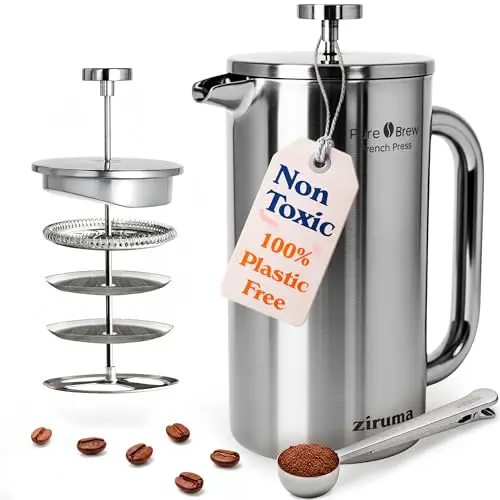
Stainless Steel French Press – Plastic-Free 34 oz Brewing
A fully stainless steel French press built around a plastic-free brew path. The double-wall body keeps coffee hot while the exterior stays cooler, and the 4-layer filter is designed to keep grit out of the cup.

Bozeman Percolator – No Plastic or Aluminum Stovetop Brewing
A stovetop percolator with stainless steel components and a glass view top, made for camp mornings and off-grid brewing. It needs only coffee, water, and a heat source-no electricity.

02811 Stainless Steel Percolator – Electric 12-Cup Brewing
An electric percolator with a stainless steel body and a 12-cup capacity. It brews quickly, signals when coffee is ready, and uses automatic temperature control to keep the pot hot.
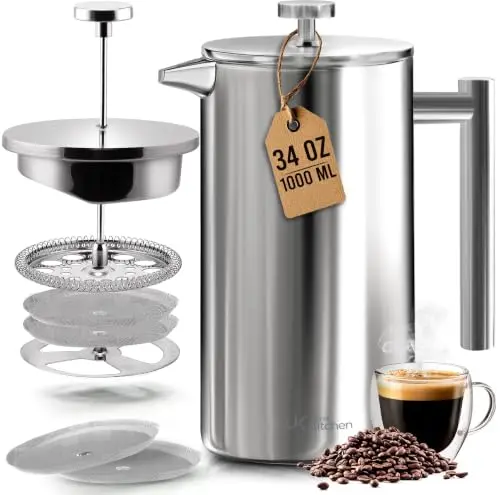
304 Stainless Steel French Press – Double-Wall 34 oz Brewing
A double-wall stainless steel French press with a 4-level filtration system and two extra filters included. The insulated body is designed to keep coffee hot and the exterior comfortable to touch.
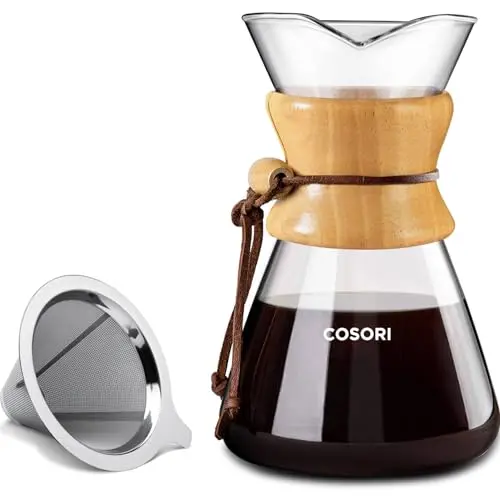
Pour Over Coffee Maker – Double-Layer Steel Filter
A pour-over brewer with a double-layer stainless steel filter, borosilicate glass carafe, and wooden sleeve. It is designed for manual brewing at home or while camping.
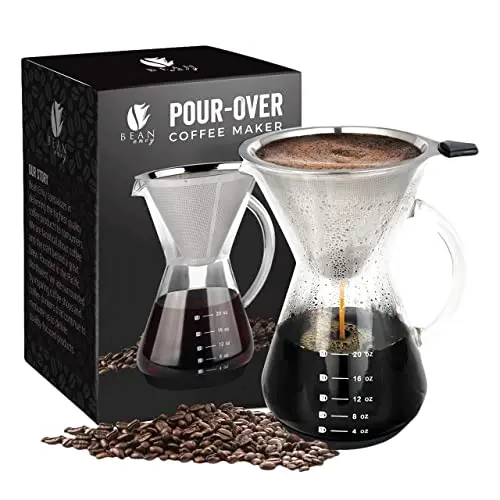
Pour Over Coffee Maker – Glass Dripper with Steel Filter
A 20 oz pour-over set with a borosilicate glass carafe, reusable stainless steel mesh filter, and silicone base. All three components are dishwasher safe.
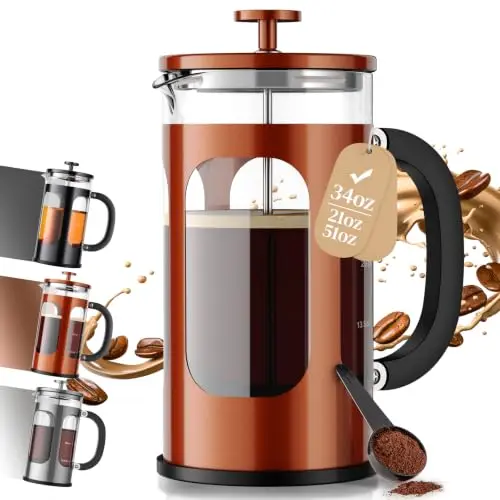
34 oz French Press – Plastic-Free Brewing Surface
A French press with a borosilicate glass carafe, 304 stainless steel filter, and food-grade silicone seals. The brew path is designed to avoid plastic contact with coffee.
How We Evaluated These Non-Toxic Coffee Makers
We didn’t run lab tests for material leaching, plastic-free certification, or long-term durability. What we did: cross-referenced 7 coffee makers from 7 distinct brands across 6 decision axes – material contact path, brewing method, capacity, filtration, cleaning routine, and portability. We triangulated published specifications, feature sets, aggregated owner feedback where available, and use-case fit for readers who want to avoid plastic in the brew path. We also audited the small parts that are easy to overlook: seals, lids, plungers, and filter assemblies.
The scoring framework weighted real-world fit (70%) – how well each maker keeps hot water in contact with stainless steel, glass, or other disclosed materials while delivering the capacity and convenience you need – against feature differentiation (30%) – unique filtration, insulation, and use-case strengths. We mapped each product to common buyer profiles: electric brewing, stovetop and camp use, French press, and pour over. A model earned a higher score when its material story was clear, its brew method matched a real routine, and its cleaning burden was reasonable. We have no commercial relationship with any brand featured; recommendations track fit and differentiation, not brand preference. If you want a plastic-free French press with the most complete material disclosure, the Ziruma Stainless Steel French Press is your match; if you need stovetop or camp-ready brewing, the COLETTI Bozeman serves you better.
How to Choose the Right Non-Toxic Coffee Maker
1. What Makes a Coffee Maker Non-Toxic and Plastic-Free?
A coffee maker is only as non-toxic as the surfaces that touch hot water and coffee. The brew path is the full route from reservoir or kettle to carafe: heating chamber, tubing, filter basket, and carafe. Stainless steel and borosilicate glass are the most transparent choices because they are inert, easy to inspect, and do not need a plastic liner. Food-grade silicone can be acceptable as a seal or grip, but it should not be the primary surface holding hot coffee. BPA-free labels help, yet they are not a complete guarantee that every internal part is plastic-free.
2. The Brew Path Matters More Than the Exterior
Many drip machines hide plastic in places shoppers do not see: the water reservoir, internal tubing, and the filter basket. A stainless steel exterior can still conceal a plastic brew path, so check the parts that actually contact hot liquid. French presses and percolators are easier to audit because the brewer is usually one visible metal or glass vessel. Pour-over setups are similarly simple, provided the filter and carafe are steel and glass rather than plastic.
3. Electric, Stovetop, French Press, or Pour Over: Match the Method to Your Morning
Choose the method around your routine. An electric percolator is best for push-button convenience and larger batches. A stovetop percolator suits campers and anyone who wants no electricity. A French press gives full-immersion brewing and a richer body, while a pour over delivers a cleaner cup with more control. If you want a large glass-and-steel pour-over setup, the Cosori Pour Over Coffee Maker is the pick. For electric convenience with a stainless steel pot, the Presto 02811 is the better route.
4. Capacity, Filtration, and Cleaning Tradeoffs
Capacity is usually listed in 5-ounce cups, not mugs, so a 12-cup pot may fill fewer travel mugs than expected. Filtration matters too: a 4-layer filter in a French press or percolator reduces grit, while a fine stainless mesh in a pour over keeps sediment out without paper. Cleaning is the last tradeoff. Dishwasher-safe parts simplify life, but glass carafes and wooden sleeves often last longer with hand washing.
5. How Much Should You Spend on a Non-Toxic Coffee Maker?
Budget-friendly non-toxic coffee makers tend to be manual French presses or simple pour-over sets. Mid-range models add double-wall insulation, larger capacities, or more filtration layers. Premium picks are usually electric percolators with bigger pots and keep-warm features. Spend up only when the added convenience or capacity matters to your daily routine; a simple stainless steel French press can brew excellent coffee for years.
Frequently Asked Questions
1. Are stainless steel French presses really plastic-free?
Most stainless steel French presses keep the main brew vessel and filter metal, but small parts can still use silicone or plastic. The Ziruma Stainless Steel French Press is the most explicit about a plastic-free brew path and uses 316 surgical-grade steel. The Veken model also states no plastic touching food, though it uses food-grade silicone as a seal. Check the plunger, lid, and filter assembly if your priority is zero plastic anywhere in the brewer.
2. What's the difference between the Ziruma Stainless Steel French Press and the COLETTI Bozeman?
The Ziruma is a manual French press built for home counters and travel, with double-wall insulation and a 4-layer filter. The COLETTI Bozeman is a stovetop percolator with a glass view top, made for camp stoves and off-grid brewing. For everyday kitchen use, the Ziruma Stainless Steel French Press is the easier daily pick; for camp coffee, the Bozeman is purpose-built.
3. How does the Presto Stainless Steel Percolator compare with the Utopia Kitchen French Press?
The Presto is an electric percolator with a 12-cup capacity and automatic keep-warm control, so it suits larger batches and push-button mornings. The Utopia Kitchen is a manual French press with double-wall insulation and a more budget-friendly positioning. Choose the Presto for volume and electric convenience; choose the Utopia for a simpler, hands-on brew with no cord.
4. Do pour-over coffee makers use plastic?
Some do, especially in the filter holder, lid, or carafe. A better pour-over brewer keeps the hot path in glass and steel. The Cosori uses a stainless steel mesh filter and a borosilicate glass carafe with BPA-free materials. The Bean Envy pairs glass and steel with a silicone base that stays out of the main brew path. Check the filter assembly first if plastic avoidance is your priority.
Final Verdict
For most buyers, the Ziruma Stainless Steel French Press is the answer: it combines a 316 surgical-grade steel brew path, double-wall insulation, and a 4-layer filter without asking you to manage a stovetop or electric pot. If you brew at camp or want zero electricity, the COLETTI Bozeman is the stovetop pick, and its no-plastic, no-aluminum build is purpose-built for off-grid mornings. Budget-conscious shoppers can go with the Utopia Kitchen 304 Stainless Steel French Press, which delivers the core stainless steel French press experience for less. And if electric convenience and a large pot matter most, the Presto 02811 Stainless Steel Percolator is the premium route. None of these need paper filters or a plastic carafe to make a good cup.
