
Best Non-Toxic Comforters – 2026 Reviews

Most “non-toxic” bedding claims fall apart the moment you read the label. A comforter gets marketed as natural, clean, or chemical-free while the shell is a polyester blend and the fill has never been near an independent lab. That’s the frustrating part of shopping this category: no regulated definition of non-toxic exists for bedding, so the word on the box tells you almost nothing.
What actually separates a genuinely cleaner comforter is boring and specific. The shell fiber comes first – certified organic or conventional cotton reads very differently against your skin for eight hours a night than a polyester blend does. Then the fill and how it’s processed: responsibly sourced down fiber, sanitized feather blends, or a down-alternative polyester, each with its own tradeoffs. After that, look for verification you can name, like OEKO-TEX Standard 100 for restricted substances, or RDS and DOWNPASS for down and feather sourcing.
Here’s where most shoppers get caught: certifications only matter if the comforter also works as a comforter. Loft, warmth level, attachment tabs, and whether you can machine wash the thing decide whether you’ll still be sleeping under it next year. We compared the leading options across materials, verification, and day-to-day livability so you can choose on evidence instead of adjectives.
Best Non-Toxic Comforters – 2026 Reviews
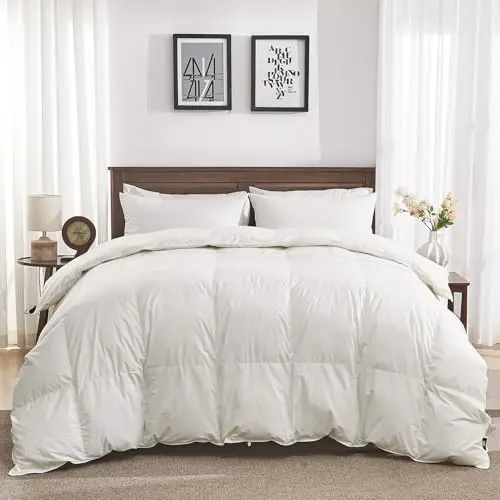
Organic Cotton Goose Feather Down Comforter – All-Season Baffle-Box Loft
The Oaken-Cat pairs a 100% organic cotton shell with a goose feather and down fiber fill, then verifies both ends: OEKO-TEX certified cotton and RDS plus DOWNPASS certified sourcing. A 3D baffle-box build keeps the fill where it belongs, and it’s one of the few feather-filled comforters here you can actually machine wash.
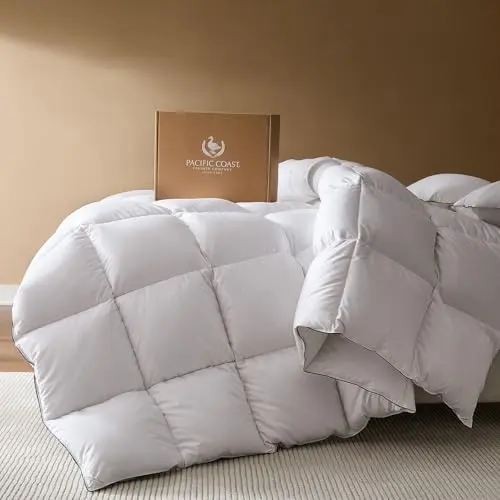
Goose Down Fiber Comforter – Hidden Baffle-Box Hotel Build
A hotel-supply comforter built on a 3D hidden-stitch baffle box and goose down fiber fill certified to both RDS and OEKO-TEX Standard 100. The shell is a 60/40 cotton-polyester blend, and care is dry-clean, low-heat tumble, or spot-clean only.
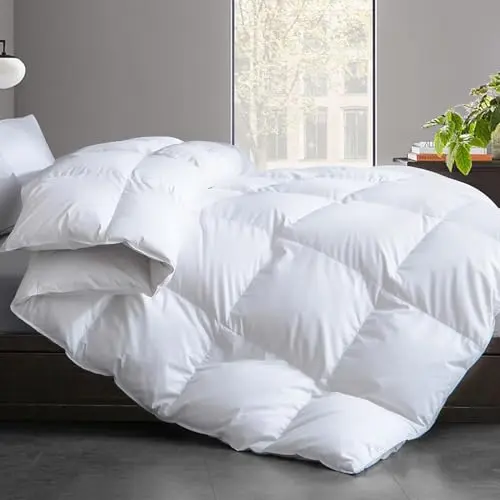
Feather and Down Fiber Comforter Insert – Certified Cotton, Washable
A feather and down fiber insert wrapped in a 100% cotton, OEKO-TEX Standard 100 certified shell, with box stitching, four corner tabs, and – unusually for feather fill – full machine washability.
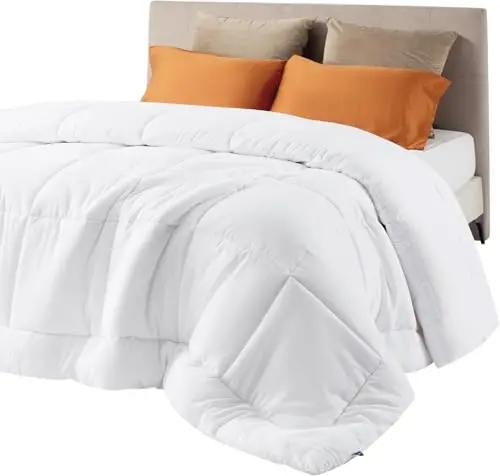
Quilted Down Alternative Duvet Insert – OEKO-TEX Certified All-Season
A down-alternative insert with OEKO-TEX certification, box stitching, eight attachment tabs, and a size range that stretches all the way to oversized king – at the most accessible tier in this lineup.
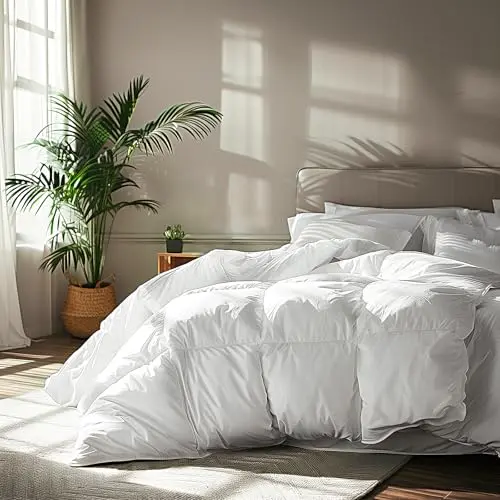
Goose Feather Down Fiber Comforter – 233 Thread Count Cotton Cover
A 100% cotton cover at 233 thread count around a 90/10 goose feather and down fiber fill, OEKO-TEX certified and processed to be hypoallergenic. Sewn-through box construction, four corner loops, dry clean only.
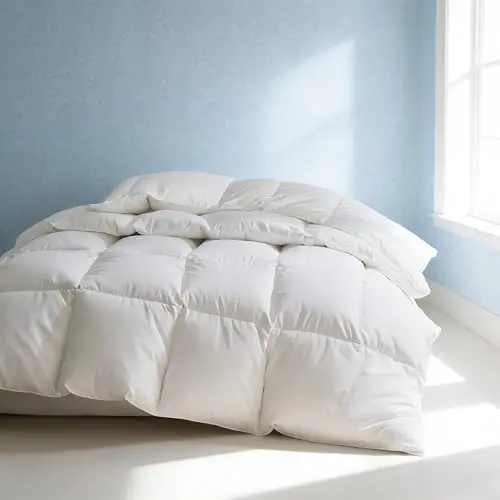
Goose Feathers Down Fiber Comforter – Hotel Collection Cotton Cover
A hotel-collection comforter with a 100% cotton shell over goose feather and down fiber fill certified to OEKO-TEX standards, built with sewn-through box construction and offered in three warmth levels.
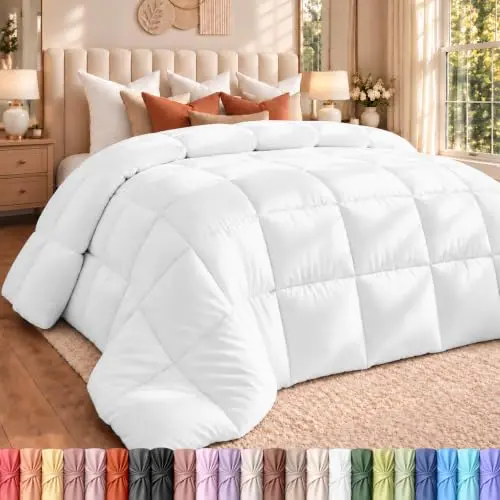
Box-Stitched Duvet Insert – Siliconized Down-Alternative Fill
A box-stitched polyester duvet insert with piped edges, corner tabs, and a siliconized fiberfill engineered to mimic down. The listing doesn’t call out any third-party textile certification.
How We Evaluated These Non-Toxic Comforters
We didn’t sleep a full season under each of these comforters or run repeated wash-cycle durability trials. What we did: cross-referenced seven comforters from seven brands across six decision axes – shell fiber, fill composition and sourcing, third-party certification, warmth and loft, care requirements, and value tier. We triangulated the specifications each listing publishes, the certifications each one actually names, aggregated owner feedback where available, and how well each build suits the sleeper it’s aimed at.
Certification claims drew particular scrutiny. A comforter only earned credit for verification it could name – OEKO-TEX Standard 100, RDS, DOWNPASS – rather than for words like natural, clean, or chemical-free, which carry no defined meaning in bedding. Where owner feedback was thin, we leaned harder on published specs and construction details and said so.
The scoring framework weighted real-world fit (70%) – material transparency plus how the comforter actually sleeps and cleans – against feature differentiation (30%) – construction quality, attachment systems, size range, and warranty support. We have no commercial relationship with any brand featured; recommendations track fit and differentiation, not brand preference. If you want the cleanest material story with machine washability, the Oaken-Cat is your match; if you’d rather have the best-built baffle box and don’t mind dry cleaning, the Pacific Coast wins.
How to Choose the Right Non-Toxic Comforter
1. What Non-Toxic Really Means in a Comforter
Non-toxic comforter is a marketing phrase, not a regulated category. No government standard defines it, which means any brand can print it on a box without proving anything. What you can actually evaluate is narrower and more useful: the fiber against your skin, the fill, the finishes and dyes, and whether an independent lab has tested any of it.
The three certifications worth knowing are OEKO-TEX Standard 100, which tests components for restricted harmful substances; RDS (Responsible Down Standard), which addresses animal welfare and traceability in down supply; and DOWNPASS, which does similar traceability work for down and feathers. None is a government safety seal, and they don’t cover the same ground – but a listing that names one is telling you more than a listing that says natural.
One detail to check: certifications apply to specific components. A certified fill inside an uncertified shell is a weaker claim than a fully certified comforter, and brands aren’t always precise about which is which. When in doubt, look at the shell fiber first – it’s the layer touching your skin for eight hours a night.
2. Shell Material: Organic Cotton, Conventional Cotton, and Polyester Blends
Cotton is why most people start shopping for a non-toxic comforter. It breathes, it doesn’t trap heat the way synthetics do, and it’s a natural fiber rather than a petrochemical one. The catch is that cotton on a label says nothing about processing, which is why certified cotton shells carry far more weight than uncertified ones.
Polyester shells and cotton-polyester blends are cheaper, more wrinkle-resistant, and hold a print better, but they’re synthetic against your skin – and in this category a blend shell usually signals a lower price tier rather than a deliberate design decision. If a certified cotton shell at a mid-range price is what you’re after, the Cosybay is the pick here.
3. Fill Options: Down Fiber, Feather Blends, and Down-Alternative
Feather and down fiber fills give you loft with relatively little weight, which is why hotel bedding leans on them so heavily. The ratio matters: a 90/10 feather-to-down blend sleeps firmer and heavier, while a higher down-fiber share feels airier and more expensive. Feather fibers bring quills with them, and quills are what eventually work through a shell – a real consideration for a comforter you plan to keep for years.
Down-alternative polyester sidesteps animal sourcing entirely and is usually the most washable choice, but it’s synthetic and the loft tends to flatten faster. The Bedsure is the certified example in this lineup if you want to go that route.
4. Warmth, Loft, and Baffle Construction
Medium warmth all-season is the sensible default for most sleepers – light warmth for people who run hot, extra warmth for cold rooms and cold sleepers. Loft is the other half of the equation. A comforter with roughly two inches of fill reads plush; anything near an inch reads like a duvet insert and needs a cover to feel substantial.
Construction decides whether that loft survives the year. Sewn-through box stitching is the standard: inexpensive, reliable, and prone to thin spots along the seams. Baffle-box construction adds a fabric wall between chambers so the fill can expand to full height – it costs more, and it’s the clearest dividing line between premium picks and the rest.
5. Care Requirements Matter More Than You'd Think for a Non-Toxic Comforter
Here’s the angle most people skip: cleaning. A comforter that requires professional dry cleaning sends you back to solvent-based processing every season, and several feather-filled options here are dry-clean or spot-clean only. A machine-washable comforter lets you use a fragrance-free, dye-free detergent on your own schedule.
If washability is a priority, look for cold-water gentle cycles and low-heat tumble drying – that’s what the machine-washable picks here specify. If you’re comfortable with dry cleaning, the field opens up considerably.
6. Oaken-Cat vs Pacific Coast: Organic Cotton or Baffle-Box Build?
These two represent the only two defensible ways to spend more in this category. The Oaken-Cat puts the money into materials: an organic cotton shell and RDS/DOWNPASS certified fill, plus machine washability. The Pacific Coast puts it into construction: a true hidden-stitch baffle box, eight attachment loops, and a three-year warranty, wrapped around a 60/40 cotton-polyester shell that has to be dry cleaned.
Neither approach is wrong. If your definition of non-toxic centers on what touches your skin and how you clean it, the cotton-shell machine-washable option wins. If longevity and even fill distribution matter more than the last increment of material purity, the baffle-box build does.
Frequently Asked Questions
1. Are non-toxic comforters actually chemical-free?
Nothing in your bedroom is literally chemical-free – cotton, polyester, and down are all chemistry. What non-toxic is shorthand for in bedding is restricted-substance testing: a third party confirming the fabric and fill don’t carry harmful levels of things like formaldehyde, heavy metals, or certain azo dyes. OEKO-TEX Standard 100 is the certification that covers this most commonly.
The practical move is to check which component is certified and to favor natural shell fibers where you can. A certified fill inside an uncertified polyester blend shell is a weaker claim than a certified cotton shell. And treat words like clean, pure, and chemical-free as marketing until a named standard backs them up.
2. What's the difference between the Oaken-Cat and the Pacific Coast comforter?
Materials versus construction. The Oaken-Cat uses a 100% organic cotton shell with RDS and DOWNPASS certified goose feather and down fiber fill, and it’s machine washable – the better fit if what touches your skin and how you launder it come first. The Pacific Coast uses a 60/40 cotton-polyester shell over certified down fiber, but builds it with a true 3D hidden-stitch baffle box, eight corner and center loops, and a three-year warranty.
Choose the Oaken-Cat for the cleaner material story and easier care; choose the Pacific Coast if you want the most durable, best-distributed fill and don’t mind dry cleaning.
3. Cosybay vs Serta: which cotton-shell comforter should you buy?
Both put a 100% cotton shell over a feather and down fiber fill with OEKO-TEX certification, so the split comes down to care and construction. The Cosybay is machine washable and tumble-dryable on low, with a beefier three-inch loft and four corner tabs. The Serta uses a 233 thread count cotton cover and sewn-through box construction, and comes in three warmth levels – but it’s dry clean only.
If you’ll actually wash your comforter, go Cosybay. If you want a wider warmth range and a more refined cotton cover and you’ll send it out for cleaning, the Serta is the more polished object.
4. Do down and feather comforters bother allergy sufferers?
The traditional concern with down is dust and residue left over from raw feather processing, which is why the better feather comforters here advertise hypoallergenic processing, multi-stage sanitation, and OEKO-TEX certification on the fill. That’s meaningful – a certified, sanitized fill is a different product from an untreated one.
That said, if you’ve reacted to down bedding before, the safest route is to skip it. A Bedsure down-alternative insert with OEKO-TEX certification gives you a synthetic fill with no animal sourcing and full machine washability, which also makes it the easiest thing here to keep genuinely clean.
5. How do you clean a non-toxic comforter without harsh chemicals?
Start with the care label, because it decides everything. Machine-washable options here want cold water on a gentle cycle and low or no-heat tumble drying, which lets you use a fragrance-free, dye-free detergent and skip the solvent route entirely. Skip fabric softener too – it coats fibers and cuts breathability.
Dry-clean-only comforters need professional solvent cleaning, which is worth knowing before you buy rather than after. And whatever the label says, give any vacuum-packed comforter 24 to 72 hours to fully loft before you judge it.
Final Verdict
For most buyers, the Oaken-Cat is the answer. An organic cotton shell, RDS and DOWNPASS certified fill, and the rare ability to go straight into your own washing machine – it’s the only pick here that gets all three right at once.
If you want the best-built comforter in the group and don’t mind dry cleaning, the Pacific Coast delivers a proper 3D baffle box and eight attachment loops. On a tighter budget, the Bedsure is OEKO-TEX certified and washes cold – just accept a fully synthetic build. And if certified cotton plus feather-fiber loft at a mid-range price is the sweet spot, the Cosybay is the quiet overachiever.
