
Best Non-Toxic Drip Coffee Makers – 2026 Reviews

You’ve probably seen the headlines about plastic leaching into hot water, and if you’re standing in your kitchen staring at a plastic drip coffee maker, it’s a fair question: what’s actually touching your coffee? The good news is that the drip category – which includes both manual pour-over brewers and automatic machines – has plenty of options that keep hot water in contact with glass, stainless steel, and other inert materials.
The biggest split is manual pour-over versus automatic drip. Pour-over brewers like the Chemex and Bodum keep hot water in glass and stainless steel only, with no plastic reservoir or internal tubing. Automatic machines are convenient but almost always route hot water through plastic parts. The second axis is filter type: paper filters produce a cleaner cup but are disposable, while stainless mesh filters are reusable and let more oils through. Neither is wrong – it’s about which tradeoff fits your morning.
We looked across brands and brew styles to find the drip coffee makers that minimize plastic contact without sacrificing a good cup. Whether you want a single-cup pour-over ritual or a programmable pot for a crowd, here’s what’s worth your counter space.
Best Non-Toxic Drip Coffee Makers – 2026 Reviews
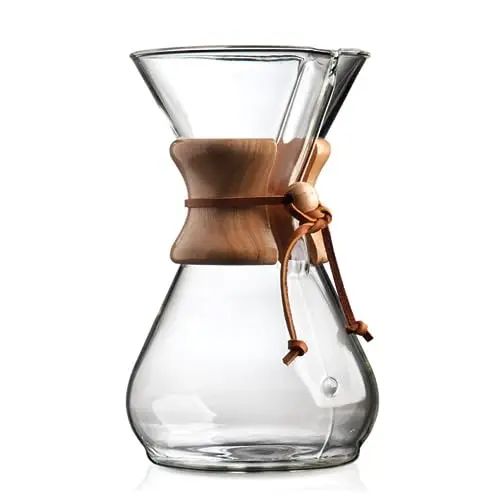
Classic Series 8-Cup – All-Glass Pour-Over
The Chemex Classic Series is the benchmark for non-toxic pour-over brewing. Its borosilicate glass body is non-porous, so it won’t absorb odors or chemical residues, and the patented hourglass shape lets you brew a clean, sediment-free cup. The 8-cup model is the sweet spot for households brewing for two to four people. It uses Chemex-bonded paper filters (sold separately), which trap fine grounds and oils for a bright, tea-like clarity.
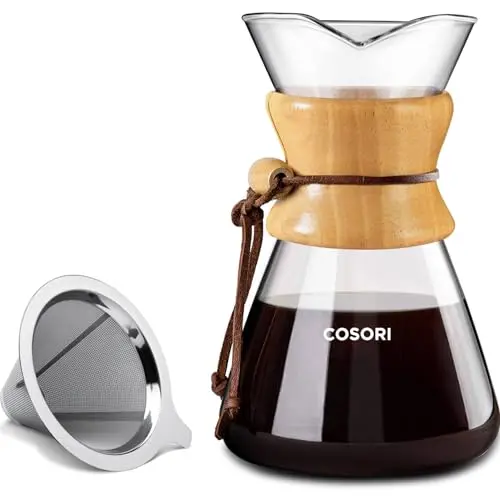
Pour Over Coffee Maker – Double Stainless Filter, 8-Cup
Cosori’s pour-over brewer pairs a heat-resistant borosilicate glass carafe with a double-layer stainless steel filter, so hot water never touches plastic. The 34-ounce capacity yields about eight 4-ounce cups, making it one of the larger manual brewers in this lineup. A wooden sleeve protects your hands and adds a warm, natural look. All materials are BPA-free, and the decanter and filter are dishwasher safe.
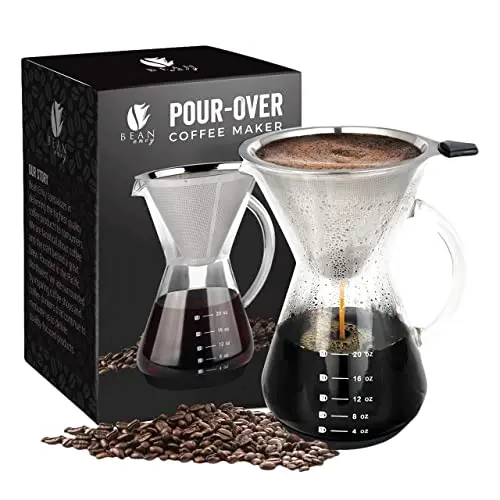
Pour Over Coffee Maker – Reusable Steel Filter, 20 oz
Bean Envy’s 20-ounce pour-over brewer is built around a reusable stainless steel mesh filter and a borosilicate glass carafe with a non-slip silicone base. The compact footprint suits single servings or small batches, and the brand markets the materials as non-toxic. All three components – glass, filter, and silicone base – are dishwasher safe, and the filter lifts out in seconds for cleaning.
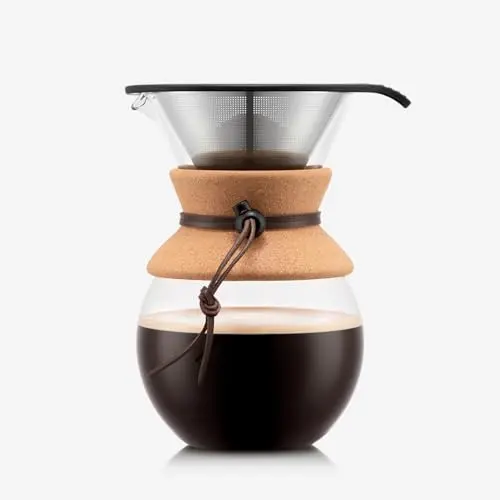
34oz Pour Over Coffee Maker – Cork Grip, Reusable Filter
Bodum’s classic pour-over brewer combines a heat-resistant borosilicate glass carafe with a reusable stainless steel mesh filter and a cork grip. The 34-ounce capacity makes it one of the larger manual brewers, and the cork band stays cool enough to handle. It’s dishwasher safe, and the stainless filter eliminates paper waste. Made in Portugal.
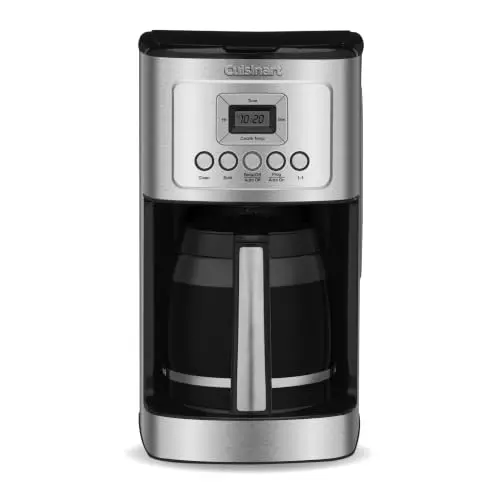
PerfecTemp 14-Cup – Programmable Drip with Hotter Brewing
The Cuisinart PerfecTemp is a programmable automatic drip machine with a 14-cup glass carafe and a stainless steel exterior. It brews at a higher temperature than many competitors and offers an adjustable warming plate. A gold-tone permanent filter and charcoal water filter are included. For a non-toxic setup, it’s a step up from all-plastic machines, but hot water still passes through plastic internals.
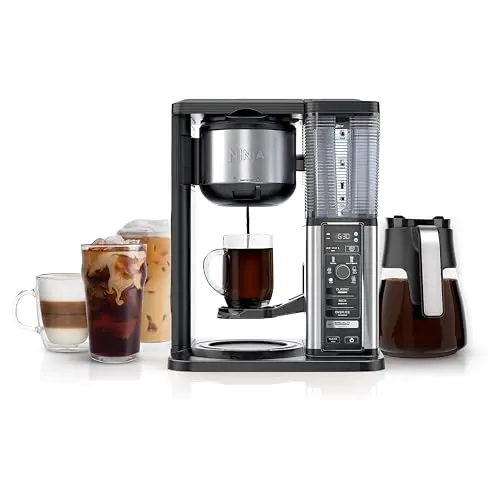
Specialty Coffee Maker CM401 – 4 Brew Styles & Frother
The Ninja Specialty Coffee Maker is a versatile automatic drip machine with four brew styles, six brew sizes, and a built-in fold-away frother. It brews everything from a single cup to a full 10-cup carafe, and it can make iced coffee and specialty concentrate for lattes. The removable water reservoir and dishwasher-safe parts make cleanup easier. It’s a plastic-heavy machine, but the glass carafe and permanent filter are welcome.
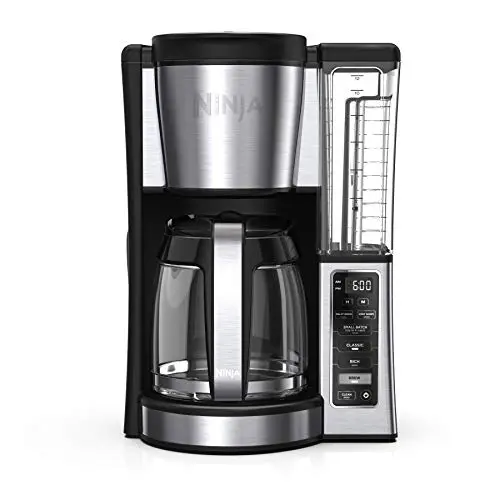
Fresh Brew CE251 – 12-Cup Programmable Drip
The Ninja Fresh Brew CE251 is a 12-cup programmable drip coffee maker with Classic and Rich brew styles, a removable water reservoir, and a small-batch setting. It has a glass carafe, a permanent filter, and a stainless steel finish. The 24-hour delay brew and adjustable warming plate are convenient, but the machine’s internal water path is plastic.
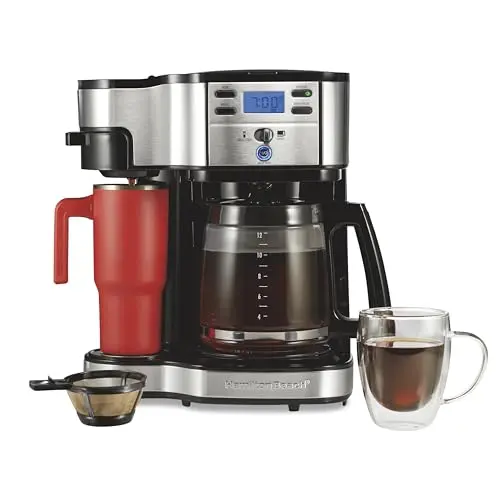
2-Way Programmable 49980RG – Carafe or Single Serve
The Hamilton Beach 2-Way is a dual-purpose coffee maker that brews either a single cup or a full 12-cup carafe. It includes a mesh scoop for single-serve ground coffee, a programmable timer, and separate water reservoirs for each side. It doesn’t use K-Cup pods, which cuts plastic waste. The carafe is glass, but the machine’s brew path is plastic.
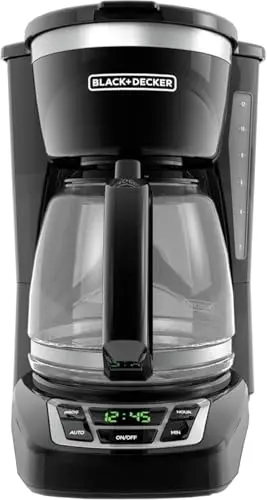
12-Cup Vortex CM1160B – Programmable Drip
The BLACK+DECKER 12-Cup Drip Coffee Maker with Vortex Brewing is a basic, affordable automatic drip machine. It has a 12-cup glass carafe, a programmable timer, Sneak-A-Cup, and a 2-hour auto shutoff. The Vortex brewing technology is designed for richer extraction. It requires standard paper filters and has a plastic brew basket and reservoir.
How We Evaluated These Non-Toxic Drip Coffee Makers
We didn’t run laboratory tests for chemical leaching or measure plasticizer migration under heat. What we did: cross-referenced 9 drip coffee maker models from 8 distinct brands across 6 decision axes – materials in the hot water path, brew temperature, filter type, capacity, ease of cleaning, and owner-feedback patterns. We triangulated published specifications, feature sets, and owner feedback where available, then mapped each brewer to representative buyer profiles for non-toxic coffee making. For manual pour-over brewers, we looked at whether hot water touches only glass and stainless steel. For automatic machines, we noted where plastic is unavoidable in the reservoir, brew basket, or internal tubing, and weighed that against convenience features. We also considered how easy each brewer is to clean and maintain, since residue buildup can affect both flavor and material longevity.
The scoring framework weighted real-world fit for non-toxic brewing (70%) – how thoroughly each model keeps hot water away from plastic and how well it performs its stated brew style – against feature differentiation (30%) – unique advantages like reusable filters, capacity, programmability, and warranty. We have no commercial relationship with any of the brands featured; recommendations track fit and differentiation, not brand preference. If you want the cleanest brew, the Chemex Classic Series 8-Cup is your match; if you need a larger plastic-free batch brewer, the Cosori Pour Over serves you better.
How to Choose the Right Non-Toxic Drip Coffee Maker
1. What Makes a Drip Coffee Maker Non-Toxic?
In coffee makers, non-toxic usually means minimizing contact between hot water and plastic. Heat can accelerate the release of BPA, phthalates, and other compounds from some plastics, so the safest brewers keep the hot water path limited to borosilicate glass, stainless steel, and food-grade silicone. Manual pour-over brewers are the easiest way to achieve this because they have no reservoir, tubing, or brew basket made of plastic. Automatic machines almost always have some plastic in the water path, even if the carafe is glass. The term non-toxic isn’t regulated for coffee makers, so you have to read the materials list rather than trust a label.
2. Pour-Over vs. Automatic Drip: Which Is More Non-Toxic?
Pour-over brewers like the Chemex, Bodum, Cosori, and Bean Envy keep hot water in glass and stainless steel only. There’s no plastic reservoir, no internal tubing, and no plastic brew basket. That makes them the clear winner if material purity is your top priority. Automatic drip machines are more convenient – programmable timers, warming plates, and larger carafes – but they route hot water through plastic parts. If you need an automatic machine, look for one with a glass carafe and a stainless steel exterior, and accept that some plastic contact is unavoidable. The hot water path is the key phrase: trace where the water goes from reservoir to carafe, and count the plastic stops along the way.
3. The Materials That Matter: Glass, Steel, Silicone, and Paper
Borosilicate glass is non-porous, heat-resistant, and doesn’t absorb odors or chemical residues. It’s the gold standard for carafes and pour-over bodies. Stainless steel mesh filters are durable and eliminate paper waste, though they let more sediment and oils into the cup. Food-grade silicone is generally inert and heat-resistant, and it’s often used for bases and grips. If you prefer paper filters, choose unbleached paper filters to avoid chlorine bleaching. Avoid plastic brew baskets and reservoirs when you can, and if you can’t, look for BPA-free claims as a minimum. The Cosori Pour Over is a good example of a brewer that combines glass, stainless steel, and BPA-free materials in one package.
4. Capacity and Brew Size: Match the Brewer to Your Household
Manual pour-over capacities range from about 20 ounces (roughly two to three cups) to 34 ounces (about eight 4-ounce cups). If you’re brewing for one or two people, a compact model like the Bean Envy is plenty. For larger households or guests, the 34-ounce capacity of the Cosori or Bodum is more practical. Automatic machines typically range from 10 to 14 cups, with 12-cup carafes being the most common. Single-serve options exist, but many use plastic pods or mesh scoops – check the materials before committing. Think about how many cups you actually brew at once, not how many you might brew on a holiday.
5. Cleaning and Maintenance for a Long-Lasting Non-Toxic Brewer
Glass and stainless steel are usually dishwasher safe, but check the manufacturer’s instructions for any wood or cork components. Cork grips and wooden sleeves should be hand-wiped with a damp cloth and dried immediately. Automatic machines need regular descaling to prevent mineral buildup, and charcoal filters should be replaced according to the schedule. A self-clean cycle makes descaling easier on models like the Cuisinart PerfecTemp. Clean your brewer consistently – residue buildup can affect flavor and, over time, degrade materials. A clean brewer is also a more pleasant brewer.
6. Price Tiers: What to Expect at Each Level
Entry-level brewers, roughly in the $20-$40 range, include basic pour-overs like the Bodum and budget automatic machines like the BLACK+DECKER. Mid-range options, in the $40-$100 range, add larger capacities, double-layer filters, or programmable features. Premium models sit above that. Price doesn’t always correlate with non-toxic materials – some of the most affordable pour-overs are the most plastic-free. Spend your budget on the features you’ll actually use, not on marketing labels.
Frequently Asked Questions
1. What's the difference between the Chemex and the Bodum pour-over?
Both are glass pour-over brewers with a strong non-toxic story, but they brew differently. The Chemex uses thick paper filters that trap fine grounds and most oils, producing a clean, tea-like cup with high flavor clarity. The Bodum uses a stainless steel mesh filter that lets more oils through, so you get more body and a richer mouthfeel. The Chemex is the pick if you want the purest materials and the cleanest cup. The Bodum has a slight edge in convenience and price, but its filter frame includes a small plastic component – a consideration if zero plastic contact is the goal.
2. Cosori vs. Bean Envy: which reusable-filter pour-over is better?
It comes down to batch size and warranty. The Cosori Pour Over has a double-layer stainless filter and a larger 34-ounce capacity, so it’s better for couples or small gatherings. The Bean Envy has a 20-ounce capacity, a silicone base, and a lifetime warranty, making it a strong choice for single servings and long-term peace of mind. Both keep hot water in glass and stainless steel. Choose Cosori for larger batches; choose Bean Envy for compact brewing and the warranty.
3. Are all drip coffee makers non-toxic?
No. Many automatic drip machines have plastic reservoirs, brew baskets, and internal tubing that contact hot water. Non-toxic isn’t a regulated term for coffee makers, so you have to look at the materials. Manual pour-overs with glass and stainless steel are the safest bet. If you choose an automatic machine, favor one with a glass carafe and a stainless steel exterior, and understand that some plastic is still in the water path.
4. Do I need paper filters for a non-toxic brew?
Not necessarily. Stainless mesh filters are reusable and eliminate paper waste, but they let more sediment and oils through. Paper filters produce a cleaner cup but are disposable; choose unbleached paper if you’re concerned about chlorine bleaching. Either approach can be part of a non-toxic setup as long as the hot water path is glass or stainless steel. The reusable route is more sustainable over time.
5. Which non-toxic drip coffee maker is best for a large household?
For an automatic machine, the Cuisinart PerfecTemp 14-Cup is the best of the bunch, with a glass carafe, stainless steel exterior, and 14-cup capacity. It does have plastic internals, so it’s not a fully non-toxic solution. For a manual option that brews a large batch without plastic in the hot path, the Cosori Pour Over handles 34 ounces – about eight small cups. Both are solid choices for entertaining.
Final Verdict
For most people, the Chemex Classic Series 8-Cup is the best non-toxic drip coffee maker you can buy. It keeps hot water in contact with borosilicate glass and paper only, and it’s forgiving enough for everyday use. If you want a larger plastic-free brewer for guests, the Cosori Pour Over is the pick – its double-layer stainless filter and 34-ounce carafe handle bigger batches without paper. On a tight budget, the Bodum 34oz Pour Over gets you most of the way there for less, with the caveat of a small plastic filter frame. And if you need an automatic machine with programmable convenience, the Cuisinart PerfecTemp 14-Cup is the best of that bunch, though it can’t match the all-glass pour-overs for material purity.
