
Best Non Toxic Duvet Inserts – 2026 Reviews

There’s a moment, usually around the third time you wrestle a duvet cover onto an insert, when you glance at the care label and realize you have no idea what you’re actually sleeping under. A duvet insert is the largest piece of fabric most people own and the least examined – bought on autopilot, washed twice a year, assumed to be fine.
‘Non toxic’ is a phrase that appears in hundreds of bedding listings and means almost nothing on its own, because nobody regulates it. What actually separates a reassuring insert from a vague one comes down to two things: whether there’s a real third-party certification attached to the finished textile, and whether the fill and shell are materials you’re comfortable having against your skin for eight hours a night.
The market splits cleanly in two. Polyester down-alternative inserts are inexpensive, washable, and easy to live with. Feather and down fiber inserts cost more, breathe differently, and need genuinely careful processing to be worth their price. We cross-shopped both camps across major brands, from entry-level to hotel-supply tier, so you can pick the one that fits your bed, your budget, and your definition of clean.
Best Non Toxic Duvet Inserts – 2026 Reviews
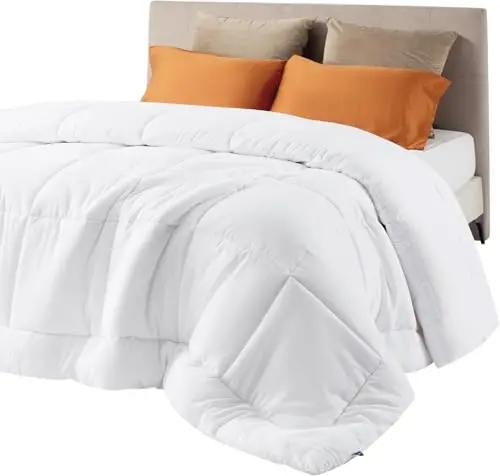
Comforter Duvet Insert – Certified All-Season Fill
An all-season down-alternative insert pairing a brushed polyester shell with GentleSoft polyester fill, box-stitched to hold its loft. It carries OEKO-TEX certification, ships with eight tabs for duvet-cover anchoring, and comes in a size run that stretches from twin all the way to oversized king.
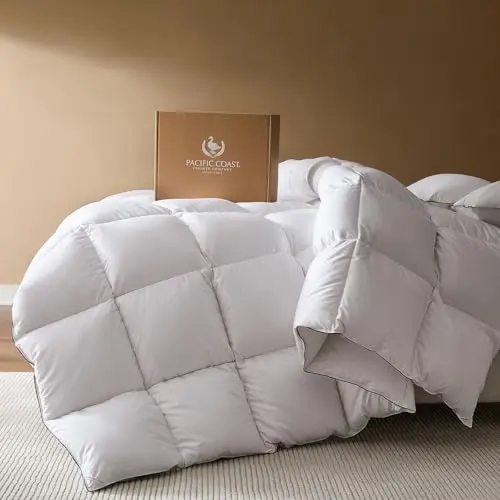
Goose Down Fiber Comforter – Baffle-Box Hotel Luxury
A hotel-supplier insert built around white goose down fiber in a 3D baffle-box shell. Certified to OEKO-TEX Standard 100 and RDS, with eight corner and center loops, a cotton-poly cover, and a three-year warranty.
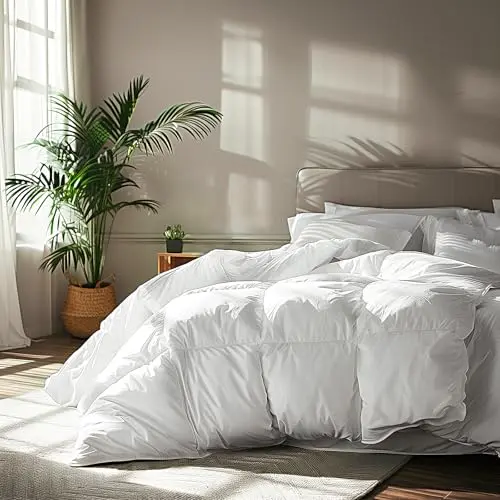
Hotel Collection Goose Feather Down Fiber – Cotton-Cover Warmth
A goose feather fiber and down fiber insert wrapped in a 233-thread-count cotton shell. OEKO-TEX certified with FreshLoft processing, sewn-through box construction, four corner loops, and all-season medium warmth.
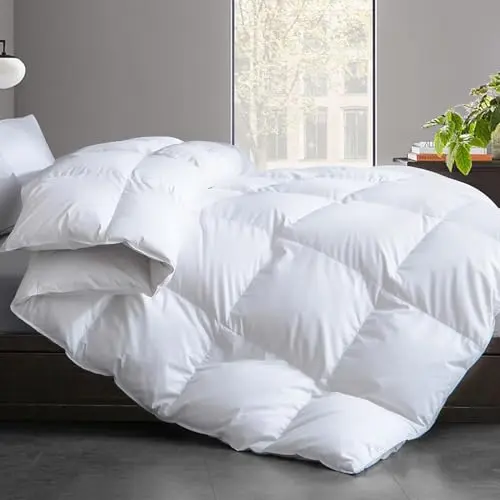
Feather and Down Fiber Insert – Washable Cotton Cover
A feather and down fiber insert with a high-density 100% cotton shell certified to OEKO-TEX Standard 100. Box-stitched with four corner tabs, medium warmth, and machine-washable care.

UB0063 – Entry-Level Box-Stitch Insert
A box-stitched polyester down-alternative insert with piped edges, corner tabs, and a light, fluffy feel. Machine washable and priced at the entry tier, though the listing doesn’t call out textile certification.

Organic Cotton Goose Feather Down Fiber – Machine-Washable Loft
A goose feather and down fiber insert with a 100% organic cotton cover, RDS and OEKO-TEX Standard 100 certification, baffle-box construction, and machine-washable care.
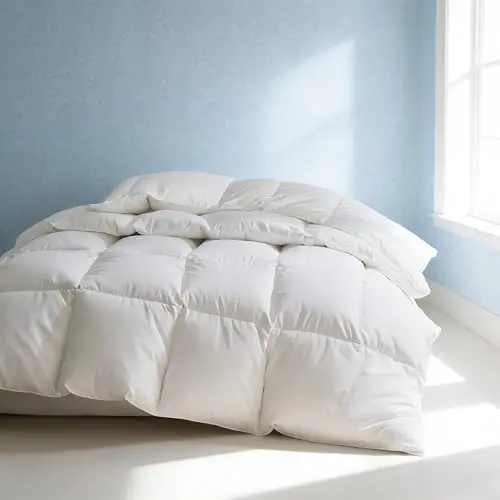
Goose Feather Down Fiber Comforter – Three Warmth Levels
A white goose feather and down fiber insert in a 100% cotton shell, OEKO-TEX certified, with sewn-through box construction and all-season medium warmth across three sizes and three warmth levels.
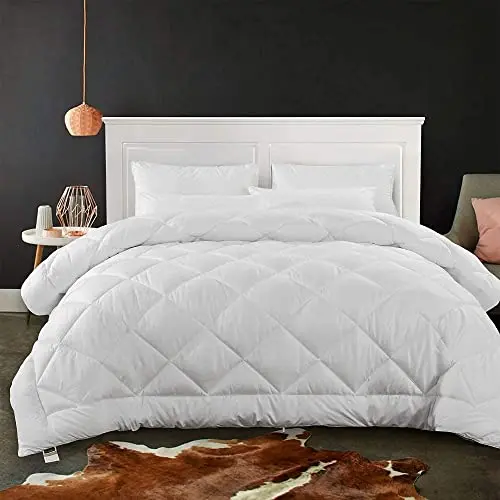
Diamond-Stitch Down Alternative – King-Size Drape
A lightweight down-alternative insert in a brushed microfiber shell, with diamond baffle-box stitching and four corner loops. Built with king and oversized beds in mind, using a 250 GSM whole-piece polyfill.

LCDACW08Q – Ultralight All-Season Insert
A lightweight queen insert with a microfiber shell and a 3D/7D down-alternative fill, box-stitched with four corner loops. Machine washable, vacuum packed, and the lightest option in this lineup.
How We Evaluated These Non Toxic Duvet Inserts
We didn’t send these inserts to a lab for off-gassing or chemical-residue testing. What we did: cross-referenced 9 duvet inserts from 9 distinct brands across six decision axes – fill material, shell fabric, third-party certification, construction, care requirements, and size and warmth options. We triangulated published specifications, certification claims listed on each product page, and owner feedback where available, then mapped every option against realistic buyer profiles: hot sleepers, allergy-sensitive households, budget shoppers, and anyone who wants a washable insert instead of a dry-clean-only one. Because most inserts ship vacuum compressed, loft recovery also fed into the construction evaluation.
The scoring framework weighted real-world fit (70%) – how well each insert delivers on its stated warmth, breathability, and care promise – against feature differentiation (30%), which in this category means certification depth, baffle-box versus simple box construction, and how many tabs anchor it to a cover. Because ‘non toxic’ isn’t a regulated claim, documented certification carried more weight than marketing language. We have no commercial relationship with any brand featured; recommendations track fit and differentiation, not brand preference. If you want the best balance of certification and washability, the Bedsure Comforter Duvet Insert is the pick; if you want genuine down fiber with hotel-grade construction, the Pacific Coast Goose Feather Down Fiber Comforter earns it.
How to Choose the Right Non Toxic Duvet Insert
1. What 'Non Toxic' Actually Means on a Duvet Insert Label
There’s no regulated definition of ‘non toxic’ for bedding in the U.S., so treat the phrase as a prompt to check for third-party testing rather than a guarantee. The most useful benchmark is OEKO-TEX Standard 100, which tests the finished textile – shell, fill, and all – against a list of harmful substances. It applies equally to polyester and to natural fills, which means a certified synthetic insert is often a safer bet than an uncertified ‘all natural’ one.
If the fill is down or feather, look for Responsible Down Standard (RDS) or Down Pass alongside OEKO-TEX. Those speak to traceability and animal welfare as well as processing cleanliness. What they don’t tell you is how the insert is handled after certification – which is why care instructions belong in the same conversation.
2. Down Alternative vs Feather and Down Fiber: Which Fill Is Cleaner?
Neither fill is inherently ‘more toxic.’ Polyester down-alternative is an inert synthetic fiber; the realistic concerns are residual dyes, finishes, and any chemical smell when you unbag it. Feather and down fiber are natural, but natural fills need rigorous multi-stage washing to remove dust and allergens – a poorly processed feather insert can be the dustier of the two.
That’s why certification matters more than material category. Among feather-and-down options here, look for language about sanitization, allergen-free processing, and OEKO-TEX Standard 100. If you want natural fill without the luxury tier, the Cosybay Feather and Down Fiber Comforter Insert pairs a certified cotton shell with a mid-range fill and stays machine washable.
3. Why the Shell Fabric Matters as Much as the Fill
The shell is the layer against your skin, and it’s the part most listings bury. A 100% cotton cover breathes, feels cooler, and – on feather and down inserts – holds quills in better than thin synthetics. A polyester microfiber shell is durable and cheap, runs quieter than stiff cotton, and is easier to launder, but it also traps heat.
Thread count is a rough quality signal on cotton shells; a 233 thread count is a reasonable middle ground where the fabric feels like cloth rather than paper. If a cotton shell is non-negotiable, the Serta Hotel Collection Goose Feather Down Fiber Comforter is the strongest cotton-first option here – just note the dry-clean care.
4. Care Instructions Are Part of the Non Toxic Equation
A certified insert that has to be dry cleaned every season is only half a win. Conventional dry cleaning relies on solvent-based processes, so if limiting chemical exposure after purchase matters to you, a machine washable insert is the more coherent choice. Most of the polyester inserts here can go in a machine on cold, as can the Cosybay and L LOVSOUL feather fills; the Serta, Pacific Coast, and Martha Stewart inserts are dry clean or spot clean only.
Whatever you buy, run it inside a duvet cover. A cover absorbs most of the skin contact and lets you wash the cover weekly while laundering the insert only a few times a year – which extends the life of both. If you want the best balance of certification and washability, the Bedsure Comforter Duvet Insert handles both better than most.
5. Construction Details That Decide How Long a Duvet Insert Lasts
Box stitching is the baseline: it creates pockets that hold fill in place so it doesn’t slide to one end by morning. Baffle-box construction is the upgrade – fabric sidewalls between chambers let the fill loft fully instead of being pinched flat at each seam, which is why a baffle-box insert feels plumper at the same weight. Expect baffle boxes on premium natural fills and simple box stitching almost everywhere else.
Count the tabs. Four corner tabs are standard; eight tabs or loops keep an insert much better anchored inside a cover. And plan for loft recovery – almost every insert ships vacuum compressed and needs anywhere from a day to three days to reach full size.
6. Sizing, Warmth, and What Non Toxic Duvet Inserts Cost
Match the insert’s dimensions to your cover, not to your mattress. A standard queen insert runs 88 to 92 inches square; oversized queen and king sizes add real drape on thick mattresses. Warmth is the other variable worth deciding before you shop: most inserts here are all-season or light, while Serta, Martha Stewart, and Pacific Coast offer a medium fill that suits a normally heated bedroom.
On cost, the market splits into three broad tiers. Entry-level polyester sits at the bottom and is genuinely fine for guest rooms. Mid-range cotton-cover feather and down fiber is where certified natural fill becomes accessible. Premium baffle-box down fiber with warranties and hotel credentials is the top tier – worth it if you keep bedding for a decade.
Frequently Asked Questions
1. Are non toxic duvet inserts actually regulated?
No. ‘Non toxic’ is a marketing phrase, not a standard, so the practical approach is to look for third-party textile certification – primarily OEKO-TEX Standard 100 – and then read the materials yourself. A certified polyester insert is a more defensible choice than an uncertified ‘all natural’ one, because certification covers the finished product including dyes and finishes.
Pair that with sensible care. Wash new bedding before use, air out anything that arrives with a chemical smell, and lean toward machine-washable inserts if solvent-based dry cleaning is something you’d rather avoid.
2. What's the difference between the Bedsure comforter and the Pacific Coast down fiber comforter?
They sit at opposite ends of the category. Bedsure is a polyester down-alternative insert – OEKO-TEX certified, machine washable, with eight anchor tabs and the widest size range here. Pacific Coast is a goose down fiber insert with a cotton-poly shell, 3D baffle-box chambers, RDS certification on top of OEKO-TEX, and a three-year warranty, but it’s spot-clean or dry-clean only.
Choose Bedsure if you want certification plus easy, solvent-free care at a mid-range tier. Choose the Pacific Coast Goose Feather Down Fiber Comforter if you want natural fill and hotel-grade construction.
3. Are feather and down fiber inserts hypoallergenic?
Only if the fill has been properly processed. Raw feather and down can carry dust and allergens, which is why the better inserts here describe multi-stage washing or sanitization and carry OEKO-TEX Standard 100. Serta uses a FreshLoft treatment and markets its insert as hypoallergenic; Pacific Coast describes its fill as triple-sanitized and allergen-free.
If you have a diagnosed down allergy, a polyester down-alternative insert is the safer route regardless of processing. And note that quill leakage – feathers working through the shell over time – is a separate annoyance from allergy, but it’s the most common complaint among natural-fill owners.
4. Serta vs Cosybay: which feather-down insert is the better buy?
Both are certified feather-and-down inserts with cotton shells; the difference is care and construction. Serta runs a 90/10 goose feather and down fiber blend in a 233-thread-count cotton shell with sewn-through box construction and four corner loops, and it’s dry clean only. Cosybay uses a feather-and-down-fiber fill in a high-density OEKO-TEX cotton shell, medium warmth, and is machine washable.
For most households the Cosybay Feather and Down Fiber Comforter Insert is the more practical pick because of washability. Go with Serta if you prioritize cotton hand-feel and are comfortable with professional cleaning.
5. Do non toxic duvet inserts need a duvet cover?
Yes, and it’s the easiest way to keep one clean. A cover takes the skin contact, gets washed weekly, and shields the insert from sweat and oils – which means you’re laundering the bulky insert a few times a year instead of monthly. It also reduces wear on the shell, the usual failure point on feather and down inserts.
Check that your cover’s interior ties line up with the insert’s tabs. Four tabs is workable; eight tabs on an insert like Bedsure or Pacific Coast keeps things noticeably tidier, and a box-stitched or baffle-box insert will hold its shape longer between washes.
Final Verdict
If you want one answer, it’s the Bedsure Comforter Duvet Insert. It’s the only insert here that pairs OEKO-TEX certification with machine-washable care, eight anchor tabs, and a size range that covers almost any bed – and it does it at a mid-range tier rather than a luxury one. For most shoppers, that combination ends the search.
If budget is the constraint and certification isn’t, the Utopia Bedding Duvet Insert gets a bed covered for entry-level money and still sleeps comfortably. And if you want natural down fiber with hotel-grade baffle-box construction, RDS traceability, and a warranty behind it, the Pacific Coast Goose Feather Down Fiber Comforter is purpose-built for exactly that.
