
Best Non-Toxic Mattress Protectors – 2026 Reviews

You buy a mattress protector for one unglamorous reason: to keep something expensive from getting wrecked. But the layer that sits between you and your mattress for eight hours a night is also the closest textile to your skin, and most shoppers never turn it over to read what it’s made of.
That’s where non-toxic gets slippery. There’s no regulated definition and plenty of listings slap the word on a polyester cover with a mystery backing. The two things that actually matter are the sleep surface, whether that’s cotton terry, bamboo viscose, or brushed microfiber, and the waterproof membrane underneath, which is usually a polyurethane or TPU laminate rather than the older vinyl and PVC films.
Third-party certification is the closest thing to a shortcut, and only a handful of covers here carry one. We compared the market and grouped the options by what each is genuinely good at, from documented material claims to deep-pocket fit to cooling performance, so you can pick the tradeoff that fits your bed rather than the loudest label on the box.
Best Non-Toxic Mattress Protectors – 2026 Reviews
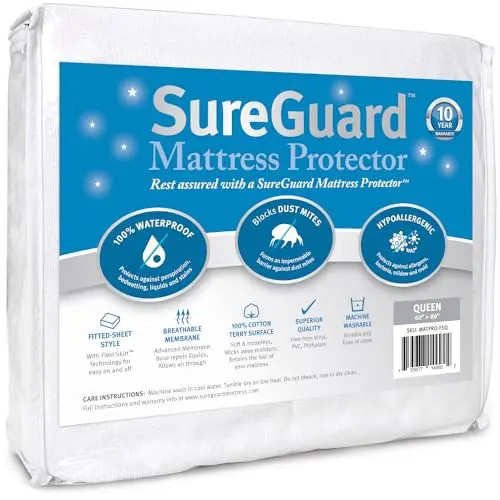
Cotton Terry Protector – GreenGuard Gold Certified Barrier
A cotton terry fitted protector with a waterproof membrane and the most concrete material claims in this lineup. The skirt stretches over deep mattresses and the surface stays quiet under sheets.
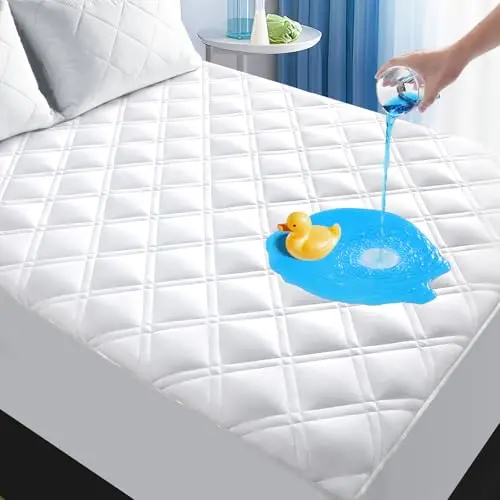
Quilted Waterproof Protector – OEKO-TEX Certified Surface
A quilted, OEKO-TEX certified protector with a pocket range that swallows thick mattresses. The diamond quilting adds light cushioning, and the TPU backing handles spills.
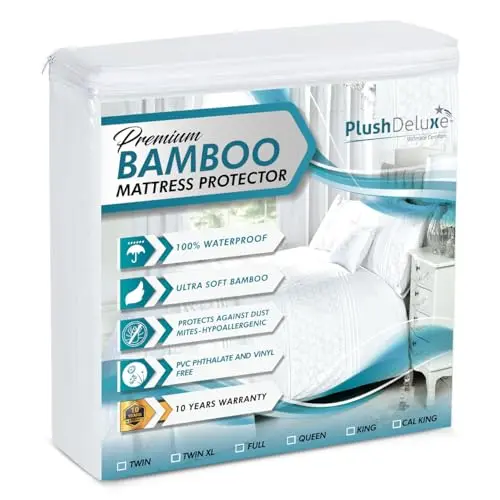
Bamboo Viscose Protector – Soft, Silent Sleep Surface
A bamboo viscose cover that prioritizes feel: soft, quiet, and breathable, with a waterproof membrane underneath. Fits mattresses up to 18 inches deep.

Cotton Terry Protector – Quiet Everyday Waterproofing
A widely used cotton-blend terry protector with a quiet polyurethane backing. Simple fitted-sheet design, machine washable, and easy to live with.
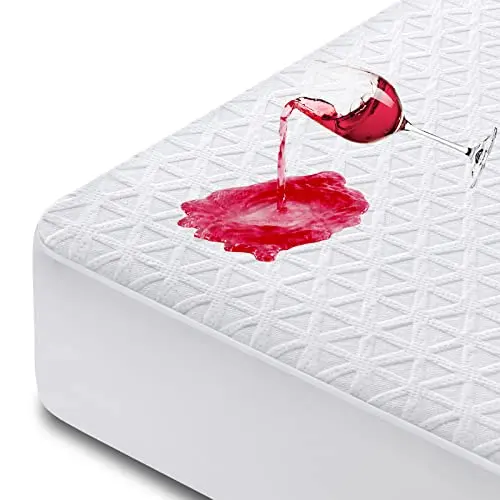
3D Air Bamboo Protector – Widest Pocket Range
A textured 3D air-mesh cover with a bamboo-blend surface and a TPU backing. The deepest pocket fit in this lineup, stretching to 21 inches.
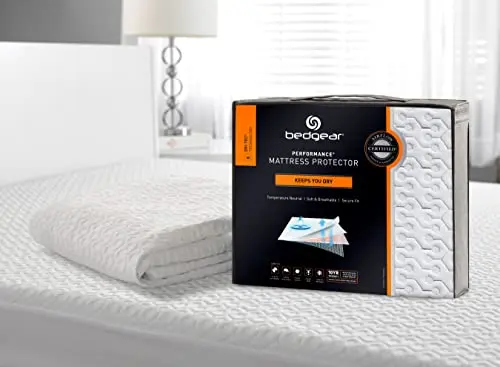
Dri-Tec Protector – Moisture-Wicking for Hot Sleepers
A performance-fabric protector built for hot sleepers, with moisture-wicking Dri-Tec material, a quiet waterproof barrier, and a fit that works on adjustable bases.
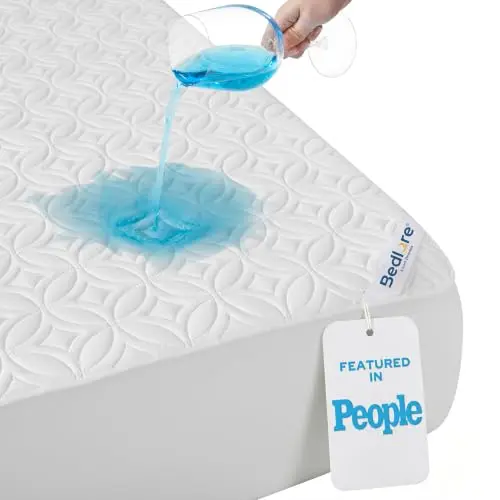
Quilted Microfiber Protector – Soft, Slip-Free Fit
A quilted brushed-microfiber protector with a waterproof TPU layer and a 360-degree elastic skirt. Quiet, soft, and priced in the accessible tier.
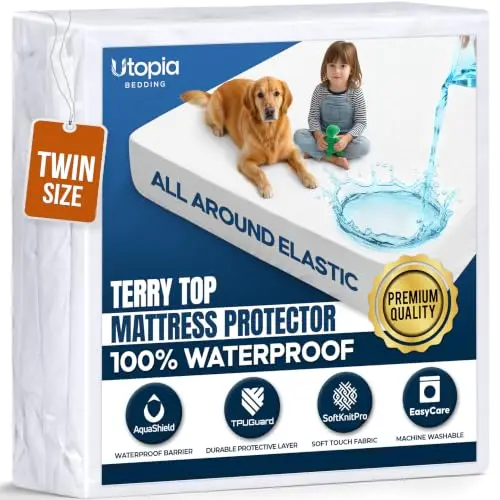
Waterproof Protector – Simple Low-Cost Barrier
A straightforward waterproof protector with a TPU backing and a soft blended surface. Fitted style with all-around elastic, machine washable, and offered in a wide size range.
How We Evaluated These Non-Toxic Mattress Protectors
We cross-referenced eight mattress protectors from eight distinct brands across five decision axes: sleep-surface material, waterproof backing type, third-party certification, fit and depth range, and long-term care requirements. Every claim in this guide traces back to published product specifications, manufacturer material disclosures, and aggregated owner feedback where available. We audited the certification and free-from language closely, because terms like non-toxic, eco-friendly, and hypoallergenic get used loosely in bedding and only some of them are backed by actual testing. A cover that names its membrane chemistry and carries a certification tells you far more than one that simply repeats the word natural.
The scoring framework weighted real-world fit and performance (70%) – how well each protector handles spills, stays silent under movement, and suits the mattress depth it’s bought for – against feature differentiation (30%), which for this topic means material transparency and verified safety credentials. We pressure-tested the marketing against the spec sheets rather than taking either at face value. We have no commercial relationship with any of the brands featured, and recommendations track fit and differentiation, not brand preference. A few things we can’t tell you: we didn’t run chemical lab assays on these covers or conduct skin-patch testing on sleepers. What we can: read the specs, verify the certifications, and map owner experience against them. If certification is your priority, the SureGuard Cotton Terry is the clear starting point; if you’re covering a deep pillow-top, the GOPOONY 3D Air fits where others won’t.
How to Choose the Right Non-Toxic Mattress Protector
1. What Makes a Mattress Protector Genuinely Non-Toxic
There’s no legal definition behind the phrase, so treat it as a starting point rather than a guarantee. A protector has two parts that matter: the sleep surface your skin rests against, and the waterproof membrane laminated underneath. Older protectors relied on vinyl and PVC films. Almost everything currently sold uses a polyurethane or thermoplastic polyurethane laminate instead, which is thinner, quieter, and doesn’t carry the same plasticizer concerns. If a listing names its membrane chemistry, that’s a good sign; if it only says waterproof, assume nothing.
The strongest signal is an explicit free-from statement paired with testing. The SureGuard Cotton Terry spells out that it’s free of vinyl, PVC, phthalates, and fire retardants, and backs that with GreenGuard Gold certification from independent lab testing. That’s the benchmark the rest of this lineup gets measured against.
2. Surface Fabric: Cotton Terry, Bamboo Viscose, and Brushed Microfiber
The surface determines how the cover feels and how well it breathes. Cotton terry is the most traditional choice: absorbent, quiet, and closer to a towel than a sheet, though it holds moisture longer after a wash. Bamboo viscose is softer and wicks sweat effectively, which is why it shows up in comfort-focused covers, but it’s usually blended with polyester and can sleep warm for some people. Brushed microfiber and polyester blends are the affordable tier: durable and smooth, less breathable, and rarely backed by a certification.
3. Certifications Worth Looking For on a Mattress Protector
Two certifications carry weight here. GreenGuard Gold tests for volatile organic compound emissions, the closest thing to an indoor-air quality check for bedding. OEKO-TEX tests textiles for harmful substances, including the dyes and finishes that touch skin. Neither is mandatory, so the absence of a certification isn’t proof of a problem. It just means the safety claim is unverified.
In this lineup, the MEELUS is the other cover with a testing standard attached, in its case OEKO-TEX certification on the surface fabric. If a listing uses the words natural, eco, or hypoallergenic with no certification and no material disclosure behind them, weigh that accordingly.
4. Fit, Depth, and Why Your Protector Slides Around
Deep pockets aren’t a marketing nicety. They’re the difference between a cover that stays flat and one that bunches at the corners by morning. Measure your mattress, including any topper. Standard depths run to about 15 inches; pillow-tops and topper setups can push past 20. A 360-degree elastic skirt holds better than corner straps, and stretch matters more than the stated maximum.
If your mattress is unusually deep, the GOPOONY 3D Air stretches the furthest of anything here. For a standard bed, a mid-range pocket range is plenty and you can put the money toward better fabric instead.
5. Noise, Heat, and What Breathability Really Means
Older waterproof covers crinkled because the barrier was a stiff film. Modern PU and TPU laminates are thin enough to stay silent, and the covers here are all described as noiseless, a claim that mostly holds up. Heat is the harder problem. A waterproof layer traps moisture by definition, so breathability comes from how the surface fabric and backing are constructed together, not from a single spec.
Hot sleepers should prioritize a moisture-wicking surface and an airflow-oriented build. Quilted and fiberfill-topped protectors add cushioning but also insulation, which is worth knowing before you buy one for a warm bedroom.
6. How Much Does a Non-Toxic Mattress Protector Cost?
Pricing in this category splits into three rough tiers. Entry-level covers get you a polyester surface, a TPU backing, and no certification. Mid-range covers add cotton terry or bamboo blends, better pocket ranges, and occasionally a testing standard. Premium covers push into performance fabrics engineered for cooling, and that’s where you pay for engineering rather than safety credentials.
Spending more doesn’t automatically buy a cleaner material story. Some of the most expensive covers here carry no certification at all, while mid-range options do. Decide which of those two things you actually want before you shop.
Frequently Asked Questions
1. Are non-toxic mattress protectors actually non-toxic, or is that just marketing?
Mostly marketing on the surface, with real substance underneath if you know where to look. There’s no regulated definition, so any brand can use the phrase. What separates a better cover from a worse one is the waterproof membrane chemistry, since modern polyurethane and TPU laminates have largely replaced the vinyl and PVC films older protectors used, plus whether the maker discloses what’s in the surface fabric.
Certification is the shortcut. GreenGuard Gold and OEKO-TEX both involve third-party testing, so a cover carrying either has been checked by someone other than the brand. A cover carrying neither might still be fine, but you’re taking the claim on trust.
2. What's the difference between the SureGuard cotton terry protector and the SafeRest protector?
They’re aimed at different buyers. SureGuard is the more documented option: 500-thread-count cotton terry, an explicit statement that it’s free of vinyl, PVC, phthalates, and fire retardants, and GreenGuard Gold certification after independent lab testing, with a 10-year quality guarantee behind it. SafeRest uses a similar cotton-blend terry surface and a quiet polyurethane backing, but the listing makes no certification or free-from claim at all.
In practice, SureGuard is the pick if material transparency is your reason for shopping. SafeRest is the more affordable, widely used workhorse, perfectly reasonable if you care more about quiet waterproofing than paperwork.
3. PlushDeluxe bamboo vs. GOPOONY 3D Air: which is better for hot sleepers?
Neither is the dedicated cooling pick, but they fail differently. PlushDeluxe’s viscose from bamboo surface wicks moisture well and feels genuinely soft, but temperature feedback is divided, with some sleepers finding the bamboo-polyester blend runs warm. GOPOONY’s 3D air fabric has a raised, ventilated structure that moves air more readily, though it’s more polyester than bamboo in composition.
If cooling is the main goal, the Bedgear Dri-Tec is the cover actually engineered for it, with moisture-wicking fabric and an airflow-friendly build. Between the two bamboo-leaning options, GOPOONY breathes better; PlushDeluxe feels better against the skin.
4. Do these protectors hold up for toddlers, pets, and bed-wetting?
Yes, with a caveat about expectations. Waterproof barriers in this category are thin laminates, and heavy or repeated soaking is where complaints show up, even on covers that handle light spills cleanly. The practical move is to own two: one protects the mattress while the other washes, and both last longer when they aren’t cycled every single day.
For a child’s bed, the Utopia Bedding twin is a sensible first cover: cheap enough to buy in pairs, simple to wash, and easy to replace. Add a quilted layer on top if comfort matters more than cost.
5. How often should you wash a mattress protector?
Every one to two months for routine maintenance, and immediately after any spill or accident. Most covers here are machine washable on cold or warm with a low tumble dry. Avoid high heat, since it degrades the laminate faster than anything else. Skip fabric softener and bleach; both break down the waterproof layer over time.
Wash before the surface looks dirty. Body oils and sweat reach the membrane long before stains show, and that’s what shortens a protector’s useful life.
Final Verdict
For most people, the SureGuard Cotton Terry is the answer. It’s the only cover here that pairs documented free-from claims with a real GreenGuard Gold certification, and the cotton terry surface means you aren’t sleeping on plastic to get it. If you want certified fabric without the premium, the MEELUS carries OEKO-TEX certification and a pocket range that swallows thick mattresses. Hot sleepers should go straight to the Bedgear Dri-Tec, whose moisture-wicking fabric is built for exactly that problem. And for a kid’s bed or a rental where the cover is a practical layer, the Utopia Bedding twin gets it done without pretending to be something it isn’t.
