
Best Non-Toxic Mattress Toppers – 2026 Reviews

A mattress topper should solve a small problem – a too-firm bed, a guest room that needs help, a pressure point that keeps waking you up – without introducing a bigger one. For anyone shopping non-toxic, the challenge is that ‘natural’ and ‘safe’ get used loosely. A topper can be comfortable and still have a vague material story.
The two axes that matter most are material transparency and sleep comfort. Look for specific certifications or disclosures – GOLS organic latex, CertiPUR-US foam, or clear formaldehyde- and latex-free claims – then weigh firmness, cooling, fit, and care. A certified foam topper can be the right call for one sleeper; a cotton or latex layer can be better for another.
This guide surveys the non-toxic mattress topper market across brands and styles, from organic latex to washable cotton pads, so you can match the material story to the way you actually sleep.
Best Non-Toxic Mattress Toppers – 2026 Reviews
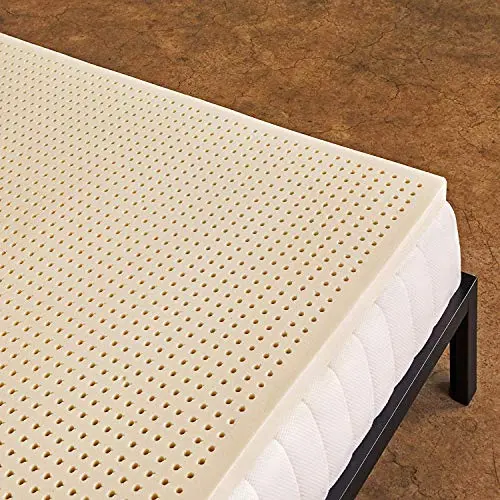
Natural Latex Topper – GOLS-Certified Organic Softness
A natural latex topper for sleepers who want a simple, certified-organic layer instead of memory foam. The soft two-inch profile adds cushioning while latex naturally stays cooler and responds to body weight without the slow sink of foam.
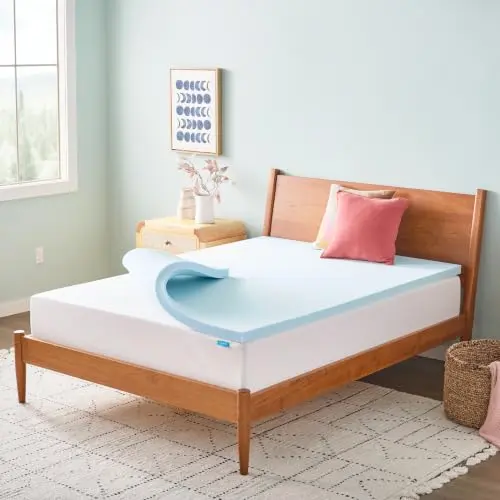
2-Inch Gel Memory Foam Topper – CertiPUR-US Plush Comfort
A budget-friendly gel memory foam topper with the CertiPUR-US certification shoppers look for when they want a foam layer without unknown material claims. The plush two-inch profile softens a hard mattress and fits under standard fitted sheets.
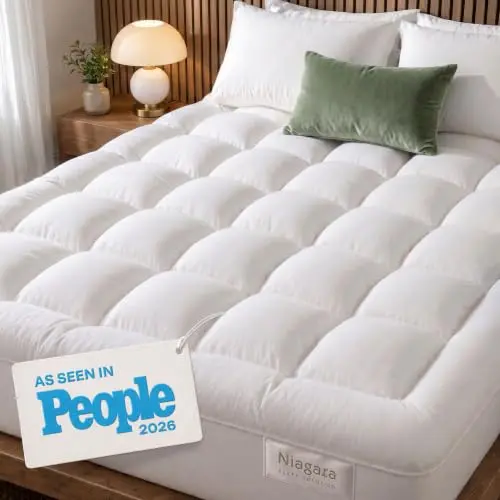
100% Cotton Top Mattress Pad – Breathable Sensitive-Skin Comfort
A cotton-topped pillow pad for sleepers who want a breathable, washable layer without latex or formaldehyde claims. The deep pocket design wraps thick mattresses and adds cloud-like cushioning without the heat of foam.
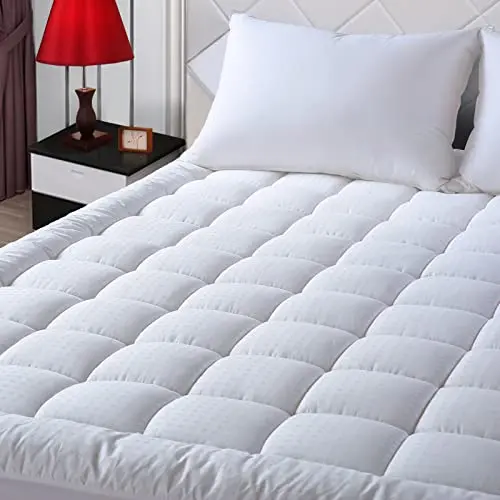
Cotton Pillow Top Mattress Pad – Deep-Pocket Washable Softness
A quilted cotton-top mattress pad that adds a soft, pillow-like layer to a firm mattress. The deep pocket skirt grips thick beds, and the whole pad is machine washable for easy refresh.
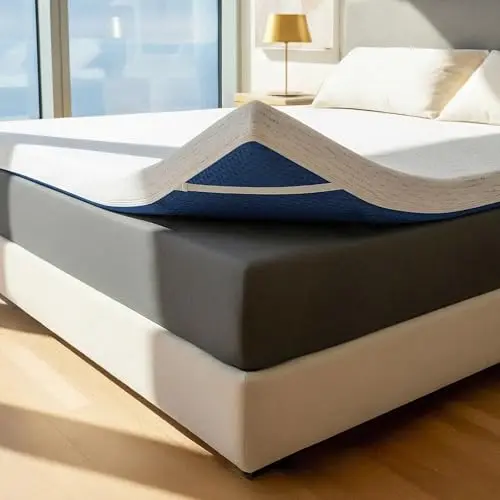
High Density 3-Inch Memory Foam Topper – Pressure Relief With Washable Cover
A high-density memory foam topper built for pressure relief and spinal alignment, with a removable washable cover and a medium-firm feel. The gel-infused foam is designed to draw heat away and keep airflow moving.
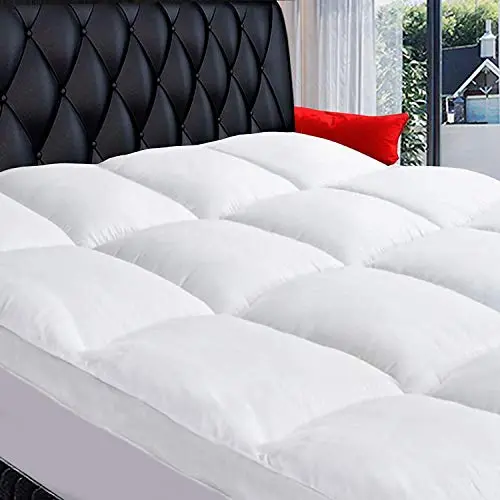
Cotton Extra Thick Pillow Top – Overfilled Cooling Comfort
An overfilled pillow-top pad with a 100% cotton top for sleepers who want a thick, fluffy layer over a hard mattress. The deep pocket skirt keeps it in place, and the pad is machine washable.
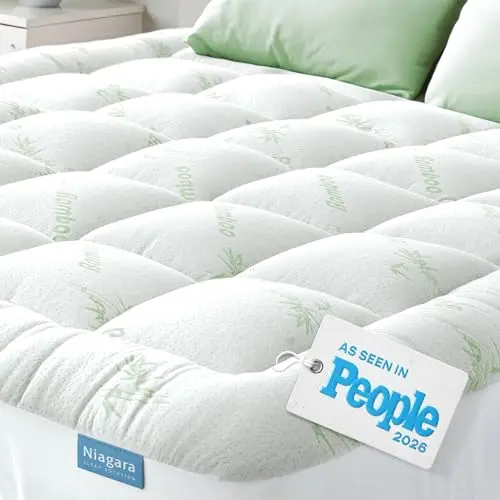
Rayon from Bamboo Topper – Breathable Full-Size Comfort
A full-size pillow topper with a rayon-from-bamboo surface for breathable, sweat-absorbent comfort. The deep pocket design fits thick mattresses, and the pad is machine washable.
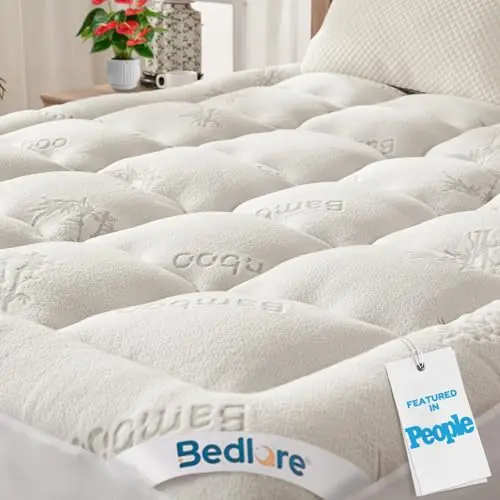
Bamboo Viscose Pillow Top – Breathable Deep-Pocket Comfort
A pillow-top topper with a bamboo viscose blend surface for breathable, soft comfort. Deep elastic pockets grip the mattress, and the pad is machine washable for easy upkeep.
How We Evaluated These Non-Toxic Mattress Toppers
We didn’t run lab emissions testing or months-long sleep trials. What we did: cross-referenced 8 mattress toppers from 7 distinct brands across five decision axes – material and certification transparency, firmness and pressure relief, temperature regulation, fit and pocket depth, and care and washability. We triangulated published specifications, certification and material disclosures, owner feedback where available, and use-case fit against representative buyer profiles for this category. Where a product lacked a third-party certification, we treated that as a real limitation rather than filling the gap with assumptions.
The scoring framework weighted real-world fit and performance (70%) – how well each topper delivers on comfort, support, and the non-toxic promise – against feature differentiation (30%) – unique material advantages, cooling design, cover practicality, and care. We have no commercial relationship with any of the brands featured; recommendations track fit and differentiation, not brand preference. If you want the strongest organic-material story, the Sleep On Latex topper is the match. If you want a certified foam topper at a more approachable tier, the Linenspa gel memory foam topper is the practical route.
We also mapped claims against what each product actually discloses. A GOLS certification, a CertiPUR-US label, or a clear formaldehyde-free statement carries more weight than a vague ‘natural’ descriptor. The result is a lineup built for shoppers who care about both what goes into the topper and how it feels under a sheet.
How to Choose the Right Non-Toxic Mattress Topper
1. What Makes a Mattress Topper Genuinely Non-Toxic?
Non-toxic is not a regulated label for mattress toppers, so the burden is on the buyer to read the material list and look for third-party verification. The strongest signals are specific: GOLS certification for organic latex, CertiPUR-US for polyurethane foam, and clear disclosures that a product is free of formaldehyde or certain chemical finishes. A cotton cover with a polyester fill can still be a reasonable choice, but the word ‘natural’ on its own does not tell you much. Pay attention to the full construction – top fabric, fill, backing, skirt, and any adhesives – not just the layer you touch.
2. Natural Latex vs. Memory Foam vs. Fiberfill: Material Tradeoffs
Natural latex is the most straightforward non-toxic story when it carries a credible organic certification. It responds quickly, sleeps cooler than memory foam, and tends to be durable, but it is firmer and heavier than a fiberfill pad. Memory foam delivers pressure relief and motion isolation, and a CertiPUR-US label gives it a clearer safety profile, but off-gassing and heat retention are common tradeoffs. Cotton and bamboo-rayon pads are breathable and washable, though they add surface softness rather than deep support. Match the material to your priority: certification, pressure relief, or washability.
3. Certifications That Matter for a Non-Toxic Mattress Topper
GOLS is the certification to look for if organic latex is your goal. It verifies the latex content and processing against the Global Organic Latex Standard, and Fair For Life adds a fair-trade layer. CertiPUR-US is the relevant benchmark for foam: it covers emissions and heavy metals, though it is not an organic certification. For cotton or fiberfill pads, there is less standardization, so brand disclosures and material lists matter more. A product that clearly states it is free of formaldehyde and latex is more useful than a vague ‘chemical-free’ claim. If organic latex is the priority, the Sleep On Latex topper is the clearest example in this lineup.
4. Cooling, Breathability, and Off-Gassing: What to Expect
Cooling claims are where mattress toppers get slippery. Gel-infused foam can help move heat, but it does not turn a memory foam topper into a cool surface for every sleeper. Latex and cotton tend to breathe better, while fiberfill pads depend on loft and airflow. Off-gassing is a separate issue: new foam can have a detectable odor that usually fades, while natural latex may have a mild rubber smell. If odor sensitivity is a concern, air the topper out before use and prioritize products with clearer material disclosures. The Linenspa gel memory foam topper is a reasonable certified-foam option, but hot sleepers should still weigh the mixed cooling feedback.
5. Fit, Thickness, and Care: Matching a Topper to Your Bed
A topper only works if it stays put. Deep-pocket skirts and elastic bands matter more than a spec sheet suggests, especially on thick mattresses or adjustable bases. Thickness is the other common mismatch: a two-inch foam topper feels different from a three-inch one, and a quilted pad adds surface softness rather than deep support. Care is part of the purchase decision too. Foam toppers are often spot clean only, while cotton and fiberfill pads are usually machine washable. If easy laundering matters, the EASELAND cotton pillow top is a practical choice with a deep pocket and washable build.
6. Non-Toxic Mattress Topper Price Tiers: What You Get at Each Level
Entry-level non-toxic toppers are usually fiberfill pads or CertiPUR-US foam in a thinner profile. They can be a good way to soften a guest bed or trial a material, but expect mixed thickness and less long-term support. Mid-range options add denser foam, washable covers, or better cotton and bamboo blends. Premium picks are where organic latex and fair-trade certifications show up; you are paying for material transparency, durability, and a more responsive feel. The right tier depends on whether your priority is certification, pressure relief, or easy care. No price tier guarantees a better night’s sleep, so match the material to the job.
Frequently Asked Questions
1. What should I look for in a non-toxic mattress topper?
Start with specific material disclosures rather than marketing words. For latex, look for GOLS certification; for foam, CertiPUR-US is the relevant benchmark. For cotton or fiberfill, check the full construction – top fabric, fill, backing, and skirt – and look for clear statements about formaldehyde or latex content. A third-party certification is stronger than a vague ‘natural’ label.
2. Is natural latex better than memory foam for a non-toxic mattress topper?
Neither is universally better; they solve different problems. Natural latex has the clearest organic story when it carries GOLS certification, and it tends to sleep cooler and respond faster. CertiPUR-US foam gives you pressure relief and motion isolation with a more defined safety benchmark, but off-gassing and heat retention are possible tradeoffs. Choose latex for material transparency and a bouncier feel; choose certified foam for a plusher, slower-conforming surface.
3. How does the Sleep On Latex topper compare with the Linenspa gel memory foam topper?
They sit at different ends of the non-toxic topper market. The Sleep On Latex topper is the organic-latex pick: GOLS certification, Fair For Life credentials, a soft two-inch profile, and naturally cooler sleep. The Linenspa gel memory foam topper is the certified-foam value pick: CertiPUR-US certification, a plush gel-infused feel, and a lower entry tier. Choose Sleep On Latex if organic material sourcing is the priority; choose Linenspa if you want certified foam and pressure relief at a more approachable tier.
4. Which is better for hot sleepers: the Niagara cotton topper or the COONP cotton pillow top?
Both lean on breathable cotton surfaces, but they feel different. The Niagara cotton top is the lighter, more washable pad with a 100% cotton top and a clear no-latex, no-formaldehyde disclosure. The COONP pillow top is fluffier and more overfilled, with a 100% cotton top and a deep pocket, but the polyester fill adds warmth for some sleepers. If you want a lower-profile cotton layer, Niagara is the better fit; if you want a fluffier hotel-style feel, COONP is the pick.
5. Do non-toxic mattress toppers have an odor?
Some do, and the source matters. Natural latex can have a mild rubber smell that usually fades, while memory foam may have a stronger off-gassing odor when new. Cotton and bamboo-rayon pads are less likely to smell, though packaging can trap a stale odor. Air out any topper before use, and prioritize products with clear material disclosures if you are sensitive to smells.
Final Verdict
For most shoppers, the Sleep On Latex natural latex topper is the non-toxic pick to beat. The GOLS-certified organic latex and Fair For Life credentials give it the clearest material story in the category, and the soft two-inch profile delivers real cushioning without the heat and sink of foam. If you want certified foam at a more approachable tier, the Linenspa gel memory foam topper is the value standout – plush, pressure-relieving, and CertiPUR-US certified. For sensitive sleepers who want a washable cotton surface without latex or formaldehyde, the Niagara cotton top mattress pad is the better fit. The EASELAND cotton pillow top is another solid washable option if you want a quilted, hotel-style layer. Match the material to your priority and you’ll end up with a topper that feels good and reads clean.
