
Best Organic Pillow Protectors – 2026 Reviews

You pull a pillow protector out of the wash, hold it up to the light, and wonder whether ‘organic” meant anything beyond the word on the package. That is a fair question in this category. Organic cotton can be genuinely certified, or it can be a loose marketing cue attached to a standard cotton shell. The difference matters if you are shopping because of allergies, chemical sensitivity, or a preference for verified fiber.
Two specs separate the useful options from the forgettable ones: certification and breathability. A GOTS-certified organic cotton protector earns the label; a soft cotton protector without certification may still feel good, but it is not the same product. The second axis is the membrane tradeoff. Organic cotton is usually breathable and quiet, but it is not waterproof. Waterproof protectors solve a different problem and often use a synthetic backing.
Our guide surveys the market across that divide – certified organic cotton, cotton comfort without the certification, and waterproof protection for spills and pests. The goal is simple: match the protector to what you actually need, not to the most convincing package copy.
Best Organic Pillow Protectors – 2026 Reviews
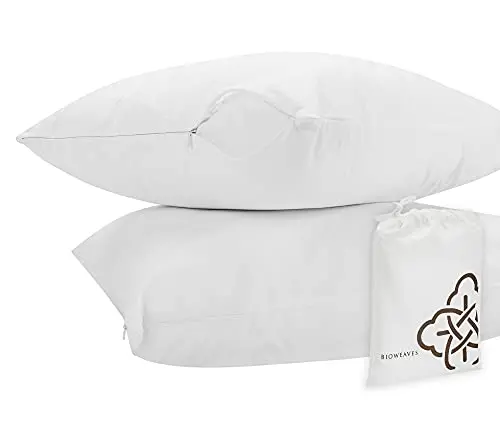
100% Organic Cotton – GOTS Certified Breathability
The Bioweaves protector is the lineup’s clear organic pick: a GOTS-certified organic cotton shell with a concealed zipper and a breathable, no-membrane build. It is designed as a quiet extra layer that protects the pillow without changing its feel.
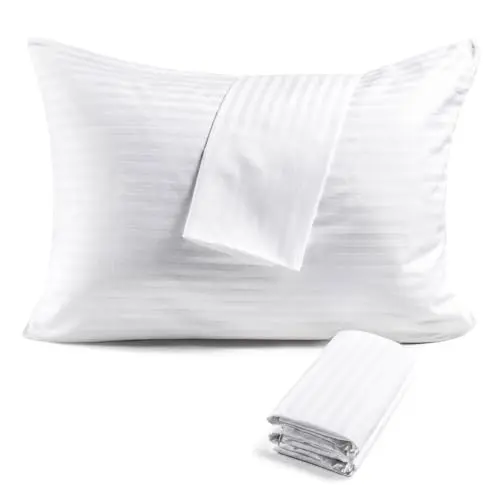
600TC Cotton – Hotel-Grade Softness
FAUNNA’s protector leans into hotel-style comfort: a 600-thread-count cotton shell, a silent zipper, and OEKO-TEX certification. It is a four-pack for standard pillows and is aimed at shoppers who want a soft cotton layer without the organic certification.

Cotton Terry Zippered Protectors – Waterproof Bed Bug Defense
SureGuard’s protector is built for hardworking protection rather than organic certification: a cotton terry surface, a waterproof backing, and a fine zipper seal. It is the pick for spills, bed bugs, dust mites, and anyone who needs a true encasement.
How We Evaluated These Organic Pillow Protectors
We didn’t run wash-cycle durability testing or sleep trials across multiple sleepers. What we did: cross-referenced three pillow protector models from three distinct brands across five decision axes – organic certification, fabric and breathability, closure and seal, fit and care, and warranty or support where available. We triangulated published specifications, certification details, feature sets, and owner feedback where available, then mapped each option against the realities of an organic bedding shopper. We also weighed how each protector is likely to behave after washing, how quietly it closes, and whether it can honestly be called organic without qualification. That matters because the category mixes certified organic cotton, standard cotton, and waterproof synthetics under similar marketing language. A protector can be soft and well-made without being organic; that distinction drives the picks below.
The scoring framework weighted real-world fit for organic-minded buyers (70%) – how well each protector delivers on certification, comfort, and day-to-day protection – against feature differentiation (30%) – unique strengths like a waterproof backing or a larger cotton set. We have no commercial relationship with any featured brand; recommendations track fit and differentiation, not brand preference. If you want the organic label to be verifiable, the Bioweaves 100% Organic Cotton is your match. If you need a waterproof barrier and can accept a non-organic shell, the SureGuard Cotton Terry is the practical route.
How to Choose the Right Organic Pillow Protectors
1. What Makes a Pillow Protector Genuinely Organic?
In this category, organic should mean more than a natural-sounding fabric. The clearest signal is GOTS certification, which covers the organic status of the cotton and processing standards. A protector made from 100% organic cotton and certified to GOTS is a different product from one made with standard cotton or a cotton-poly blend. If the label only says cotton or eco-friendly, treat the organic claim as unverified until you find a certification.
The tradeoff is that organic cotton shells are usually not waterproof. They protect against dust, wear, and light spills, but they are not a barrier against bed bugs or a full cup of liquid. If you want certified organic cotton and breathable comfort, the Bioweaves 100% Organic Cotton is the pick. If you need a true waterproof encasement, the SureGuard Cotton Terry is the better tool for that job.
2. Certification Labels That Matter for Organic Pillow Protectors
GOTS is the label to look for when organic cotton is the priority. OEKO-TEX is a useful safety certification for restricted substances, but it does not make a product organic. GREENGUARD Gold speaks to indoor-air emissions, which is relevant for waterproof or synthetic-backed protectors. These labels answer different questions, so do not treat them as interchangeable.
A protector can be OEKO-TEX certified and still use standard cotton, or it can be waterproof and still be a sensible choice for allergy households. The right label depends on your goal: organic fiber, chemical safety, or barrier protection. For a cotton set with a strong safety certification but no organic claim, the FAUNNA 600TC Cotton is a reasonable middle path.
3. Breathability, Noise, and the Membrane Tradeoff
Organic cotton protectors are usually breathable and quiet because they do not rely on a polyurethane membrane. That is a real comfort advantage for hot sleepers and anyone who hates the crinkle of a waterproof encasement. The tradeoff is protection: a no-membrane protector resists dust and light spills but will not stop liquids.
Waterproof protectors add a TPU or polyurethane backing to block liquids. That backing can make the protector warmer or noisier, though better designs keep the surface soft. If you want the quietest possible layer, lean toward cotton or microfiber without a waterproof membrane. If you need spill protection, accept that the feel will change.
4. Zipper Seals, Fit, and Pillow Protection
A zippered closure is table stakes for a protector that actually stays put. Look for a concealed zipper or a silent zipper if you are sensitive to hardware near your face, and check the stated dimensions against your pillow. Standard protectors are commonly sized around 20 x 26 inches, but cut can vary enough to matter.
For bed bugs and dust mites, the zipper needs to create a full seal with no gap at the end. A soft cotton protector with a simple zipper is fine for daily wear, but a true encasement needs tighter construction. If you are dealing with an infestation or allergy plan, prioritize the seal over the organic label.
5. Care, Longevity, and Realistic Price Tiers
Most pillow protectors are machine washable, but heat is the enemy of waterproof linings and elastic. Wash on a gentle cycle, tumble dry low, and avoid ironing or bleach unless the care label explicitly allows it. Organic cotton tends to soften with washing, while microfiber can hold onto oils if it is not laundered regularly.
The category spans budget-friendly single covers, mid-range cotton multipacks, and premium certified-organic sets. Paying more usually buys better fabric, a quieter zipper, or a meaningful certification. Paying less can still get you a serviceable protector, but check the zipper quality and return policy. A larger set can be the better value if you rotate covers often.
Frequently Asked Questions
1. Are organic pillow protectors waterproof?
Usually, no. A GOTS-certified organic cotton protector is typically breathable and free of a waterproof membrane, which is why it feels quiet and comfortable. It can resist dust and light spills, but it is not automatically waterproof. If you need a barrier against liquids, bed bugs, or dust mites, look for a dedicated waterproof encasement rather than assuming the organic label covers it.
2. What's the difference between the Bioweaves organic cotton protector and the FAUNNA 600TC cotton protector?
The Bioweaves is the stricter organic choice: it uses GOTS-certified organic cotton, has a no waterproof membrane, and comes as a two-pack. The FAUNNA is a 600-thread-count cotton protector with OEKO-TEX certification and a four-pack, but it is not GOTS organic. If certification is your priority, the Bioweaves 100% Organic Cotton is the pick. If you want a silkier cotton feel and more covers per set, FAUNNA is the value route.
3. How does the SureGuard cotton terry protector compare with the Bioweaves organic option?
SureGuard solves a different problem. It has a waterproof backing, a bed bug seal, and GREENGUARD Gold certification, so it is built for spills and pests. The Bioweaves is GOTS organic and breathable cotton, but it is not waterproof. If you need a true barrier, the SureGuard Cotton Terry is the practical specialist. If organic fiber is the non-negotiable, stay with Bioweaves and add a separate waterproof layer only if needed.
4. Do organic pillow protectors fit standard pillows?
Most do, but check the stated dimensions before buying. A standard 20 x 26 protector is the common fit, though some brands cut roomier to accommodate thicker pillows. Look for a zippered closure that fully covers the pillow and leaves no exposed end. If your pillow is overstuffed, a roomy cut matters more than the label.
5. How should I wash organic cotton pillow protectors?
Use a gentle cycle with mild detergent and tumble dry on low heat. Avoid non-chlorine bleach unless the care label allows it, and skip fabric softener because it can coat the fibers. If the protector has a waterproof lining, wash it with the waterproof lining facing inward and remove it from the dryer as soon as it is dry.
Final Verdict
For most shoppers who want an organic pillow protector that can back up the label, the Bioweaves 100% Organic Cotton is the answer. It pairs GOTS certification with a breathable, no-membrane shell that stays quiet and protects without turning your pillow into a plastic sleeve. If you want a softer high-thread-count cotton feel and a larger set, the FAUNNA 600TC Cotton is the value-minded alternative, though it is not GOTS certified. And if spills, bed bugs, or dust mites are the real concern, the SureGuard Cotton Terry is the purpose-built specialist. Start with your non-negotiable – certification, cotton softness, or waterproof protection – and the choice becomes straightforward.
