
Best Organic Pillows For Side Sleepers – 2026 Reviews

Side sleeping puts your neck in an awkward spot. Your head has to clear a shoulder-width gap, and if the pillow pancakes flat or shoves your chin toward your chest, you feel it by six in the morning. Then there’s the organic part – you’re trying to keep synthetic fill and conventional cotton away from your face for eight hours a night.
Those two goals pull against each other more often than you’d think. Plenty of pillows slap an organic cotton cover on a firm synthetic core and call it a day. Plenty of genuinely supportive side-sleeper pillows never touch organic cotton at all. The overlap is much narrower than the shelf at a big-box store suggests.
Two things separate the good ones. First, whether the loft can actually be changed to match your own shoulder width instead of a generic medium. Second, whether the organic claim covers the cover, the fill, or both – and who verified it. This guide walks the models worth your money across the brands that take both questions seriously.
Best Organic Pillows for Side Sleepers – 2026 Reviews

Organic Buckwheat Pillow – Adjustable Neck Support
A 14×20 buckwheat hull pillow with a 100% organic cotton shell and a bonus organic cotton pillowcase. The tartary buckwheat fill is firm and moldable – shape a channel for your shoulder and it stays – while the side zipper lets you add or remove hulls until the height matches your frame. Hulls let air pass between them, so the pillow runs cool, and the washable case keeps upkeep simple.
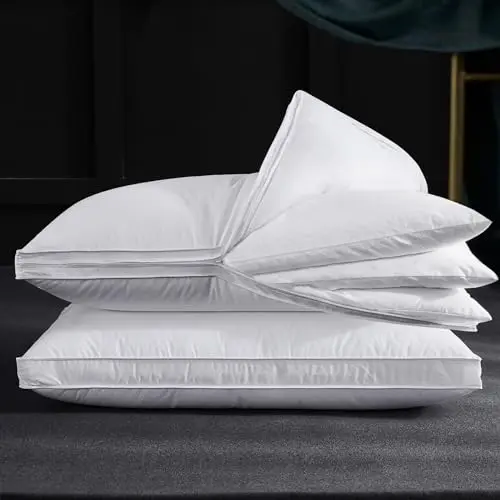
Adjustable Layer Goose Feather Pillow – Three-Insert Custom Loft
Two queen pillows, each built from three separate goose feather inserts stacked inside a zippered organic cotton case. Use one insert for a low profile or all three for a genuinely tall loft – side sleepers can assemble the height their shoulder width actually needs. The outer case is 1000 thread count cotton with a soft polyester-fiber layer against the face, and the listing states OEKO-TEX Standard 100 certification.
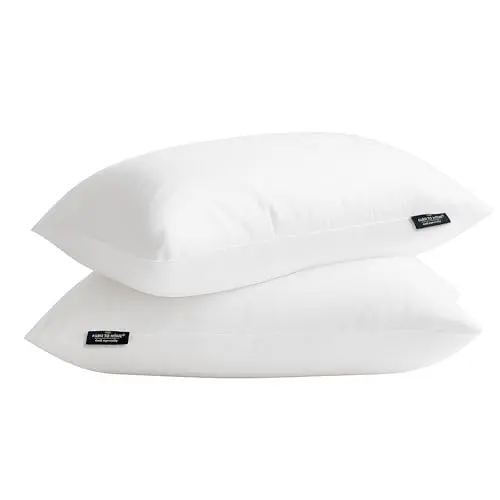
Organic Cotton Cover Pillows – Soft Support King 2-Pack
A two-pack of king pillows, 20 by 36 inches, with an organic cotton cover certified to the Organic Content Standard and a fill of recycled polyester that meets the Global Recycled Standard. Medium-soft with a hotel-style smoothness, breathable enough for warm rooms, and fully machine washable. Plenty of surface area for side sleepers who like to gather the pillow up.
How We Evaluated These Organic Pillows for Side Sleepers
We didn’t sleep on these pillows for weeks or run pressure-mapping tests. What we did: cross-referenced 3 organic pillow models from 3 distinct brands across six decision axes – fill material, loft adjustability, cover construction and certification, breathability, care requirements, and how each design handles the shoulder-to-head gap a side sleeper actually sleeps in. We triangulated published specifications, certification language, and owner feedback where available, then mapped every option against representative side-sleeper profiles.
The scoring framework weighted real-world fit for side sleeping (70%) – whether the loft can be tuned to the sleeper and whether it holds through the night – against feature differentiation (30%), meaning organic credentials, fill choice, and ease of cleaning. We have no commercial relationship with any of these brands; recommendations track fit and differentiation, not brand preference. Where a listing was vague about certification, we treated the claim as unverified rather than assuming the best.
Two scope notes. This is a narrow category – pillows that are genuinely organic and genuinely good for side sleepers form a short list, so the lineup is small and each pick earns its slot. And certification language blurs easily: an OEKO-TEX label speaks to harmful-substance testing, not organic fiber content, and we weighed those claims separately. If maximum adjustability is what you’re after, the LOFE Organic Buckwheat Pillow is your match; if you’d rather keep a conventional pillow feel, the Three Geese Adjustable Layer Pillow is the better route.
How to Choose the Right Organic Pillows for Side Sleepers
1. What an Organic Pillow Label Actually Promises
Organic on a pillow listing can mean almost anything unless a standard is named. The strongest claims cover the organic cotton fabric itself – the Organic Content Standard tracks how much of a textile is genuinely organic, while the Global Recycled Standard applies to recycled content like polyester fill. They’re different promises, and a pillow can carry one without the other.
OEKO-TEX Standard 100 is the label most often mistaken for organic certification. It tests finished textiles for harmful substances; it doesn’t certify that cotton was grown organically. Useful information, different question. Ask which part of the pillow the claim covers – cover, fill, or both – because in practice ‘organic pillow’ frequently means organic cover only.
2. Why Loft Beats Firmness for Side Sleepers
Side sleeping opens a gap between your ear and the mattress that roughly matches your shoulder width. The pillow’s job is to fill it so your head, neck, and spine stay in one line. Too low and your chin drops toward your chest; too high and your head gets shoved forward all night.
That makes loft – the height under your head – the number that matters, not the firmness word on the packaging. A pillow that’s adjustable beats a pillow that’s ‘medium’ for the simple reason that medium is someone else’s shoulder width. Broad shoulders usually need more height than the label suggests.
3. Pillow Fill Materials: Buckwheat Hulls, Feather, and Down-Alternative
Buckwheat hulls are firm, moldable, and stay where you push them, which makes them unusually good at side-sleeper support. They also let air move between the shells so they sleep cool. The trade-offs are noise and a short break-in period while you tune the fill level. If that trade sounds fine to you, the LOFE Organic Buckwheat Pillow is the pick here.
Goose feather delivers a traditional, plush loft and holds height better than most synthetics, though it sleeps warmer and rules itself out for anyone with down sensitivity. Down-alternative polyester is the easiest to wash and the most likely to compress over time.
4. How Much Adjustability Do Side Sleepers Actually Need?
Two mechanisms dominate. The first is zippered fill – open the side, scoop hulls out, zip it shut. The second is stackable inserts, where you build height by adding whole layers. Both work. Inserts give you bigger jumps in height; a zipper gives you finer control.
If you’ve never found a pillow that felt right, adjustability is the feature worth paying for. The Three Geese Adjustable Layer Pillow takes the insert route, arriving with three separate goose feather layers per pillow so a side sleeper can go from nearly flat to genuinely tall.
5. Covers, Thread Count, and What You Can Stop Worrying About
Thread count on a pillow cover tells you about weave density, not quality on its own – a 233-count percale can feel cooler than a denser sateen. What matters more is whether the cover breathes, whether it’s removable or washable, and whether the construction holds fill evenly. A gusset, the boxed edge on hotel-style pillows, adds structure and keeps loft from splaying outward.
If certification and affordability both matter, the Farm To Home Organic Cotton Cover Pillows carry the Organic Content Standard and the Global Recycled Standard in a two-pack, which is rare at the value end of the category.
6. Organic Pillow Care Without Ruining the Fill
The pillows here all have washable elements, but not in the same way. Down-alternative and feather pillows tolerate a cold machine cycle and a low tumble dry with dryer balls to break up clumps. Buckwheat is different: you wash the pillowcase, not the hulls. Soaking hull fill wrecks it.
Seasonal washing is the usual rhythm – roughly every few months, or when a pillow starts smelling like something other than clean cotton. Keep a spare casing around if you own a buckwheat pillow, since the fill needs to air dry separately from the fabric.
Frequently Asked Questions
1. What does 'organic' actually mean on a pillow label?
Usually it means the cover fabric is organic cotton, not the fill. Certification names matter more than the word itself: the Organic Content Standard verifies organic fiber content in a textile, the Global Recycled Standard covers recycled material, and OEKO-TEX Standard 100 simply confirms the finished fabric was tested for harmful substances.
A pillow can be genuinely organic cotton on the outside and filled with conventional polyester. That’s not a scam, but it is a distinction worth checking before you pay a premium – decide whether you care about the cover, the fill, or both.
2. How thick should a pillow be for side sleeping?
Tall enough to fill the gap between your ear and the mattress, which tracks your shoulder width more than any standard measurement. Most side sleepers land somewhere between a medium and a high loft – enough that your chin stays roughly level rather than tucking downward.
Because shoulder width varies so much, the practical answer is to buy adjustable rather than guess. A pillow you can add fill to or take fill out of will get you closer than any fixed loft rating printed on a box.
3. LOFE buckwheat vs Three Geese adjustable layer – which is better for side sleepers?
They solve the same problem with opposite materials. The LOFE Organic Buckwheat Pillow uses hull fill you mold into shape, so support is firm, precise, and stays exactly where you put it. It sleeps cool and travels well, and it is audible.
The Three Geese Adjustable Layer Pillow uses stackable inserts of goose feather, so height comes in larger steps and the feel is plush rather than sculpted. Choose buckwheat for firm, moldable support; choose the feather layers for hotel-pillow softness with a tunable loft – and skip it if you’re sensitive to down.
4. How do the Farm To Home organic pillows compare with the other two?
Different job. Farm To Home is a two-pack of king pillows with an organic cotton cover and a recycled polyester fill – the practical choice when you’re outfitting a bed rather than fine-tuning one sleeper’s neck. The loft is medium-soft and leans flatter than the feather layers, so broad-shouldered side sleepers may want something taller.
Where it wins is certification transparency and value: both the Organic Content Standard and the Global Recycled Standard are named on the listing, and two king-size pillows arrive in a single order. LOFE and Three Geese are precision tools for one sleeper; this one is bedding.
5. Can an organic pillow for side sleepers work for back and stomach sleeping too?
Often yes, if it’s adjustable. Back sleeping wants a lower loft than side sleeping, and stomach sleeping wants lower still – sometimes nearly flat. A pillow you can remove fill from covers all three positions; a fixed high-loft pillow does not.
That’s why the stackable inserts and the zippered hull design both travel well across positions. If you switch positions through the night, favor the pillow with the widest adjustment range rather than the one tuned perfectly for a single posture.
Final Verdict
For most side sleepers shopping organic, the LOFE Organic Buckwheat Pillow is the answer. Nothing else here lets you reshape the fill around your own shoulder width, and the organic cotton shell plus included pillowcase means the part touching your face is the part that’s organic. It’s firm, it’s audible, and it’s still the pick.
If you want a conventional pillow feel, the Three Geese Adjustable Layer Pillow gives you a tall, tunable loft under 1000-thread-count organic cotton – just don’t choose it if feathers are a problem. And if you’re dressing a king bed on a tighter budget, the Farm To Home Organic Cotton Cover Pillows carry OCS and GRS labels in a two-pack that won’t stretch the month.
Match the loft to your shoulder width, check who certified the organic claim, and you’ll sleep better than any marketing copy can promise.
