
Best Organic Wool Comforters – 2026 Reviews

An organic wool comforter sounds simple until you start reading labels. One brand means an organic cotton cover. Another means Australian wool. A third has OEKO-TEX certification but no organic claim at all. Those distinctions matter, because the word organic can describe the shell, the fill, or the certification path, and they do not always line up.
The better comforters in this category get two things right: they regulate temperature without that clammy synthetic feel, and they keep the fill where it belongs instead of letting it bunch into corners. We also paid attention to care. A wool comforter that sleeps beautifully but needs professional cleaning every time is a different ownership proposition from one you can wash at home.
This guide is built for cross-shopping, not brand loyalty. We compared the organic wool comforters that actually make sense for different sleepers – hot sleepers, cold sleepers, sensitive skin, and anyone who wants natural materials without a complicated routine.
Best Organic Wool Comforters – 2026 Reviews
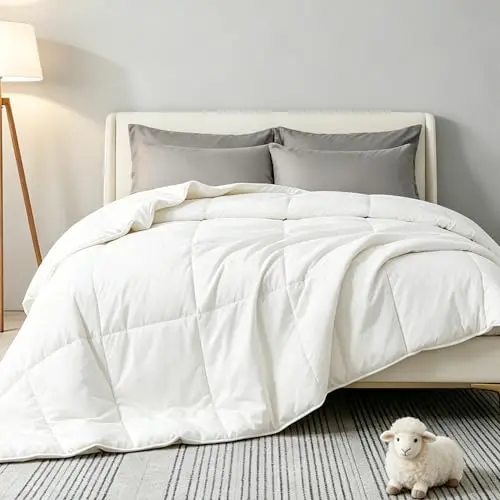
Australian Merino Wool Comforter – Organic Cotton, Machine Washable
A clean organic-cotton-and-Merino wool build with machine-wash care and a box-stitched, no-shedding design.
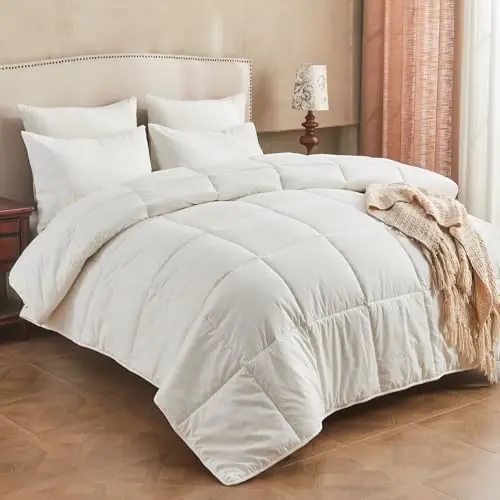
Australian Wool Comforter – Organic Cotton Shell, All-Season
An organic cotton shell around Australian Merino wool, with all-season loft and machine-wash care at a value tier.
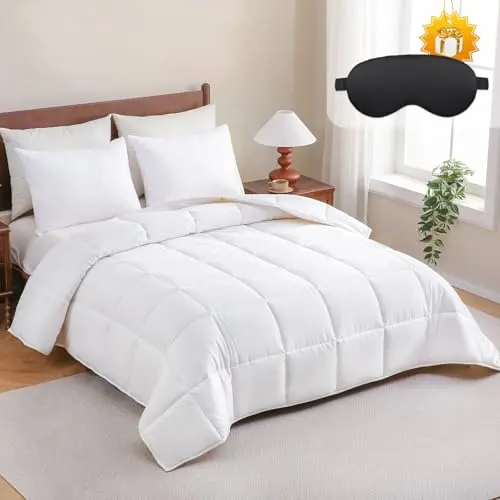
Lamb Wool Comforter – Breathable All-Season Insert
A breathable lamb wool insert with a noiseless cotton shell and strong temperature regulation.

All-Natural Australian Wool Comforter – Heavy Fill, Organic Cotton Cover
A heavy-fill Australian wool comforter with a silky organic cotton sateen cover and machine-wash care.

Classic Wool Comforter – Midweight, Quiet Cotton Cover
A midweight wool insert with a quiet jacquard cotton cover and dry-clean care.
How We Evaluated These Organic Wool Comforters
We didn’t sleep under these organic wool comforters through a full season of night-by-night use. What we did: cross-referenced 5 organic wool comforter models from 5 distinct brands across 6 decision axes – fill quality and sourcing, cover material and certifications, temperature regulation, loft and weight, care requirements, and sizing and corner attachment. We triangulated published specifications, feature sets, owner feedback where available, and use-case fit against representative sleeper profiles.
The scoring framework weighted real-world fit (70%) – how well each comforter matches its stated use case, from hot-sleeping to cold-room warmth – against feature differentiation (30%) – the organic-cotton and wool certifications, quilting, washability, and attachment details that separate one option from another. We have no commercial relationship with any of the brands featured; recommendations track fit and differentiation, not brand preference. If you want the cleanest organic-cotton-and-wool pairing, the Cobnom is your match; if home washing matters most, the KUSNUG is the easier choice.
We audited claims against the product information supplied, pressure-tested the care instructions against real ownership routines, and mapped each comforter to the sleeper it suits best. We did not run lab loft measurements or controlled temperature tests. The goal is a practical shortlist: which organic wool comforter belongs on your bed, and which tradeoffs you are signing up for. That is especially true in a category where certification language can outrun what the label actually proves.
How to Choose the Right Organic Wool Comforter
1. What Makes an Organic Wool Comforter Truly Organic
The label organic wool comforter can mean different things. Some brands use organic cotton for the shell but do not certify the wool fill. Others certify the wool or the finished product through OEKO-TEX Standard 100 or OCS. Neither certification automatically means every component is organic, so read the fine print on the fill and the cover separately.
If organic purity is your top priority, look for a comforter that names both the wool source and the cover material. Australian wool is common in this category, but the more useful detail is whether the brand states 100% wool fill versus a blend.
2. Fill Quality: Australian Wool, Merino, and Fill Weight
Australian wool is the baseline here, but the grade matters. Merino and lamb wool are finer fibers, which usually means a softer hand feel and less prickle. Fill weight is the other half of the story. A heavy-fill comforter suits cold sleepers and people who like weight; a medium-weight or 300GSM build is more versatile for year-round use.
If you sleep hot, do not assume heavier is better. The best organic wool comforter for you may be the one with enough loft to trap warmth without turning into a sauna. If you want the cleanest organic-cotton-and-wool pairing, the Cobnom is the pick.
3. Cover Fabric and Certifications That Matter
The cover affects feel, noise, and durability. Organic cotton sateen feels smoother and a little more substantial; jacquard cotton adds texture and a more finished look; plain-weave cotton is lighter and more breathable. Certification labels such as OEKO-TEX Standard 100 and OCS are useful shorthand, but they test different things. OEKO-TEX focuses on harmful substances; OCS speaks to organic content.
4. Temperature Regulation and Breathability for All-Season Sleep
Wool’s advantage is moisture-wicking and breathability. It can absorb moisture vapor without feeling clammy, which is why wool comforters work for hot sleepers who dislike synthetic fills. The catch is that temperature regulation depends on fill weight, shell tightness, and how you use the comforter. A medium-weight wool comforter with a breathable cotton shell is the safer all-season choice; a heavy fill is better for cold rooms.
If overheating is your main problem, the YOUR MOON is the most temperature-focused pick in this lineup.
5. Care Requirements: Machine Wash vs Dry Clean
Care is where wool comforters separate quickly. Machine-washable models are easier to live with, but use cold water and low heat, and expect some loft loss over time. Dry-clean-only comforters are lower-effort day to day but less convenient long term. A duvet cover reduces how often the comforter itself needs cleaning, and corner loops or ties keep that cover from sliding around.
If home washing is non-negotiable, the KUSNUG is the easier choice.
6. Sizing, Loft, and Corner Attachment
Measure your bed and your duvet cover before buying. A queen comforter that measures 88 x 88 inches can look skimpy on a deep mattress, while a true 90 x 90 size gives more drape. Box stitching or lattice quilting keeps the fill from shifting; corner tabs, loops, or ties keep the insert anchored. If you use a duvet cover, count the attachment points before you commit.
Frequently Asked Questions
1. What does organic mean in an organic wool comforter?
In an organic wool comforter, organic can describe the cotton cover, the wool fill, or a certification path like OCS or OEKO-TEX. Not every comforter that uses natural wool is fully organic. Look for a named wool source, a stated cover material, and a clear 100% wool fill claim if purity matters. Certification is helpful, but it is not a substitute for reading the components.
2. Cobnom vs KUSNUG: which organic wool comforter is better for hot sleepers?
Both are medium-weight, breathable, and machine washable, but they differ in certification and fill story. The Cobnom pairs 100% Australian Merino wool with a 400TC organic cotton cover and a cleaner no-odor pitch. The KUSNUG also uses an organic cotton shell and Australian Merino wool, with OCS and OEKO-TEX backing, and it tends to be the more affordable route. For hot sleepers, I would lean Cobnom for the tighter organic-cotton-and-wool story; if budget is the deciding factor, KUSNUG is the practical pick.
3. YOUR MOON vs CUDDLE DREAMS: which wool comforter is quieter and softer?
YOUR MOON is the stronger temperature-regulation pick, with lamb wool and a noiseless cotton shell. CUDDLE DREAMS is the softer, more polished option thanks to its jacquard cotton cover and piped edges, and it is also OEKO-TEX certified. The tradeoff is care: YOUR MOON should not go in the machine, and CUDDLE DREAMS is dry-clean only. If quietness and a more luxurious hand feel matter most, CUDDLE DREAMS wins; if you overheat at night, YOUR MOON is the better fit.
4. Can you machine wash an organic wool comforter?
Some can, but not all. Look for an explicit machine-washable claim and follow cold-water, low-heat instructions. A duvet cover cuts down on cleaning frequency, and corner loops or ties keep the cover from bunching. If washability is a priority, the KUSNUG is the easier option in this lineup; dry-clean-only models like CUDDLE DREAMS are better for low-maintenance day-to-day use but less convenient long term.
Final Verdict
For most buyers, the Cobnom is the answer. It pairs a 100% Australian Merino wool fill with a 400TC organic cotton cover, adds machine-wash care, and keeps the design simple enough for everyday use. If you sleep hot, the YOUR MOON is the better temperature-regulating pick, with a noiseless cotton shell and a medium-weight loft that is built for year-round breathability. If budget is the deciding factor, the KUSNUG gets you organic cotton, Australian wool, and machine washing at a more accessible tier.
And if you run cold and want that heavy, wrapped-up feel, the ORGANIC TEXTILES comforter is the heavyweight choice. The right organic wool comforter is the one that matches your sleep temperature first, then your care routine. Start there, and the shortlist narrows quickly.
