
Best Patio Umbrellas For Windy Areas – 2026 Reviews

A gust rolls across the deck, the canopy fills like a sail, and your umbrella either lifts out of the table or folds a rib in half. That’s usually the moment someone starts shopping for a patio umbrella that can handle wind, and it’s also the moment they realize the umbrella they already own was never designed for it.
Two things separate an umbrella that copes from one that collapses. The first is venting: air has to escape somewhere, and a canopied top with a single crown vent is the bare minimum while multi-tier designs move far more air. The second is the skeleton, meaning rib material, rib count, and pole diameter. Fiberglass ribs flex and recover; thin iron ribs resist until they snap. A thick pole gives the whole canopy something solid to lean against.
We looked across the market rather than down one brand’s catalog, from entry-level frames to commercial-grade models, and weighed each against a specific buyer: someone with a table on an open deck, patio, or poolside slab that catches real breeze. Canopy size matters too, since every extra foot of fabric is extra sail area. Here’s how the field shakes out for windy spots.
Best Patio Umbrellas for Windy Areas – 2026 Reviews
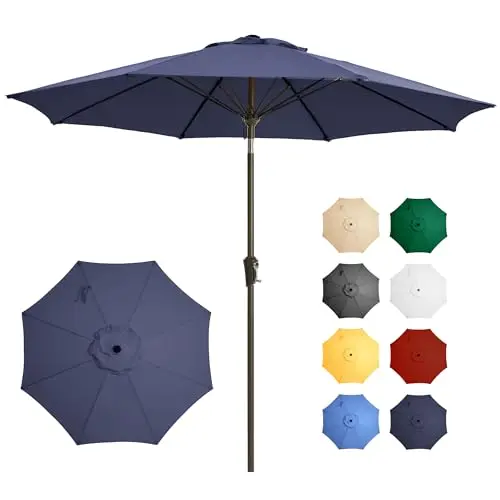
9 FT Fiberglass-Rib Patio Umbrella – Wind-Flexing Shade for Exposed Decks
A nine-foot market umbrella built around fiberglass ribs, which flex under load rather than snapping the way rigid iron can. The canopy carries a top vent so air escapes upward instead of lifting the umbrella, and the crank lift pairs with a push-button tilt for up to 45 degrees of angle adjustment.
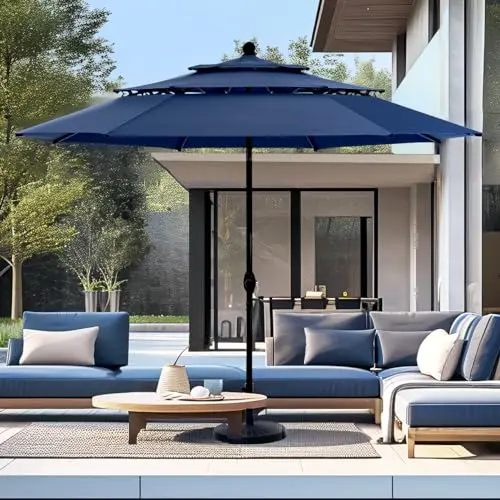
10ft 3-Tier Vented Umbrella – Maximum Shade for Open, Breezy Yards
A ten-foot umbrella with a three-tier vented top that was designed specifically to keep air moving and reduce heat underneath. The 1.5-inch steel pole and eight rust-proof ribs support the widest canopy in this lineup, and the crank with auto-tilt handles opening, closing, and angle changes.
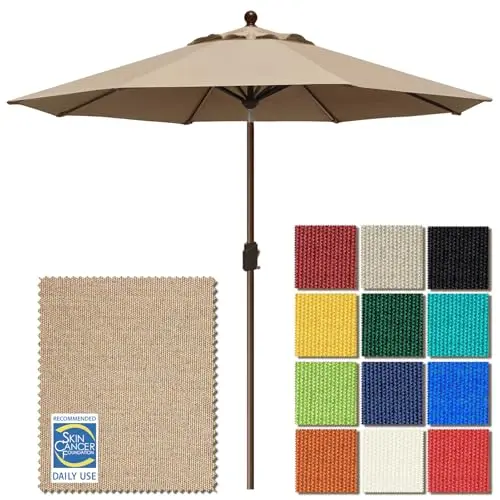
9Ft Market Umbrella – Solution-Dyed Fabric That Keeps Its Color
A market umbrella that puts its money into fabric and frame rather than extras. The canopy is 100% solution-dyed acrylic at 260 GSM with a long fade-resistance claim, and the heavy-duty steel frame uses a 1.5-inch pole with eight powder-coated ribs and a rust-free finish.
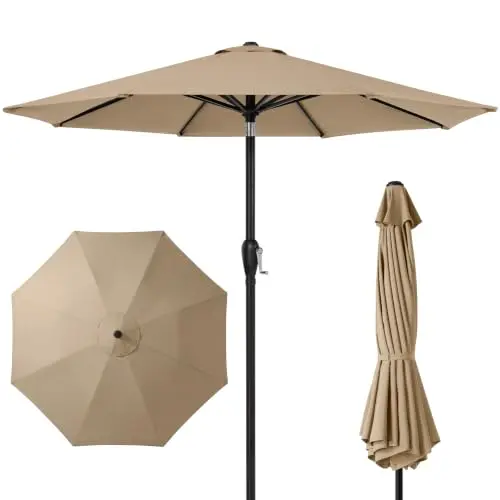
9ft Commercial Grade Umbrella – Rustproof Frame for Daily Use
An octagonal nine-footer pitched at restaurants and daily-use patios, built on a rustproof aluminum frame with a 260 GSM performance canopy. It carries a multi-year fade-resistance claim, an adjustable tilt, and a smooth crank lift.
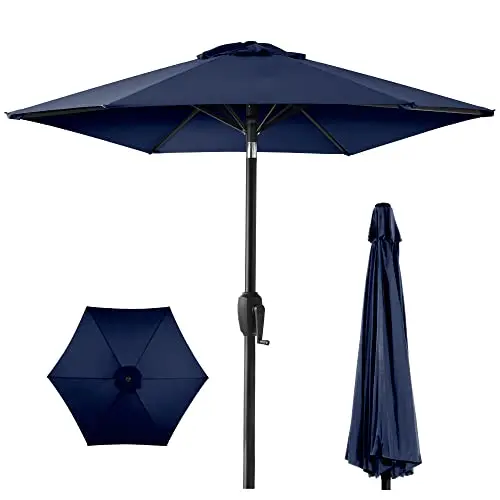
7.5ft Heavy-Duty Market Umbrella – Small Sail Area, Strong Value
A compact seven-and-a-half-foot umbrella with a solid six-rib steel frame and a powder-coated finish. The top vent lets air pass through for stability, and a hand crank plus push-button tilt handle the daily open, close, and angle chores.
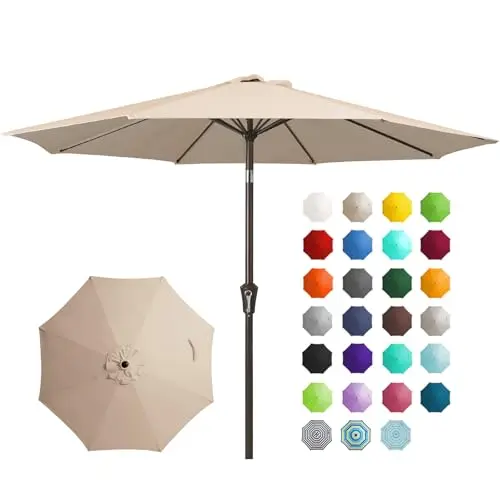
9FT Market Umbrella – Double-Layer Vent for Breezy Patios
A nine-foot market umbrella with a double-layer vented canopy that pushes heat and air upward. The frame is iron throughout, with a powder-coated pole and eight sturdy ribs for adding overall stability, plus a crank and push-button tilt.
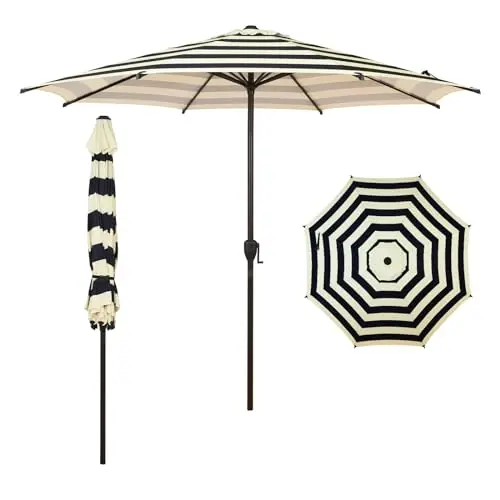
9FT Lyon Market Umbrella – Reinforced Ribs, Tool-Free Setup
A nine-foot market umbrella with a threaded pole that assembles without tools. Rib tips are reinforced with end screws, the canopy is vented for airflow, and embedded weights help counterbalance gusts. UPF 50+ fabric rounds out the package.
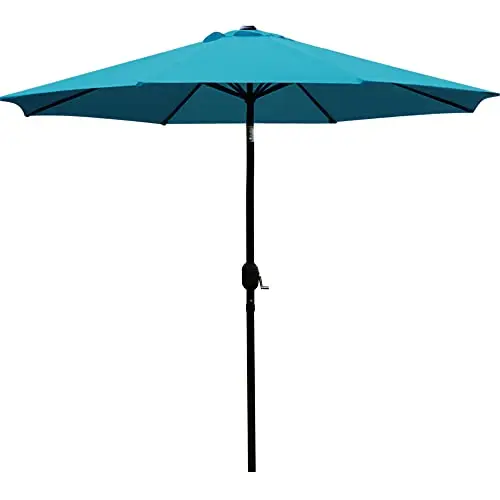
9' Aluminum-Pole Umbrella – Lightweight Everyday Shade
A nine-foot table umbrella with a 40mm powder-coated aluminum pole and a single wind vent at the crown. Waterproof polyester covers a four- to six-chair table, and a crank with push-button tilt handles opening and angle changes.
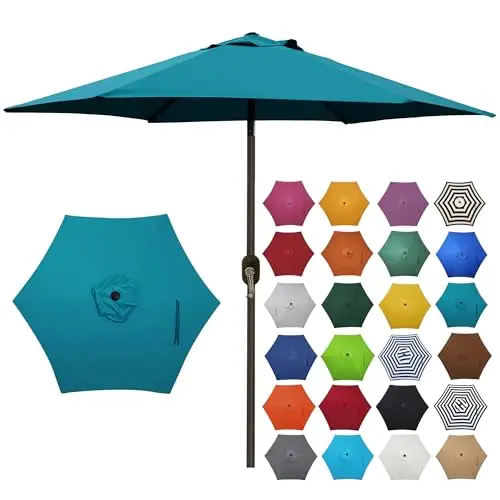
7.5 ft Market Umbrella – Compact Shade for Tight Patios
A compact seven-and-a-half-foot umbrella with an air-vented canopy and a six-rib frame on an aluminum and iron pole. It’s sized for small round or square tables, and a crank with push-button tilt handles the mechanics.
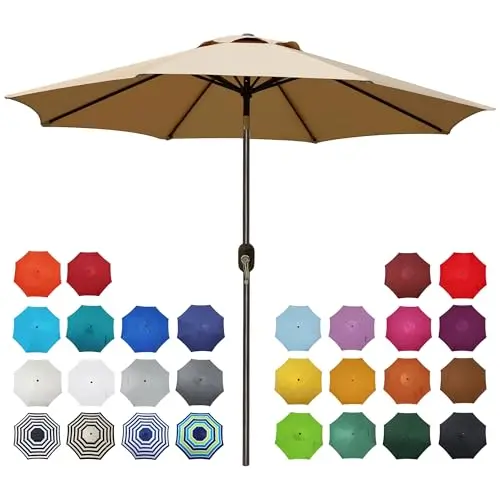
9' Outdoor Table Umbrella – Straightforward Full-Size Shade
A nine-foot market umbrella with eight iron ribs and a powder-coated aluminum and iron pole, sized for four- to six-chair tables. Waterproof UV-resistant polyester covers the canopy, and the crank with push-button tilt keeps operation simple.
How We Evaluated These Patio Umbrellas for Windy Areas
We didn’t see these umbrellas through a full season of field use on an exposed deck. What we did: cross-referenced 10 patio umbrella models from 9 distinct brands across six decision axes – venting design, rib material and rib count, pole diameter, canopy fabric weight, coverage size, and the crank, tilt, and closure hardware that tends to fail first. We triangulated published specifications, feature sets, and aggregated owner feedback where available, then mapped each option against a realistic buyer profile: someone with a table on an open deck, patio, or poolside slab that catches more than a gentle breeze. Where a manufacturer published no rib count or pole diameter, we weighed the umbrella on what it did disclose rather than filling the gaps ourselves.
The scoring framework weighted real-world performance (70%) – how an umbrella is likely to behave when a gust hits, and how much shade it delivers the rest of the time – against feature differentiation (30%), meaning fiberglass versus iron ribs, single versus multi-tier vents, and fabric upgrades that change how a canopy ages. We have no commercial relationship with any of the brands featured; recommendations track fit and differentiation, not brand preference. If wind tolerance is your priority, the Ayge 9FT is the pick. If you have a long table to cover, the PHI VILLA 10ft is the better match.
How to Choose the Right Patio Umbrella for Windy Areas
1. Why Venting Matters Most for Patio Umbrellas in Windy Areas
A canopy is a sail. When wind hits a solid fabric top, pressure builds underneath with nowhere to go, and that’s exactly how umbrellas lift out of tables or flip inside out. A wind vent gives that air an escape route. Single vents at the crown are the baseline, while double-layer and triple-tier vents move noticeably more air and tend to hold their composure in gusts.
Be realistic about what venting buys you. It’s margin, not immunity, and every umbrella in this lineup ships with instructions to close it when weather turns serious. That advice isn’t legal boilerplate. The goal in a windy area is an umbrella that shrugs off the daily afternoon breeze without drama, not one that survives a storm front.
2. Rib Material and Pole Diameter: What the Wind Spec Sheet Actually Says
Ribs are the skeleton, and material matters. Iron ribs are stiff and inexpensive; they resist until they don’t, and then they bend or snap. Fiberglass ribs flex and spring back, which is why the most wind-focused design in this lineup uses them. Rib count is the second number to check, since eight ribs spread load better than six across the same span.
Pole diameter is the quiet spec. Anything near 1.5 inches gives the canopy a stiffer spine than a thin 38mm tube, and it also determines which table openings the umbrella will actually pass through. If frame flex is what you’re after, the Ayge 9FT is the clearest example of a frame spec’d around wind rather than price.
3. Canopy Size Is Sail Area: Sizing a Patio Umbrella for a Windy Space
Every extra foot of canopy adds shade and load at the same time. A 7.5-foot canopy covers a two- to four-seat table and catches meaningfully less wind than a nine-footer, while a 9-foot canopy is the sweet spot for most four- to six-chair tables. A ten-foot span is for long tables and generous shade, and it demands the heaviest base you can reasonably move.
On a genuinely exposed deck, sizing down is a legitimate wind strategy rather than a compromise, because fewer square feet of fabric means less sail area to fight. If you want maximum coverage anyway, the PHI VILLA 10ft is the widest option here and offsets that with a triple-vented top.
4. Fabric Weight, Fade Resistance, and What 260 GSM Really Means
Canopy fabric runs from light 180G polyester on budget umbrellas to 260 GSM performance fabric at the premium end. Heavier fabric blocks more heat, flutters less in a breeze, and generally looks better in year three. Solution-dyed acrylic is the color-fastness benchmark, which is why one pick here carries a multi-year no-fade claim while budget polyester can wash out within a season.
UV ratings sit on top of that. UPF 50+ and similar claims describe how much UV the fabric blocks, not how the umbrella handles wind, so don’t let a sun-protection badge stand in for a venting and frame comparison.
5. Crank, Tilt, and Closure Systems: The Parts That Fail First
Hardware is where inexpensive umbrellas give themselves away. A crank lift is standard now, but smoothness varies, and the push-button tilt joint is a known failure point across multiple brands. Note as well that nearly every maker says not to tilt the canopy in wind, since an angled canopy catches more air than a level one.
Closure details are small but daily: a fabric strap with a tie, a hook-and-loop wrap, or a molded clip. None of these change wind performance, but a closure that works one-handed means you’ll actually use it when the sky darkens.
6. Bases, Budgets, and What Changes as You Spend More
No umbrella in this lineup includes a base, and an underweight umbrella base undoes every frame upgrade you paid for. Plan on a substantial freestanding or through-table base and match its weight to canopy size.
At the entry-level end you get six-rib steel frames, lighter polyester, single vents, and honest shade. The mid-range adds eight ribs, thicker poles, and better venting. The premium and commercial-grade tier brings solution-dyed or heavyweight fabric, rustproof aluminum, and multi-year fade claims. If you’re furnishing a small patio on a budget, the Best Choice Products 7.5ft is a sensible starting point. Above that, the extra money buys longevity rather than more shade.
Frequently Asked Questions
1. Do patio umbrellas actually hold up in windy areas?
They can, with the right design. The combination that matters most is venting plus a flex-friendly frame: a multi-tier vent lets air through, and fiberglass ribs or a beefy 1.5-inch pole keeps the canopy from folding under load. A smaller canopy helps too, since less fabric means less sail area.
What no umbrella handles well is being left open in a real gust front. That’s a close-it situation regardless of build quality, and most manufacturers say so directly in the care instructions.
2. What's the difference between the Ayge 9FT and the PHI VILLA 10ft?
The Ayge leans toward wind tolerance: eight fiberglass ribs, a vented top, and a design philosophy of flexing rather than resisting. The PHI VILLA leans toward coverage, with a 10-foot canopy and a triple-vented top that moves a lot of air across a much wider table.
If your priority is an exposed deck and unpredictable gusts, the Ayge 9FT is the safer call. If you have a long table and want everybody in shade, the PHI VILLA wins on span.
3. How does the EliteShade 9Ft compare with the Newport Outdoor 9ft?
They solve different problems. The EliteShade invests in fabric: solution-dyed acrylic at 260 GSM with a multi-year no-fade claim, wrapped around a heavy steel frame with a 1.5-inch pole. The Newport invests in frame longevity, using rustproof aluminum that won’t corrode when the finish takes a knock, plus a 260 GSM polyester canopy with a shorter fade claim.
Pick the EliteShade if color retention over years is what bothers you most. Pick the Newport if your umbrella sits out in wet weather and rust is the thing you’re trying to avoid.
4. Should you close a patio umbrella when the wind picks up?
Yes, and every maker in this roundup says so. Wind loading on an open canopy is the single most common cause of bent ribs and snapped tilt joints. If you’re expecting sustained gusts, crank it closed and secure the strap or clip before weather arrives, not during it.
Two related habits help: don’t leave the tilt engaged in a breeze, since an angled canopy catches more air, and always pair the umbrella with a base rated for the canopy size. A gust that rocks an underweight base will eventually bend something.
5. Which patio umbrella suits a small, exposed patio?
Go smaller and vented rather than big and braced. The Best Choice Products 7.5ft is the practical answer here: a 7.5-foot canopy presents less sail area, the top wind vent releases pressure, and the six-rib steel frame is described as resisting warping. It also suits two- to four-seat tables, which is what most small patios actually have.
If you want a bit more shade without much more sail, the Blissun 7.5 ft is the other compact option worth weighing, though its canopy fade record is weaker.
Final Verdict
For most people shopping for a windy spot, the Ayge 9FT is the answer. Fiberglass ribs and a vented canopy are the two features that actually change how an umbrella behaves when the breeze picks up, and you don’t have to spend at the top of the market to get them.
If your table seats six or more, the PHI VILLA 10ft gives you the widest shade span here, offset by that triple-vented top. On a tight or exposed patio where less sail area is a feature rather than a compromise, the Best Choice Products 7.5ft is the smart, wallet-friendly route. And if you’d rather buy once and keep the canopy looking new for years, the EliteShade 9Ft backs its fade claim with genuinely better fabric.
