
Best Personal Air Purifiers – 2026 Reviews

A packed boarding gate, a shared office desk, a car with the windows up-these are the moments when personal air quality stops being a buzzword and becomes a practical question. You are not trying to clean a whole house. You want less dust, pollen, smoke, or stale air in the small pocket of space you are actually breathing in.
The hard part is that personal air purifier covers several different tools. There are wearable ionic necklaces, cordless HEPA units for cars and travel, and compact plug-in purifiers for a bedside table or dorm desk. The right pick depends on two axes: how close the device sits to your breathing zone, and whether you need filter-based capture or a maintenance-free wearable.
Below, we compare the strongest options across brands and break down where each one earns its place. The goal is to help you choose the format that fits your routine, not to crown one brand for everyone.
Best Personal Air Purifiers – 2026 Reviews

A310 Personal Air Purifier Necklace – Wearable Ionic Clean Air
A wearable ionic purifier that creates a small cleaner-air zone around your face without filters or maintenance. It is built for planes, offices, and crowded spaces where you want less airborne dust and odor close by.
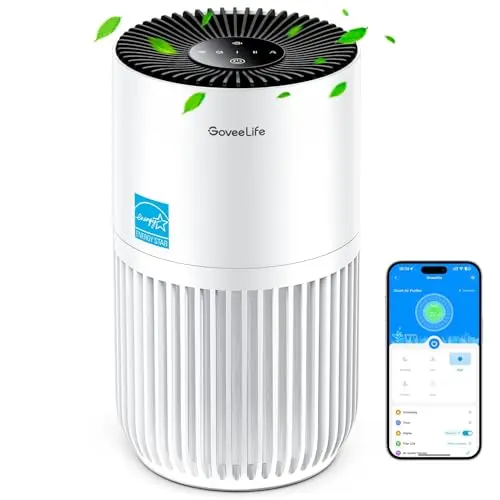
H7126 Smart Mini Air Purifier – App-Controlled Bedroom Cleaner
A compact HEPA purifier with app and voice control, three speeds, and a sleep mode quiet enough for a bedroom. It is the most connected option here, and it can pair with a separate air-quality monitor for automatic speed changes.
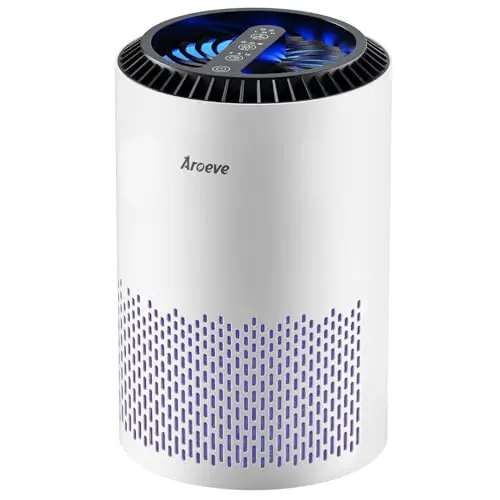
MK01A – Quiet Small-Room Purifier
A small-room purifier with 360-degree intakes, a sleep mode, and an aromatherapy pad. It is designed for bedrooms and desks where quiet operation and straightforward filter changes matter.
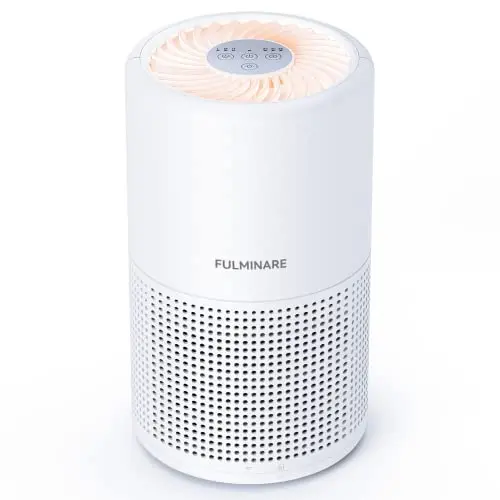
PU-P05 H13 Air Purifier – Night-Light Bedroom Purifier
A budget-friendly HEPA purifier with a built-in night light, timer settings, and a compact plug-in body. It suits bedrooms, dorms, and offices where you want simple controls and a soft glow at night.
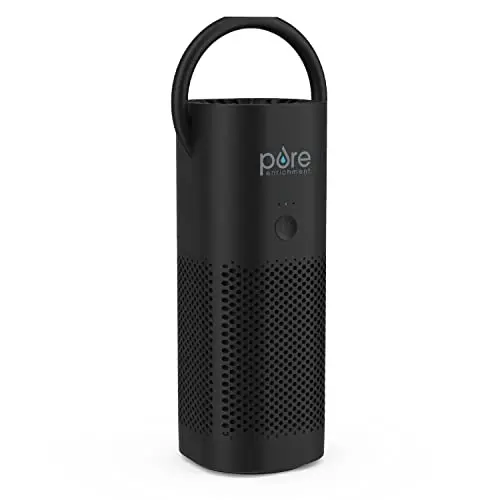
PureZone Mini – Cordless HEPA for Cars and Travel
A cordless mini purifier with True HEPA filtration and a rechargeable battery for cars, travel, and desk-side use. Its adjustable handle lets it sit upright or on its side, and the fan can double as a small cooling breeze.
How We Evaluated These Personal Air Purifiers
We did not run lab particle-count tests or controlled air-quality chamber measurements. What we did: cross-referenced 5 personal air purifier models from 5 distinct brands across 6 decision axes – personal coverage, filtration method, portability and power, noise, maintenance, and controls. We triangulated published specifications, feature sets, owner feedback where available, and fit against representative buyer routines: commuting, desk work, bedside sleep, and car travel. We mapped claimed coverage areas against the realities of personal use, and weighed filterless ionic designs against HEPA designs without pretending they serve the same buyer. Where owner feedback was mixed, we treated it as a signal to look closer at airflow, battery life, and durability.
The scoring framework weighted real-world fit and performance (70%) – how well each purifier serves the space and routine it is designed for – against feature differentiation (30%) – unique advantages like wearable ionic operation, smart controls, battery power, or night-light convenience. We have no commercial relationship with any of the brands featured; recommendations track fit and differentiation, not brand preference. If you want a true wearable, the AirTamer A310 is the closest match; if you want a connected bedside purifier, the GoveeLife H7126 is the stronger fit. The final order reflects that balance rather than a simple spec sheet.
How to Choose the Right Personal Air Purifiers
1. What Makes a Personal Air Purifier Truly Personal
A personal air purifier is not just a small room purifier with a handle. The useful ones are designed around a close breathing zone: a necklace-style wearable, a car-friendly cordless unit, or a compact bedside model that sits within arm’s reach. If the device is across the room, you are really shopping for a room purifier, not a personal one.
Start by deciding which kind of personal you need. A wearable ionic purifier like the AirTamer A310 targets air right at your face and asks nothing of your space. A desktop or bedside HEPA unit cleans a small pocket of air and is easier to live with if you stay in one place. A cordless travel purifier splits the difference for cars and hotel rooms.
2. HEPA, Ionic, and Filter-Based Filtration: What's the Difference?
Most compact purifiers use a True HEPA filter, often with an activated carbon pre-filter for odors. That is the familiar setup in the Pure Enrichment PureZone Mini, AROEVE MK01A, FULMINARE PU-P05, and GoveeLife H7126. HEPA is a good fit when you want to trap dust, pollen, dander, and smoke particles, but it adds filter maintenance and replacement cost.
Filterless ionic designs are different. They emit negative ions and aim to move particles out of your breathing zone rather than pulling air through a filter. That makes them maintenance-free, but it also means they do not offer the same measurable filtration as a HEPA unit. Neither approach is automatically better; they solve different personal-air problems.
3. Portability, Power, and Battery Life for Personal Air Purifiers
If you plan to move the purifier between car, desk, and hotel room, battery power and weight matter more than raw coverage. The Pure Enrichment PureZone Mini is the most travel-oriented here because it runs without an outlet and has an adjustable handle. For a car, the PureZone Mini is the logical pick; it is designed for close-range use and will not clean a whole cabin.
Plug-in models like the AROEVE MK01A, FULMINARE PU-P05, and GoveeLife H7126 are better left in one spot. They can be quieter and offer more features because they do not ration battery. Check the power adapter placement and outlet requirements before buying; some compact units ship with the adapter tucked into the base, and a few are limited to 120V outlets.
4. Noise, Sleep Modes, and Bedroom Air Purifier Use
For a bedroom, sleep mode and low-speed noise are the specs that matter. A unit that claims 20 to 24 dB on low is likely quiet enough for most sleepers, but fan noise rises on higher speeds. The AROEVE MK01A and FULMINARE PU-P05 both lean into bedroom use with low-decibel sleep modes, while the GoveeLife H7126 adds app scheduling and a night-friendly footprint.
If you want a connected bedroom purifier, the GoveeLife H7126 is the strongest fit in this lineup. Its app and Alexa controls are useful when the unit sits across the room, and the optional air-quality monitor can automate fan speed. For a simpler bedside setup, the AROEVE MK01A is the quieter, no-fuss alternative.
5. Filter Maintenance and Long-Term Ownership Costs
HEPA purifiers need filter replacements, usually every few months depending on use. That ongoing cost is part of the real price, so check filter availability and whether the unit has a filter-change reminder. The AROEVE MK01A and FULMINARE PU-P05 both use replaceable filters and remind you when it is time; the GoveeLife H7126 tracks filter life in its app.
Filterless ionic models avoid that chore entirely. The tradeoff is that you are buying a different kind of device, not a HEPA purifier without a filter. If you want zero maintenance and a wearable format, the AirTamer A310 is the one to look at. If you want to trap particles and odors, budget for filters.
6. Matching a Personal Air Purifier to Your Routine
Match the device to the way you will actually use it. For crowded transit and shared offices, a wearable makes more sense than a desk unit you cannot carry. For car commutes, a cordless HEPA purifier with a stable base is more practical. For bedrooms and dorms, a quiet plug-in model with a night light or app control is the easier long-term choice.
Do not overbuy coverage. A personal purifier is at its best when it is close to you and running consistently. A larger room purifier may clean more air, but it will not be personal in the way this category promises.
Frequently Asked Questions
1. What's the difference between the AirTamer A310 and the Pure Enrichment PureZone Mini?
The AirTamer A310 is a wearable ionic purifier that hangs around your neck and aims to create a cleaner breathing zone without a filter. The Pure Enrichment PureZone Mini is a cordless HEPA purifier that pulls air through a filter and runs on battery for car, travel, or desk use. Choose the AirTamer for hands-free personal space in crowds; choose the PureZone Mini if you want filter-based particle capture and do not mind a device on your desk or car seat.
2. Is the GoveeLife H7126 a better choice than the AROEVE MK01A?
They serve different priorities. The GoveeLife H7126 is the smart-control pick, with app and Alexa support, scheduling, and optional auto mode with a separate monitor. The AROEVE MK01A is the simpler value pick, with 360-degree intakes, a quiet sleep mode, and an aromatherapy pad. If you want connected convenience, GoveeLife wins; if you want a no-fuss bedside purifier with strong owner feedback, AROEVE is the easier recommendation.
3. Are personal air purifiers actually effective?
Effectiveness depends on the type and the space. A HEPA personal purifier can trap dust, pollen, dander, and smoke particles in a small, close area, but it will not clean a whole room from across the room. A wearable ionic purifier is designed to affect the air immediately around your face; it is a different tool, not a smaller room purifier. Set realistic expectations: these devices are best for close-range use and consistent use, not as a replacement for a full-size home purifier.
4. Which personal air purifier is best for a car?
For car use, prioritize cordless power, a stable base, and close-range filtration. The Pure Enrichment PureZone Mini is the most car-ready option here: it runs on a rechargeable battery, has an adjustable handle, and uses a True HEPA filter with an activated carbon pre-filter. Keep in mind that it is a personal-space purifier, not a cabin-wide air cleaner, so place it near you and expect the biggest benefit in the front seat area.
5. Do filterless personal air purifiers really work?
They work differently from HEPA purifiers. Filterless ionic models like the AirTamer A310 emit negative ions and are designed to push particles away from your breathing zone, rather than trapping them in a filter. That makes them maintenance-free and easy to wear, but it also means you should not expect the same particle-removal specs as a True HEPA unit. If you want a wearable personal purifier for crowded spaces, the format makes sense; if you want filter-based capture, choose HEPA.
Final Verdict
For most people who want a true personal air purifier, the AirTamer A310 is the pick. It is the only wearable here, and its filterless ionic design and long battery life make it genuinely useful in crowds, on planes, and at a shared desk. If you would rather clean a small room or bedside zone, the GoveeLife H7126 is the better everyday choice, with app control, quiet sleep mode, and strong owner feedback. For car commutes, go with the Pure Enrichment PureZone Mini; its cordless HEPA setup is purpose-built for close-range travel. And if budget is the priority, the FULMINARE PU-P05 covers the bedroom basics without smart features. Match the format to your routine, and the category makes sense.
