
Best Pet Air Purifiers For Cats – 2026 Reviews

Cat hair has a way of showing up everywhere, and litter-box odor has a way of reminding you it is still there. A regular room purifier can help, but a cat-friendly one needs to grab floating fur before it clogs the intake and neutralize odor without turning into a noisy box in the bedroom.
The useful split is not brand against brand; it is design intent. Some models lean on wide, pet-specific intakes and washable pre-filters, while others focus on large-room coverage, smart sensors, or near-silent sleep modes. For a cat household, the right pick depends on whether your main complaint is hair, litter odor, allergies, or all three.
We looked across the market at purifiers that make sense for cat homes, from compact budget options to large-room units. The goal is to match airflow, filtration, and maintenance to the rooms your cat actually uses, not to crown a single do-everything machine.
Best Pet Air Purifiers for Cats – 2026 Reviews
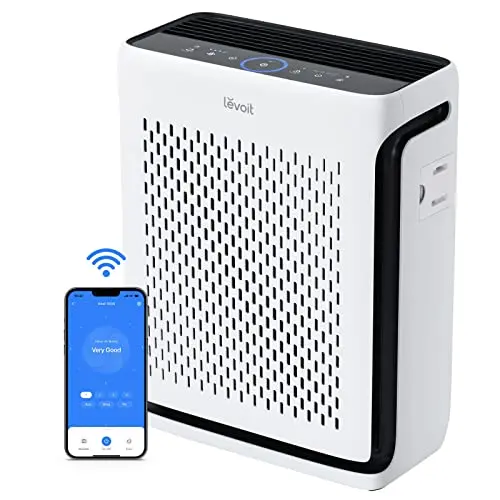
Vital 100S-P – Pet Mode With Washable Pre-Filter
The Vital 100S-P is a smart mid-size purifier with a dedicated Pet Mode, a wide U-shaped inlet, and a washable pre-filter. It is AHAM Verifide and designed for rooms up to 1,073 square feet at one air change per hour, or 222 square feet at 4.8 air changes per hour.
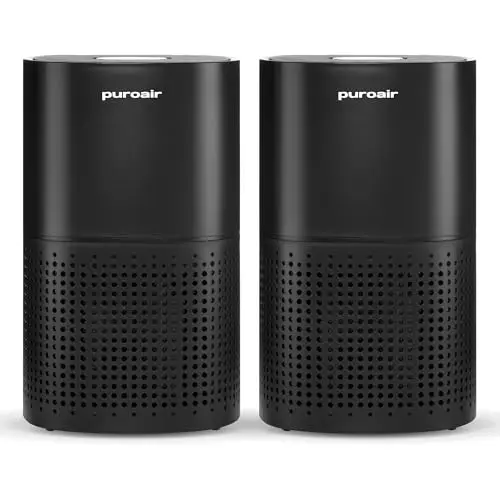
Puro Air 240 – Two-Pack HEPA for Large Rooms
The PuroAir 240 two-pack uses a three-layer pre-filter, HEPA, and activated carbon setup with a built-in particle sensor and auto mode. Each unit is rated for rooms up to 1,000 square feet in one hour and includes a quiet sleep mode.
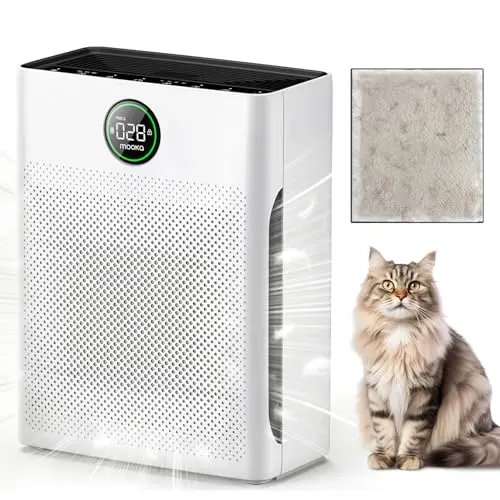
PR1 – Pet Mode With Dual Air Intake
The MOOKA PR1 is a large-room purifier with a dedicated Pet Mode, a washable pre-filter, and a PM2.5 display. It offers six fan settings, a 26 dB sleep mode, aroma support, and a child lock.
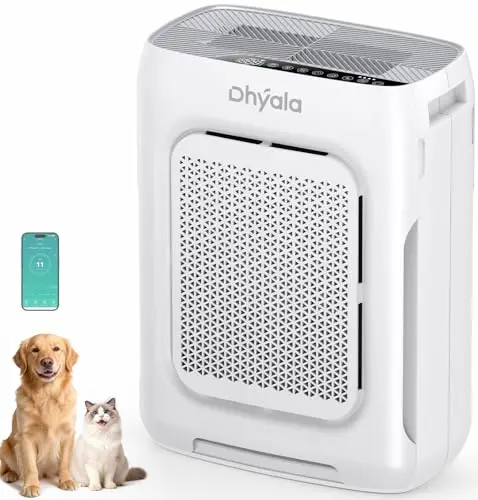
KJ03 – Dual-Filter Smart Purifier for Big Spaces
The Dhyala KJ03 is a smart dual-filter purifier with front and rear multi-intake airflow, a PM2.5 sensor, Wi-Fi control, and a 15 dB sleep mode. It is rated for large spaces and includes a washable pre-filter, aromatherapy box, child lock, and anti-chew cord.

MW-PA16 – Purpose-Built Cat Hair and Odor Control
The Meowant MW-PA16 is a pet-focused purifier with multi U-shaped inlets, dual-sided intake, and a six-layer H13 HEPA setup. It includes an AQI display, auto mode, five fan speeds, a washable electrostatic pre-filter, and a 25 dB sleep mode.
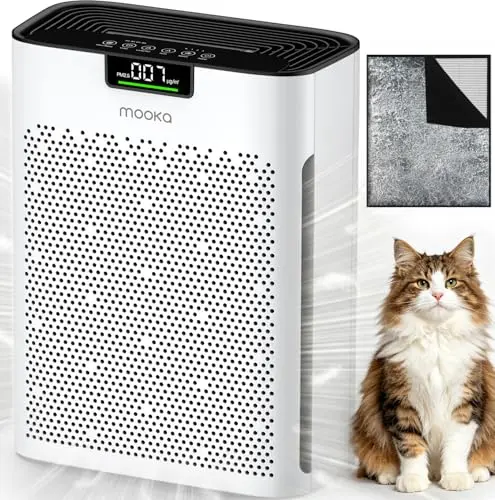
KJ190H – Wide-Intake Purifier for Pet Homes
The MOOKA KJ190H uses a wide front and dual-side intake, a three-stage HEPA filter, and a washable pre-filter. It includes a PM2.5 display, auto mode, four fan speeds, a 20 dB sleep mode, aroma support, and a child lock.
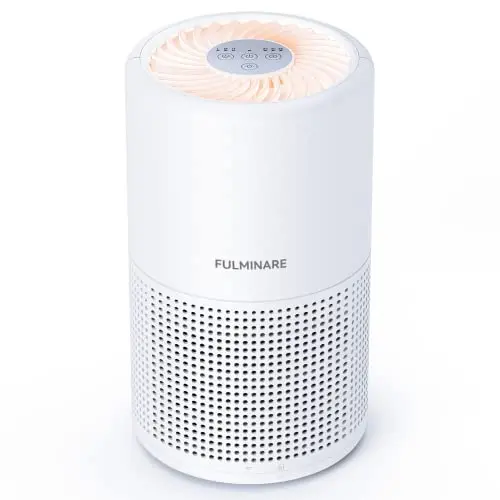
PU-P05 – Compact Night-Light Purifier on a Budget
The FULMINARE PU-P05 is a compact H13 HEPA purifier with a 360-degree air outlet, a sleep mode around 20 dB, an independent night light, and five timer settings. It is designed for small-to-mid rooms and includes a replacement-filter reminder.
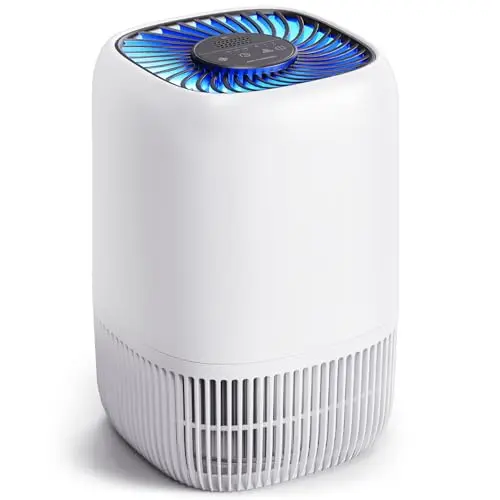
DH-JH12 – Tiny 360-Intake Purifier for Desks and Corners
The VOOPNU DH-JH12 is a compact purifier with a 360-degree intake, a three-layer filtration system, three fan speeds, a timer, and an essential-oil tray. It is rated for up to 1,076 square feet per hour and runs as quietly as 22 dB.
How We Evaluated These Pet Air Purifiers for Cats
We did not run particle-count tests in a sealed room or live with these purifiers through a full cat-hair season. What we did: cross-referenced eight pet air purifier models from seven brands across seven decision axes – coverage and CADR, filtration stages, pet-hair intake design, odor control, noise and sleep mode, smart sensors, and filter maintenance. We triangulated published specifications, feature sets, and owner feedback where available, then mapped each unit to realistic cat-household scenarios like litter-box rooms, bedrooms, and open-plan living areas. We also weighed how easy each pre-filter is to rinse, because cat hair turns maintenance into a weekly chore rather than a seasonal one. Where coverage claims differed, we normalized them to air changes per hour instead of comparing headline square footage alone.
The scoring framework weighted real-world fit for cat homes (70%) – how well each purifier handles hair, dander, and odor in the rooms cats actually use – against feature differentiation (30%) – pet-specific intakes, washable pre-filters, sensors, and quiet operation. We have no commercial relationship with any of the brands featured; recommendations track fit and differentiation, not brand preference. If you want the most complete pet-focused package, the Levoit Vital 100S-P is the one we would start with; if litter odor is your main complaint, the Meowant MW-PA16 is the more targeted pick.
How to Choose the Right Pet Air Purifier for Cats
1. What Makes a Good Air Purifier for Cat Hair
Cat hair is larger than dander but it is sticky and clogs intakes quickly. Look for a true HEPA filter, a washable pre-filter, and a wide intake that does not rely on a narrow grille. A purifier can have excellent filtration on paper and still struggle in a cat home if the pre-filter mats over in a week. Pet-specific inlet designs and easy-access filter doors matter more here than app extras.
2. How to Size an Air Purifier for the Rooms Your Cat Uses
Ignore the biggest square-footage number on the box until you find the air-change rate behind it. A room rated at one air change per hour is a different job from a bedroom rated at nearly five. For a cats main room, aim for a purifier that can cycle that space several times per hour. CADR is the cleaner benchmark when it is published, and open-plan layouts need more airflow than a closed bedroom. If your cat follows you from room to room, a two-pack or a large-room unit can make more sense than one tiny purifier.
3. Pet-Specific Intake and Pre-Filter Design
This is where cat-friendly purifiers separate themselves. A U-shaped inlet, dual-sided intake, or wide front grille gives hair somewhere to collect without sealing the airflow path. A washable electrostatic pre-filter is a practical upgrade because you can rinse or vacuum it instead of buying a new filter every few weeks. If hair clogging is your main frustration, the MW-PA16 is built around this problem with multi U-shaped inlets and a dual-sided path. Standard purifiers can still work, but they usually need more frequent vacuuming.
4. Odor Control: Carbon, Sensors, and Realistic Expectations
Odor control comes from activated carbon, not from a night light or a pretty scent. Carbon volume and filter design matter more than the word carbon on the box. A PM2.5 sensor and auto mode help a purifier react to litter dust, smoke, or a sudden odor event, but they cannot replace scooping. Aromatherapy pads are optional cover-ups. For daily odor plus smart control, the Vital 100S-P is the most balanced pick here; for a litter-room specialist, look at the pet-focused models first.
5. Noise, Sleep Mode, and Cat-Friendly Operation
A purifier that is too loud will get switched off, which defeats the purpose. Look for a sleep mode in the low-20-decibel range, a display that dims automatically, and controls that are not easy for paws to trigger. Child lock and anti-chew cords are small details that matter in a pet home. If the unit lives in a bedroom or open living area, the KJ03 is the quietest large-room option here on paper, with a 15 dB sleep mode and pet-safety features.
6. Filter Costs and Maintenance for Cat Homes
Budget for maintenance, not just the purifier. A washable pre-filter lowers long-term cost, but the HEPA and carbon stages still need replacement. In a cat home, check the pre-filter weekly, rinse it when fur is visible, and replace the main filter on the manufacturers schedule or sooner if airflow drops. Genuine filters are worth the consistency because off-brand replacements can fit poorly and reduce performance. A filter reminder is a useful convenience, but do not rely on it alone if you have a heavy-shedding cat.
Frequently Asked Questions
1. Do air purifiers really help with cat litter box odor?
They help, but they are not a substitute for scooping. The most useful models pair activated carbon with a sealed filter path and enough airflow to cycle the room air several times per hour. Aromatherapy trays and night lights are nice extras, not odor control. For a litter-heavy room, the MW-PA16 is the more targeted pick because its carbon layer and pet-focused intake are aimed at fur and urine smells. Keep the box clean, run the purifier continuously, and expect improvement rather than a magic fix.
2. Levoit Vital 100S-P vs MOOKA PR1: Which is better for cat hair?
The Vital 100S-P is the more polished choice if you want AHAM Verifide coverage, a washable pre-filter, and app scheduling. Its Pet Mode and U-shaped inlet are designed to keep fur from clogging the intake. The MOOKA PR1 counters with a larger coverage claim, a PM2.5 display, and six fan speeds, but it has a shorter track record for long-term reliability. For most cat homes, the Levoit is the safer daily driver; choose the MOOKA if you want visible air-quality feedback and broader room coverage.
3. Meowant MW-PA16 vs PuroAir Puro Air 240: Which handles cat odors better?
The MW-PA16 is the more targeted odor machine because its six-layer H13 system uses activated carbon and a dual-intake design intended for pet hair and litter smells. The PuroAir 240 is a broader two-room solution with a particle sensor and auto mode, but it is not pet-specific. Choose the Meowant for a litter room or a cat-dense apartment; choose the PuroAir pair if you want sensor-driven coverage in two rooms and do not need pet-shaped inlets.
4. How often should I clean the pre-filter in a cat home?
Check it weekly. Cat hair can mat a pre-filter fast, and a clogged pre-filter reduces airflow even if the HEPA filter is still good. Rinse washable pre-filters when you see visible fur, and let them dry fully before reinstalling. Replace disposable pre-filters or carbon stages according to the manufacturer, and use genuine filters when possible. A washable pre-filter is one of the most useful features in a cat home because it protects the HEPA stage and lowers long-term cost.
5. Can an air purifier reduce cat dander and allergy symptoms?
It can reduce airborne dander, but it will not remove the source. A purifier with a true HEPA filter, sized for the room, and run continuously will capture more particles than a small unit used intermittently. Keep the cat out of the bedroom if allergies are severe, wash bedding often, and use a washable pre-filter to keep hair from blinding the main filter. The Vital 100S-P and KJ03 are both strong fits for allergy-focused cat homes, but no purifier replaces source control.
Final Verdict
For most cat households, the Vital 100S-P is the pick because it pairs a real Pet Mode and washable pre-filter with smart, quiet operation. If you want a compact unit for a bedroom or litter corner without spending much, the PU-P05 gets you basic H13 filtration and a night light at a budget-friendly tier. In an open-plan home where hair and dander spread far, the KJ03 brings dual filters and 15 dB sleep operation. And if litter-box odor is the problem you notice most, the MW-PA16 is built around pet-specific intakes and carbon odor control. Match the purifier to the room and the complaint, and you will get more out of it than chasing a single do-everything label.
