
Best Piercing Pillows – 2026 Reviews

Waking up with a throbbing ear after a new cartilage piercing is a special kind of frustrating. You finally got the piercing you wanted, then every pillow in the house seems designed to press directly on it. A regular pillow forces your ear into the mattress; a good piercing pillow gives it a pocket, a hole, or a soft landing so you can sleep on your side without undoing the healing.
The category looks simple, but the useful differences are in the details. Hole placement matters – centered openings suit some sleepers, while off-center holes let you flip the pillow to match your neck. Fill material changes the feel, from soft cotton and down to supportive memory foam. Cover material matters too, because satin glides past earrings while cotton can snag. And adjustability is the quiet hero: a pillow you can tune is easier to live with than one fixed loft.
This guide surveys the piercing pillow market across brands and styles, from compact donuts to larger contoured memory foam pillows. We will help you match the pillow to your piercing, sleep position, and tolerance for firmness, so you can stop guarding your ear all night.
Best Piercing Pillows – 2026 Reviews
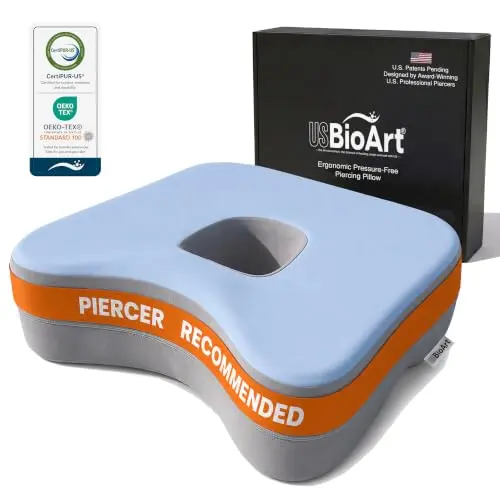
Ergonomic Ear Piercing Pillow – Piercer-Designed Pressure Relief
A compact memory foam pillow with an oval ear opening, elevated neck support, and a shoulder cutout. It is designed for side sleepers healing cartilage, helix, conch, daith, tragus, industrial, or lobe piercings, and can also help with CNH pressure relief.
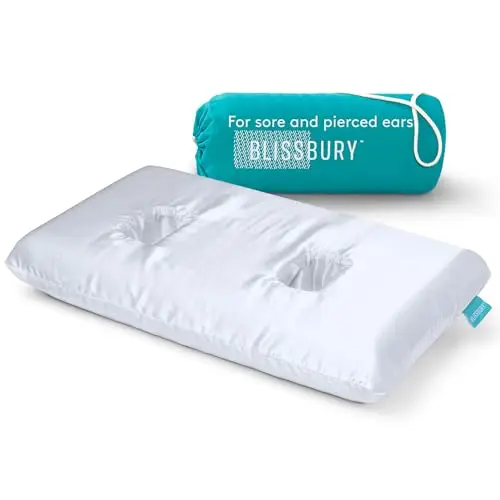
Satin Ear Hole Pillow – Dual-Hole Memory Foam
A rectangular satin-covered pillow with two ear holes and adjustable memory foam. The anti-snag cover and dual openings make it a strong choice for multiple piercings or CNH, though the firmer feel will not suit everyone.

Off-Center Ear Hole Pillow – Memory Foam Side Support
A compact memory foam pillow with a large off-center ear opening and a smooth satin cover. The offset hole lets side sleepers flip the pillow to match their neck, while the removable foam plug turns the opening into a flat travel surface.

Ear Piercing Pillow – Compact 9-Inch Donut
A compact round cotton-blend pillow with a centered ear hole, adjustable filling, and a machine-washable cover. It is an affordable entry point for fresh piercings, side sleeping, and pressure relief, though the small size and soft fill will not suit everyone.
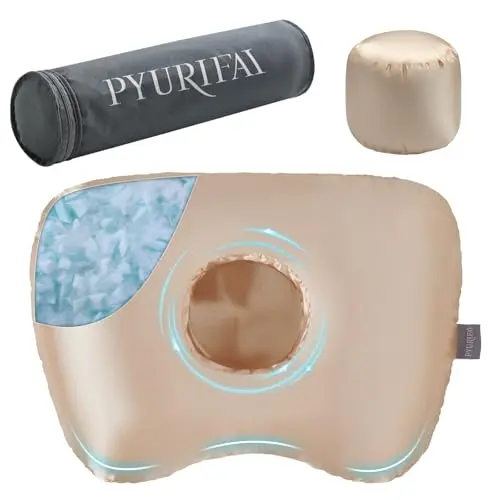
Shredded Memory Foam Ear Pillow – Adjustable Satin Comfort
A satin-covered pillow with shredded memory foam, a large ear hole, and a removable foam plug. The adjustable fill and curved shape aim to protect piercings while supporting side, back, or stomach sleepers.

Curved Ear Piercing Pillow – Larger Cotton Support
A larger curved cotton pillow with a centered ear hole, breathable cover, and adjustable filling. It is designed for side sleepers who want more surface area and neck-shoulder contouring than a small donut provides.

Ear Piercing Pillow – Lightweight Down-Fill Donut
A lightweight round pillow with a centered ear hole, down filling, and a soft cotton cover. It is a simple, affordable option for side sleepers with sore ears, though the hand-wash care and mixed firmness feedback are worth noting.

Ear-Shaped Hole Pillow – Reversible Satin and Cotton
A rectangular pillow with an ear-shaped hole and a reversible satin-and-cotton cover. It is portable and gentle on earrings, though the thin profile and mixed thickness feedback mean it suits overlay use best.

Contoured Cotton Ear Pillow – Shoulder Groove Support
A contoured cotton pillow with a centered ear hole and a shoulder groove. The larger rectangular shape adds neck-shoulder support, though the firmness and size draw mixed reactions from side sleepers.
How We Evaluated These Piercing Pillows
We did not run long-term sleep trials or lab-test foam compression. What we did: cross-referenced 9 piercing pillow models from 8 brands across 5 decision axes – ear-hole placement and size, fill material and firmness, cover material and snag risk, adjustability and loft, and support for side sleeping or CNH. We triangulated published specifications, feature sets, owner feedback where available, and use-case fit against common buyer profiles for piercings, ear pain, and side sleeping.
The scoring framework weighted real-world fit and pressure relief (70%) – how well each pillow keeps the ear clear and supports the head and neck – against feature differentiation (30%) – unique details like off-center holes, dual openings, removable plugs, and washable covers. We have no commercial relationship with any of the brands featured; recommendations track fit and differentiation, not brand preference. If you want piercer-informed design and a compact memory foam shape, the USBioArt Ergonomic Ear Piercing Pillow is the strongest all-around match. If you have multiple piercings and want a dual-hole layout, the BLISSBURY Satin Piercing Pillow is the better runner-up.
A few things we cannot tell you: how each pillow will feel after months of nightly use or how it performs for every neck shape. What we can: map the specs, compare the designs, and flag where owner experience points to firmness, size, or alignment tradeoffs. That is the basis for the picks below.
How to Choose the Right Piercing Pillows
1. Hole Placement and Size: The Make-or-Break Detail
A piercing pillow lives or dies by the hole. A centered opening works when your ear naturally lands in the middle of the pillow, which is common if you sleep on your side with your head square on the pillow. An off-center hole gives you more flexibility because you can flip the pillow to match a shorter or longer neck. That is why the USlixury Off-Center Ear Hole Pillow is worth considering if centered donuts tend to miss your ear. Size matters too: a 3.5-inch hole is common and works for many lobes and cartilage piercings, while a 4.5-inch or oval opening gives more clearance for multiple piercings, swelling, or CNH. The opening should be large enough that your ear rests inside it without touching the rim, but not so large that your head loses support.
2. Fill Material and Firmness: Cotton, Down, Memory Foam, or Shredded Foam
Fill changes how the pillow feels and how well it holds the ear pocket. Cotton and down fills feel softer and more traditional, but they can compress or need fluffing. Memory foam holds a shape and gives more predictable support, though it can feel firm to stomach or back sleepers. Shredded memory foam sits in between: it is adjustable and holds loft better than loose fiber, but it can feel lumpy until you redistribute it. Firmness is personal, so treat owner feedback as a signal rather than a verdict. If you want a pillow that stays put and supports your neck, memory foam is usually the safer bet. If you want a soft, sink-in feel and do not mind adjusting the fill, cotton or down is more forgiving.
3. Cover Material and Earring Snagging
The cover matters more than it looks. Satin and silky covers let studs, hoops, and sleepers glide instead of catching, which reduces the chance of tugging a healing piercing. Cotton covers are breathable and easy to wash, but they can create more friction around earrings. If you have long hair, a smooth cover also helps reduce tangling. Check whether the cover is removable and machine washable, because piercing aftercare involves keeping the sleep surface clean. A removable washable cover is a practical feature, especially during the first few weeks of healing.
4. Adjustability and Loft for Side Sleepers
Loft is the height of the pillow, and it is where side sleepers run into trouble. Too high and your neck bends; too low and your ear takes pressure. An adjustable fill lets you add or remove material to find a comfortable height, while a removable foam plug can turn an ear hole into a flat travel surface. If you sleep on your side with broad shoulders, a slightly higher loft may help keep your neck aligned. If you sleep partially on your stomach or prefer a thin pillow, look for a lower profile. The best piercing pillow is the one you can tune without fighting the design.
5. How to Choose a Piercing Pillow for Healing and CNH
Start with the ear condition you are managing. For a fresh cartilage piercing, prioritize a roomy ear opening, a smooth cover, and a fill that will not collapse. For CNH or pressure sores, look for a pillow that keeps pressure off the rim of the ear and supports the neck without forcing your head into one position. For multiple piercings, a dual-hole or oversized opening gives you more placement options. If you wear earplugs, earbuds, or a hearing device, make sure the cavity is deep enough to keep the device from pressing into your ear. The USBioArt Ergonomic Ear Piercing Pillow is the most complete package for healing-focused support, while the BLISSBURY Satin Piercing Pillow is the better fit for multiple piercings and dual-hole flexibility.
6. Budget, Mid-Range, and Premium Piercing Pillows
Budget piercing pillows usually give you a simple donut shape, cotton or down fill, and a basic cover. They can work well for short-term healing or travel, but the fill may compress and the hole may be less precisely placed. Mid-range options often add adjustable fill, better covers, or a larger surface area. Premium models bring memory foam, dual holes, off-center openings, washable covers, and more intentional neck support. You do not need to spend the most to get pressure relief, but the details add up if you are sleeping on the pillow every night for weeks. The Wuronsa 9-Inch Ear Piercing Pillow is the budget-friendly entry point, while the BLISSBURY and USBioArt models sit in the premium tier.
Frequently Asked Questions
1. What is the difference between the USBioArt Ergonomic Ear Piercing Pillow and the BLISSBURY Satin Piercing Pillow?
The USBioArt is built around a single large oval opening, elevated neck support, and a shoulder cutout, which makes it the more ergonomic choice for side sleepers who want pressure-free ear clearance and neck alignment. The BLISSBURY uses dual ear holes and an anti-snag satin cover, so it is better if you have multiple piercings or want a second placement option when one side does not line up. Both use memory foam, but the BLISSBURY has a firmer reputation and a more rectangular pillow shape, while the USBioArt feels more like a compact recovery pillow with a piercer-informed design. If you want the most complete healing-focused package, the USBioArt Ergonomic Ear Piercing Pillow is the pick. If dual holes matter more, choose the BLISSBURY.
2. How does the USlixury Off-Center Ear Hole Pillow compare with the Wuronsa 9-Inch Ear Piercing Pillow?
The USlixury is the more adjustable design for neck positioning because its off-center hole lets you flip the pillow to match your neck length. It also uses CertiPUR-US memory foam and a satin cover, so it feels more supportive and is gentler on earrings. The Wuronsa 9-Inch is a compact cotton donut with a centered hole and adjustable fill; it is lighter, simpler, and more budget-friendly, but the small size and centered opening will not suit every sleeper. Choose the USlixury if alignment and earring-friendly fabric matter. Choose the Wuronsa if you want a low-cost, lightweight pillow you can stuff to your preferred firmness.
3. Do piercing pillows actually help new cartilage piercings heal?
They can help by reducing pressure and friction, which are two common sources of irritation during healing. A pillow with an ear hole keeps your ear from pressing into the mattress, and a smooth cover reduces snagging on jewelry. That said, a pillow is a comfort tool, not a treatment. Keep up your aftercare routine, avoid sleeping on the piercing when you can, and check with a professional piercer if you see signs of infection. The best setup combines a pressure-relieving pillow with consistent cleaning and careful handling.
4. What size ear hole should I look for in a piercing pillow?
A 3.5-inch round hole is the common baseline and works for many single lobe or cartilage piercings. If you have multiple piercings, swelling, or CNH, a larger oval opening gives more clearance and reduces the chance of bumping the rim. The hole should be big enough that your ear sits inside it without touching the edges, but not so big that your head loses support. If you are between sizes, lean toward the larger opening and adjust the pillow height separately.
5. Can I use a piercing pillow with earplugs, earbuds, or a hearing device?
Yes, as long as the cavity is deep enough to keep the device from pressing into your ear. A deep ear opening creates a protected space for earplugs, earbuds, or a hearing amplifier, which can otherwise become painful against a standard pillow. Look for a pillow with a roomy hole and enough loft to prevent the device from bottoming out. The USlixury Off-Center Ear Hole Pillow is a good match because its large opening and memory foam support keep the ear suspended. If you move a lot in sleep, a contoured pillow with a stable base may be more reliable than a small donut.
Final Verdict
For most buyers, the USBioArt Ergonomic Ear Piercing Pillow is the answer. It pairs a roomy oval ear opening with elevated neck support, a shoulder cutout, and washable covers, so it handles fresh piercings, CNH pressure, and side sleeping without feeling like a one-trick donut. If you have multiple piercings and want dual-hole flexibility, the BLISSBURY Satin Piercing Pillow is the premium alternative, though its firmer foam will not suit everyone. For a lower-cost entry point, the Wuronsa 9-Inch Ear Piercing Pillow is compact, adjustable, and easy to try. And if neck positioning is your main frustration, the USlixury Off-Center Ear Hole Pillow lets you flip the opening to fit your neck. Start with the pillow that matches your biggest sleep problem, then adjust from there.
